The 4 Elements of Nature and Their Spiritual Meaning

The four elements —air, fire, water, and earth— have been interpreted since ancient times as essential expressions of the energy of life. Each represents a quality that is also part of our inner experience. In this article, we explore what each one means, how they influence our daily lives, and why they can help us better understand ourselves.
Table of Contents
- What Do the 4 Elements Represent in Spirituality?
- One by One: The Spiritual Meaning of the Four Elements
- The 4 Elements in Different Spiritual Traditions
- The 4 Elements and the Chakras
- The 4 Elements and the Zodiac Signs
What Do the 4 Elements Represent in Spirituality?
For many spiritual traditions, the elements are not just components of nature but also ways of understanding how our inner energy works. Each one reflects a part of us: how we think, feel, act, and stay grounded in the present. This perspective helps us know ourselves more completely, integrating body, mind, and spirit.
Air is connected with the mind and breathing, fire with action and transformation, water with emotions and intuition, and earth with stability and the body. They are symbols, but also tools: the elements provide a practical way to recognize how our energies are expressed and where we can work to achieve greater balance.
Knowing the spiritual meaning of the four elements allows us to identify which energies are most present in our lives and which ones we might need to cultivate more. If someone feels a lack of direction, they may need more fire. If there is mental confusion, perhaps they need to connect with air. This type of personal reading, based on the elements, offers a simple yet powerful way to work on our energetic and emotional well-being.
One by One: The Spiritual Meaning of the Four Elements
Each of the four classical elements expresses a specific quality of vital energy. Air, fire, water, and earth not only represent aspects of the physical world but also reflect inner patterns that influence our emotions, thoughts, decisions, and the way we relate to our environment. Understanding their spiritual meanings allows us to observe more clearly our strengths, our blocks, and the energies we need to balance in order to live more fully.
-
Air: The Breath of Life and the Mind
The element air is connected with breathing, the mind, clear thinking, and communication. In many traditions, it is associated with what is invisible yet essential, such as ideas, inspiration, and consciousness. It is also linked to movement, lightness, and the ability to see things from a broader perspective.
From a spiritual point of view, air represents the energy of knowledge, mental intuition, and the connection with the subtlest plane of understanding. When this energy flows in balance, it facilitates clarity of thought, creativity, and open communication. However, when it is unbalanced, it can manifest as mental distraction, excessive thinking, or difficulty concentrating.
Working with the element air involves cultivating inner silence, observing our thoughts without judgment, and learning to express ourselves authentically. Conscious breathing, meditation, and contact with open spaces such as mountains or clear skies can help balance this energy. By doing so, we gain focus, clarity, and a deeper connection with our inner wisdom.
-
Fire: Transformation, Passion, and Inner Power
Fire symbolizes the force that drives change, willpower, passion, and the power to act. It represents the energy that moves us, the one that ignites the desire to advance, create, and transform. On a spiritual level, fire is the engine that leads us to make decisions, break with the old, and open space for the new.
This element is deeply linked to vital energy, enthusiasm, and the ability to sustain an intention with firmness. When the inner fire is balanced, it manifests as motivation, confidence, and a clear sense of direction. But if it overflows, it can be expressed as impulsiveness, anger, or exhaustion. On the other hand, if it is extinguished, it shows up as discouragement, stagnation, or lack of purpose.
Connecting with spiritual fire requires paying attention to what ignites our passion, what moves us, and what we are ready to transform. Practices such as lighting candles with intention, working with affirmations, or performing energetic body movements can help activate this energy. Fire reminds us that within us lies a spark capable of guiding our process of change and renewal.
-
Water: Intuition, Emotions, and Flow
Water is connected with the emotional world, sensitivity, intuition, and the ability to adapt. It is the element that flows, that changes form without losing its essence, and that invites us to connect with what is deep. Spiritually, it represents connection with the invisible, the inner world, and what is emotionally authentic.
When water is in balance, it allows us to feel without fear, trust in intuition, and flow with life’s changes. This energy helps us open up emotionally, understand our feelings without repressing them, and create empathetic bonds with others. On the contrary, an excess of water can lead to emotional instability or confusion, while its absence can cause emotional disconnection or difficulty expressing what we feel.
Working with the water element involves cultivating spaces of introspection, allowing ourselves to feel without judgment, and developing trust in our inner perception. Taking mindful baths, meditating near the ocean or rivers, and keeping an emotional journal are ways to activate this energy. Water teaches us that true strength often lies in the ability to adapt and let things flow.
-
Earth: Stability, Abundance, and Connection with the Sacred
Earth is the element of matter, structure, the body, and everything that sustains. It represents what is concrete, stable, and what gives us security and grounding. Spiritually, it is linked to abundance, nourishment, and deep connection with the sacred that resides in nature.
When earth energy is balanced, we feel centered, trust in our processes, and appreciate what we have. We also cultivate patience, consistency, and presence in the here and now. In imbalance, it can manifest as excessive attachment to material things, fear of change, or a sense of disconnection from the body and everyday reality.
Connecting with earth means becoming aware of the body, the physical environment, and the care of our foundations. Walking barefoot, tending a plant, practicing gratitude, or simply spending time in nature are effective ways to activate this energy. Earth reminds us that spirituality is also lived with our feet firmly on the ground.
The 4 Elements in Different Spiritual Traditions
The idea that the universe is composed of four fundamental elements has been present in many cultures throughout history. This concept has not only served to explain the physical world but also to understand the inner processes of human beings from a spiritual perspective. Air, fire, water, and earth have been seen as universal principles that operate both in nature and in the soul.
In ancient Greece, philosophers such as Empedocles and later Aristotle proposed that these elements were the roots of all existence. Each was associated with specific qualities: heat, cold, moisture, or dryness. This theory deeply influenced medieval alchemy, where the elements were reinterpreted as inner forces necessary for the spiritual transformation of the practitioner.
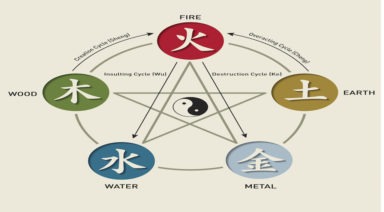
In India, the Samkhya philosophy and the Ayurvedic tradition also recognize five elements —adding ether or space— that make up the body and the universe. Each of these elements corresponds to physical functions, senses, and vital energies. The same occurs in traditional Chinese medicine, where, although five different elements are used, the focus remains on understanding the interaction between natural forces and how they are reflected in the human body and emotional balance.
Many Indigenous cultures, such as the Andean worldview or the Native American peoples, also work with the elements as living and sacred beings. In these traditions, the elements are not only studied but also revered and honored. They are part of a spiritual framework where humans maintain a reciprocal relationship with their environment, guided by the wisdom of nature.
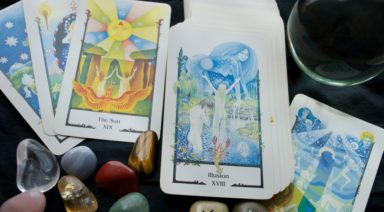
Over time, the symbolism of the elements has been adopted by various contemporary spiritual currents. Tarot, astrology, reiki, and other energetic systems continue to use this structure to interpret reality. This continuity demonstrates that the four classical elements remain a powerful and relevant tool to explore inner life and the connection with the sacred.
The 4 Elements and the Chakras
The relationship between the four elements and the chakras makes it possible to understand how certain energies manifest in different areas of our body and our life. Each chakra, as an energy center, regulates specific aspects of being: from the physical and emotional to the mental and spiritual. By observing which element is connected to each chakra, we can identify energetic blockages or excesses and work more clearly to harmonize them.
- Root Chakra (Earth): Located at the base of the spine, this chakra represents security, survival, and connection with the physical body. Earth provides it with stability, grounding, and a practical sense.
- Sacral Chakra (Water): Located in the lower abdomen, this center is linked to emotions, creativity, and sexuality. Water gives it fluidity, sensitivity, and adaptability.
- Solar Plexus Chakra (Fire): Situated in the stomach area, this chakra governs willpower, personal power, and action. Fire drives it with energy, determination, and transformation.
- Heart Chakra (Air): In the center of the chest, this chakra is related to love, empathy, and openness toward others. Air gives it lightness, expansion, and the ability to connect.
These 4 elements not only sustain the first chakras but also prepare the way for the higher centers to be activated in a stable way. When body, emotions, willpower, and heart are in balance, energy can rise more smoothly toward the subtler planes of consciousness.
The throat, third eye, and crown chakras—related to expression, inner vision, and spiritual connection—require a solid energetic foundation to expand without creating imbalances. That is why working with the elements not only improves overall well-being but also strengthens any deep spiritual practice.
The 4 Elements and the Zodiac Signs
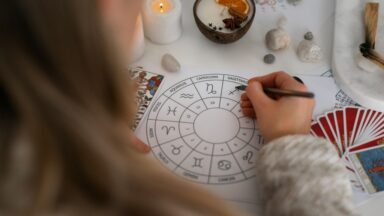
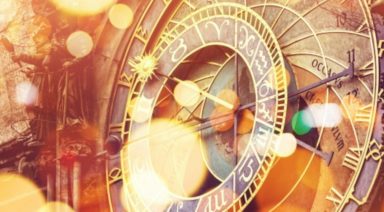
In astrology, the zodiac signs are grouped into four large families, each ruled by one of the elements. This division influences the way each sign perceives reality, relates to others, and manages vital energy. Knowing which element a sign belongs to can reveal behavioral patterns and deep energetic needs.
- Air signs (Gemini, Libra, Aquarius): Mental, communicative, and sociable. They easily express themselves, adapt, and connect ideas, but may become disconnected from emotions.
- Fire signs (Aries, Leo, Sagittarius): Characterized by initiative, enthusiasm, and vitality. They are natural leaders and passionate, though sometimes act without much thought.
- Water signs (Cancer, Scorpio, Pisces): Emotional, empathetic, and receptive. They have great intuition and emotional depth, but may become overly absorbing or sensitive.
- Earth signs (Taurus, Virgo, Capricorn): Practical, consistent, and organized. They seek security and tangible results, though they can become rigid or conservative.
Beyond the sun sign, each birth chart contains a unique mix of elements, which explains why people of the same sign can be very different from each other. By identifying which energies predominate or are lacking in a natal chart, more conscious decisions can be made to balance them. This perspective provides clarity on how to use the qualities of each element to support personal growth.
About the Author

What Your Numerology Chart Reveals: Discover Its 5 Key Elements
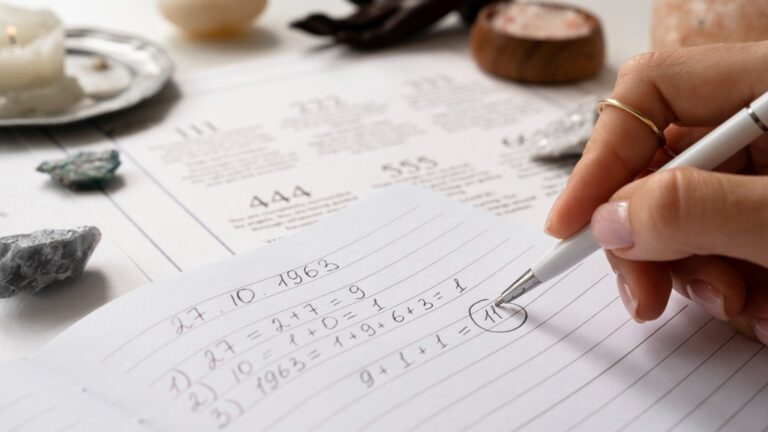
The numerology chart is a tool from numerology that is created based on a person’s full name and date of birth. With that data, key numbers are identified that describe personality traits, internal challenges, and spiritual lessons. In this article, we explore what a numerology chart is, what it reveals about your spiritual path, and what its five essential elements are.
Table of Contents
- What Is A Numerology Chart And What Does It Reveal?
- The 5 Key Elements Of A Personal Numerology Chart
- The Personal Year And Its Influence On Your Current Energy
- How Numerology Can Help You On Your Spiritual Path
- What’s The Difference Between A Numerology Chart And A Birth Chart?
What Is A Numerology Chart And What Does It Reveal?
Just like the natal chart in astrology, the numerology chart is a personalized study that is built from birth data. Instead of analyzing planetary positions, it works with the numbers derived from your date of birth and full name, to which specific meanings are assigned. Through this information, it’s possible to understand how a person thinks, feels, acts, and makes decisions throughout life.
From a spiritual perspective, the numerology chart offers information about the lessons the soul comes to develop. It allows for the identification of natural talents, recurring challenges, and patterns that repeat at different stages, providing context for significant life experiences. This information does not define a fixed destiny, but rather points to tendencies and processes of inner growth.
In addition, the numerology chart functions as a guide to interpret the life moment a person is going through. By understanding which numbers are active on their path, one gains greater clarity about the internal processes influencing their current experience. This fosters a more conscious relationship with personal decisions and spiritual evolution.
The 5 Key Elements Of A Personal Numerology Chart
Although a complete numerology chart can include many more aspects, there are five numbers that are considered fundamental to understanding a person’s energetic structure. These numbers help clearly identify who you are, what motivates you, how others perceive you, and where your evolution is headed. Each one fulfills a specific role within numerological analysis and offers a complementary perspective. Below, we explore the five most relevant elements.
-
1. Life Path Number
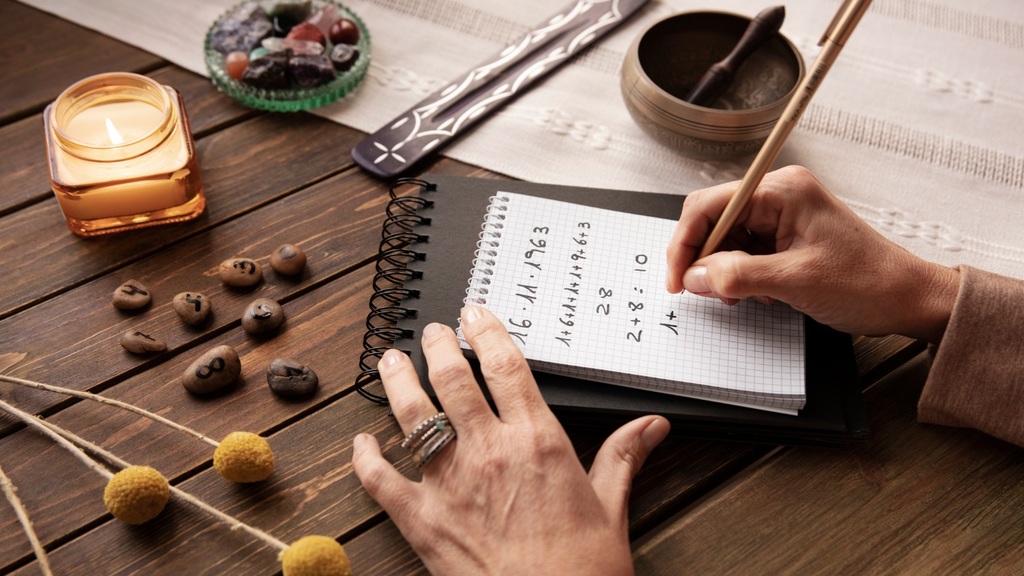
The Life Path Number is calculated by adding together all the digits of your date of birth until they are reduced to a single number from 1 to 9, or to one of the master numbers (11, 22, or 33). It represents the central energy that guides your journey, the lessons you came to integrate, and the qualities you are called to develop. It is considered one of the pillars of numerological analysis due to the structural information it provides.
This number functions as a vital compass. It does not determine every decision you will make, but it indicates the general direction in which your experience flows. By knowing it, you can more easily recognize recurring challenges, the resources you have available, and the choices that align with your life purpose.
-
2. Soul Number
The Soul Number is obtained from the vowels in the full name with which you were registered at birth. It reveals what motivates you from within: your deepest desires, your emotional needs, and what truly gives you meaning. It is not always evident to others, as it reflects an intimate and essential part of your being.
Understanding this number allows you to live in a way that is more coherent with your inner world. It also helps distinguish when you are making decisions based on external expectations and when you are acting in harmony with what truly supports your well-being. In spiritual search processes, this number becomes especially revealing.
-
3. Personality Number
The Personality Number is calculated from the consonants of the full name. It represents the image you project outward, the way others perceive you, and the type of energy you communicate in your environment. It may or may not coincide with how you feel internally, and for that reason it can also point to possible tensions between what you show and who you truly are.
This number helps you understand how you impact your surroundings, which aspects of your character are most visible, and how you interact socially. It also allows you to identify the type of first impressions you generate and which qualities stand out in public or professional contexts.
-
4. Destiny Or Expression Number
The Destiny Number, also called the Expression Number, is obtained by adding the numerical value of all the letters in the full name. It reflects the total potential you bring into this life: your natural talents, developmental capacities, and the resources you can use to move forward. It is a broad number that synthesizes your complete identity and the tools you have to build your path.
Unlike the Life Path Number, which marks direction, the Destiny Number shows how you can walk that path. Knowing it allows you to recognize your innate strengths as well as the abilities you are called to cultivate in order to express your full potential.
-
5. Life Mission Number
The Life Mission Number is calculated by combining information from the name and date of birth. It indicates the deepest purpose you came to fulfill, that which gives meaning to your journey beyond the personal. It is a synthesis of who you are, what you bring, and where you are called to evolve.
This number provides an integrative view of the spiritual path and helps you understand your role within a broader context. When you know it, you can make decisions with greater clarity and align your actions with a more conscious and meaningful direction.
The Personal Year And Its Influence On Your Current Energy
In addition to these five fundamental elements that make up the basic structure of a numerology chart, there are other complementary numbers that offer valuable insight into the present moment.
One of the most relevant is the Personal Year Number, which signals the type of energy that accompanies you during the current year. Although it changes each year, it can be included in a numerology chart to offer a more complete and updated view of the process you are going through.
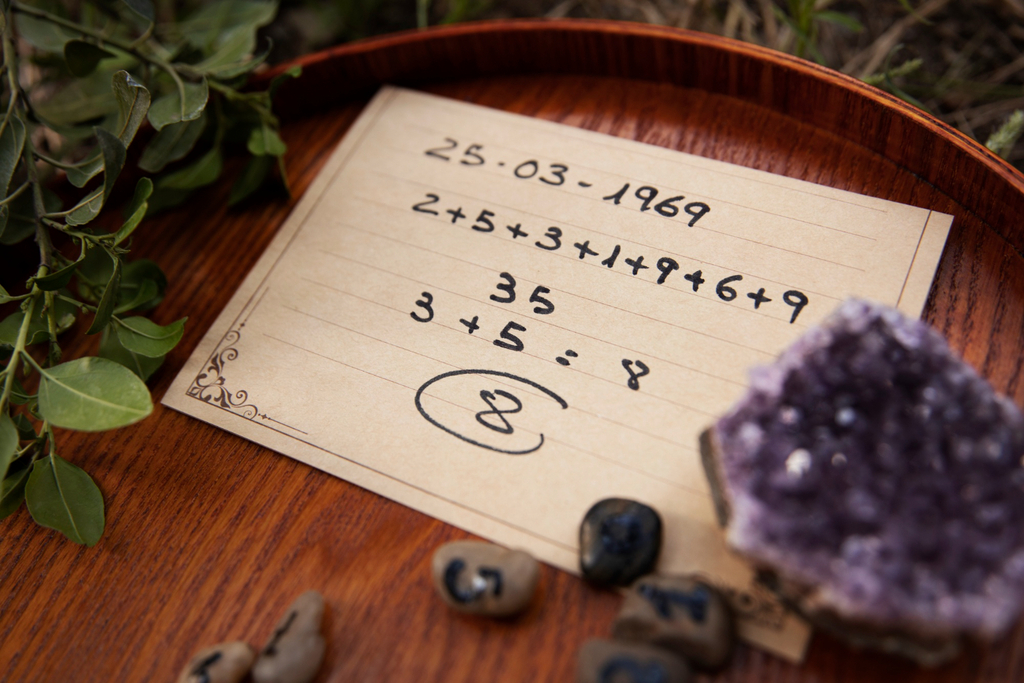
The Personal Year is calculated by adding the day and month of your birth to the current calendar year. For example, if you were born on March 14 and it’s the year 2026, the calculation would be: 1 + 4 (day) + 3 (month) + 2 + 0 + 2 + 6 (year) = 18. Then, reduce the result to a single digit: 1 + 8 = 9. In this case, your Personal Year is 9, indicating a phase of closure, conclusions, and preparation for new beginnings.
Knowing this number allows you to better understand the dynamics shaping your present. It’s not about predicting specific events, but identifying the dominant energy of the year and using it as a guide to make more aligned decisions. Working consciously with your Personal Year can help you flow with greater clarity through your personal, emotional, or spiritual processes.
How Numerology Can Help You On Your Spiritual Path
Numerology can become a powerful ally when you are seeking greater inner clarity or a deeper sense of purpose. By understanding the numbers that govern your energy, you can interpret with more lucidity the processes you are going through and make decisions that are in tune with your true path. It’s not about predicting the future, but about understanding how you are energetically designed and how to better use your personal resources.
In times of crisis, change, or uncertainty, the numbers in your chart can help you see with more perspective. They reveal themes you are called to work on, talents you may not be fully using, and aspects of your life that could be transformed. That information acts like a map: it doesn’t tell you exactly what to do, but it does show you where to move forward with greater awareness.
Working with your numerology chart also allows you to recognize that not everything that happens to you is random. Many of the challenges or cycles you experience are responses to broader internal processes. When you understand the “why” behind certain experiences, you can go through them with less resistance and greater connection to your spiritual path.
What’s The Difference Between A Numerology Chart And A Birth Chart?
Although both tools are based on personal data such as the date of birth, the numerology chart and the birth chart belong to different disciplines and have complementary approaches. While astrology observes the position of the planets at the time of birth and how they influence your character and destiny, numerology is based on the symbolism of the numbers found in your name and date of birth to explore your inner energy, deep motivations, and the challenges you came to work through.
Knowing both charts not only enriches your self-knowledge, but also allows you to approach your spiritual path from different levels. When integrated, they provide a more complete view of who you are, how you interact with the world, and what direction your personal evolution may take. These are distinct tools, but they enhance one another when used together with an intention for growth and inner clarity.