All About the Fifth Dimension and the Shift in Consciousness

The fifth dimension is a plane of consciousness that goes beyond linear time and material perception. It is an energetic space where the unity between the physical, the mental, and the spiritual becomes conscious. In this article, we explore what is 5th dimension from the perspective of Matías De Stefano, as explained in the series Initiation: Journey to the Origin of the Universe, available on Gaia.
Table of Contents
- What Is the Fifth Dimension
- Differences Between the Third, Fourth, and Fifth Dimension
- Vibrating in the 5th Dimension: What This Shift in Consciousness Involves
- Energetic Characteristics of the Fifth Dimension
- Signs That You Are Accessing Your 5D Consciousness
- The Role of Guides, Masters, and the Expanded Self in the Fifth Dimension
- How to Connect With Your Fifth-Dimension Consciousness
- How to Sustain Your Connection With the Fifth Dimension in Daily Life
What Is the Fifth Dimension?
The fifth dimension is one of the nine dimensions of the universe and represents a much broader level of consciousness than the previous ones. It is a plane of existence in which time and space are no longer perceived as separate entities. At this level, everything that was, is, and will be is experienced simultaneously. It is a state of consciousness where the processes of the third and fourth dimensions integrate to give way to a complete understanding of reality.
Unlike the earlier dimensions, which limit us to physical experience (3D) and the passage of time (4D), the fifth dimension allows us to observe the entire journey of life as a reflection. It is a plane where the questions of “why” and “for what” find answers, as one gains access to the soul’s broader vision and its lessons. Here, there is no judgment—only deep understanding and clarity.
In the series Initiation, available on Gaia, Matías De Stefano explains that the fifth dimension is not a place one travels to, but a state of consciousness that already exists within each being. It is the plane where guides, masters, and the highest aspects of oneself reside, and from which it is possible to observe life from a total and expanded perspective.
Differences Between the Third, Fourth, and Fifth Dimension
Each dimension represents a different way of perceiving reality and experiencing consciousness. Although we coexist with all of them, the way we relate to time, space, and our identity changes radically at each level. Understanding these differences is key to consciously integrating the evolutionary process.
- Third dimension: This is the physical plane, where the linear perception of time and the idea of separation dominate. Here, consciousness identifies with the body, the rational mind, and the external world. Experiences are lived through duality, and learning usually occurs through contrast.
- Fourth dimension: This introduces the perception of time as a flexible structure. It is the space where internal processes are organized and where one can begin to observe reality from an emotional and energetic perspective. Here, the shifts in consciousness begin that allow the transcendence of the third dimension’s limitations.
- Fifth dimension: This is a plane of expanded consciousness where the soul accesses a full vision of its journey. Time and space integrate as a single unit, and experience is lived from connection, deep understanding, and the absence of judgment. At this level, the soul’s purpose is remembered, and the interconnection with all that exists is recognized.
Vibrating in the 5th Dimension: What This Shift in Consciousness Involves
Vibrating in the fifth dimension doesn’t mean abandoning the physical body or disconnecting from the material world, but rather integrating life from a higher level of consciousness. It is a profound change in the way we perceive, feel, and act. This vibration implies living from coherence, presence, and connection with the soul’s purpose.
When a person begins to vibrate in 5D, their energy system reorganizes itself to align with the frequency of unity. Decisions are no longer made from fear or the need for control, but from a broader understanding of the personal and collective journey. Duality ceases to be an inner battle and becomes a tool for conscious learning.
This shift in consciousness also implies a new way of relating to others and to the environment. Judgment is replaced by empathy, and the search for meaning takes the place of automatic reaction. Vibrating in the fifth dimension is a remembering that every experience is part of a greater evolutionary process, guided by a higher intelligence that dwells within us.
Energetic Characteristics of the Fifth Dimension
The fifth dimension is characterized by a higher, subtler, and more coherent frequency that allows us to experience reality from a state of deeper integration. It’s not about abandoning the physical, but about inhabiting it with an expanded consciousness aligned with the soul’s purpose. These are some of its main qualities:
- Unity consciousness: A real connection with everything that exists is perceived. The sense of separation begins to dissolve.
- Greater internal coherence: Thought, emotion, and action begin to align naturally. This generates clarity, peace, and sustained well-being.
- Deep presence: The present moment takes center stage. Attention stops scattering and focuses on what truly matters.
- Conscious relationship with the environment: A more refined energetic sensitivity develops. Decisions are made considering their vibrational impact.
- Openness to the soul’s purpose: New questions, inquiries, and inner quests arise, inviting a more meaningful way of living. The personal path becomes clearer and more significant.

Signs That You Are Accessing Your 5D Consciousness
Access to 5th dimension consciousness doesn’t happen suddenly, but through internal and external signs that indicate a change in vibrational state. These manifestations can vary in intensity, but they all point to a real expansion of perception.
- Greater inner clarity: A deep understanding begins to emerge where there was once confusion. Decisions feel more aligned with purpose.
- Sense of unity: The feeling of separation from others and the environment dissolves. A natural awareness of belonging to the whole arises.
- Detachment from old structures: Beliefs, relationships, or habits that no longer resonate are released more easily. Change is met with less resistance.
- Shifted perception of time: The rigidity of schedules and cycles fades. The present moment gains new depth.
- Increased energetic sensitivity: Vibrations from people, places, and situations are perceived more clearly. This sensitivity becomes a reliable guide.
The Role of Guides, Masters, and the Expanded Self in the Fifth Dimension
In the fifth dimension, the perception of reality expands to the point where it becomes possible to recognize the presence of the spiritual guides who accompany the soul’s journey. These beings do not operate through imposition or from the outside, but as expressions of consciousness that help us remember who we truly are. Their guidance is subtle yet constant, and becomes more perceptible as one’s personal vibration rises.
The guides may manifest as intuitions, inner messages, or signs in the environment. They can also appear in meditation, dreams, or moments of deep connection. Their purpose is to support the process of evolution, helping integrate lessons and aiding in decision-making from inner wisdom.
Alongside them, the contact with the expanded self is activated, which is nothing more than one’s own consciousness in a higher state. Through that connection, we gain a broader vision of the soul’s purpose and of the universal fabric to which we belong. This higher consciousness is not separate from the human being—it lives within, waiting to be recognized.
How to Connect With Your Fifth-Dimension Consciousness
Connecting with 5D consciousness is an internal process that requires presence, intention, and practice. It is not about reaching a new place, but about remembering a dimension that already exists in the deepest part of the self. Here are some ways to strengthen that connection:
- Conscious silence: Set aside daily moments free from external stimuli. This allows you to hear your inner voice and sharpen energetic perception.
- Focused meditation: Practice meditations that work on the coherence between mind, heart, and body. This alignment facilitates access to higher states of consciousness.
- Non-judgmental self-observation: Observe your own thoughts and emotions without identifying with them. This attitude opens space for new insights.
- Emotional coherence: Live from your inner truth, avoiding actions driven by fear or habit. Authenticity is a direct doorway to expanded consciousness.
- Connection with nature: Spending time in natural environments raises your vibration and restores energetic harmony.
How to Sustain Your Connection With the Fifth Dimension in Daily Life
Maintaining an active connection with the fifth dimension means bringing expanded consciousness into daily actions. It’s not about “leaving the world,” but about inhabiting it from another level of perception. This requires commitment, ongoing practice, and a clear intention to live from your center.
The key lies in integrating the spiritual into the everyday: observing how you respond to challenges, how you care for your body, how you relate to others. The small decisions of each day reflect whether you’re operating from the soul’s consciousness or from the ego’s automatic patterns. Every moment offers a new opportunity to choose from a state of presence.
Sustaining this frequency also means nourishing your inner space. Creating moments of silence, engaging in energetic practices, surrounding yourself with harmonious environments, and feeding your mind with elevated information are concrete ways to stay aligned with 5D consciousness. Transformation happens when we live in coherence with what the soul already remembers.
About the Author

Name Numerology: What Your Name Says About You

Your name has been with you from the beginning: you hear it, sign it, respond to it, and carry it through every stage of your life. Rarely, however, do you stop to look at it closely. Numerology proposes exactly that: observing it not only as a form of identification, but as a key that can reveal aspects of your deeper identity.
In this article, we explore what your name reveals about you, which main numbers arise from it, and how to calculate them step by step.
Table of Contents
- Numerology and Its Relationship With Names
- The Three Main Numbers of Your Name
- How to Calculate the Numbers of Your Name Step by Step
- What Name Numerology Is For
Numerology and Its Relationship With Names
Numerology begins with a very ancient idea: that numbers are not only used to measure or count, but also hold a meaning of their own. Each digit, from 1 to 9, is associated with a set of specific qualities. The name is one of the elements this discipline uses as the basis for its interpretation, because it turns something as everyday as your letters into a symbolic key to who you are.
To arrive at that meaning, it starts from a simple principle: each letter corresponds to a number. In this way, your full name stops being only a set of sounds and becomes a sequence of digits that can be added together and interpreted. That sequence, once deciphered, begins to speak about your way of being.
There is something particular about working with the name: you did not choose it yourself, it was given to you at birth and, over time, became inseparable from who you are. Numerology uses it as a starting point to talk about you. What it offers, ultimately, is one more language for knowing yourself.
In the episode Numerology from the series The Other Side, available on Gaia, numbers are explored as a symbolic language for better understanding personal experience. There, numerology is presented not as a form of divination, but as a tool for observing who you are, how you show up in the world, and what patterns appear on your path.
The Three Main Numbers of Your Name
When working with the full name, there are three numbers that are considered especially important: the Destiny or Expression Number, the Soul Urge Number, and the Personality Number. Each one is calculated using a different part of the name and reveals a specific dimension of your way of being.
It may help to think of them as three levels of interpretation. One speaks of your visible potential, another of your inner motivation, and another of the image you project. They do not compete with each other: they complement one another.
-
The Destiny or Expression Number
The Destiny Number, also called the Expression Number, is calculated by adding all the letters of the full name. It is one of the broadest numbers in the analysis because it takes the entirety of the name into account, not just one part.
It is related to your talents, abilities, and personal resources. It speaks of the way you tend to act, create, solve, build, or communicate when you express your potential with greater clarity.
It does not indicate a fixed destiny or a series of inevitable events. Rather, it points to the tools you have available to move forward on your path and the way you can develop what is already within you.
-
The Soul Urge Number
The Soul Urge Number is calculated only with the vowels of the full name. In numerology, vowels are associated with a person’s innermost dimension: what they desire, value, and need in order to feel aligned.
This number can help you recognize what truly moves you, even when you do not express it in an obvious way. Sometimes it appears in quiet decisions: a choice that may seem illogical from the outside, but feels necessary within.
It can also reveal tensions between what you deeply want and what you do out of habit, obligation, or external expectation. That is why it is often a very useful number for reviewing motivations, relationships, and important decisions.
-
The Personality Number
The Personality Number is obtained from the consonants of the full name. Unlike the Soul Urge Number, it does not focus on what you feel inside, but on the way you show yourself to the outside world.
This number describes the first impression you can create, the type of energy you communicate, and certain traits that others often perceive easily. Depending on the result, it can speak of a more reserved, firm, sensitive, creative, practical, or expansive image.
Knowing it does not mean adjusting your behavior to be more pleasing to others. It helps you observe whether the way you are perceived matches what you feel you are, or whether there is something in the way you express yourself that you could refine in order to relate with greater authenticity.
How to Calculate the Numbers of Your Name Step by Step
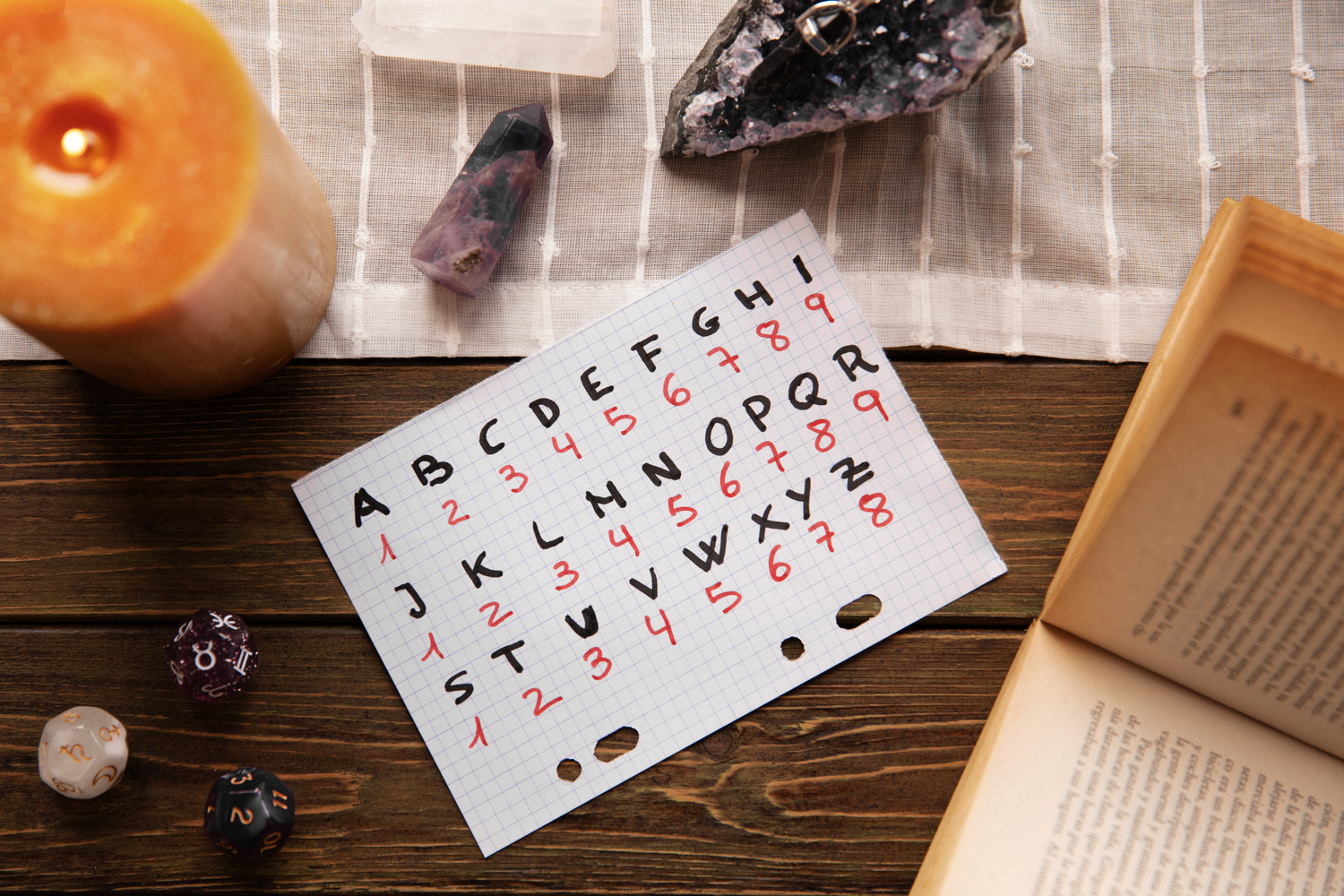
To calculate these numbers, you first need to convert each letter into its corresponding value according to the Pythagorean table. Then you make different sums depending on the number you want to obtain: all the letters for the Destiny or Expression Number, only the vowels for the Soul Urge Number, and only the consonants for the Personality Number.
The process is simple, but it is best to do it calmly. Write your full name, separate vowels and consonants, and check each letter before adding. In names with accents or special characters, the base letter is usually used for numerological calculations.
-
The Pythagorean Table Letter by Letter
The Pythagorean table assigns a number from 1 to 9 to each letter of the alphabet. The full correspondence is as follows:
- 1: A, J, S
- 2: B, K, T
- 3: C, L, U
- 4: D, M, V
- 5: E, N, W
- 6: F, O, X
- 7: G, P, Y
- 8: H, Q, Z
- 9: I, R
With this table, you can convert any name into a numerical sequence. Then, you only have to add and reduce the result until you obtain a number from 1 to 9, unless a master number appears: 11, 22, or 33.
-
Practical Example With a Full Name
Let’s take the name Olivia Carter as an example. First, each letter is replaced by its numerical value:
O (6) + L (3) + I (9) + V (4) + I (9) + A (1) + C (3) + A (1) + R (9) + T (2) + E (5) + R (9)
The total sum is:
6 + 3 + 9 + 4 + 9 + 1 + 3 + 1 + 9 + 2 + 5 + 9 = 61
6 + 1 = 7
In this case, the Destiny or Expression Number is 7.
To calculate the Soul Urge Number, only the vowels are taken:
O (6) + I (9) + I (9) + A (1) + A (1) + E (5) = 31
3 + 1 = 4
The Soul Urge Number is 4.
To calculate the Personality Number, only the consonants are taken:
L (3) + V (4) + C (3) + R (9) + T (2) + R (9) = 30
3 + 0 = 3
The Personality Number is 3. In this way, the same name offers three different readings: one about the potential for expression, another about inner motivation, and another about the image projected toward others.
-
What to Do With Master Numbers (11, 22, and 33)
Master numbers in numerology are 11, 22, and 33. When a sum reaches one of these results, it is not reduced further. That is, if by adding the letters you obtain 11, you do not turn it into 2; if you obtain 22, you do not turn it into 4; and if you obtain 33, you do not turn it into 6.
These numbers are interpreted as vibrations of greater symbolic intensity. This means they may indicate a broader potential, but also more demanding challenges when it comes to integrating that energy into everyday life. They do not indicate that a person is “better” or “more advanced”; they simply require a more careful reading.
It is also useful to remember that each master number contains the base of its reduction: 11 is linked to 2, 22 to 4, and 33 to 6. That is why, when interpreting them, both their elevated qualities and their simpler, everyday expressions are observed.
What Name Numerology Is For
Knowing the numbers that arise from your full name can be a form of self-knowledge. This does not mean that every description will match you exactly, or that you should adjust yourself to a fixed interpretation. It works more like a mirror: it shows you certain tendencies so you can observe them, question them, and understand yourself better.
This reading can help you distinguish between what moves you inside, what you express through your actions, and what others perceive in you. Perhaps you discover that your Soul Urge Number points to a need for stability, while your Personality Number projects a much more changeable or restless image. That difference can give you clues as to why others sometimes expect an energy from you that does not always match what you truly need.
It can also be useful when making decisions. You can ask yourself: Does this respond to what truly moves me? Does it allow me to use my abilities? Does the way I am presenting myself reflect what I want to communicate? The answers do not depend only on a number, but the calculation can give you a concrete reference point from which to look more honestly.
As with the birth chart, numerology does not replace your discernment or fully define who you are. It offers a symbolic language for looking at your experience from another angle. Used with discernment, it can help you recognize patterns, organize inner questions, and make decisions that are more aligned with who you are, not only with what others expect to see in you.