The History of Astrology
Little did I know 30 years ago when I mistakenly purchased an Astrology book, believing it to be a novel, I had just opened the door to an ancient system of insight and divination. A system as it turns out that would profoundly change my life. Like Alice through the Looking Glass, I fell into a world of signs and symbols representing some of humankind’s earliest observations and collective wisdom dating back almost 5,000 years.
In the Beginning
Today astrology and astronomy are distinct and separate disciplines. This wasn’t always so. Approximately 2000 B. C. our ancestors watched, studied, and mapped the movement of constellations of stars and planets as these celestial bodies appeared to rise over the Eastern horizon, and move on their appointed course across the sky. What at first must have seemed like random occurrences or chaos began to appear as purposeful patterns.
Based on years of watching this cosmic dance, observers created theories. Knowledge of repeating patterns became useful tools to predict seasons and weather conditions. These in turn guided the planting and harvesting of crops, migrations from one geographical area to another, and similar behaviors. In no small way, I am indebted to these early astrologers for painstakingly crafting observations into recommendations. Otherwise, I might be planting my vegetable garden in February instead of May! Hopefully it comes as no surprise that we are the fortunate recipients of our ancestors due diligence in connecting the celestial dots.
From the Egyptians to the Babylonians, to the Greeks, and Romans, the growing body of knowledge known as Astrology spread across the world. Why? Because it works. Success with predicting weather and natural disasters evolved into more sophisticated and complex theories and beliefs. These allowed devotees to take another leap and use the mapping of the celestial bodies to understand and predict events in the lives of human beings.
Soon it was not just farmers who relied on Astrology, but also kings and rulers kept cosmic savvy advisors by their sides. Great philosophers and mathematicians including Ptolemy, Plato, Aristotle, Copernicus and Sir Isaac Newton were among those scientists who experimented with the application of theories of astronomy and astrology. Hippocrates, the famous Greek physician is quoted as saying “A physician without a knowledge of Astrology has no right to call himself a physician.” Historically Astrology has been used to plan important actions ranging from declaring war to celebrating a wedding.
Throughout the history of Astrology, various cultures adopted these principles in one form or another. Systems were revised and adapted. In some cases, cultures developed their own fairly unique versions and interpretations. For example, there are 5 chinese zodiac elements (fire, wood, earth, metal, and water) and 12 animals. Today, Vedic and Western Astrology are probably the most popular and prevalent systems, with Western Astrology also known as Tropical, being the most familiar. (As a Western Astrologer, this article reflects my understanding and experience with this version.)
We Are More Than Our Sun Signs
What first grabbed my attention and made me give Astrology a second look, was realizing the history of astrology provides a rich, complex, but cohesive picture that involves not only the Sun, but all the known planets in our solar system. “What’s your Sun Sign?” is not only an antiquated pick-up line; it’s only the tip of the cosmic iceberg.
Throughout time, astrologers have developed simple yet sophisticated meanings for each of the planets. For example, the Sun represents personal ego and how we think of ourselves. The Moon describes emotional expression and may also be a key to understanding the relationship with our mothers. Mars represents motivation; Saturn is the planet of discipline; and so on. The real practice of astrology is far more complex and interesting than the familiar paragraph predictions based on Sun Sign Astrology. However, these pithy daily, weekly, or monthly horoscopes can be amazingly accurate and helpful!
Comparing Sun Sign Astrology to the usual more comprehensive practice of Astrology feels something like this. It’s the difference between telling you I am a woman; or telling you I am a woman raised by Catholic parents with nine siblings, with a master’s degree in business, a practicing animal communicator, convinced chocolate is one of the major food groups, and has a thing for James Bond movie music. Can you appreciate the richness and depth in the second approach?
Astrology Charts
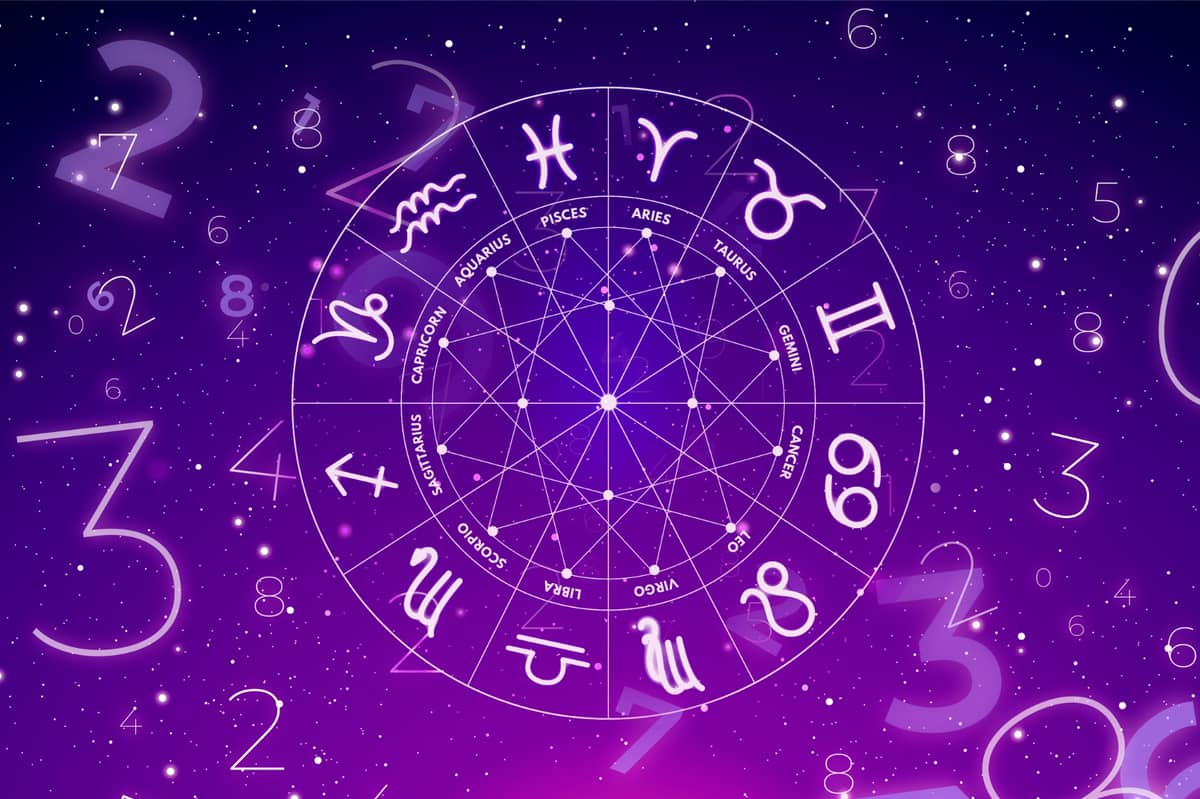
Getting useful information using Astrology usually begins with the calculation of a chart. Simply, it is a picture of the earth and the surrounding constellations and planets at a specified time. Historically astrologers have recognized 12 star constellations which in turn are associated with the 12 Astrological Signs – Aries, Taurus, Gemini, and Cancer and so on. Most often, Astrology charts are drawn as circles and divided into 12 sections that look like pie wedges. Each of the 12 constellations or signs has its place around the perimeter of the circle of the chart. Each of the pie wedges are referred to as Houses each representing an area of life. For example partnerships, home, parents, siblings, work, career, money, friendships, and health as well as other important components are represented.
Charts are drawn according to mathematical calculations factoring in time, and location. Using the calculations along with ancient charts and graphs, an astrology chart for a specific individual birth or event can be drawn. Thank God for computers and modern astrological software. They make it possible for modern day astrologers to cast charts simply and with great precision. Having started out manually casting charts with blank paper, pencil, calculator and reference books, I have great appreciation for those who preceded me and for those software innovators!
Why Astrology?
The History of Astrology can be fascinating. But let’s face it. What interests me more is what can I do with it now? Why should I bother?
Astrology is used very effectively in the hands of competent practitioners as a tool for choosing the perfect date for a wedding, a root canal, or launching a successful business. However, one of its greatest contributions is in demystifying the human psyche. Astrological interpretation provides the basis for building a psychological profile of an individual or event based on the placement of the planets in Astrological signs and in the 12 chart houses at the time of birth. Along with planets, signs, and houses, astrologers carefully consider the interaction and relationship of each planet to the others. Collectively, we can build an insightful picture.
Astrology charts hold the keys to understanding many of life’s conundrums. They can describe how a person is likely to express their feelings. Do they take their cue from the air element and think them over or talk them out? Maybe they get physical like doing housework, mowing the lawn or chopping wood to work out frustration or anger. We can look at Mercury for clues to how a person thinks, learns or shares information. An Astrology chart also holds information about where we feel wounded, alone, alienated or ineffective. Fortunately they also can tell us about our strengths and greatest personal assets.
Parting Thoughts
Like all tools, Astrology is best left in the hands of experienced and trustworthy practitioners. The good news is there are plenty available. More good news: astrology may seem complicated and you’ll get no argument from me. However, learning this ancient tool can be easy especially when approached like peeling an onion – one layer at a time. Every layer can be rewarding and can enrich our lives many times over.
Astrology remains a controversial science, praised and touted by some, debunked by others. However, history demonstrates its universal appeal.
It’s not just you and I who may keep an astrologer on our speed dial. We are in the company of kings, emperors, philosophers, physicians, notable scientists, rock stars, world leaders, entrepreneurs and many others who are open to using the art of Astrology to inform our choices. The key word in that sentence is “inform”. Astrology like many other disciplines and sciences should never become our only point of reference or source of information and guidance.
How to Get a Great Astrological Reading
- Start by finding a great astrologer
- Ask friends, family, or co-workers for referrals
- Often metaphysical and spiritually-oriented websites, stores, and businesses can provide names
- Don’t be afraid to ask for references or ask the potential Astrologer for information about their background and their style of reading
- Be clear about the purpose or intention for the reading. Are you looking for general information? Are you trying to schedule an important event like a wedding? Are you looking for clarity about your love life or maybe you want direction about changing careers or starting your own business
- Most people remember only a small fraction of what they hear. If you are interested in getting a recording of your session, make this arrangement before your appointment
- Assume the posture of a student or “beginner’s mind”. If you have a genuine intention of hearing valuable information or gaining insight, chances are you will
- Don’t leave your rational mind, intuition or common sense at home. Although you are relying on an expert, no one’s opinion should be more important than your own. As many have stated or paraphrased before, “Don’t be so open minded your brain falls out”
- Expect that much of what you hear will confirm what you already know or suspect about yourself, your emotions, your attitudes, beliefs, motivations and personality. That being said, it’s lovely to get confirmation
- Resist the temptation to dismiss information without at least considering it. It’s very typical that clients tell me something they initially did not understand or found difficult to accept, later was proven accurate and true. This includes very positive qualities. It is sometimes hard to hear and accept reflections that are positive about ourselves
- Run away as fast as you can, if a reading even hints at manipulation or a reader attempts to coerce you into a behavior that is uncomfortable. This includes suggestions that you are under a spell, possessed, or in some way under a black cloud or karmic obligation the Astrologer can release in exchange for something – usually money! I’m embarrassed that I even have to mention this one; but unfortunately, in every profession there are those whose integrity or ethics are suspect
Unless your situation or question is very serious, have fun. And even if your situation is serious, try to enjoy yourself when you explore astrology.
About the Author

What Is a Birth Chart and What Does It Reveal About Your Personality?
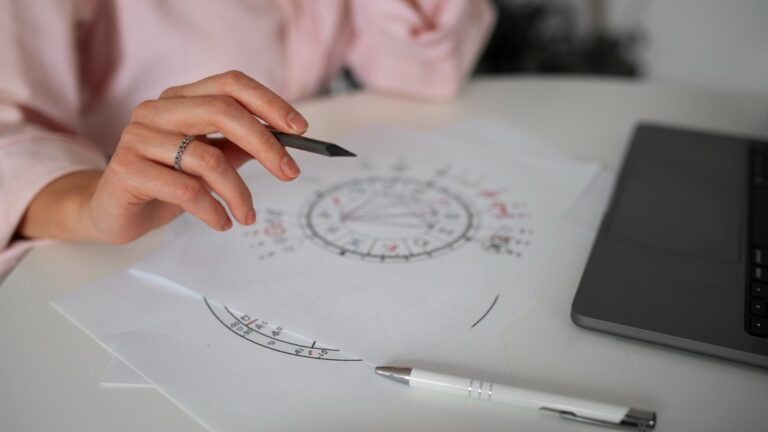
You know what your sign is, and you say it without thinking when someone asks. But that word —Aries, Cancer, Libra— is only the tip of something much larger and more personal. Your birth chart is the complete map of the sky at the exact instant you were born, and it contains much more information than can fit into a single sign.
In this article, we explore what a birth chart is, what elements make it up, and what it can reveal about your way of being, feeling, and existing in the world.
Table of Contents
- What Is a Birth Chart
- Main Elements of a Birth Chart
- What Do the Houses Mean in a Birth Chart?
- What Each Planet Represents in the Natal Chart
- Venus, Lilith, and Other Important Points in the Birth Chart
- How to Read a Birth Chart at a Basic Level
- What Is the Purpose of Knowing Your Natal Chart?
What Is a Birth Chart
Imagine a photograph of the sky taken at the exact instant of your first breath, from the precise place where you were born. That is, in essence, a birth chart: a record of where the Sun, the Moon, and the planets were at that unique moment. Each of them appears positioned in one of the twelve signs of the zodiac, and that position is what is later interpreted. Since no two people are born in the same second and in the same place on the planet, no two charts are identical: yours is as particular as a fingerprint.
Astrology begins from a simple and very ancient idea: what happens above is connected to what we are down here. It is not that the stars decide your life, but that their position at the moment of your birth draws a symbolic map of your character, your talents, and your challenges. Understanding that map is a way of knowing yourself better: of putting into words traits of yours that perhaps you always sensed, but had never known how to name.
Unlike magazine horoscopes, which only look at the sign where your Sun is, the natal chart takes the entire sky into account. That is why it can tell you much more, and in a much more precise way, about who you are.
If you want to see how these symbols are interpreted in practice, the episode Fundamentals of Astrology, from the series Beyond Belief, available on Gaia, is a good place to start. In it, Heather Arielle explores the foundations of astrology —houses, planets, rising signs and the reading of a natal chart— showing how this symbolic language can help you recognize your personal cycles and make more conscious decisions.
Main Elements of a Birth Chart
The first time you see your chart, it can look like a hieroglyph: a circle full of symbols, lines, and numbers that seem to say nothing at first glance. The good news is that behind that apparent chaos, there are a few key elements. Once you understand what each one is, the drawing begins to make sense.
-
The Sun and Essential Identity
When you say “I’m a Taurus” or “I’m a Scorpio,” you are actually talking about your Sun. Your sign is simply the place in the zodiac where the Sun was on the day you were born. And the Sun is the central piece of the chart: it represents the core of who you are, your underlying character, and what truly moves you. It is the part of you that shows most clearly when you are doing something you love and feel fully like yourself.
-
The Moon and the Emotional World
If the Sun is who you are, the Moon is how you feel. It represents your emotional world: the way you react internally, what you need in order to feel calm and safe, and what moves you even if you do not always show it. It is the most intimate part of you, the one that appears when you are in a place of trust and let your guard down. That is why knowing your Moon helps you understand why certain things affect you more than you might say out loud.
-
The Ascendant and the Way You Present Yourself to the World
The Sun is who you are and the Moon is how you feel; the ascendant is how others see you. It is the image you project without realizing it and your spontaneous way of responding to what is new, the thing others notice about you before they know you deeply. It depends on the exact time you were born, which is why it is so personal; without a precise birth time, it cannot be calculated properly. Sometimes it looks very different from how you feel inside, and that is where the feeling comes from that people perceive you differently from who you really are.
-
The Planets and Their Areas of Influence
You already know the Sun, the Moon, and the ascendant. Your chart also has other protagonists: the planets. The best way to understand them is to think of them as a cast of characters living inside you, each one in charge of something different: one of how you think, another of what attracts you, another of how you pursue what you want. None of them acts alone; together, they shape your way of being. Later, you will see what each one represents, but for now, that image is enough: an inner team working all at once.
-
The Astrological Houses and the Areas of Life
So far, we have talked about parts of you: the Sun, the Moon, the ascendant, the planets. The houses are something different: they represent the areas of your life. The chart is divided into twelve sections, and each one corresponds to a specific field: work, money, love, family, health. And what do they have to do with the planets? Each planet is placed within one of those twelve houses, and that tells you in which part of your life it acts with the most strength.
-
The Aspects Between Planets
The planets in your chart are not isolated: they “converse” with one another. In the drawing, those conversations appear as lines crossing the center of the wheel and connecting some planets to others. They are called aspects. Some are harmonious: two planets that get along well and strengthen each other. Others are tense: they create friction, that small inner struggle between what you want and what you end up doing. That is why aspects explain much of your contradiction and, also, your richness.
What Do the Houses Mean in a Birth Chart?
For the houses to make sense, it helps to see how the three basic pieces of the chart fit together. They work like a play. The planet is the actor: a part of you that does something; for example, Mars is your drive, your way of taking action and going after what you want. The sign is its character: the style in which it moves, whether calmly, intensely, or cautiously. And the house is the stage: the area of your life where that actor steps into the scene, such as work, love, or money.
What matters is that every planet has all three things at once: it is a part of you, it acts with the style of a sign, and it appears on the stage of a house.
The twelve houses, one by one, cover these areas:
- House 1: your image and the way you show yourself to the world.
- House 2: money, what you have, and what you value.
- House 3: communication, early studies, and siblings.
- House 4: home, family, and your roots.
- House 5: creativity, pleasure, romance, and children.
- House 6: daily work, routine, and health.
- House 7: partnership and one-on-one relationships.
- House 8: deep intimacy, what you share with others, and major transformations.
- House 9: travel, higher studies, and the search for meaning.
- House 10: vocation, career, and your public place in the world.
- House 11: friends, groups, and future projects.
- House 12: the inner world, rest, and what happens in silence.
Let’s look at a complete example. Imagine that your Mars is in the sign of Aries —which gives it an impulsive and direct style— and that it falls in the 6th house, the house of daily work. The reading would be something like this: you put your energy mainly into your work life (that is shown by the house), and you do it quickly and decisively, without overthinking things (that is shown by the sign).
That same Mars in Aries, but placed in the 7th house, the house of partnership, would direct that impulsive drive into your relationships. The actor and its character are the same; the only thing that changes is the stage: the area of your life where all of that is most visible.
What Each Planet Represents in the Natal Chart
The Sun, the Moon, and the ascendant are the main headlines of your chart; the other planets add the details. Each one governs a part of your inner world and expresses itself according to the sign and house where it is placed. Getting to know them is like getting to know the different characters that live within you.
-
Mercury, Venus, and Mars
These three move close to the Sun and touch the most everyday parts of your life. Mercury rules how you think and communicate: whether you get straight to the point or take detours, whether you learn quickly or need your time. Venus speaks of what you enjoy and what you value: your sense of beauty, pleasure, and what attracts you almost without trying. Mars is your engine: how you pursue what you desire, how you get angry, and how much initiative you bring to making things happen.
-
Jupiter and Saturn
After Mars, the rhythm changes. Jupiter and Saturn are the great teachers of the chart, and they often pull in opposite directions. Jupiter is expansion, confidence, and abundance; it shows where you grow with ease and where life invites you to open up and take risks. Saturn is the opposite: limits, responsibility, and sustained effort. It marks where you are asked to mature, take responsibility, and build with patience. Together, they represent that balance between casting off the moorings and keeping your feet on the ground.
-
Uranus, Neptune, and Pluto
The three most distant planets move so slowly that they mark entire generations, not just one person. Even so, the place they occupy in your chart says something intimate about you. Uranus is rupture and originality, the impulse to break out of the mold and do things your own way. Neptune dissolves boundaries: it rules imagination, dreams, spiritual sensitivity, and also the tendency to idealize. Pluto is depth and power, what dies and is reborn within you after the crises that transform you from the root.

Venus, Lilith, and Other Important Points in the Birth Chart
A chart does not stop at the planets. There are other points that astrologers also look at because they add very revealing nuances. Some are angles of the drawing itself, highlighted places on the wheel, and others are lesser-known celestial bodies. You do not need to master them to begin, but it is worth knowing four of the most commonly used ones. Let’s start with one we have already named: Venus.
-
Venus and the Way of Loving
We have already seen that Venus speaks of what you like and what you value. But Venus has a second side, just as important: the way you love. Its position describes what you look for in relationships, how you show affection, and what makes you feel truly loved. Some people need constant words and gestures; others feel loved through a calm presence, without so much display. Looking at your Venus helps you understand why you fall in love the way you do.
-
Lilith and Instinctive Energy
Lilith is not a planet, or a sign, or a house: it is a point calculated in the chart and known as the Black Moon. It represents your most instinctive and untamed side: the desire that does not ask permission and the part of you that refuses to fit into what is expected. It shows where you struggle to follow the rules and where you hold a strength, an anger, or a passion that you may have learned to silence. When listened to well, Lilith is not something dark: it is the voice that appears when you stop trying to please everyone and show yourself exactly as you are.
-
The Midheaven and Vocation
The Midheaven is another of those key points: it marks the highest point in your chart, the top of the sky at the moment of your birth, which is where its name comes from. Because it looks upward, toward what is visible, it speaks of your public life: your vocation, your professional image, and what you feel you are moving toward, even if you do not yet know how to name it. If the ascendant is the impression you give when you enter a place, the Midheaven is the mark you leave on the world. When your work comes close to what this point indicates, the effort feels lighter, because you feel you are moving in the right direction.
-
Chiron and the Wound That Can Become Medicine
Chiron is a small celestial body that astrology incorporated a few decades ago. It takes its name from a figure in Greek mythology: a wise being who knew how to heal others but carried a wound of his own that he could not heal. In your chart, Chiron points precisely to that: a sensitive wound, almost always linked to something that hurt early on and still touches a nerve. What is valuable is that this same wound, when you move through it, becomes your greatest capacity to understand and accompany others. That is why Chiron is said to be the wound that can become medicine.
How to Read a Birth Chart at a Basic Level
You do not need to be an astrologer to begin understanding your chart. In fact, you do not take the first step yourself: today, any astrology website or app can draw your chart for free. You simply give it your date, time, and place of birth, and it shows everything in order: which sign and house each planet occupies, and which lines, the aspects, connect them. With that image in front of you, you can read it like this:
- Start with your basic trio: Look for your Sun, your Moon, and your ascendant: they are the backbone of your chart and, together, they already tell a large part of your story.
- Notice which house each planet is in: The chart already shows you; all you have to do is look at which area of life, such as work, love, or money, each one is located in.
- Observe the lines in the center: These are the aspects: harmonious connections show you your natural talents, while tense ones point to the areas where you often feel an internal push and pull.
- Read the whole before the parts: One isolated detail says little; meaning appears when you see how all the elements combine.
Take it as a conversation with yourself, not as an exam. If one part does not fit, let it rest: many times, a piece of the chart only begins to make sense when life places before you the situation that explains it.
What Is the Purpose of Knowing Your Natal Chart?
At this point, the most important question remains: what is all this for? The natal chart does not tell you what is going to happen, nor does it hand you a written destiny. What it does is return a more complete image of yourself to you, with your light and your shadows, without asking you to change anything.
Knowing it often brings a form of relief. You understand why you react the way you react, why certain things are harder for you and others come naturally, why you repeat certain patterns. And when you understand that, you judge yourself a little less. Where you once saw a flaw, you begin to see a trait you can work with.
More than an oracle, the birth chart is a mirror and a compass. A mirror, because it shows you who you are with an honesty that is difficult to find anywhere else. A compass, because it helps you make decisions that are more faithful to your nature, instead of living according to what others expect of you. And that is, perhaps, its greatest gift: not turning you into someone different, but bringing you closer to the person you already are.