What Are the Earth’s Chakras and Where Are They Located

The Earth’s chakras are geographical points where planetary energy is concentrated and distributed. They act as centers of power that influence ecosystems and human consciousness. In this article, we explore what these centers are and where they are located from the perspective of Matías De Stefano, who offers an integrative interpretation of the Earth’s energetic map.
Table of Contents
- The Earth as a Living Being With Energetic Centers
- Planetary Chakras and Human Chakras: An Energetic Connection
- The 7 Main Chakras of the Earth
- First Chakra: Africa as the Planet’s Root Center
- Second Chakra: Asia and Oceania as Centers of Creative Energy
- Third Chakra: South America as the Solar Plexus and Center of Identity
- Fourth Chakra: Europe as the Planet’s Heart Center
- Fifth Chakra: North America as the Channel of Global Communication
- Sixth Chakra: The Andes and Andean Regions as the Planetary Third Eye
- Seventh Chakra: Antarctica as the Connection With the Divine
- Vortices, Ley Lines, and Energy Portals: The Planet’s Hidden Network
- Why Are the Earth’s Chakras Changing?
- How to Connect With the Energy of the Earth’s Chakras
The Earth as a Living Being With Energetic Centers
The idea that the Earth is a living organism is not new. Various ancient cultures already regarded it as a conscious entity, capable of feeling, transforming, and evolving. This view is compatible with an energetic understanding of the planet, in which each area fulfills a specific function within a greater system.
From this perspective, continents, mountain ranges, rivers, and oceans are not isolated elements, but interconnected parts of a body in motion. Just as a nervous system regulates the functioning of the human body, the Earth also possesses an energetic network that maintains balance among the planet’s different elements. This system is activated or weakened according to the state of consciousness of those who inhabit it.
The Earth’s chakras are points of high energetic concentration that regulate the planet’s vital flow. Through these centers circulate impulses that affect both ecosystems and human societies. Understanding the function of each one allows not only for honoring the territory, but also for aligning with a way of life that is more coherent with the environment.
Planetary Chakras and Human Chakras: An Energetic Connection
The relationship between human chakras and those of the Earth is not merely symbolic. Both systems share a structure of seven main centers, each associated with a specific function: survival, creativity, identity, love, expression, vision, and higher consciousness. This correspondence confirms that there is a direct resonance between the human body and the planetary body.
When a person works on their inner development, they also influence the collective energetic field. In the same way, changes in the planet’s chakras impact people’s emotional and spiritual states. This connection is strengthened when one consciously visits these energetic centers or participates in practices that activate them.
Living in a territory is not a casual fact. Each person is born in a zone with a specific energetic frequency that offers particular lessons and challenges. Connecting with the chakra corresponding to the place where one lives brings clarity about personal and collective purpose, while also strengthening the bond with the Earth.
The 7 Main Chakras of the Earth
Just like the human body, the Earth has seven main chakras that channel its vital energy. Each of these centers is manifested in a specific continent and fulfills a key role in planetary evolution. In this section, we explore the location and meaning of these chakras from the perspective of Matías De Stefano, who presents them in the series Initiation, available on Gaia.

-
First Chakra: Africa as the Planet’s Root Center
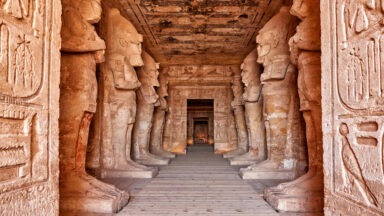
The first chakra of the Earth is located in Africa, considered the point of origin of the planet’s vital energy. This root center represents the connection to matter, survival, and ancestral memory. Africa holds the energetic foundation of humanity and is the point from which the Earth’s kundalini begins to flow.
-
Second Chakra: Asia and Oceania as Centers of Creative Energy
The second chakra is associated with Asia and Oceania, areas that act as centers of creative and emotional processing. This energy relates to movement, fertility, relationships, and the expression of life in its diversity. At this point, energy transforms and divides, generating momentum and expansion.
-
Third Chakra: South America as the Solar Plexus and Center of Identity
South America represents the planet’s solar plexus, where energy becomes conscious of itself. This chakra is related to self-recognition, willpower, and personal strength. It is a key territory for developing a new collective identity based on connection with the Earth and spiritual awakening.
-
Fourth Chakra: Europe as the Planet’s Heart Center
Europe represents the heart of the Earth, the point where both cultural expansion and processes of integration and conflict converge. This chakra is connected to love, empathy, and the ability to connect with others from a human place. From Europe emerged movements that promoted freedom, science, and cooperation, as well as structures that also imposed domination. Its energy reflects the duality of the heart: the power to unite or to divide.
-
Fifth Chakra: North America as the Channel of Global Communication
The planet’s fifth chakra is located in North America and is related to expression, technology, and outward projection. It is the center of global communication, where messages, narratives, and innovations that influence the world are generated. Through this point, planetary energy is translated into action, speech, and collective impact. It also represents the challenge of finding an authentic voice amidst global noise.
-
Sixth Chakra: The Andes and Andean Regions as the Planetary Third Eye
The sixth chakra, associated with the third eye, is manifested in the Andes and Andean regions of South America. This area is key for activating spiritual vision and deep perception of reality. In this territory, ancestral memory is preserved and knowledge is cultivated that connects the human with the sacred. It is a center of consciousness that invites us to see beyond the visible and awaken a new way of looking at the world.
-
Seventh Chakra: Antarctica as the Connection With the Divine
Antarctica is the seventh chakra of the planet, the highest point on the energetic scale, where the connection with the divine and universal consciousness is anchored. Its isolation, purity, and natural silence make it a space of integration with the most subtle aspects of the cosmos. It is a land without ownership, without permanent population, which reinforces its role as a portal to the transcendent. There, energy is not expressed through form, but through presence.
Vortices, Ley Lines, and Energy Portals: The Planet’s Hidden Network
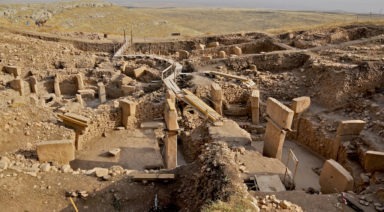
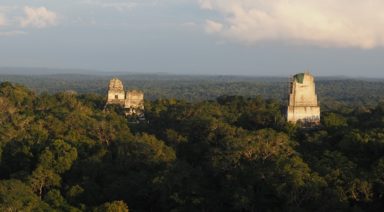
In addition to the main chakras, the planet is traversed by a subtle energy grid formed by ley lines and vortices. These lines are invisible routes that connect points of high vibration and intersect in areas considered energy portals. Throughout history, many cultures have built temples, pyramids, and ceremonial centers at these intersections, intuitively recognizing their power.
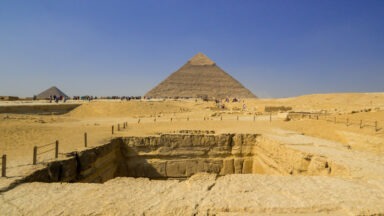
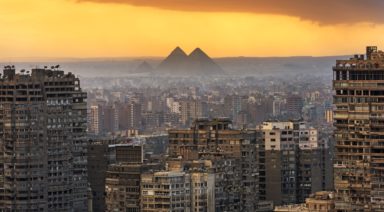
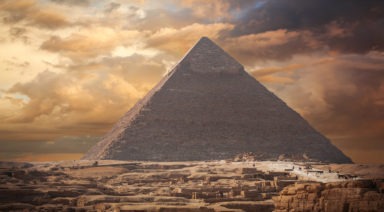
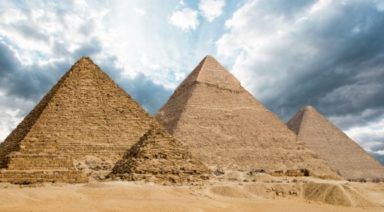
Energy vortices act as activation or amplification points for Earth’s energy. They are located in places where multiple ley lines converge and where energy flows more intensely. Some are widely known, such as Machu Picchu, Uluru, or the pyramids of Giza, and they are often surrounded by natural or spiritual phenomena that are difficult to explain through rational means.
Energy portals are not only linked to physical geography but also to collective consciousness. They are activated when people engage with them through intention, respect, and deep connection. These points function as bridges between dimensions, facilitating experiences of personal and collective transformation, as well as access to information or higher states of consciousness.
Why Are the Earth’s Chakras Changing?
According to Matías De Stefano, the Earth’s chakras are not static; they are undergoing reconfiguration due to shifts in the planet’s frequency. The energy that once circulated through certain regions is now moving to adapt to a new evolutionary stage. This adjustment is linked to the awakening of a global consciousness more aligned with cooperation, unity, and regeneration.
Energetic movement responds both to cosmic cycles and to human actions. When people become aware of the territory they inhabit and recognize it as part of a whole, they activate healing and transformation processes that directly impact the planet’s energy network. In this way, what happens in one specific place can have effects in other parts of the world.
This shift also calls for a new kind of relationship with the Earth. Instead of seeking to control the environment, the invitation is to listen to it, feel it, and collaborate with it. Understanding the relocation of the planetary chakras helps align with this transition, both personally and collectively.
How to Connect With the Energy of the Earth’s Chakras
Connecting with the Earth’s chakras doesn’t require physically traveling to each of them—although visiting them can enhance the experience. The key lies in developing a conscious relationship with the territory one inhabits: observing its geography, acknowledging its history, and feeling its vibration. Each place has a specific frequency and offers a particular teaching.
There are practices that can facilitate this connection: focused meditations, sound work, circular dances, ceremonies with the Earth, and symbolic acts of gratitude or healing. These actions not only activate the energy of the place but also awaken internal memories that have lain dormant. Simply bringing attention and presence to a site already creates an impact.
Matías De Stefano encourages each person to discover the energetic role of their territory and how they can contribute to the global process from there. This approach doesn’t arise from obligation but from recognition: by understanding the function of the place we inhabit, we can align our actions with the collective purpose of the planet. In this way, connecting with the Earth’s chakras becomes a path to the awakening of a new humanity.
About the Author

The Orion War: History of a Stellar War
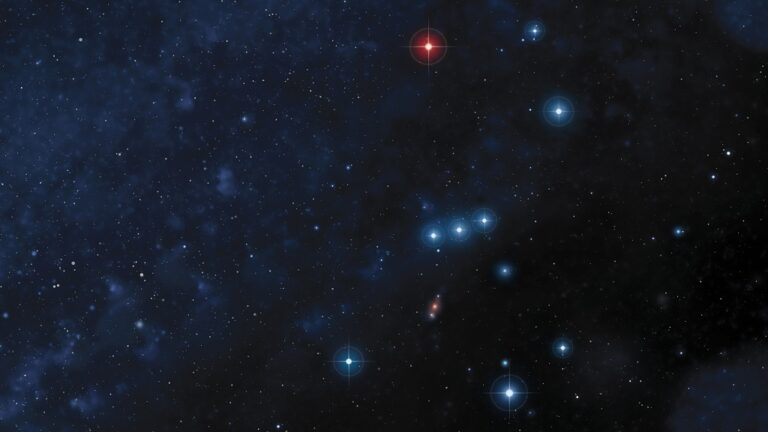
The Orion War was a cosmic conflict that involved several galactic civilizations fighting for control of an interdimensional portal in the Orion constellation. This confrontation had both physical and spiritual repercussions, affecting the evolution of multiple races and star systems.
In this article we explore what the Orion War was, its protagonists and its impact on our understanding of the Universe.
Table of Contents
- What Was the Orion War?
- The Origin of the Orion War
- The Forces Involved in the War
- The Development of the Orion War
- Impact of the Orion War on Earth
- The Legacy of the Orion War
What Was the Orion War?
The Orion War was an interstellar conflict that involved various galactic civilizations, fighting for control of an interdimensional portal in the Orion constellation. This portal was crucial for the balance of cosmic energies, and its control could determine the fate of many races and star systems. The draconian forces, known for their aggressive nature and advanced technology, attempted to dominate this portal by confronting a confederation of beings of light seeking to preserve universal harmony.
This confrontation did not only take place on the physical plane, but also had significant spiritual implications. The forces involved had the ability to manipulate the chakras of living beings, opening portals to other realms and dimensions. This control over subtle energies meant that the war had direct repercussions on the spiritual evolution of the souls involved, marking a struggle not only for stellar territories, but for the very destiny of universal consciousness.
In the series Initiation, available on Gaia, there is an episode titled Fighting for Universal Harmony that explores in detail the Orion War and its cosmic implications. There, Matías de Stefano explains how this conflict was a crucial point in the history of the universe, influencing the evolution of multiple galactic civilizations.
The Origin of the Orion War
The origin of the Orion War dates back to the first civilizations that inhabited this constellation, including the beings of the Lira system and the draconians of the Alpha Draconis system. These civilizations had very different philosophies and objectives, which generated tensions from the beginning. The Lirians, peaceful and spiritually advanced beings, sought to expand knowledge and harmony in the universe, while the draconians, with their inclination toward control and domination, sought to impose their will on other star systems.
The spark that ignited the conflict was the discovery of an interdimensional portal in Orion, a crucial connection point between various dimensions and planes of existence. This portal not only had strategic value, but was also a source of immense spiritual energy, capable of influencing the flow of consciousness and the evolution of souls. The struggle for control of this portal led to a series of epic battles that lasted for millennia, involving multiple races and civilizations that aligned with one side or the other.
The conflict escalated to unprecedented levels, affecting not only Orion but also other constellations and allied star systems. The intervention of the Galactic Federation, a coalition of diverse races and civilizations that promoted peace and balance, was fundamental in countering the draconian threat. This conflict, although devastating, also led to greater unification and collaboration among stellar races, laying the foundations for lasting peace and a deeper understanding of cosmic interconnectedness.
The Forces Involved in the War
The Orion War involved several powerful forces with different objectives and philosophies. The main actors were the draconians, the Lirians, the Orion group, and the Galactic Federation. Each group had its own motivations and strategies, which further complicated the conflict and increased its scale and duration.
-
Alpha Draconis and the Draco System
Alpha Draconis, also known as the Draco system, was the home of a race of beings known as draconians. The draconians were recognized for their warlike nature and their desire for control and domination. They were highly technological and strategic beings, using their advanced science to subjugate and control other star systems. Their hierarchical and authoritarian social structure allowed them to organize efficiently in their conquest campaigns.
The Draco system was not only composed of draconians but also of several subordinate races that had been conquered or had aligned with them out of convenience or coercion. This alliance provided them with considerable military strength, with combined resources and knowledge from various civilizations. The draconians, with their combination of military and technological power, represented a significant threat to peace and stability in the galaxy.
-
The Lira System and Its Inhabitants
The Lira system was known for its peaceful and spiritually advanced inhabitants. The Lirians valued harmony, knowledge, and spiritual development, and their society reflected these principles. They were masters in the use of energy and consciousness, which allowed them to live in a state of balance and prosperity. Their technology was aligned with nature and universal energy, promoting well-being and spiritual growth.
The Lirians were among the first to recognize the threat posed by the draconians and became key defenders in the Orion War. Their pacifist approach did not prevent them from fighting for justice and the protection of the most vulnerable. They formed alliances with other races that shared their values, creating a coalition of forces that opposed draconian expansion.
-
The Orion Group and Its Alliances
The Orion group was composed of various races and civilizations that inhabited the Orion constellation. These beings had a diversity of cultures and levels of development, but they united in the face of the common threat of the draconians. Some of these groups already had historical conflicts among themselves, but the urgency of the situation led them to form strategic alliances.
These alliances were based on the common interest of protecting their worlds and the stability of their region of space. Through cooperation, they shared technology, knowledge, and military strategies. This collaboration not only strengthened their resistance against the draconians, but also fostered greater understanding and respect among the different races and cultures within the Orion group.
-
The Galactic Federation and Its Role in the Conflict
The Galactic Federation was a crucial actor in the Orion War. This coalition of diverse galactic civilizations had as its main objective to maintain peace and harmony in the galaxy. Its structure included representatives from multiple races, each contributing their knowledge and resources to face common threats. The Galactic Federation acted as a mediator and defender, promoting collaboration and understanding among the different forces involved in the war.
During the conflict, the Galactic Federation provided logistical, technological, and military support to the races that fought against the draconians. Their combined forces and their focus on peace and justice were vital in countering draconian aggression. In addition, their intervention helped coordinate defense efforts and maintain morale among allied races, becoming a symbol of hope and resistance amid the chaos of the conflict.
The Development of the Orion War
The Orion War unfolded in several stages, beginning with small clashes between the draconian forces and the Lirians. These initial battles were mainly over the control of strategic resources and key positions within the Orion constellation. As both sides understood the magnitude of the threat they faced, they began to mobilize their forces and resources on a much larger scale.
Over time, the conflict intensified, becoming a total war involving multiple star systems. Battles were fought not only on the physical plane, but also on the spiritual one, as both sides attempted to manipulate energies and interdimensional portals to gain an advantage. The draconian forces, with their advanced technology and aggressive tactics, managed to conquer several important positions, but faced fierce resistance from the coalitions of Lirians and other allied races.
The intervention of the Galactic Federation was a crucial turning point in the war. With its help, the forces of light were able to reorganize and launch a series of offensives that changed the course of the conflict. These strategic campaigns not only recovered lost territories, but also significantly weakened the draconians’ ability to sustain their war effort. Eventually, the war culminated in a series of treaties and agreements that established a fragile but lasting peace in the Orion region.
Impact of the Orion War on Earth
The Orion War had significant repercussions on Earth, both physically and spiritually. During the conflict, various races involved in the war directly influenced the development of humanity, transmitting advanced knowledge and technologies that helped shape early terrestrial civilizations. In addition, many of the myths and legends about gods and celestial beings in different human cultures have their roots in the events and figures of the Orion War.
Spiritually, the war deeply affected the evolution of human souls. The manipulation of chakras and energies by both draconian forces and the forces of light left a lasting imprint on humanity’s collective consciousness. This cosmic conflict awakened in many humans a sense of purpose and spiritual mission, leading them to seek a deeper understanding of their place in the universe and their connection with other forms of life. This spiritual search continues to influence modern culture and spirituality, reflecting the lessons learned from this ancient confrontation.
The Legacy of the Orion War
The legacy of the Orion War manifests on multiple levels and continues to affect the cosmos today. One of the main legacies is the establishment of the Galactic Federation as a force of peace and balance in the universe. The war demonstrated the need for cooperation and unity among diverse stellar races, which led to greater collaboration and understanding throughout the galaxy. This legacy of unity and peace remains an aspiration and guiding principle for many civilizations.
Another important aspect of the legacy is the spiritual evolution of the races involved. The Orion War was not only a physical conflict, but also a battle for consciousness and spiritual development. The experiences and lessons learned during this conflict have been passed down through generations, fostering deep growth and transformation in the souls of those who participated directly or indirectly. This spiritual legacy continues to be a source of inspiration and learning for those seeking to understand the true meaning of universal harmony.
Finally, the Orion War left an indelible mark on the history of the universe, serving as a constant reminder of the dangers of domination and the importance of peace. The stories and knowledge passed down about this conflict continue to educate and warn new generations about the need for balance and respect among the different forms of life in the cosmos. This legacy is essential for preventing future conflicts and promoting a more harmonious and evolved universe.