Time Crystals Are Here, So What Does That Mean?
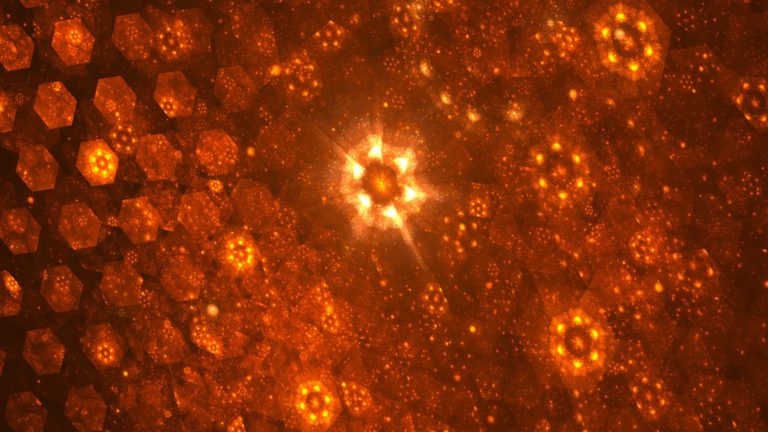
Physicists have created a phase of matter that breaks traditionally held laws of physics regarding linear time.
We’re all familiar, and many of us enamored, with crystals and their beautiful, repeating patterns. The elegance of nature and its use of mathematics to create aesthetically pleasing and often useful forms of matter is inherent in crystalline structures. Crystals, as we know them, occupy 3-dimensional space in a rigid, periodic way. But what if there was a crystal that occupied a 4th dimension… time.
Time crystals, though once a seemingly flawed theoretical concept, have now been physically proven to exist. Their existence is yet another product of the study of quantum physics – mind-blowing discoveries in a field that is incredibly hard to comprehend, but whose applications are revolutionary. So, what exactly is a time crystal and what can it do for us?

Breaking Symmetry
The concept of time crystals was theorized by a physicist named Frank Wilczek. Crystals as we know them occupy space periodically in three dimensions. Wilczek believed that in the quantum world the periodicity of crystals could be extended into a 4th dimension, time. For time crystals to be a thing, Wilczek predicted that they would have to spontaneously break what is called, time-translation symmetry.
Time is thought of as being symmetrical in that probability of an occurrence or the laws of physics in general are the same throughout time, essentially time moves through a common interval. Regular crystals break spatial symmetry spontaneously in their existence by repeating physical patterns in space. So, can time crystals break the symmetry of time we perceive it? Apparently, the answer is yes, but how?
How Does a Time Crystal Work?
The term ‘prefer’ often comes up when time crystals are described. 3-dimensional crystals prefer certain areas in space, breaking what’s called spatial translational symmetry. So, time crystals prefer certain areas in space in the same way, but they also prefer certain intervals in time.
Time crystals never reach thermal equilibrium, it’s like something that’s being heated and cooled at the same time. They’re a state of matter that could lead to a whole non-equilibrium phase realm of matter that is new and profound to scientists. When scientists induce this state to create a time crystal, they use lasers and magnets to create a state of non-equilibrium, which basically causes atomic particles to spin in perpetual motion.
Once this state is induced, the particles don’t act as one would expect them to, given our concept of time. In one experiment, given a certain amount of energy, the atoms that were put into non-equilibrium responded with half the amount of energy than was being put into them. One analogy to explain this was that it was like hitting piano keys twice a second and only having notes come out once per second. Or another way of thinking of it is if your jumping rope and for every two times your hand spins, the rope only spins once, and it can’t be forced to move otherwise.

Quantum Leaps
While Wilzcek theorized time crystals, a physicist from UC Berkley, named Norman Yao, formulated a plan for actually creating them. But it was two teams of physicists from Harvard and the University of Maryland that brought time crystals into fruition. The teams physically proved the crystals’ existence using two different methods. The team in Maryland levitated ytterbium ions with a magnetic field and then shot lasers at its atomic particles, causing them to spin. The Harvard team used the center of a diamond as their medium and microwaves as their stimulant to make particles spin and induce non-equilibrium.
So, what is the practical application of a time crystal you might ask? While distorting time to travel back thousands of years to see if the Annunaki really ruled over ancient civilizations sounds like the obvious choice, it’s not that simple. Nor is a more practical function like a perpetual energy generator. But quantum physics has never been simple. Physicists still don’t what the practical functions of time crystals are except for their go-to answer – they’ll be great for memory purposes in quantum computers. Hopefully those quantum computers turn out to either be time machines.
About the Author

We're Overdue For The 150-year Carrington Event
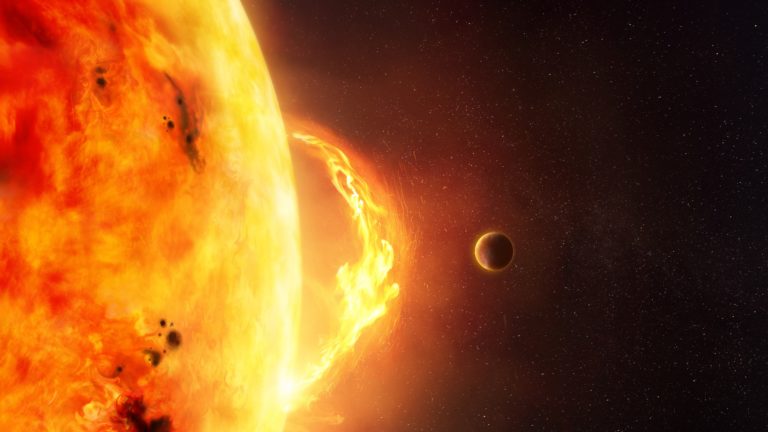
An 1859 solar storm caused the Sun’s corona to expel a massive release of magnetic energy, known as a coronal mass ejection, or CME. It lit up the night sky leading some in mountainous regions of North America to wake up and start their day, believing it was morning, when it wasn’t even midnight.
Though radio communication was in its nascent phase at the time, telegraph operators reported sparks and fire coming from their equipment, while some were even thrown across the room. A man named, Richard C. Carrington, had been recording the activity of sun spots at the time, quickly recognizing the nature of this phenomenon, and so it became known as a Carrington Event. Based on historical precedence, these massive CMEs typically happen every 150 years, leaving us overdue and more vulnerable than ever.