YouTube Earthquake Forecaster Predicting With Shocking Accuracy
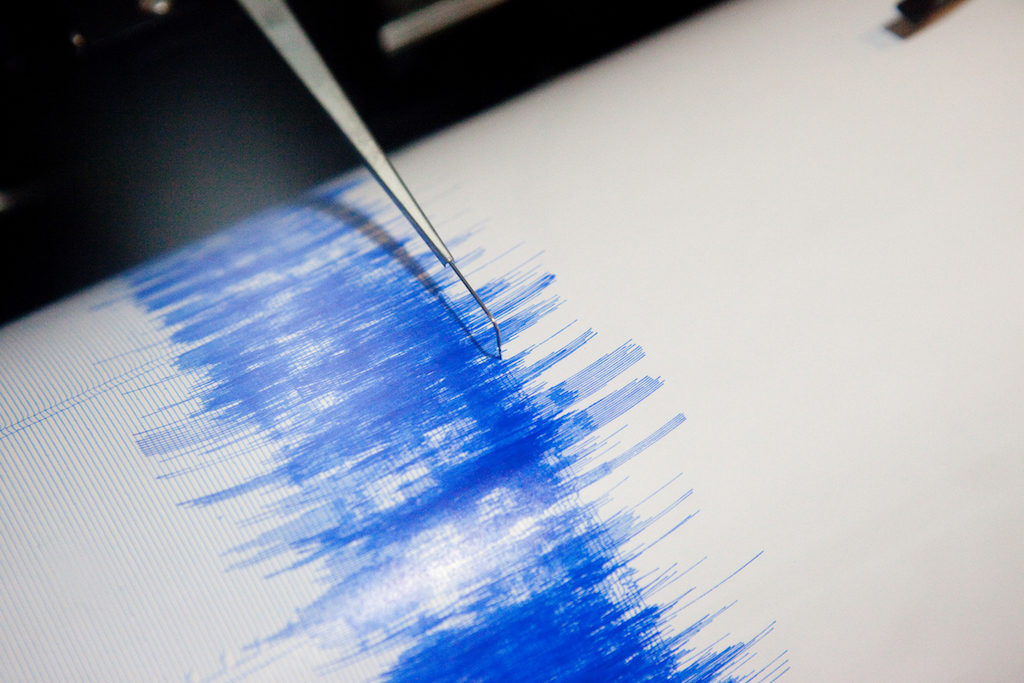
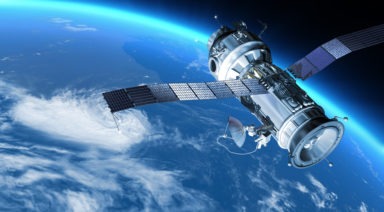
An online independent forecaster continues to make prescient predictions of future earthquakes using seismic data, Google Earth, and imaging from the recently launched GOES weather satellite.
His predictions have consistently fallen within a 70 to 80 percent accuracy range, correctly predicting the recent spate of earthquakes on the Pacific, from southern Peru to Alaska. His predictions over the next week portend earthquakes shaking locations in the Midwest and northern New York.
Using the pseudonym Dutchsinse, the forecaster’s YouTube videos provide fast-paced walkthroughs of global seismic events with uncanny accuracy. Over the past week he has correctly predicted a multitude of quakes throughout the west coast of North and South America, picking up on evidence from geophysical and tectonic activity to eruptions from volcanoes and fracking operations.
His latest video, in the wake of predicting a 7.9 magnitude in Alaska, as well as a 5.8 magnitude quake in northern California, shows two plumes of steam erupting from locations in Death Valley and the Grand Canyon. Dutchsinse points to these two spots as being isolated, arid, and desolate localities to dispel comments from detractors saying he’s just seeing weather phenomena or controlled burns from farmers.
He also notices that at one point in the day, there appears to be small eruptions of steam across the Midwest. Upon further inspection, he discovers that all of those spots were fracking and oil drilling locations, from which tectonic activity is emitting steam.
Within the next week he expects an earthquake to hit the east coast, an area that rarely sees significant seismic activity. But not to fear (hopefully), Dutchsinse thinks this quake will only be within the 3.0 magnitude range, striking near the border between Canada and northern New York. A quake of this magnitude could be felt within a roughly 100-mile radius from its epicenter.
To add to the intrigue, some have commented that his predictions, which have often trumped those of “professional” seismologists, are being suppressed on YouTube’s view counter. This, he tends to agree with, as well as an occasional off-handed, conspiratorial comment here and there.
We’ll see if his predictions continue to hold up. In the meantime, his channel is updated several times a week with more groundbreaking foresight.
About the Author

We're Overdue For The 150-year Carrington Event
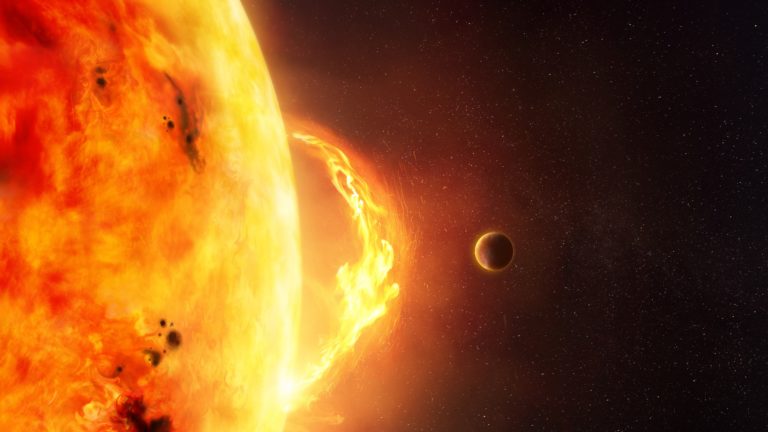
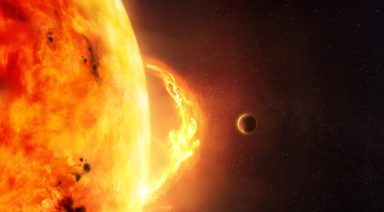
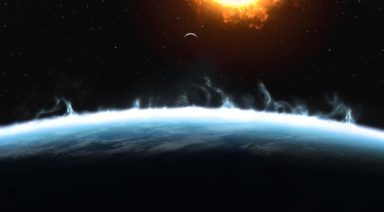
An 1859 solar storm caused the Sun’s corona to expel a massive release of magnetic energy, known as a coronal mass ejection, or CME. It lit up the night sky leading some in mountainous regions of North America to wake up and start their day, believing it was morning, when it wasn’t even midnight.
Though radio communication was in its nascent phase at the time, telegraph operators reported sparks and fire coming from their equipment, while some were even thrown across the room. A man named, Richard C. Carrington, had been recording the activity of sun spots at the time, quickly recognizing the nature of this phenomenon, and so it became known as a Carrington Event. Based on historical precedence, these massive CMEs typically happen every 150 years, leaving us overdue and more vulnerable than ever.