Paradigm Shifts in Global Economies

Imminent Change
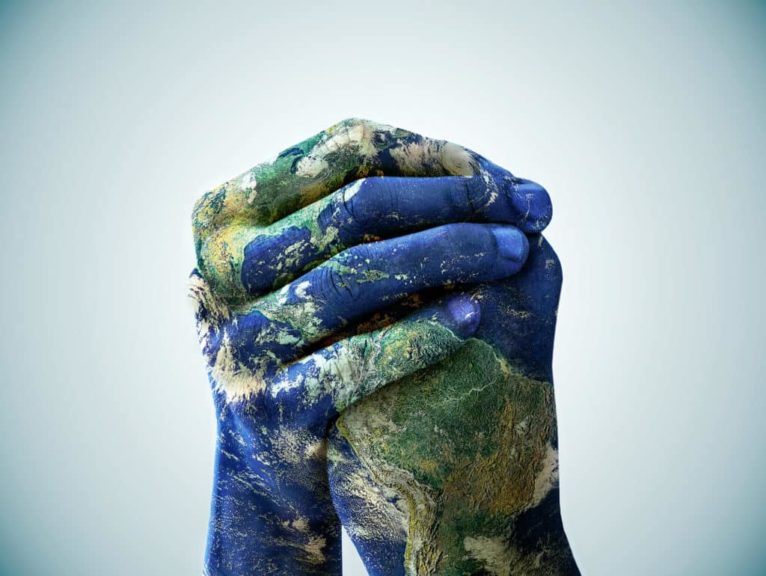
Does it feel like we are on the verge or in the process of drastic changes – particularly on a global scale? Are we headed toward a more unified global economy or are isolated local economies the path of the future?
The confluence of global political disruptions, technological advancements and economic flux in our recent history suggests that we are moving toward new paradigms in global and local societies.
We have seen the effects of globalization, and most often the negative implications of it, as a product of corporate greed. But what would happen if a globally concerted effort was made with humanity’s benefit in mind?
Artificial Intelligence and Universal Basic Income
With computing power increasing at an exponential rate, the prospect of artificial intelligence reaching a level of taking over low-skill jobs is not very far off. In many ways, we have already experienced its initial push with automated services and current development of autonomous vehicles. An apparent result of this would be mass unemployment and subsequently, a large segment of the workforce that might be unemployable.
Elon Musk, amongst others, believes that to alleviate this problem it will be necessary for governments to pay citizens a universal basic income or UBI. Musk believes a complete automation of transportation will happen within the next 20 years. A drone taxi service is already being tested in Dubai. With driving, in its different forms, being one of the largest fields of employment, a significant portion of the workforce would be out of work. But would they have to find another job?
There have been recent attempts and experiments with the introduction of a UBI. In Finland this year, an experimental program was passed giving a group of randomly selected citizens, currently receiving welfare, a basic income of 560 euros per month. A tech start-up in California is giving a UBI to some residents of Oakland, ostensibly for philanthropic purposes, but also to research its effects. The Netherlands is also trying out a UBI experiment of its own.
Shattering Historical Paradigms
Scientists, historians and archeologists are actively engaged in answering the big questions about human origins, our relationship to each other and the world around us. But advances in technology and scientific techniques are uncovering paradigm shattering discoveries which are forcing a crisis in their way of thinking.
What to do in Your Spare Time?
What would you do if you didn’t have to worry about earning enough money to survive? Aside from a significant decrease in stress and anxiety, a UBI would allow people more time to focus on art, music, hobbies and pastimes – things that contribute to happiness and a better quality of life.
But one might argue that people’s jobs and careers give them a sense of purpose and without them they might struggle to find meaning in their life. What are the alternatives?
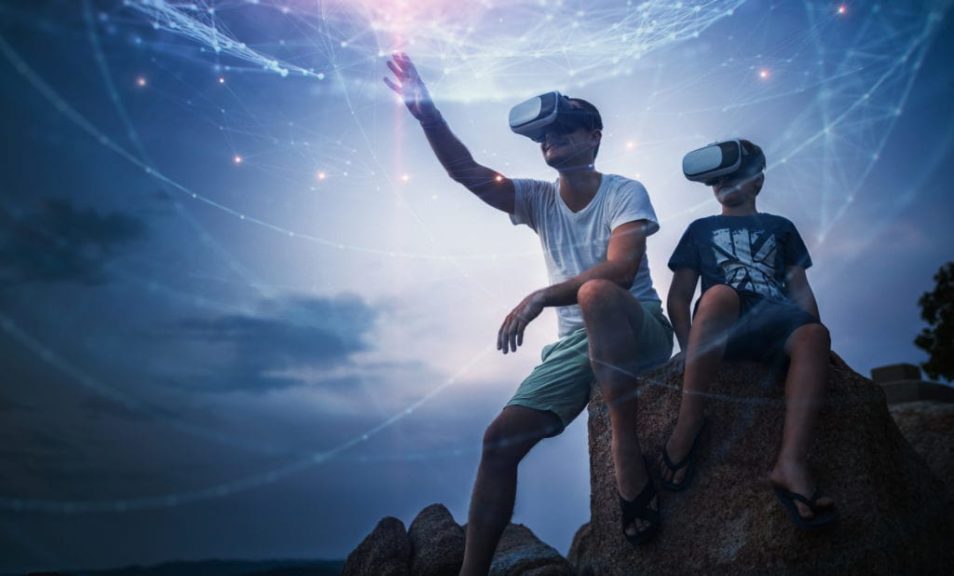
A consequence of technological advancement that we are becoming more and more familiar with is the development of virtual reality. We have already seen the effects that VR has had on society in different ways than one might associate with digital VR. The Pokémon Go fad, that had people searching and battling for imaginary creatures suffused with actual geographic locations, is one instance.
As Yuval Hararai notes, there are many orthodox Jews in Israel who do not work (although their wives do) and instead spend their time devoted to their religion. He notes that religion is somewhat of an abstract type of VR. Rules are abided by that are not necessary for survival, imaginary points are awarded for performing pious rituals, or subtracted for lack thereof. These orthodox men live impoverished lives, but report some of the highest levels of happiness.
Will VR, in its many forms, become more pervasive in our everyday lives?
The Cashless Society
How would you feel if the government asked you to turn in all of your $20 and $100 bills tomorrow?
Although it may be difficult to fathom, a society that eliminates cash is potentially forthcoming and is already partially implemented or on the verge of induction in some countries. More than 1/3 of the populations of the U.S. and Europe say that they would be willing to move to a cashless society.
Proponents say that the benefits of digital currency and banking can reduce crime, eliminate counterfeit money and create new ways for those without credit to establish it. Of course on the other hand there is the problem of identity theft or digital trails for Big Brother to trace, but which is the bigger problem?
The most pertinent example, as of late, has been the system put into place by Indian Prime Minister Narendra Modi. Modi removed 86 percent of India’s currency in an attempt to stop corruption, tax evasion and the black market. Another intended result of the program was to register a large portion of the Indian population, particularly those born in rural areas, that had no identification. The Indian government created a system, called Aadhar, to give identification to those without it through a retinal scan and fingerprints. Once this system was in place, a follow-up system was created to give its citizens a bank account where transactions could be processed for free and money could be sent instantaneously.
In the U.S., there was a noticeable drop in crime that was correlated with a move away from cash, when unemployment benefits were delivered in the form of a debit card rather than a paper check, that most recipients without a bank account would cash. It appeared that the less cash that was on the street led to a drop in crime.
We’re decreasingly using cash in our day to day transactions when plastic is often preferred or the only accepted form of payment. We don’t even need our physical credit cards to pay for items at the grocery store, when a simple scan from our phone will suffice. Is cash beneficial or a hinderance to you? Could you live in a society that eliminated paper currency?

About the Author

Weaponized Ticks: Is Lyme Disease an Escaped Government Bioweapon?
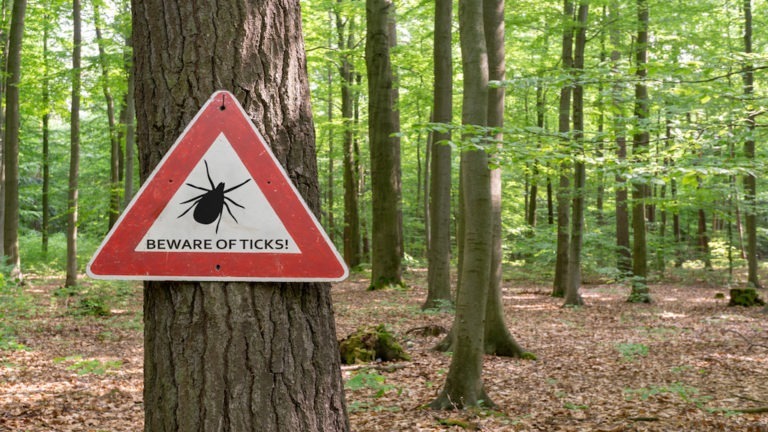
Lyme disease is now a fairly common ailment, plaguing more than 300,000 people each year, and most people believe it to be an extremely unfortunate side effect of living in or near heavily wooded areas.
Although ticks are found all over the world, some are questioning why 95 percent of all confirmed Lyme disease cases are occurring in the United States. Investigators are looking into the possibility that the ticks blamed for spreading the disease may actually be carrying bioweapons that were never meant to escape from an island off the coast of New York.