Utkatasana: Chair Pose
ADJUSTMENTS | BENEFITS | SEQUENCING | SANSKRIT | STEPS
A challenging pose with hidden benefits, utkatasana (OOT-kah-TAHS-anna) works your body inside and out. Aside from strengthening your legs, this powerful pose also improves the health of your diaphragm and stimulates your heart. Practicing regularly will not only increase your physical endurance, it also encourages your chest and arms to open, creating more space in your body energetically.
Philosophy + Origin
While sitting in a chair is a common act for most of us today, chairs were once, and in some locations still are, considered a luxury. A throne in particular is a seat of power, one assumed by leaders around the world. The pose utkatasana, translated to mean powerful pose, invites individuals to sit on their throne, their seat of power. Embracing the challenge of the pose, and recognizing the strength that is generated when assumed thoughtfully and in proper alignment (physically and spiritually), you can begin to refine all aspects of your life, allowing yourself to step into roles of leadership and responsibility with clarity and confidence.
ADJUSTMENTS/MODIFICATIONS:
- Roll up a blanket and place it beneath your heels if they’re tight or if stiff ankles prevent you from reaching the mat comfortably.
- Keep your gaze straight ahead to prevent pain or discomfort in the neck.
- Place a block in between your thighs to practice proper alignment while also strengthening your thighs and legs.
- Bend your knees only as much as is comfortable for your low back.
STEP-BY-STEP:
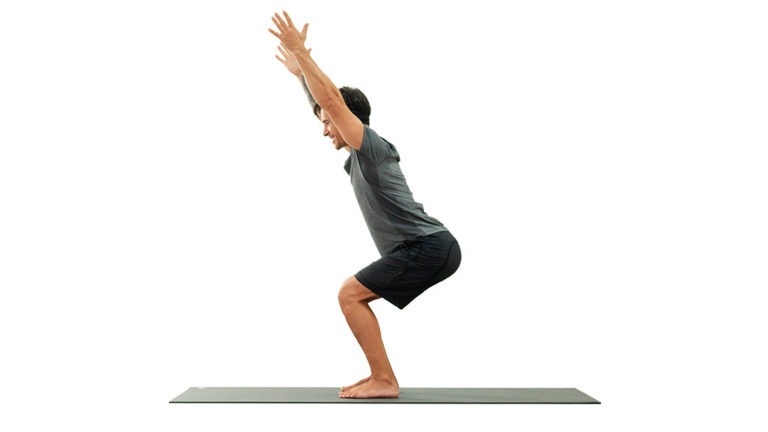
- Stand at the top of your mat and place your feet inner-hip width distance apart with all toes facing forward.
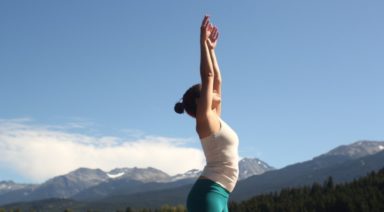
- Reach your arms overhead, palms facing each other.
- Bend your knees and reach your seat back, so most of your weight is in your heels. Keep your knees over your feet.
- Allow your upper body to lean forward slightly. If you were to look in a mirror, the line of your torso and the line of your thighs would approximately create a right angle.
- Draw your shoulder blades gently toward each other and down, keeping shoulders away from your ears. Lengthen through your tailbone to encourage your lower back to stay long.
- Hold the pose for up to 60 seconds, then release.
PREPARATORY POSES:
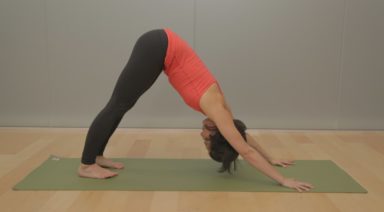
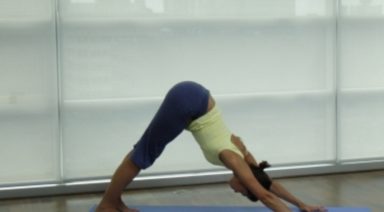
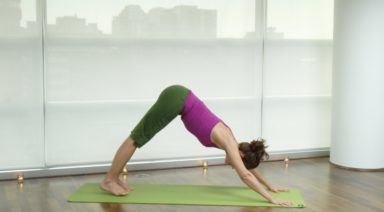
- Downward-facing dog | Adho mukha svanasana
- Mountain pose | Tadasana
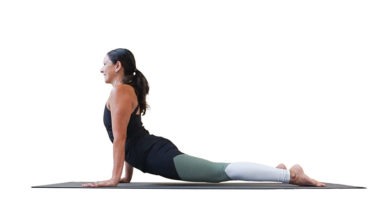
- Cobra pose| Bhujangasana
SEQUENTIAL POSES:
- Revolved chair pose | Parivrtta utkatasana
- Eagle | Garudasana
- Garland pose | Malasana
COUNTER POSES:
- Hero pose | Virasana
- Dancers pose | Natarajasana
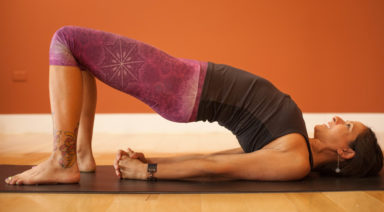
- Bridge pose | Setu bandha sarvangasana
SANSKRIT:
- Utkata = fierce, powerful
- Asana = pose
PHYSICAL BENEFITS:
- Strengthens the lower body, specifically hip flexors, quadriceps, inner thighs, and gluteus muscles.
- Strengthens and stretches the calf muscles.
- Opens chest and shoulders.
- Strengthens arches in feet.
- Stimulates the heart and diaphragm.
ENERGETIC BENEFITS:
- Strengthens mental endurance.
- Opens energetic channels in the body, especially around the heart.
Legal Disclaimer Before participating in any exercise program or using any fitness products or services that may be described and/or made accessible in or through the Gaia Website and/or the Services, you should consult with a physician or other healthcare provider. Read more about Gaia’s Terms Of Use.

About the Author

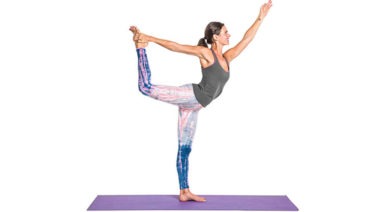
Natarajasana: Lord of the Dance Pose
ADJUSTMENTS | BENEFITS | SEQUENCING | SANSKRIT | STEPS
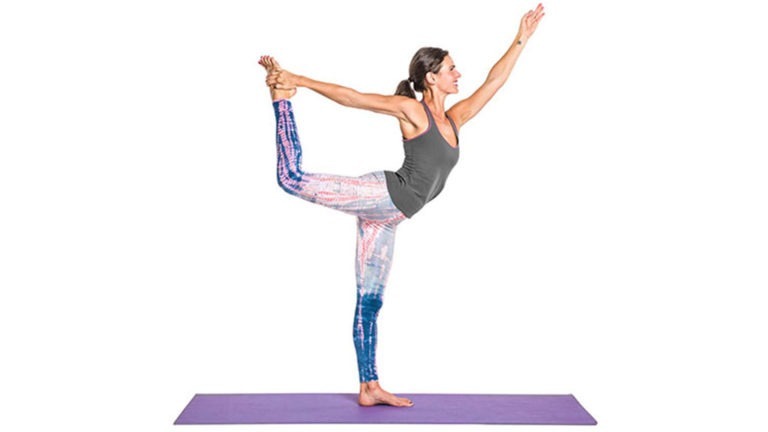
Natarajasana (not-ah-raj-AHS-anna) is a physically challenging, beautiful pose that requires flexibility in the spine, legs, and hips. To practice the pose, use a thoughtful sequence filled with plenty of preparatory poses in order to make sure your body – and mind – are adequately prepared. Regular practice will help develop strong mental fortitude and determined concentration.
Philosophy + Origin
A physical embodiment of King Nataraja, a form of the lord Shiva, lord of the dance pose (also referred to as king dancer pose) is a tribute to this powerful god of destruction. Embracing destruction and even death as part of the cycle of change and growth, this pose is a helpful reminder that no good can exist without evil, no birth without death.
In most depictions of King Nataraja, he is standing on one leg (hence the shape of the pose), gazing over the head of a small dwarf, whose presence represents ignorance. In this way, lord of the dance pose encourages our consciousness to elevate above ignorance, above the common thoughts and misunderstandings that cloud our view. The balance that comes from the pose awakens our understanding that clarity brings steadiness.