What Are Twin Flames and How to Know if You’ve Found Yours

The concept of twin flames has been interpreted in many ways throughout time, and today it remains a topic of debate within spirituality. Beyond the romantic idea of two halves of the same soul destined to reunite, this connection is perceived as a deep energetic bond that transcends the common experience of relationships. It is a union that drives intense, challenging, and, in many cases, transformative personal development.
In this article, we explore what twin flames really are, how they differ from soulmates, and how to recognize if you’ve found yours.
Table of Contents
- What Is a Twin Flame and What Is Its Spiritual Meaning
- Twin Flames and Soulmates: Key Differences
- How to Know if You’ve Found Your Twin Flame
- Why Twin Flames Experience Challenges and Separations
- The Spiritual Purpose of Twin Flames
- Do All People Have a Twin Flame?
What Is a Twin Flame and What Is Its Spiritual Meaning
A twin flame is a soul with which we share an exceptional bond, one that goes beyond the physical or emotional. This connection transcends time and circumstances, manifesting as a profound recognition and an inexplicable sense of familiarity. Their presence in our life usually marks a before and after in our personal and spiritual development.
The purpose of twin flames is not limited to romantic love; rather, it is tied to the evolution of the soul. Their union awakens deep aspects of the self, which can create moments of both harmony and challenge. This relationship brings to light emotional wounds, unconscious patterns, and unresolved lessons that each must heal individually, forcing each person to face themselves and grow spiritually.
This connection has a high vibration and functions as a mirror that reflects both the light and the shadows of each individual. For this reason, the bond between twin flames can be as revealing as it is complex, challenging beliefs, emotional structures, and internal limitations to lead both people to a greater understanding of themselves and the universe.
Twin Flames and Soulmates: Key Differences
Although both concepts are related to deep spiritual connections, there are key differences between a twin flame and a soulmate. Soulmates are people with whom we share a significant bond, whether in a romantic relationship, friendship, or family. They are harmonious connections that provide support, companionship, and valuable lessons throughout life.
On the other hand, the relationship with a twin flame is much more intense and challenging. Instead of giving us immediate stability, this connection is a unique experience that goes beyond attraction or compatibility, propelling you into accelerated personal growth. While we may have several soulmates in a single life, there is only one twin flame, and its purpose is not to complete us but to help us reach our highest spiritual evolution.
How to Know if You’ve Found Your Twin Flame
Finding your twin flame is a unique experience that goes beyond attraction or compatibility. From the very first encounter, an intense and inexplicable connection emerges, accompanied by a deep sense of recognition, as if you already knew each other on a soul level.
This relationship stirs strong emotions and acts as a mirror that reflects both your virtues and your shadows, propelling you into accelerated personal growth. Along the way, challenges, periods of separation, and intense lessons may arise, but the connection always remains, guiding you toward a shared evolution and a higher purpose.
Most Common Signs of a Twin Flame Connection
The relationship with a twin flame has unique characteristics that set it apart from any other bond. Here are some signs that may indicate you have found yours:
- Instant and intense attraction: From the very first meeting, you feel a magnetic connection that is difficult to explain. No matter how much time passes, the energy between you always remains.
- Sense of recognition: Even if you barely know the person, you feel that you have met them before. Their presence awakens memories or deep emotions without any logical reason.
- Mirror effect: Your twin flame reflects both your strengths and your unresolved fears and wounds. This relationship pushes you to grow and face what you need to heal.
- Telepathic connection: Many times, you can feel what the other person is experiencing without needing to speak. It is common to share thoughts, emotions, and even dreams in which you meet.
- Separations and reunions: The relationship may go through periods of distance in which each person must work on their own growth. However, the bond never breaks, and destiny brings you back together at the right time.
Stages of Meeting a Twin Flame
The journey of twin flames is not linear; it goes through different phases that accelerate the growth of both parties. These are the most common stages in their process of union:
- The recognition: From the first meeting, both feel a profound and inexplicable connection. There is a sense of destiny and familiarity that goes beyond the rational.
- The initial fusion: The relationship advances with intensity, creating moments of unconditional love and a deep emotional connection. It is a stage of expansion and spiritual awakening.
- The challenges and crisis: Internal conflicts arise as they face the mirror effect. Both must work on their shadows, which can create tension or even a temporary separation.
- The healing phase: During the distance, each person undergoes a process of personal growth. They learn key lessons for their individual evolution before they can reunite.
- The conscious union: After overcoming the obstacles, the relationship balances and strengthens. In this stage, the twin flames work together on their spiritual purpose and in the development of their highest connection.
Why Twin Flames Experience Challenges and Separations
The bond between twin flames is deeply transformative, but also challenging. As they are reflections of one another, the relationship brings to light emotional wounds, fears, and unresolved patterns that each must heal individually. This confrontation can create moments of tension and instability, as both must face their own evolution before reaching balance in the connection.
Separations are often a necessary part of the process, as they allow for personal growth and the integration of the lessons that the relationship brings. In many cases, one of the two may not be ready for the intensity of the connection and needs to step away to work on their internal development. Although the distance can be painful, it is a period of healing that helps strengthen the bond on a higher level.
More than an obstacle, the challenges that twin flames face are part of the evolutionary path they have chosen. Rather than depending on each other, the true purpose is to learn, heal, and develop a connection based on individual wholeness. Only when both have achieved this internal balance can the union occur in harmony.
The Spiritual Purpose of Twin Flames
Twin flames are not only united by an energetic bond, but also by a soul agreement made prior to their incarnation. These spiritual agreements establish encounters and experiences designed to accelerate the growth of both parties. Their purpose is not to provide an easy or perfect relationship but to awaken personal transformation and guide them toward a greater understanding of themselves and their mission in the world.
Beyond individual growth, many twin flames have a shared purpose that goes beyond their personal relationship. Their union generates a high-vibration energy that can manifest as healing projects, spiritual teachings, or contributions to humanity. In many cases, this connection is a catalyst for the awakening of others and the expansion of collective consciousness.
The twin flame path does not always involve a romantic relationship or permanent cohabitation. In some cases, the union manifests as a spiritual collaboration or a bond of deep understanding without the need to be physically together. What matters is not the type of relationship they form, but the impact they create on their evolution and that of others.
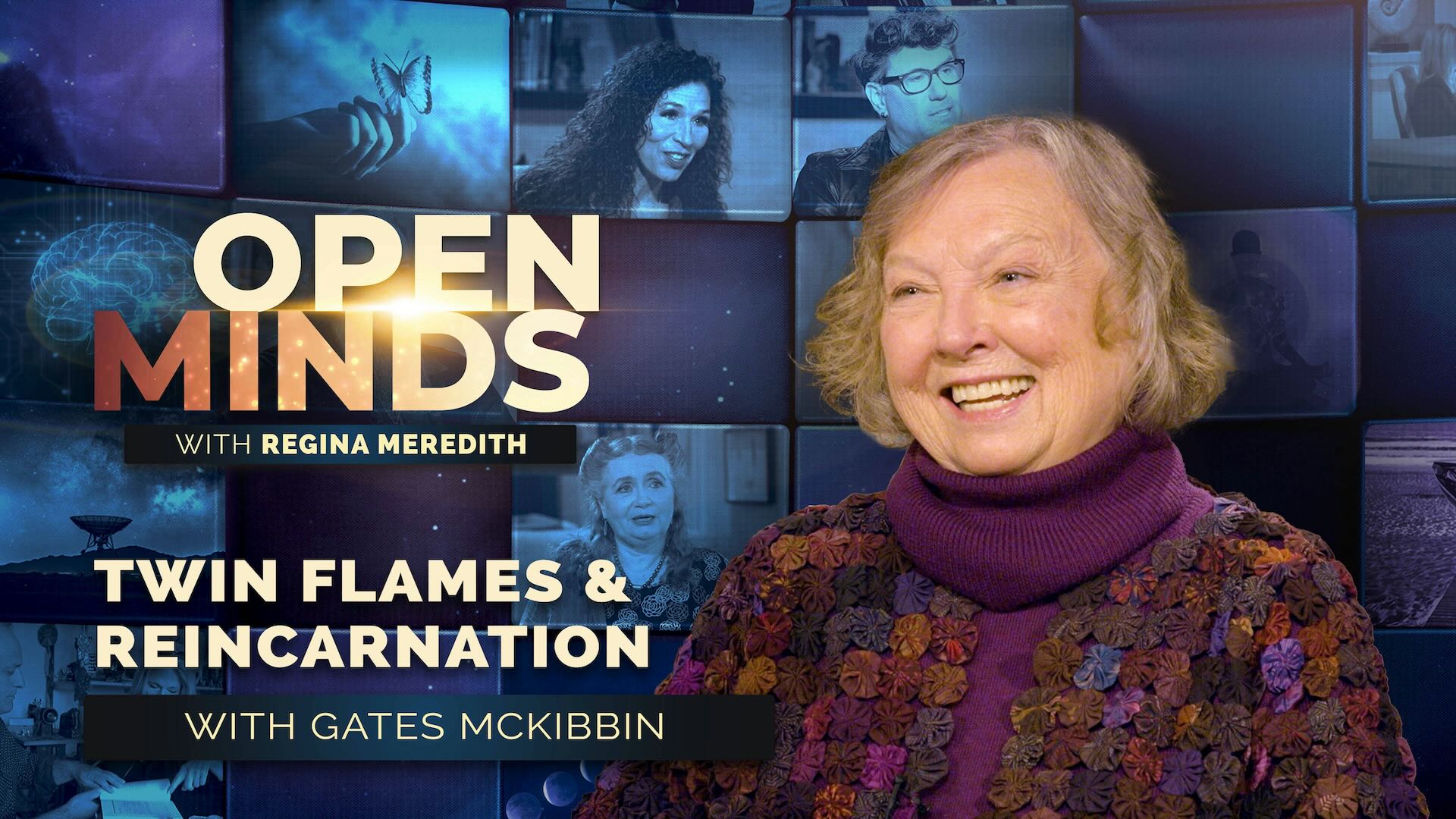
In the Open Minds series, available on Gaia, Regina Meredith converses with Sheila and Marcus Gillette about the role of twin flames in the evolution of the soul. Through the channeling of THEO, they reveal how these connections are designed to help us release limiting beliefs and access a greater spiritual understanding.
Do All People Have a Twin Flame?
Not all souls have a twin flame incarnated in the same life. Some may be in different planes of existence or in distinct evolutionary processes, so a reunion is not always possible in this incarnation. However, this does not mean that a person cannot experience deep and meaningful relationships that contribute to their spiritual growth.
The path of each soul is unique, and the absence of a twin flame in this life does not prevent personal development or spiritual evolution. Many people find equally transformative connections with soulmates, kindred spirits, or other types of relationships that help them fulfill their purpose. What is essential is not to seek a twin flame, but to focus on one’s own growth and on the lessons that each bond brings.
About the Author

What Your Numerology Chart Reveals: Discover Its 5 Key Elements

The numerology chart is a tool from numerology that is created based on a person’s full name and date of birth. With that data, key numbers are identified that describe personality traits, internal challenges, and spiritual lessons. In this article, we explore what a numerology chart is, what it reveals about your spiritual path, and what its five essential elements are.
Table of Contents
- What Is A Numerology Chart And What Does It Reveal?
- The 5 Key Elements Of A Personal Numerology Chart
- The Personal Year And Its Influence On Your Current Energy
- How Numerology Can Help You On Your Spiritual Path
- What’s The Difference Between A Numerology Chart And A Birth Chart?
What Is A Numerology Chart And What Does It Reveal?
Just like the natal chart in astrology, the numerology chart is a personalized study that is built from birth data. Instead of analyzing planetary positions, it works with the numbers derived from your date of birth and full name, to which specific meanings are assigned. Through this information, it’s possible to understand how a person thinks, feels, acts, and makes decisions throughout life.
From a spiritual perspective, the numerology chart offers information about the lessons the soul comes to develop. It allows for the identification of natural talents, recurring challenges, and patterns that repeat at different stages, providing context for significant life experiences. This information does not define a fixed destiny, but rather points to tendencies and processes of inner growth.
In addition, the numerology chart functions as a guide to interpret the life moment a person is going through. By understanding which numbers are active on their path, one gains greater clarity about the internal processes influencing their current experience. This fosters a more conscious relationship with personal decisions and spiritual evolution.

The 5 Key Elements Of A Personal Numerology Chart
Although a complete numerology chart can include many more aspects, there are five numbers that are considered fundamental to understanding a person’s energetic structure. These numbers help clearly identify who you are, what motivates you, how others perceive you, and where your evolution is headed. Each one fulfills a specific role within numerological analysis and offers a complementary perspective. Below, we explore the five most relevant elements.
-
1. Life Path Number
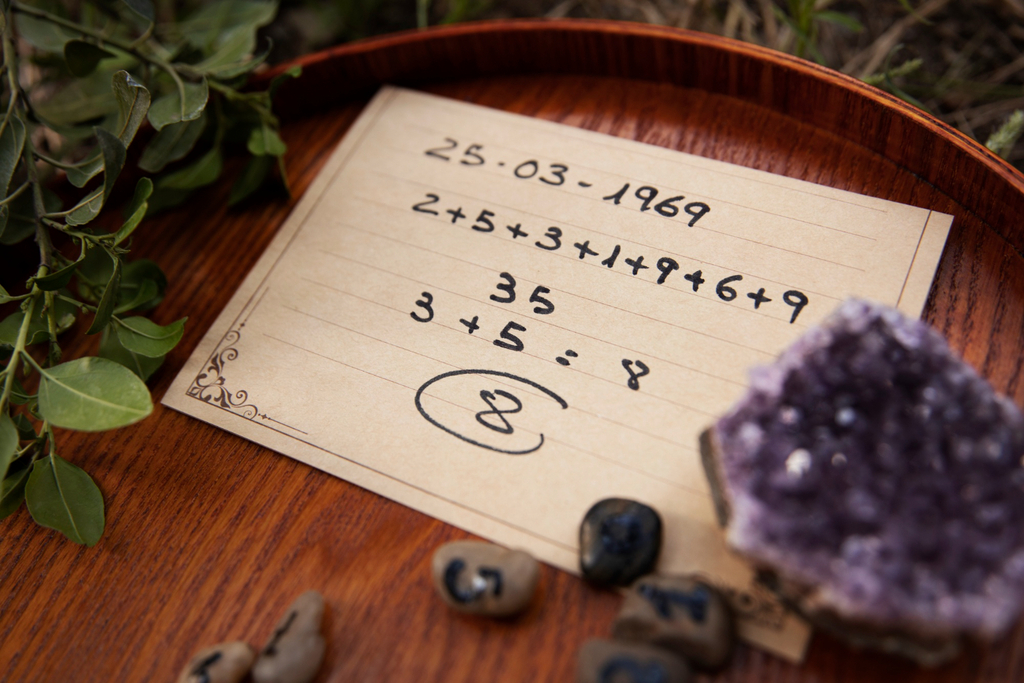
The Life Path Number is calculated by adding together all the digits of your date of birth until they are reduced to a single number from 1 to 9, or to one of the master numbers (11, 22, or 33). It represents the central energy that guides your journey, the lessons you came to integrate, and the qualities you are called to develop. It is considered one of the pillars of numerological analysis due to the structural information it provides.
This number functions as a vital compass. It does not determine every decision you will make, but it indicates the general direction in which your experience flows. By knowing it, you can more easily recognize recurring challenges, the resources you have available, and the choices that align with your life purpose.
-
2. Soul Number
The Soul Number is obtained from the vowels in the full name with which you were registered at birth. It reveals what motivates you from within: your deepest desires, your emotional needs, and what truly gives you meaning. It is not always evident to others, as it reflects an intimate and essential part of your being.
Understanding this number allows you to live in a way that is more coherent with your inner world. It also helps distinguish when you are making decisions based on external expectations and when you are acting in harmony with what truly supports your well-being. In spiritual search processes, this number becomes especially revealing.
-
3. Personality Number
The Personality Number is calculated from the consonants of the full name. It represents the image you project outward, the way others perceive you, and the type of energy you communicate in your environment. It may or may not coincide with how you feel internally, and for that reason it can also point to possible tensions between what you show and who you truly are.
This number helps you understand how you impact your surroundings, which aspects of your character are most visible, and how you interact socially. It also allows you to identify the type of first impressions you generate and which qualities stand out in public or professional contexts.
-
4. Destiny Or Expression Number
The Destiny Number, also called the Expression Number, is obtained by adding the numerical value of all the letters in the full name. It reflects the total potential you bring into this life: your natural talents, developmental capacities, and the resources you can use to move forward. It is a broad number that synthesizes your complete identity and the tools you have to build your path.
Unlike the Life Path Number, which marks direction, the Destiny Number shows how you can walk that path. Knowing it allows you to recognize your innate strengths as well as the abilities you are called to cultivate in order to express your full potential.
-
5. Life Mission Number
The Life Mission Number is calculated by combining information from the name and date of birth. It indicates the deepest purpose you came to fulfill, that which gives meaning to your journey beyond the personal. It is a synthesis of who you are, what you bring, and where you are called to evolve.
This number provides an integrative view of the spiritual path and helps you understand your role within a broader context. When you know it, you can make decisions with greater clarity and align your actions with a more conscious and meaningful direction.
The Personal Year And Its Influence On Your Current Energy
In addition to these five fundamental elements that make up the basic structure of a numerology chart, there are other complementary numbers that offer valuable insight into the present moment.
One of the most relevant is the Personal Year Number, which signals the type of energy that accompanies you during the current year. Although it changes each year, it can be included in a numerology chart to offer a more complete and updated view of the process you are going through.
The Personal Year is calculated by adding the day and month of your birth to the current calendar year. For example, if you were born on March 14 and it’s the year 2026, the calculation would be: 1 + 4 (day) + 3 (month) + 2 + 0 + 2 + 6 (year) = 18. Then, reduce the result to a single digit: 1 + 8 = 9. In this case, your Personal Year is 9, indicating a phase of closure, conclusions, and preparation for new beginnings.
Knowing this number allows you to better understand the dynamics shaping your present. It’s not about predicting specific events, but identifying the dominant energy of the year and using it as a guide to make more aligned decisions. Working consciously with your Personal Year can help you flow with greater clarity through your personal, emotional, or spiritual processes.
How Numerology Can Help You On Your Spiritual Path
Numerology can become a powerful ally when you are seeking greater inner clarity or a deeper sense of purpose. By understanding the numbers that govern your energy, you can interpret with more lucidity the processes you are going through and make decisions that are in tune with your true path. It’s not about predicting the future, but about understanding how you are energetically designed and how to better use your personal resources.
In times of crisis, change, or uncertainty, the numbers in your chart can help you see with more perspective. They reveal themes you are called to work on, talents you may not be fully using, and aspects of your life that could be transformed. That information acts like a map: it doesn’t tell you exactly what to do, but it does show you where to move forward with greater awareness.
Working with your numerology chart also allows you to recognize that not everything that happens to you is random. Many of the challenges or cycles you experience are responses to broader internal processes. When you understand the “why” behind certain experiences, you can go through them with less resistance and greater connection to your spiritual path.
What’s The Difference Between A Numerology Chart And A Birth Chart?
Although both tools are based on personal data such as the date of birth, the numerology chart and the birth chart belong to different disciplines and have complementary approaches. While astrology observes the position of the planets at the time of birth and how they influence your character and destiny, numerology is based on the symbolism of the numbers found in your name and date of birth to explore your inner energy, deep motivations, and the challenges you came to work through.
Knowing both charts not only enriches your self-knowledge, but also allows you to approach your spiritual path from different levels. When integrated, they provide a more complete view of who you are, how you interact with the world, and what direction your personal evolution may take. These are distinct tools, but they enhance one another when used together with an intention for growth and inner clarity.