What is Occultism?

The word, “occult,” is difficult to define. The reason for this is that almost everyone has a different view of what the word means. To some, it represents a fascinating sphere of paranormal activity and mystery. To others, it implies sorcery and dark intentions. Very few people call themselves occultists, yet many are, perhaps without knowing it. Those who do know it, rarely use the term due to an abundance of negativity surrounding the whole concept.
It’s unfortunate that occultism has come to be cast in such dark shadows, because it truly is a place of wonder and offers opportunities to enrich and embrace life in many ways. The key to understanding the realm of the occult is to approach it without fear, bias or a desire to use it for unscrupulous reasons. It is a world of multi-faceted possibilities, like a beautiful gemstone that reveals a different view of the world at every angle.
What Does “Occult” Mean?
In decades past, the word occult dealt with anything that was outside of “natural” thinking. It was a generic term that incorporated almost everything that we now view to be part of the nontraditional spiritual frontier. When I was a kid, my first stop in our public library was always to the books shelved in the 130 section, as defined by the Dewey Decimal System. It was the paranormal and occult category.
130 Section: Paranormal and Occult
There were books on astrology, divination, which included Tarot, the I Ching, cartomancy, or telling fortunes with regular playing cards, palmistry, numerology, phrenology, crystal gazing, clairvoyance, clairaudience, automatic writing and tea leaf reading. Also in the occult section were books on séances, astral projection, Ouija boards, mind-reading, auras, ghosts, haunted houses, vampirism, lycanthropy, fairies, brownies and sprites, herbalism, numerology, communicating with elemental forces, reincarnation, past lives, trances, spirit boxes, witchcraft, sorcerers and their familiars, and ritual magic. In addition, there were books on demonology, angelic communication, the dark arts, mind control, ESP for fun and profit and a personal favorite of mine, a book on how to hypnotize chickens. Every single one of these books was in the occult section.
A Shadow is Cast
Exactly when the word “occult” began to connote something dark and sinister is a mystery to me. I noticed the beginnings of it in the mid-1970s, when the whole spiritual movement seemed to take on a different tone, one of the necessity of having to choose sides. This may have, in part, arisen due to the rise in popularity of Satanic organizations, as well as the rapid growth of new religions and cults that spread like wildfire across the culture. Many of these were established religions, commonly worshiped in other nations, some were new religious groups, while others were revivals of ancient religions, long thought to be dormant.
Hidden Magic: What it the Purpose of Occultism?
People began to view many of the tools of divination with an almost religious fervor, attributing a sacredness to Tarot, or other tools of the trade. This is a trend that still exists today. These people are missing the point that the magic is within us and that the tools are simply a means to an end.
As time progressed, factions splintered, many trying to abandon uncomfortable thoughts, embracing only love and light and thus negating reality. In the beginning, some called them “La La’s,” but eventually, these gentle souls became more the norm than the exception. I was once kicked out of a bookstore filled with statues of angels because I asked for a copy of the Aleister Crowley Tarot. I was sternly informed, “We don’t carry that type of filth here.”
So why does the word occult carry such weight? Why was the word ever used at all?
The word simply means hidden. Astronomers use the word, occult, to describe what happens when an object, such as the Moon or Venus, crosses in front of another object in the sky.
Occultations caused by the Moon passing in front of stars are common. If you’ve never seen Jupiter or Venus blot out a bright star in the night sky, you should seek it out.
Focusing on the concept of one thing hiding another, we gain a glimpse into the metaphysical meaning of the word occult. At one time, those who thought in ways that ran contrary to the norm were held in contempt, suspicion, were imprisoned, or worse. There was little tolerance for freedom of thought and even less for freedom of speech, or religion. Conformity and unity were the ideal and anyone who dared to present an ulterior philosophy, endangered themselves and their families. Galileo got off comparatively light, with house arrest, for teaching his heretical belief that the earth was not the center of the solar system. Hundreds of thousands of others were not as fortunate and found themselves the victims of inquisitional punishment, mob justice and torture.
As human beings, we’re designed to think and look below the surface. We are meant to question the nature of deity and attempt to discover why terrible things happen to good people, and why brutal individuals thrive. Our natural tendencies are to question authority and to entertain the prospects of the illegitimacy of claims to power. These sorts of thoughts gave rise to rebellion, sometimes leading to a new world order, other times to despotic tyranny. The key throughout it all, is that a certain level of secrecy was necessary in order to organize, mobilize and maintain the movements of change.
Protection for the Open Minded
The same desire to remain safe and to survive gave rise to the idea of the occult as we know it today. The wish to think freely and to practice arts that were claimed to foretell the future, communicate with those from the past, or find the truth in any situation, were considered heretical, blasphemous and had to be practiced in secrecy. These included alternative religious thoughts, such as Wicca, Voodoo, Santeria and even such religions as Buddhism and Hinduism. In order to remain safe, it was necessary to go underground and stay hidden, thus one of the meanings and purposes of the occult.
Dissemination of Knowledge
There is also a natural layering of information in anything that exists. For example, let’s say you go to the store to buy a deck of cards with which to play Cribbage. Directly behind you is a person also buying a deck of cards. You probably wouldn’t question how those cards were going to be used. You will go home, open the pack and play your game. The person in back of you will go home, open the deck, peer into the future and uncover secrets of the past. It doesn’t mean that the person involved has special powers; it implies that they know how to read the cards. You can do it, too; all you have to do is learn the meanings. Once upon a time, that was the issue. The dissemination of knowledge was kept secret as part of a greater tradition that needed to be maintained as pure, sometimes out of habit, sometimes because of very real dangers. Occultists became masters of hiding powerful knowledge in plain sight.
Remembering that Tarot started as a game, it’s easy to see that a lot of meaning got stuffed into the card images as time progressed. I’m fascinated by the fact that the hidden meanings of the cards have become commonly known, whereas some of the actual meanings of the iconography, as designed by the original Tarot designers, have now become occult, hidden, more by atrophy than by design. Just because something is concealed, it doesn’t mean that it has a good reason for being so.
Occultism: A Path to Your Own Worldview
In college, I became good friends with astronomy grad students. They liked me fine, but thought that my interest in astrology was an exercise in complete idiocy. Their disdain for the subject became more pronounced after a few beers and I felt the sting of being ridiculed for something I believed strongly in. I learned to keep my mouth shut about my interests, at least for a while, and adhered to the precepts of the occult, the hidden. It simply made things easier. Eventually, however, I became annoyed and turned against that mindset, daring anyone and everyone to challenge my point of view. In the beginning, I was adamantly argumentative, but thankfully, over the years, I’ve learned to shrug it off and realize that my worldview fits me, even if it doesn’t fit others.
I find it completely ironic that we live in a society where we are expected to accept the religious views of others, as long as they are traditionally held, regardless of how unusual their dogma may seem to us and how blatantly steeped in controversy their history may be. Yet, if I discuss a conversation I had with a Holly bush, or Spruce tree in my front yard, I’m considered to be on the fringe and a devotee of the occult. So be it.
Have there been abuses in the occult? Of course. Such actions skulk in every nook and cranny of humanity.
I call myself an occultist and have for a long time. I’ve owned a Tarot deck since I was 10 years old. I’ve been studying it all my life and have developed my own theories and techniques, both for understanding and reading the cards. I have forged new pathways into the study of Elemental Forces and have connected them to my work in Tarot. I have studied Vedic Astrology and have worked with it for decades. I’ve counseled thousands of people over the years, many of them keeping me a secret from the world around them, for fear of ridicule. It’s quite possible that you are an occultist as well. It doesn’t mean that you practice dangerous rituals, portend doom or delve into the belly of the beast. It simply means the you are practicing or experimenting with something that doesn’t jive with the norm. Whatever you call yourself is irrelevant and completely up to you.
There is one more reason why the term occult makes sense. Our predecessors understood that as human beings, we have a tendency to abuse power and advantage. There is no doubt that there is power to be had and numerous advantages in the arts we practice. Even the simple act of casting an astrological chart can give a leg up to anyone seeking to understand how a situation will unfold. Likewise, in the right hands, a deck of cards can be remarkably accurate in laying out an exact sequence of events, and ways of preventing them from occurring. There are numerous stories about men and women who discovered hidden rules and regulations about playing the stock market, using astrology, or other means. They always kept them closely to themselves, sometimes in order to keep others from abusing this knowledge, or sometimes in order to sell it to the highest bidder. Whatever the case, whether it be a Grove of Druids or a lodge of Freemasons, they all have symbols that you will not understand and are not meant to be intuitive. Within those symbols are hidden greater meanings that eventually will be passed on to others. Yes, they’re delving into the occult, such as it is.
Occultism is nothing more than a belief (or experimentation) in alternative ways of viewing the world, views that may not necessarily be welcomed, nor understood, by the culture in which an individual lives. The occult is a pliable, ever-changing philosophy. By delving into the occult, we learn truths and discover lies. We find lines of thought and methods of illuminating the darkness that are as personal as our DNA. Just as it’s unusual for people to define the word occult in the same way, so no two individuals can ever experience it exactly alike. The occult is a personal and unique experience well worth the adventure. Don’t fear it; embrace the mystery.
Until next time, I wish you all peace and love.
About the Author

Achieving Modern Enlightenment With Gurdjieff's Fourth Way
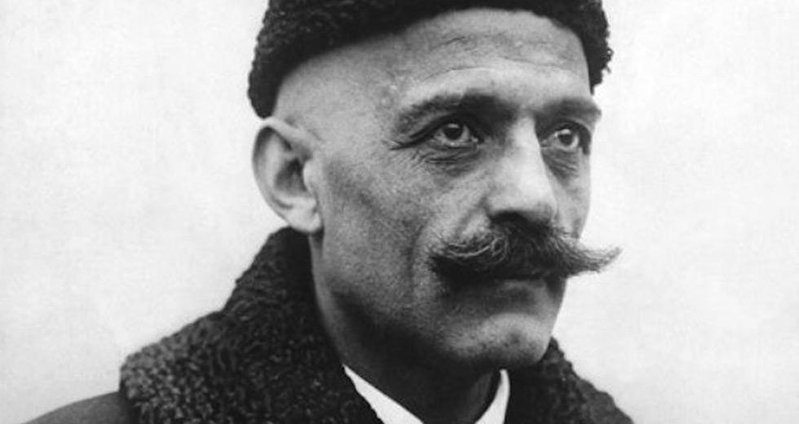
Around the turn of the 20th century, the mysticism movement aimed to bridge the gap between western and eastern philosophies with theosophy, esotericism, and a burgeoning interest in the occult. This spiritual zeitgeist inspired George Gurdjieff to develop the Fourth Way; exercises that can be incorporated into one’s daily life to remove yourself from a state of hypnotic waking sleep.
The Fourth Way: Hindu, Sufi, And Christian Esotericism
Deeply devoted spiritual practices often focus on either a detachment from the physical or a strict dominance over it. Georges Gurdjieff did not see these attempts to embrace a higher self as practical, believing instead that enlightenment could be achieved without asceticism.
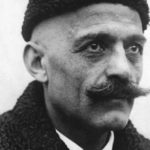
Born in 1866 in Alexandropol, Armenia, Gurdjieff was inspired by the theosophical movement and decided to travel to Central Asia and the Middle East in search of esoteric spiritual leaders and seekers of truth. Upon his return, he penned a series of books that would become the foundation of his spiritual practice: The Fourth Way. The second book in the series and 1979 film, Meetings with Remarkable Men, detailed his encounters with spiritual leaders on his journey who were more likely fictional characters symbolic of the three “ways” preceding his.
During his travels, he was inspired by the spiritual ways of the fakir, monk, and yogi, though he saw their methods as only successful in achieving a fraction of development, with the more practical roots of their disciplines lost in antiquity. At the same time, he believed that the effects of modern technology and society were entrancing everyone into a hypnotic waking sleep.