What Kind of Witch Are You?
You know that gut feeling you’ve learned to trust?
Maybe you feel most like yourself with your hands in the garden. You’re curious about the moon’s cycles. Or you light a candle to mark a fresh start, giving an ordinary moment a little more meaning.
What if those instincts are your witchy powers at work, and you’ve been using them all along?
So, what kind of witch are you?
The answer begins with what draws you in. A love of plants might lead you toward green witchcraft. An interest in ceremony could draw you toward a more structured ritual practice. You may find yourself exploring several paths as you discover what resonates.
Think of these labels as doorways: ways to find ideas, teachers, and traditions that speak to your curiosity.
Ready to see where yours might lead? Keep reading to explore the different paths.
How Do You Find Your Witchcraft Path?
Start with what you actually want to learn. A garden full of medicinal plants might interest you more than an elaborate altar. You might want to understand the symbolism behind a ritual before trying it yourself. That preference tells you something.
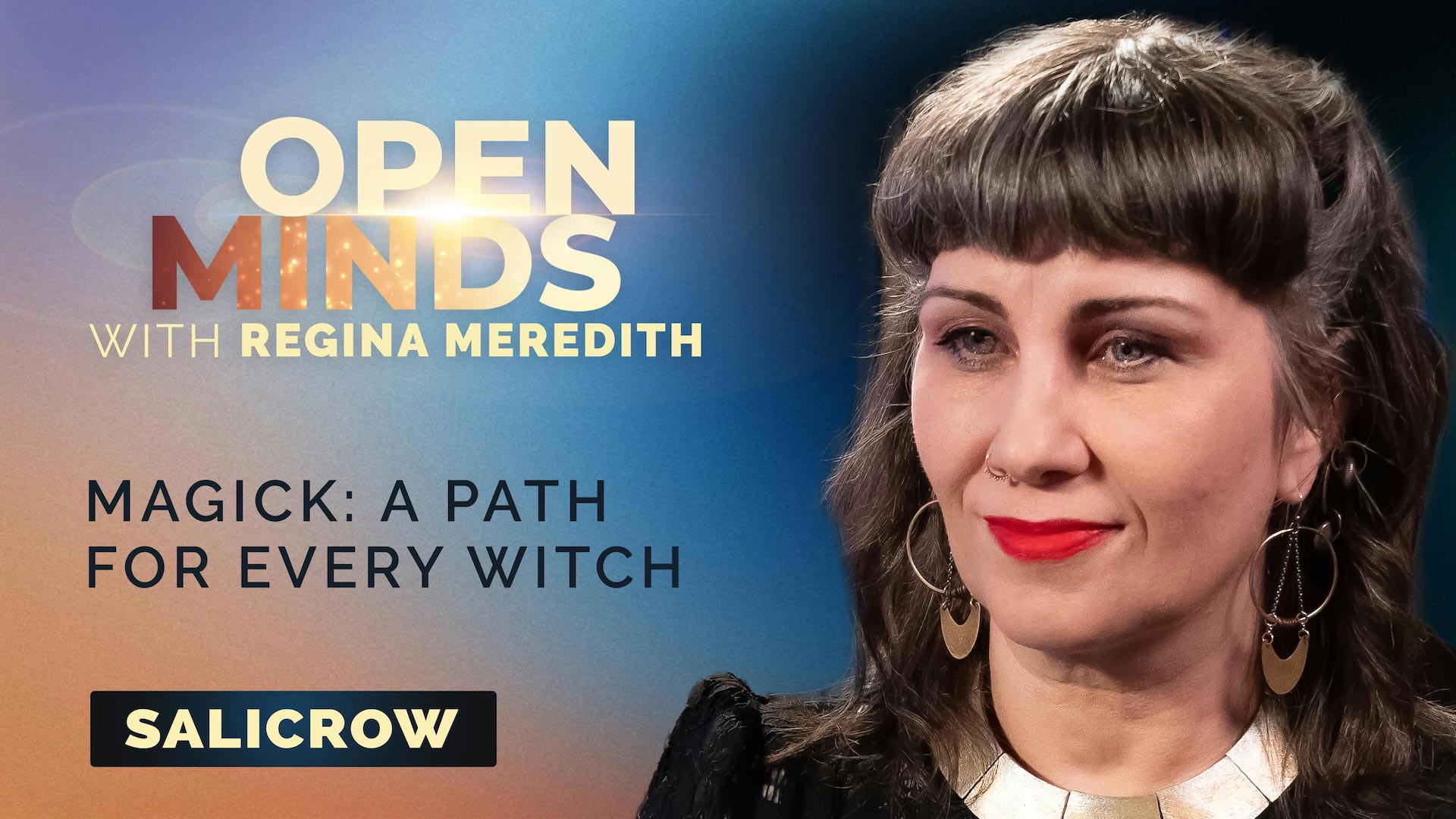
In Magick: A Path for Every Witch, an episode of Open Minds, author and practicing witch Salicrow talks with Regina Meredith about how different a magical practice can look from one household to the next. She describes magic worked over a cooking pot and intention woven into a blanket made for a baby.
Those examples make witchcraft easier to picture in an ordinary week. They also raise a better question than whether you look the part: Which practices would you want to spend time learning?
Some Types of Witches You May Recognize
These are a few terms you’ll encounter while exploring modern witchcraft. They describe interests and approaches, rather than a universal system of witch types.
Green Witch
Green witchcraft centers on a relationship with the natural world, especially plants. Learning what grows near your home can become part of the practice, along with studying the magical associations people give to herbs.
If you want to know when a plant flowers as well as why it appears in a spell, this approach may appeal to you. A windowsill can be a reasonable starting point; you don’t need a cottage surrounded by woodland.
Kitchen Witch
Kitchen witchcraft brings magical intention into preparing food and caring for a home. A practitioner might choose an ingredient for its symbolic meaning or make a meal with a particular blessing in mind.
The cooking-pot magic Salicrow describes fits here. The same herb might belong in a green witch’s garden and a kitchen witch’s recipe, which gives you an idea of how much the labels can overlap.
Hedge Witch
Hedge witchcraft is often associated with solitary practice and folk magic. Some practitioners also use the term for work involving trance or spiritual journeying, sometimes called hedge riding.
It may interest you if you prefer independent study and want to explore folklore alongside personal ritual. The word covers different approaches, so it helps to read how a particular teacher uses it before assuming you know what their practice involves.
Elemental Witch
Elemental witchcraft works with earth, air, fire, and water as spiritual forces and ritual symbols. A candle flame or a bowl of water may have a specific place in a practitioner’s ritual.
Salicrow explores these relationships in The Path of Elemental Witchcraft. This approach may suit someone who wants to study the elements in detail and build a practice around them.
Ceremonial Witch
Some witches prefer rituals with a defined sequence and carefully chosen tools. Preparing a space and learning the purpose of each step are part of the appeal. If structure helps you concentrate, you may want to explore this approach.
You’ll also encounter Wicca in discussions of ritual. Wicca is a distinct modern Pagan religion, with its own traditions and customs. Witchcraft is a broader term. Practicing witchcraft does not automatically make someone Wiccan, and ceremonial practice extends beyond Wicca.
Can You Be More Than One Kind of Witch?
Yes. You might work with plants and also prefer a formal ritual. Practicing alone describes how you work; it doesn’t tell you everything about what you believe.
Salicrow’s own practice has changed over time. In the interview, she describes spending years in a coven before coming to prefer a more solitary approach, while still practicing with other people.
Questions About Finding Your Witch Type
How Do I Find My Witchcraft Path? Start with the practices that interest you. Learning about the magical uses of plants might lead you toward green witchcraft, while an interest in cooking could draw you toward kitchen witchcraft. You can explore before choosing a label.
Can I Explore Witchcraft as a Beginner? You can begin by reading about different traditions and learning how practitioners approach their craft. Notice which practices you’d like to understand well enough to try yourself.
Do I Need Special Tools to Practice Witchcraft? Many practitioners use everyday objects in their rituals. Salicrow describes bringing magical intention into cooking and making things by hand. The tools you use will depend on the practice you choose.
Do I Need to Join a Coven? Many witches practice independently. A coven offers a group setting for learning and ritual, while solitary practice allows you to work on your own. Particular traditions may require formal training or initiation.
About the Author

Gematria: Understanding the Numerical System that Decodes the Divine
Have you ever thought that numbers might tell stories just like words do? Gematria, a fascinating form of numerology found in Kabbalistic teachings, suggests that there’s a deep connection between numbers and words.
This ancient method, deeply rooted in sacred texts, proposes that every letter and word carries a numerical value that unveils deeper meanings. These connections might even offer clues to understanding both historical and future events through sacred texts like the Torah.
The concept of gematria numerology stems from the idea that mathematics is the universal language of nature and within it may be the keys to explaining our universe or evidence of supernatural power. Marty Leeds has taken this concept of the Kabbalistic gematria and applied it to the English language, believing that he has found a cipher in our alphabet to prove this theory.
What is Gematria?
Gematria is a numerological system where each letter of the Hebrew alphabet is assigned a specific numerical value. This system is used to interpret the hidden meanings within words, names, or phrases, based on the belief that God created the universe through the numerical values of Hebrew letters.
This practice, deeply rooted in the mystical aspects of the Hebrew Bible and embraced within Kabbalistic traditions, transcends simple word-to-number correspondences. It serves as a profound tool to explore the divine blueprint encoded within sacred texts, suggesting that every letter and word carries an intrinsic numerical value that reveals deeper, spiritual insights.
Modern scholars, including Marty Leeds, have extended the principles of gematria beyond Hebrew to the English language, proposing that these numerical ciphers uncover universal truths and mystical insights across different languages and cultures.
How Does Gematria Work?
The idea behind gematria numerology is that mathematics is a universal language, which might hold the keys to explaining our universe or even pointing to the existence of supernatural powers. In the practice of gematria, each Hebrew letter’s numerical value allows scholars and mystics to draw connections between words and uncover deeper meanings. These numerical values can also reflect broader concepts and beliefs. For instance:
- Number 888: In Christian numerology, the number 888 represents Jesus, or more specifically Christ the Redeemer. This comes from the fact that in Greek gematria, the letters of Jesus’ name add up to 888. This number is seen as a representation of infinite love and redemption.
- Number 666: Often recognized as the number of the beast from the Book of Revelation in the New Testament, 666 is associated with evil and Satan in popular culture. However, in the context of gematria, this number can have more complex interpretations depending on the scriptural and cultural context.
- Number 4: The number 4 is often seen as a symbol of stability and order in many cultures. In the context of gematria, it can represent the four elements (earth, water, air, fire), the four cardinal directions, or the foundational aspects of creation. This reflects its universal significance in forming the basis of the world’s structure.
- Number 33: This is a number with significant importance in Freemasonry where it signifies the highest degree of the Scottish Rite. In Kabbalistic tradition, it can represent the age at which Jesus was crucified and, by extension, a period of accomplishment or completion.
For example, the tzitzit, a shawl worn during Jewish ceremonies, provides a perfect illustration: the numerical value of its knots and strands adds up to 613, which intriguingly corresponds to the total number of commandments in the Torah. These numerical associations are believed to hold deeper spiritual or mystical significance, revealing connections that go beyond the surface and delve into the divine or universal truths.
What is Gematria Used For?
Gematria is not just about playing with numbers; it’s a tool embedded in the Kabbalistic tradition to interpret deeper meanings within sacred texts. Scholars use it to uncover insights about life, the divine, and cosmic mysteries. Beyond Judaism, gematria also appears in other cultures and languages, demonstrating its widespread influence and importance in various religious and philosophical traditions.
Exploring the Origins of Gematria
The practice of gematria is believed to have originated in the Jewish mystical tradition known as Kabbalah, but its influences can be traced back even further to ancient Greek and Arabic cultures. The practice was likely influenced by Greek isopsephy and Arabic abjad numerals, which also connect letters with numerical values. These practices highlight a universal quest to find deeper meaning in language and numbers across different cultures and historical periods.
Gematria in Different Cultures
While Hebrew gematria is most prominent, similar numerological practices exist in other cultures such as Greek and Arabic. These systems adapt to the peculiarities of their own languages and scriptures, providing a broad field of study for numerologists worldwide. The Greek system, for example, has been referenced by philosophers like Plato, showing gematria’s influence on early philosophical thought.
Examples of Gematria in Practice
- Biblical Texts and Jewish Tradition: Gematria is often used to interpret the Hebrew Bible. For instance, the Hebrew word for ‘life’ (חי) sums to 18, making it a significant number in Jewish culture.
- Modern Applications by Marty Leeds: Leeds argues that even the English alphabet can be broken down into numbers that reveal hidden codes, blending traditional and contemporary interpretations of gematria.
Kabbalistic Connections
In Kabbalah, gematria is not merely a numerological curiosity; it is an essential tool for exploring the esoteric and mystical dimensions of Hebrew scriptures. This practice is particularly valuable for interpreting the hidden meanings behind the names of God, such as the Tetragrammaton (YHWH) and other sacred words.
Kabbalists believe that each letter in these divine names carries specific numerical values that are direct expressions of cosmic energy and divine attributes. By decoding these numbers, mystics can gain insights into the fundamental structures of existence and the inner workings of the cosmos.
The use of gematria in Kabbalistic studies is seen as a method of interpretation and a form of meditation and spiritual practice, aimed at bringing practitioners closer to divine wisdom.
Key Aspects of Kabbalistic Gematria:
- Interpretation of divine names and cosmic energy
- Insights into the fundamental structures of existence
- Meditation and spiritual practice to connect with divine wisdom
Practical Uses of Gematria Today
While its roots are ancient, gematria has evolved to meet the needs of modern society. Today, it finds applications in various personal and practical contexts:
- Event Planning: Individuals use gematria to select auspicious dates for significant events, such as weddings or business openings. Aligning activities with favorable numerical values is believed to influence outcomes positively.
- Personal Insight: Gematria is used to analyze personal names, birth dates, and keywords, helping individuals uncover deeper spiritual meanings and potential life paths.
- Creative Applications: Artists and writers often use gematria to structure their works around specific numerical themes, adding a layer of symbolic significance to their creative outputs.
- Digital Accessibility: In the digital age, the principles of gematria have been adapted for online use, making this ancient wisdom accessible globally and allowing its exploration across different languages and cultures.
The Ongoing Relevance of Gematria
Gematria’s roots stretch deep into Kabbalistic mysticism and have branched out into modern linguistic studies. It remains a vital tool in the study of sacred texts and offers a unique perspective on the numerical patterns that many believe govern the universe. Whether used for spiritual discovery, theological study, or philosophical exploration, gematria captivates those who seek to understand the intersection of numbers and words in various cultures.
Gematria FAQs
How do you calculate words using gematria?
Calculating a word’s gematria value involves adding up the numerical values of each letter in the word. Different traditions may have their own set of values and methods, adding a layer of complexity to the calculations.
What is a Gematria Calculator?
A Gematria calculator is a digital tool that simplifies these calculations, allowing users to quickly find the numerical value of words and phrases across different Gematria systems.
How does gematria work in the Hebrew language?
In Hebrew, each letter is assigned a numerical value, and these numbers are used to explore relationships and uncover deeper symbolic meanings between words, based on their numerical equivalence.