Yoga and Anterior Pelvic Tilt

The anterior pelvic tilt is a hot topic in yoga and in manual medicine. Some people are overly concerned about the fact that their pelvis is tilting anteriorly without even understanding what it means. Let’s simplify the issues behind this increasingly common postural variation and learn how it can affect other parts of our body.
A normal pelvic angle is 30°; this means that our posterior superior iliac spines (the dimples above our bottoms) are slightly higher than our anterior superior iliac spines (the bones that stick out at the front of our pelvis). This angle can vary a few degrees either anteriorly or posteriorly due to our genetic makeup and even temporarily due to tight and/or weak muscles. An anterior pelvic angle of 40° is considered excessive and will produce a lower back (lumbar spine) curve that is also extreme. Our lumbar spine should have an anterior curve which is known as a lordosis; however, when this curve is excessive it is known as a hyperlordosis, which is not ideal. Cases of increased pelvic angles and lumbar hyperlordoses are very prevalent in today’s society.
Causes of increased lumbar lordosis include:
- Postural deformity
- Lax muscles, especially the abdominal muscles in combination with tight muscles, especially hip flexors or lumbar extensors
- A heavy abdomen, resulting from excess weight or pregnancy
- Compensatory mechanisms that result from another deformity, such as an increased curve in the thoracic spine (mid-back)
- Hip flexion contracture
- Spondylolisthesis (displacement of the vertebra above with relation to the vertebra below)
- Congenital problems, such as bilateral congenital dislocation of the hip
- Fashion (e.g., wearing high-heeled shoes)
Magee, J. David. Orthopedic Physical Assessment: Fourth Edition. Saunders. Toronto. 2002.
Cause number two from the list above is the reason that affects most. The majority of the population sits for at least eight hours a day while hunched over a desk at work; this can lead to a generic condition known as lower cross syndrome. This disorder consists of the following muscular issues: Weak or inhibited gluteal muscles and abdominals & Tight and shortened hip flexors and lumbar extensors
To better visualize this, observe the illustration that demonstrates lower cross syndrome. Take note of how the two weak/inhibited muscles create one line of the cross and the two tight/shortened muscles create the other line to complete the shape of a cross, hence lower cross syndrome.
When our hip flexors are tight, specifically our psoas, our pelvis rotates forward by the psoas pulling down on the lumbar spine from its attachment sites; this increases our lumbar lordosis and subsequently shortens our lumbar extensor muscles. This is most often seen in combination with weak abdominal and gluteal muscles.
Now that the reasons for this postural condition have been noted, the way to correct it is clear: reverse the causes. However, the distinction between inhibited muscles and weak muscles must be made first before rehabilitation can effectively begin. Inhibited muscles require the re-establishment of correct muscle firing patterns, while weak muscles need to be strengthened. Some individuals have weak muscles that are not inhibited; some have the reverse, and some have both issues to correct. Tight/shortened muscles require lengthening; sometimes stretching is sufficient and sometimes alternative soft tissue treatments such as Active Release Technique® and Graston Technique® are required to decrease scar tissue and increase the range of motion of the particular muscle.
If you are concerned that you may have lower cross syndrome, or simply a pelvic tilt, paying a visit to your manual health care practitioner (sports focused chiropractor, sports physician) will be well worth the time and money. They will be able to diagnose any underlying issues related to this condition and create an appropriate rehabilitation programs specific to the weaknesses and inhibitions they find upon physical examination. They will also be able to reduce scar tissue that may be contributing to your pelvic tilt (anterior or posterior).
Education is the ticket to eliminating these sorts of conditions from society. If we understand how to mitigate the risks for such generic conditions, we will all be much healthier individuals. Here is to learning more about our bodies!
Learn More about Dr. Carla Cupido.
About the Author

What Really Happens in Hip Openers
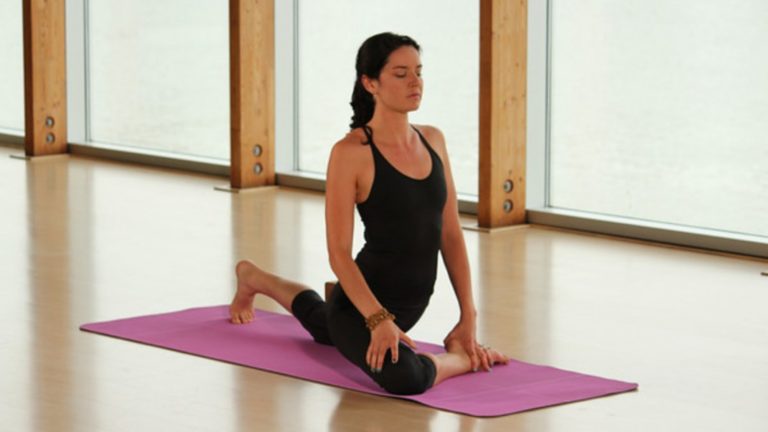
One of the most common requests heard in a yoga class is hip openers today please. This request is usually followed by the other half of the class groaning. We love to hate hip openers yet our bodies crave them and often feel lighter and more open after — for good reason. The majority of us sit for most of our days, shortening the hip flexors at the front of the hip (psoas, rectus femoris, sartorius) and tightening the hip rotators (piriformis, obturator internus, gamellus, to name a few).
A Look Inside the Hip
The hip joint itself is a ball and socket type joint with the head of the femur (thigh bone) sitting in the acetabulum or socket of the pelvis. A variety of muscles attach into the femur starting from the pelvis itself, the lumbar spine, the sacrum, or other parts of the femur. Hip openers could affect any of the muscles surrounding the hip depending on the position of the joint at the time of the pose.
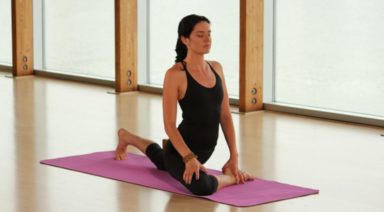
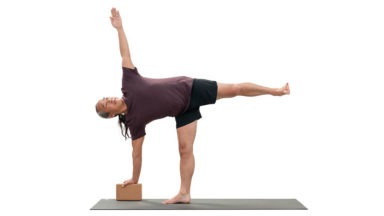
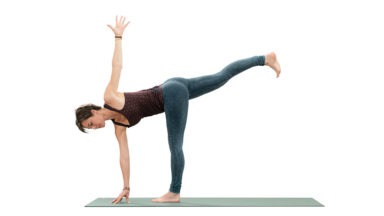
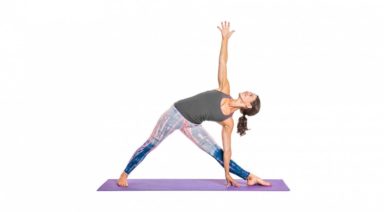
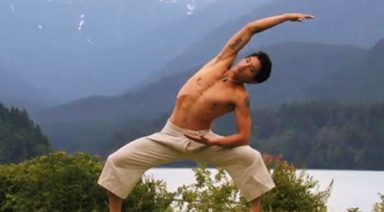
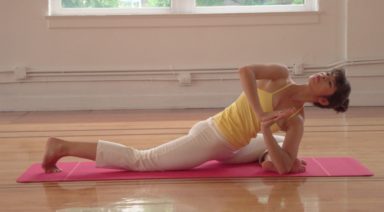
In general when we stretch or open a muscle we are lengthening its position, moving the two attachment points away from each other. This is easy to assess with linear muscles like the psoas which attaches from the front of the lumbar spine, crosses through the pelvis and attaches to the head of the femur. If we flex the hip forward we are shortening the psoas, bringing the two attachments of the muscle closer together. If we extend the hip backwards (such as in the back leg of Pigeon pose we are opening and lengthening the psoas. The effect becomes greater in King Pigeon pose if we assume an upright posture with our spine so that we lengthen the upper attachment more. In this example we can also rethink our definition of hip openers. Suddenly, poses with a bent knee where we rotate the hip are not the only way to open our hips. If the psoas attaches into the femur, and a shortened psoas tightens our hip (not to mention the affect it has on our low back) then poses like Warrior / Virabhadrasana or Half Moon / Ardha Chandrasana become hip openers too.
Rotate to Open a Rotator
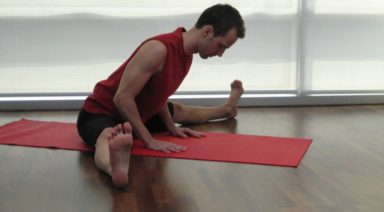
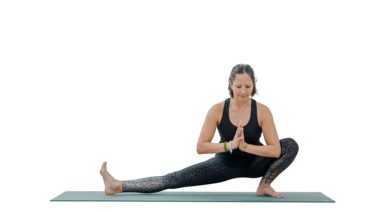
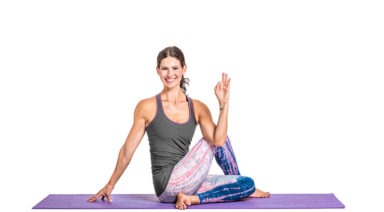
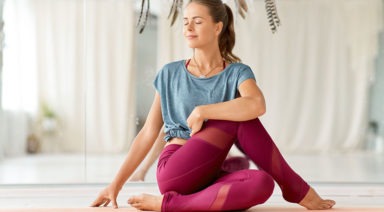
The rule of how to open a muscle becomes less clear with the hip rotators where the angle of the joint actually affects the action of the muscle. For example, the piriformis muscle attaches from the front of the sacrum to the back of the femur. It acts as an external or outward rotator of the hip. Except if the hip is flexed, then it assists in abduction or sideways movement of the hip. So to follow the rule of opening we would want to internally rotate the femur, flex the hip and adduct or bring the femur towards midline. This can be achieved with the top leg in Marichyasana (sit with your left leg extended, bend your right knee and step the foot across your left thigh so that the femur is flexed, adducted toward midline, and gently internally rotated.) Other hip openers don’t seem to follow the rule of opening. We often externally rotate the hip to stretch the external rotators of the hip. Huh? The reason this works is because we typically flex the hip at the same time.
Use Your X-Ray Vision
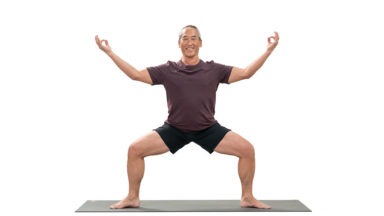
To understand how hip openers work we have to picture the position of the muscle. Let’s picture the obturator internus muscle, a close friend of piriformis. It attaches from our sitting bone or ischial tuberosity to the greater trochanter of the femur, a bony outcropping on the side of the hip. We can feel both of these pieces of bony anatomy. Our ischial tuberosities can be felt when sitting, they are the bony bits under the flesh of our buttocks. Our greater trochanter can be felt by first finding the top of our pelvis by by placing our hands at our waist, firmly pressing in and down until we feel a ledge. This is our iliac crest. Slide your hands down and with your thumb you will feel a bony prominence that is the femur. You can feel it move by slowing rotating the hip in and out. So now we can feel the attachment points for the obturator internus, between the ischial tuberosity or sitting bone, and our femur. From this observation we can see that in a neutral position the muscle wraps around the hip. So if were to flex the hip, the ischial tuberosity scoops under thus increasing the space between the two attachment points and increasing the wrapping distance of the muscle – hence lengthening the muscle. This is why a simple squat (using the term simple lightly) can stretch our hip rotators and can be one of the reasons Westerners find it so challenging to achieve.
Opening Our Hips to Open to Possibility
Since there are many muscles in the hip with many functions depending on the demands we place on our body, keeping these muscles supple can help us in ways that may not seem obvious at first. Hip openers may help us attain a standing pose we’ve been struggling with, or they may help us get down on the ground easily to play with our kids or our kitten. Traditional yogic thought attributes many healing properties to hip openers from organ issues to sexual dysfunction. So if you are one of the groaners when hip openers are suggested, perhaps pause to wonder if they could be helping you in ways you weren’t even aware.