Professor Finds $21 Trillion Missing from Government Budget
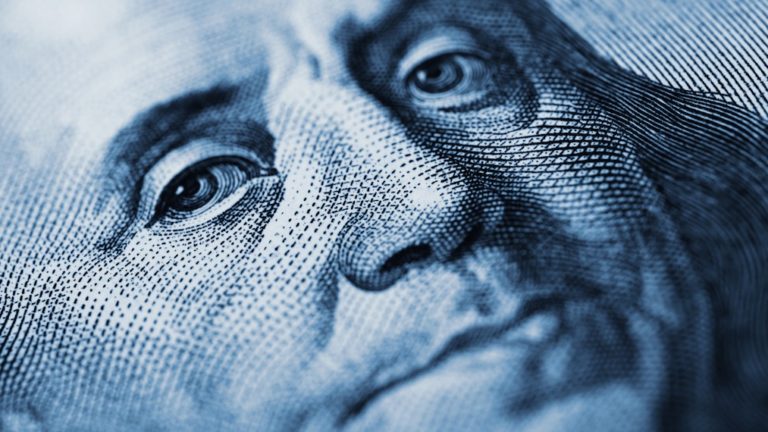
A Michigan State University economics professor discovered $21 trillion unaccounted for in the federal budget starting in 1998 until the end of fiscal year 2015. Professor Mark Skidmore enlisted the help of his graduate students to examine government documents from the Department of Defense and Housing and Urban Development to uncover an unfathomable amount of unauthorized spending.
According to the Constitution, all federal spending must be voted on and authorized by Congress each fiscal year. Any discrepancies found in the way of unauthorized spending would normally elicit a congressional hearing and investigation.
Skidmore and his students’ analysis used publicly available government documents from the two agencies’ websites to expose this inconsistency. Shortly after Skidmore published his findings, both agencies removed those documents from public access.
While no congressional committee tied to the budget had signaled the would open an inquiry prior to Skidmore’s findings, the Department of Defense allowed a first ever department-wide audit by independent firm Ernst & Young.
Skidmore says that sometimes there can be discrepancies meant to account for inadequate transactions, but those adjustments are usually no more than 1 percent of the total budget.
The Army’s annual budget for FY 2015 was $122 billion, meaning that an adjustment for inadequate transactions might be around $1.2 billion. The Army’s actual adjustments for FY 2015 were $6.5 trillion – 54 times what it was authorized to spend.
Out of thousands of documents spanning that period, Skidmore was able to find Army budget documentation for 13 of those years, saying its budget represented roughly $11.5 trillion of the missing $21 trillion. He also called these accounting documents “opaque,” saying it was not clear what the unauthorized adjustments were for.
That amount of unauthorized, “missing” money is equivalent to about $65,000 for every person in America. The government estimated that the federal deficit sits at around $20 trillion, an entire $1 trillion less than what Skidmore found missing in these adjustments.
So, what exactly is this money going towards? The revelation of a $56 billion Pentagon black budget for secret military, space, and surveillance programs has led some to speculate that it could be merely a fraction of what’s actually being spent.
Skidmore said he reached out to the Office of Inspector General, the Government Accountability Office, and Congressional Budget Office, asking if maybe the $6.5 trillion figure was a mistake and was instead supposed to be $6.5 billion. It was confirmed that $6.5 trillion was the correct adjustment. Though, when he asked if any of these agencies were alarmed or considering this a red flag, his questions were met with slight confusion and little concern.
Though Skidmore has reserved his speculation as to what he thinks the money might be going toward, it’s clear that either someone knows that a large amount of taxpayer dollars is being spent without authorized permission, or the accounting practices of those in charge of massive amounts of public money are that flawed.
About the Author

4-Year University Study Discredits Official 9/11 Narrative

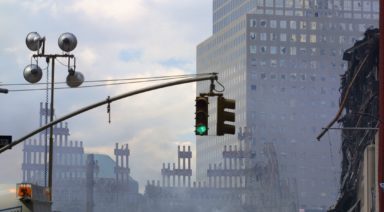
“Jet fuel can’t melt steel beams,” has been an aphorism used by those who believe the events on 9/11 were a false flag operation. It is also used pejoratively by those who believe that several steel-framed buildings fell in on themselves in downtown Manhattan that day, due primarily to intense heat from fires, defying all historical precedence for structures of that magnitude and level of engineering.
It can be difficult to take a firm stance on either side of the argument when talking about an event that was so tragic and insidious. But no matter where one stands in their perspective of Sept. 11, 2001, it helps to keep an open mind and always question the narrative we are fed that is so often controlled by underlying agendas.
9/11 False Flag
Of the horrific attacks that took place that day, there are seemingly endless postulations and conspiracies as to what really went on. Millions of dollars of United and American Airlines “put-option” stocks were traded in the week leading up to the attack; there were blatant business ties between the Bush family and Osama bin Laden; and only one flight was allowed in the air after the attacks, flying 140 Saudi nationals home to safety. These are just a few of the conspicuous events tied to that day.
But the use of those events as justification to go to war, ostensibly makes 9/11 a false flag event used as an imperialist grab of oil reserves, miring us in an endless conflict with no light at the end of the tunnel. Terrorism persists, Operation Iraqi Freedom created a bigger monster in ISIS, and the situation in Afghanistan is still a quagmire.
But the truth behind the events of that day still remain shrouded by government cover-ups and harsh ridicule of those who dare to question that narrative. All the elements of the events that have transpired since, are the classic building blocks of a false flag operation. And a majority of Americans believe the government is concealing information about 9/11, while 15 percent believe the towers were brought down in a controlled demolition.