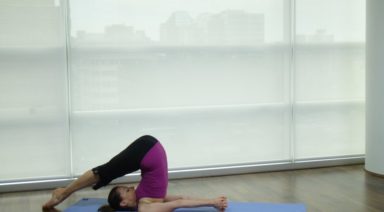
Ardha Uttanasana: Half Standing Forward Bend
ADJUSTMENTS | BENEFITS | SEQUENCING | SANSKRIT | STEPS
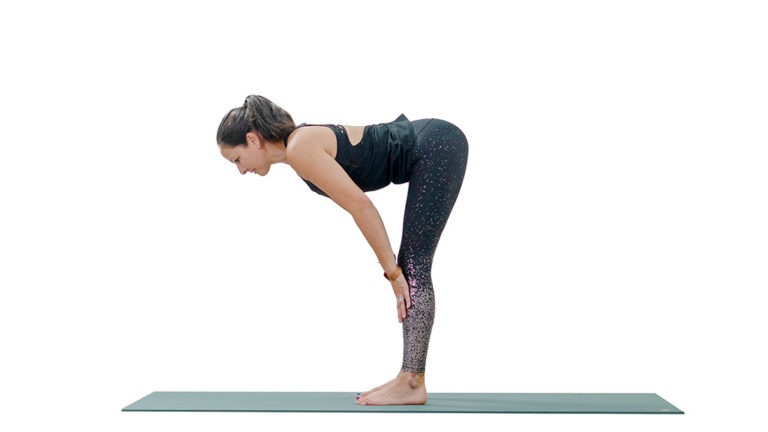
An effective stretch for your hamstrings and calves ardha uttanasana (ARE-dah OOT-tan-AHS-anna), is often used during vinyasa sequences to connect the breath as you flow from one posture to the next.
Philosophy + Origin
One of the reasons ardha uttanasana is used so much in vinyasa yoga classes is that it positions the body for chaturanga dandasana. Because it engages the navel and core, it’s a powerful pose for warming up the body, which is why it’s included in warm-up sequences. Despite its sometimes transitory nature, the pose also engages the navel chakra (manipura), which can bring the practitioner increased confidence and willpower.
ADJUSTMENTS/MODIFICATIONS:
- Place fingertips on the shins or blocks.
- Place hands on a chair or wall.
- Bend knees as much as needed to offer more space for the spine and lower back.
- Although the name of the posture suggests “half,” it doesn’t mean that you must lift half way up. For some, even a quarter lift provides a powerful stretch for the backs of the legs without compromising alignment.
STEP-BY-STEP:
- Begin in a standing forward bend (uttanasana).
- Inhale to reach your chest forward, lengthening the sides of your torso.
- Place your fingertips on the ground, or hands to shins.
- Bring your gaze to the ground in front of you, neck in neutral alignment.
- Hold the lifted pose for a couple breaths before exhaling back to forward fold.
PREPARATORY POSES:
- Standing forward bend | Uttanasana
- Plank pose | Phalakasana
- Mountain pose | Tadasana
SEQUENTIAL POSES:
- Wide-legged forward fold | Prasarita padottanasana
- High to mid plank | Chatarunga dandasana
COUNTER POSES:
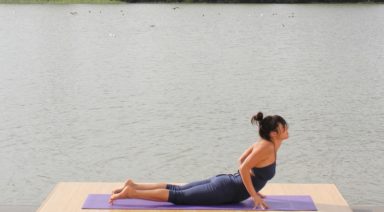
- Cobra pose | Bhujangasana
- Sphinx pose | Salamba bhujangasana
- Supported fish pose | Matsyendrasana
SANSKRIT:
- Ardha = half
- Uttana = intense stretch
- Asana = pose
PHYSICAL BENEFITS:
- Stretches your hips, hamstrings, calves and lower back.
- Strengthens your thighs, core, and back.
- Warms your body.
ENERGETIC BENEFITS:
- Engages the navel chakra, manipura.
- Increases confidence, willpower, and self-esteem.
Legal Disclaimer Before participating in any exercise program or using any fitness products or services that may be described and/or made accessible in or through the Gaia Website and/or the Services, you should consult with a physician or other healthcare provider. Read more about Gaia’s Terms Of Use.

About the Author

Urdhva Dhanurasana: Upward Facing Bow Pose
ADJUSTMENTS | BENEFITS | SEQUENCING | SANSKRIT | STEPS
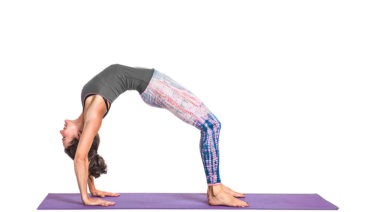
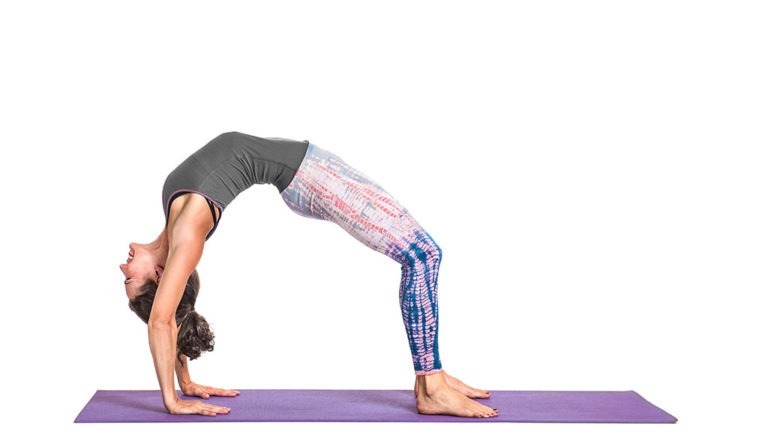
Urdhva dhanurasana (OORD-vah don-your-AHS-ah-nah) is a deep backbend that can cultivate flexibility, strength, and patience.
Philosophy + Origin
Urdhva dhanurasana is thought to increase the vital life force in the body, specifically around the heart. When practiced regularly and with dedication, even if the “full” pose is never achieved, upward facing bow pose can awaken courage, compassion, and radiance in the mind and spirit.
ADJUSTMENTS/MODIFICATIONS:
- Blocks on the wall: Place two blocks against a wall, about shoulder distance apart. Place your hands on the blocks as you move into urdhva dhanurasana to help elevate your upper body and better engage your shoulder blades.
- Strap: Use a strap around your upper arms to prevent the elbows from splaying as you press upward.
- Block: Place a block between your thighs to keep your lower body engaged.
- One-legged: Try out eka pada urdhva dhanurasana by lifting up one leg at a time.