Extended Side Angle Pose: Utthita Parsvakonasana
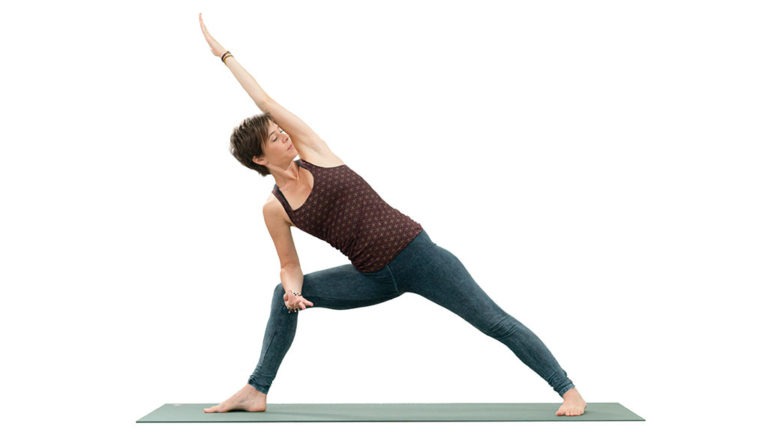
Utthita parsvakonasana (oo-TEE-tah PARZ-vuh-ko-NAHS-uh-nuh) is a standing pose that stretches the legs, knees, hips, and ankles while increasing endurance and stamina.
SANSKRIT
- Utthita: extended
- Parsva: side
- Kona: angle
- Asana: pose
PHYSICAL BENEFITS
- Strengthens your thighs, hips, knees, and ankles.
- Stretches your groin, back, spine, waist, ankles, and shoulders.
ENERGETIC BENEFITS
- Increases endurance and stamina.
PREP POSES
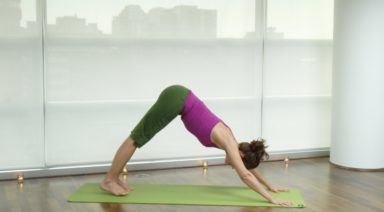
- Downward facing dog | Adho mukha svanasana
- Warrior II | Virabhadrasana II
- Low lunge | Anjaneyasana
SEQUENTIAL POSES
- Triangle pose | Trikonasana
- Half moon pose | Ardha chandrasana
- Bound extended side angle | Baddha parsvakonasana
COUNTER POSES
- Pyramid pose | Parsvottanasana
- Standing forward fold | Uttanasana
- Reverse warrior | Viparita virabhadrasana
ADJUSTMENTS/MODIFICATIONS
- Rest your forearm on the top of your front thigh. Draw your shoulders away from your ears and stay engaged in the sides of the torso to prevent collapsing toward the ground.
- Place a block under your bottom hand to bring the ground closer to you.
- Keep your gaze forward or down to the floor to invite more space in the neck.
STEP-BY-STEP
- Begin in warrior II pose with your right foot forward.
- Reach your right arm toward the top of your mat, extending through the sides of your torso. When you reach as far as you can, lower your right hand down and left hand toward the ceiling, both palms facing the left side of your mat.
- Draw both shoulders away from your ears. Square your shoulders to the left side of your mat.
- Hold for 3-5 breaths, then return to warrior II and release. Repeat on the other side.
###Legal Disclaimer Before participating in any exercise program or using any fitness products or services that may be described and/or made accessible in or through the Gaia Website and/or the Services, you should consult with a physician or other healthcare provider. Read more about Gaia’s Terms Of Use.
About the Author

Virabhadrasana III: Warrior III Pose
ADJUSTMENTS | BENEFITS | SEQUENCING | SANSKRIT | STEPS
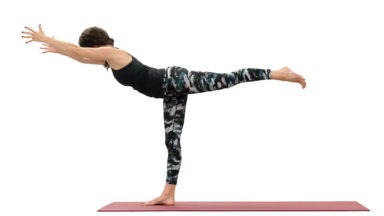
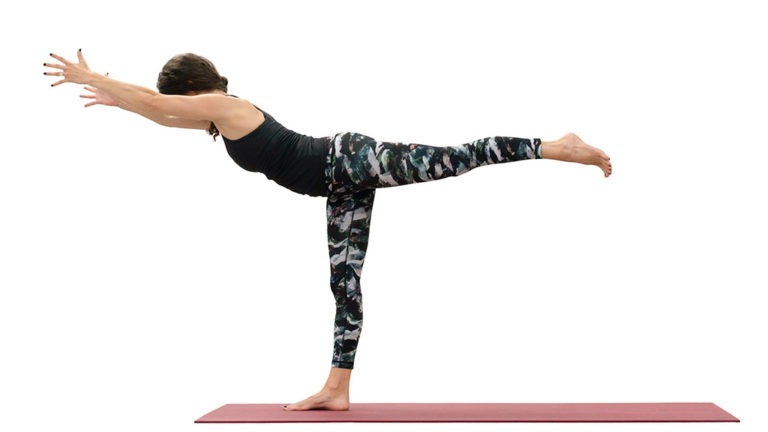
Warrior III, or virabhadrasana (veer-ah-bah-DRAHS-ah-nah) III, is a challenging pose of balance and strength.
Philosophy + Origin
A fierce warrior, Virabhadra is often depicted as having a thousand heads, eyes, and feet. Draped in the skin of a tiger, this warrior wields a thousand clubs. In Virabhadra’s origin story, he is created from a single dreadlock from Shiva’s head, a manifestation of the rage he feels upon feeling like his true love has died. The shape of virabhadrasana III comes from this story, the moment when Virabhadra beheads the king Daksha and extends forward to place the head on a stake.
Despite the outward appearance and violent origin, this powerful pose is actually a great reminder of our own inner strength and the measures we would take in the name of true love.