What is Infinite Consciousness?
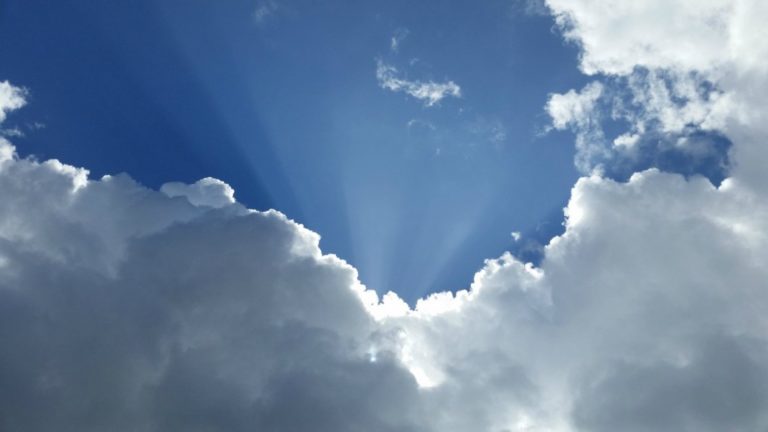
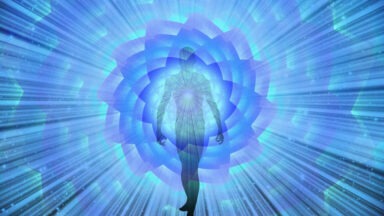
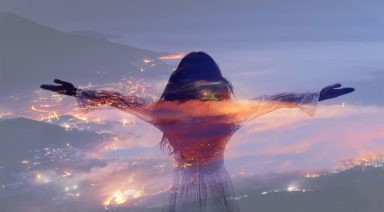
Have you ever stood on the edge of the Grand Canyon, or gazed into the heavens by a calm lake on a moonless night? Did you feel your self expand into that vast unimaginable vacuum, while at the very same instant you felt yourself collapse inward into your singleness, your simple insignificance? Is that a trick question? Maybe it only seems a little tricky because the answers to these crazy huge mysteries don’t just lie out there in the infinite universal consciousness, but also right in here, within the [not-so-finite] form that we call our Self.
The nature of everything we see, and everything we are, is defined and determined for us solely by our own consciousness. Yet everywhere we look there’s clearly more and more “outside” consciousness entering the world we can see, all of the time. Add to that its seemingly inexhaustible potential in many of the forms of the world that our limited perceptions won’t let us see, directly. And what of the possible consciousness alive in worlds beyond our own? Without even a good definition of consciousness to work with, how can we expect to comprehend its real range and reach?
“Science cannot solve the ultimate mystery of nature. And that is because, in the last analysis, we are a part of the mystery that we are trying to solve.” ::Max Planck
The Range and Reach of the Universal Consciousness Quandary
As unique, autonomous human beings, none of us can really wrap our heads around the vastness of space and what forms of intelligence may exist out there, but when the Kepler space telescope keeps finding thousands of earth-like planets, the sheer potential for conscious intelligent life is staggering. Likewise, we’re never particularly aware that deep within us there are endless tiny organisms constantly going about the moment-to-moment choices we all make to stay secure, find nourishment, have sex, and possibly discover some sense of purpose and fulfillment.
Whether we’re looking out into the cosmos, or into the sub-atomic constructs of the natural world, our power to discern the range and influence of consciousness is a direct result of how deeply our tools of observation allow us to penetrate. As our telescopes and microscopes improve, and our theorizing based on those observations becomes more complex and comprehensive, we find ever more structures of apparent consciousness in every direction we look. It seems that, endlessly, either we are projecting our own consciousness into our expanding reality, or that we find it there waiting for us already.
Universal Consciousness Definition
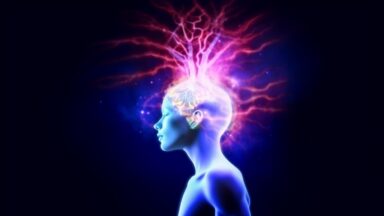
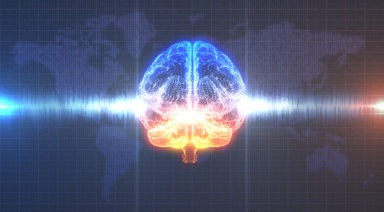
The simplest explanation appears to be this: Consciousness is an infinite energy field that creates the conditions to manifest different realities according to differing sensory perception. In this sense, consciousness is a pre-existing, universal presence, and fundamental element of both mind and matter—an ancient concept, known as panpsychism. As we have no means of demonstrating the emergence of consciousness from matter, we can only assume that it’s been there all along, and that everywhere we look we see matter expressing consciousness.
And in any direction that we investigate deeply, we discover the forms of the observable world manifesting themselves in series of reliably recurring patterns. Basic building-blocks — not just of of everything we can see, but of everything we can’t see, as well. There appears to be a design standard that suggests a seamless conscious intelligence—whether you believe it’s God, all a big coincidence, or just none of your business. They are the limitless variations on the forms of what is.
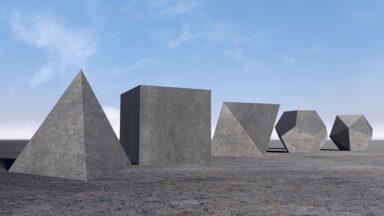
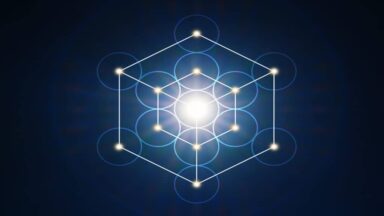
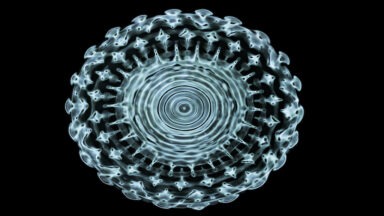
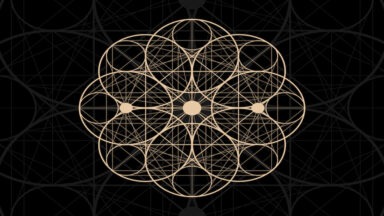
All the forms of our material reality realize themselves through a kind of spacetime ”sacred geometry” (as described in David Wilcock’s “Wisdom Teachings”). Constructs like the merkaba and torus, and fractal, holographic emanations exist at every scale manifesting in myriad ways as crystalline structures, force fields of electro-magnetism or gravity; or in constellating structures as in atoms and molecules, stellar systems, galaxies, and more. It’s not at all coincidental that the neurons and synapses in our brains resemble the cosmological patterns of the universe, and the connective web-like extrapolations of the internet (whose exponential growth indicates a kind of infinitely expansive consciousness in itself).
Proponents of the ‘consciousness as an existing infinite field,’ like Dr. Stuart Hameroff of the University of Arizona and Sir Roger Penrose (David Hawking’s former teacher, and his co-discoverer of the black hole/singularity theory) theorize a molecular structure describing the entanglement of everything in our material reality within a vast quantum plenum called the Planck Field. A field energized by consciousness—and, in a way, a modern avenue to our old idea of panpsychism.
The Old Way of Thinking About Consciousness is New Again
From Plato’s metaphysical concept of the universe, where eternal, indestructible forms—imperceivable forms beyond space and time—constitute the foundation of everything we are and can witness; to what the Buddha referred to as Alaya, or “storehouse consciousness” when he discussed the forms of consciousness; to when Dr. Carl Jung theorized his “collective unconscious,” and stated: “It is the matrix of all conscious psychic occurrences,” perhaps nothing describes the field of infinite consciousness like Hinduism, the oldest of the world’s enduring major religions.
“I pervade the entire universe in my unmanifested form. All creatures find their existence in me, but I am not limited by them…They move in me as the winds move in every direction in space.” ::The Bhagavad Gita 9:4‑6
While Buddhism is based on a spiritual evolutionary continuum revealed in levels of consciousness, Hinduism (the philosophical parent of the Buddha) comprehensively addresses the range and reach of consciousness itself. Sanskrit cultures describe an all-encompassing field that underlies everything, and becomes everything, called Akasha. From this, all the manifesting attributes of our universe realize themselves through the eternal state of Brahman—the infinite, undifferentiated, creative dynamic that serves as the seat of all consciousness.
To put it in a Western layman’s terms (like mine), Brahman is what we may be compelled to call “The Mind of God.” The grounding intelligence that permeates and manifests everything we can know (an idea I discussed in an earlier article, Is God Consciousness…or Vice Versa). Each of us is connected to Brahman through Atman, our personal soul, or self. Atman is our own consciousness, which we struggle to expand in order to see beyond the illusory forms of the material world (called Maya) towards our realization of the infinite.
Pretty progressive stuff for being so old, don’t you think?
So What Does Infinite Universal Consciousness Mean for Me?
So here we are, where the observer, the observed, and the whole darn process opens up within our shared field of infinite consciousness, dependent upon our conscious awareness of it—which is where the personal meaning comes in for each of us in terms of our direct experience.
“Consciousness is that in which all experience occurs; is that with which all experience is known; is that out of which all experience is made.” ::Rupert Spira
Many of us have had breakthroughs in our lives, radical transformations resulting from the expansion of our consciousness (atman) into our infinite potential. These often result as a product of trauma, loss, great fortune, or the presence of a remarkable teacher, or life-lessons where our concept of self was destroyed, then recreated.
Suddenly, we’re granted greater access to an extra-dimensional aquifer, where our conscious awareness no longer thinks of itself as coming from anywhere. Where we realize that each of our finite minds originates from the same infinite field of consciousness.
Then we can sense our entanglement, our inter-connectedness with everything, and behave accordingly. Responsibly. We recognize that in living an “infinite life” (thank you, Robert Thurman), our obstacles are old foes and our possibilities are limitless. We begin to recognize that a kind of divine guidance and intuitive intelligence is built—in patterns—into our lives on this level of consciousness.
The evidence of infinite consciousness is all around us, the moment you open up to it. Our capacity for experiencing the infinite is always available—without drugs or even gurus—but maybe with just a little serious practice of meditation. Meditation is the gateway to the infinite, and can lead to revelations of extra-dimensional consciousness in a similar way as described in the heavily documented experiences of near-death survivors, remote-viewers and psychics, and adult—and child—reincarnation subjects (like in the exhaustive research by the University of Virginia’s Department of Perceptual Studies). The realm of infinite consciousness is the realm of transpersonal experience, as well as the realm of the afterlife—of infinite life.
Personally, the evidence of infinite consciousness is available the moment you become willing to deeply investigate the moment. For example, look inside your eyelids—what do you see? You see the actions of your eyes in the absence of light. But something else, too—faint, effervescent waves in a sea of infinite energy issuing directly from our shared source of intelligent awareness. Then you may look into the heavens on a starry night and find that you can’t really focus on that either—but you can sense your spiritual expansion into the limitless grandeur of the cosmos. Anything, everything is possible out there…and everything is possible in here.
“Our deepest fear is not that we are inadequate. Our deepest fear is that we are powerful beyond measure…Your playing small does not serve the world.” ::Marianne Williamson
Almost all the bad things in the world happen as a result of people living constrained by the lonely sense of their singular consciousness. Fearful self-centeredness makes them feel as though they were pitted against everyone else, and they do terrible things.
That is where evil comes from. When we realize and engage in our shared infinite consciousness, we discover that we need other people.
We intuitively act together for the benefit of everyone (and the earth), and good grows and spreads across humanity. People, and the planet, are healed.
The Cosmic Net of Reflection
I’ll leave you with this: The Hindu Vedas, by way of Mahayana Buddhism, give us the gift of the “Net of Indra” (the god of the heaven) — a beautiful metaphoric concept of our relationship to the infinite field of consciousness.
The Net of Indra stretches out in infinite directions, and is comprised of many-faceted jewels, each suspended so that all of its facets reflect all of the other jewels in the endless cosmic net.
In much the same way, we are all joined together in this web of being — all reflecting one another, and the miraculous light that illuminates us and everything we witness in our universe. Delicate. Eternal. Alive.
About the Author
Psychic Abilities May Stem From a Field of Consciousness

Ever have the feeling that you know you’re being watched? Or the feeling of thinking about someone just before they call? Some believe these feelings are merely coincidental or just happenstance, but the fact that they are common and something everyone can relate to, leaves open the possibility that there could be a metaphysical mechanism at play. Now, researcher Rupert Sheldrake says he believes these occurrences are due to a psychic phenomenon that is evidence of a collective consciousness and he’s found this theory to show statistical significance.
Sheldrake is most famous for his theory of morphic resonance, a concept that revolves around psychic capability, which he believes is innate in humans and animals. Morphic resonance states that processes and behavior in nature, particularly learned behavior, can be inherited and transmitted psychically. This theory has made him somewhat of a pariah in the scientific community, which labelled him a heretic for entertaining such a seemingly nebulous concept. Nevertheless, he embraces the criticism and continues to pursue his research.