Researchers Find Genetic Signature in People With Channeling Abilities

New research into channeling is getting closer to validating and explaining the ancient practice, and is showing that everyone had the innate ability to channel.
While the practice of channeling has existed throughout all of history, it has always been shrouded in mystery and misunderstanding. Doctor Helané Wahbeh is the director of research for the Institute of Noetic Sciences, or IONS, whose mission is to reveal the interconnected nature of reality through scientific exploration. Dr. Wahbeh has been practicing and researching channeling for decades. She is the author of the newly released book “The Science of Channeling.”
“The way I define channeling is the process of accessing information and energy beyond our conventional notions of time and space that can appear receptive or expressive,” Dr. Wahbeh said.
“We propose that anybody can channel; that it’s actually this innate human capacity that anybody has. Channeling phenomenon exists on a spectrum from, perhaps, intuition and hunches that everyone can probably say they’ve had at one time or another, to more rare experiences like trance channeling or mediumship or mind-over-matter psychokinesis. And then you have everything in-between, like being able to sense the future or mind-to-mind communication,” she said.
Dr. Wahbeh and the team at IONS have just completed a study in which they analyze the characteristics of 500 channelers to answer the question “what makes a channeler?” They call the unique way in which a channeler receives and uses information their ‘noetic signature.’
“So we coined this term the ‘noetic signature,’ that refers to this unique and diverse fingerprint, if you will, of people’s channeling abilities, and we created a measure to be able to see what that looks like. We call it the noetic Myers-Briggs, which is a personality test, to be able to understand people’s channeling expression. We have 12 different categories of channeling or noetic experiences that make up this noetic signature,” Dr. Wahbeh said.
Now that the inventory is complete, IONS will soon be making it available to the public so that everyone can assess their own unique noetic signature. IONS has also been doing some fascinating research on the genetic basis of channeling abilities. They recently completed a study in which they analyzed the DNA of a group of channelers.
“There are many, many anecdotes where people share that their experiences of channeling run in family, so we did a case-control study. We found 13 high-functioning psychics who had various channeling abilities, we had them give us a saliva sample and we looked at their DNA. So this TNRC18 gene was statistically significantly different in the channelers versus the controls. The controls, the people who said they didn’t have channeling abilities, had the mutation whereas all of the channelers had the original version of that gene,” Dr. Wahbeh said.
“The notion of this supports this concept that we actually all have an innate capacity to channel on some level.”
Watch more:
About the Author

How To Expand Consciousness: 7 Practices To Awaken Your Potential

There is a state of greater presence in which everything becomes more conscious. Before reacting, you can register what is happening inside you; before being carried away by an emotion, you are able to observe it with a certain distance; before repeating a habitual way of thinking, feeling, or acting, you begin to recognize the patterns that activate it.
Little by little, mental habits, beliefs, and internal mechanisms become visible—things that were always there, although they remained hidden beneath the automatic rhythm of everyday life.
The expansion of consciousness is what makes possible this broader, clearer, and more present way of perceiving yourself and relating to the world. In this article, we explore what it means to expand consciousness, what potential awakens when it happens, and seven concrete practices to begin developing it.
Table of Contents
- What Is the Expansion of Consciousness?
- What Potential Awakens When You Expand Consciousness?
- 7 Practices To Expand Your Consciousness
- Meditation: The Gateway to More Conscious States
- Conscious Breathing: The Bridge Between Body and Mind
- Yoga, Qigong, and Other Practices That Integrate Body and Mind
- Contact With Nature: Leaving the Noise to Return to Yourself
- Silence: The Practice of Listening to Yourself
- Sound and Frequencies: Working With Vibration
- Journaling and Self-Observation: Seeing Your Inner World in Writing
- The Benefits of Maintaining a Consistent Practice
- The Less Visible Side of the Process
- How To Integrate Expanded Consciousness Into Everyday Life
What Is the Expansion of Consciousness?
When we function from ordinary consciousness, we live guided by automatisms: learned responses, mental habits, old fears, and inherited beliefs that activate on their own in response to any stimulus. We eat while thinking about something else, pick up the phone without remembering why, react before realizing what we feel. That is the way consciousness operates within its usual range, and it is also the reason why most people live without noticing their own inner functioning.
Consciousness, in simple terms, is your capacity to become aware: of what you feel, what you think, and what happens inside and outside of you. That capacity exists in everyone, but most of the time it functions in a limited way, completely absorbed by what is happening in the mind and emotions. When a thought appears, you become that thought; when an emotion appears, you get lost in it. There is no distance between what you experience and your response: everything happens automatically.
Expanding consciousness means broadening that range. It means beginning to see what you used to do unconsciously: the recurring patterns, the thoughts that arrive without being invited, the conditioning that sustains your identity. The moment that observation appears, something changes irreversibly: you are no longer only what you feel or think, you are also the one observing it. And that small split—being and observing at the same time—is the beginning of everything.
In everyday life, this translates into very concrete moments. Before arguing with someone, you notice the wave of irritation pushing you. Before eating, you realize that you are not actually hungry. Before saying yes, you clearly feel that deep down it is a no. As you expand your consciousness, a small space appears between what happens and your response, and within that space you recover something decisive: the possibility of choosing. That is what it means to awaken a potential that, in most people, remains dormant their entire lives.

What Potential Awakens When You Expand Consciousness?
When people talk about “awakening your potential,” there is no need to imagine extraordinary abilities or hidden powers. It is something much closer than that: human capacities that were always there begin to activate, although automatic functioning had kept them dormant. As consciousness expands, the way you relate to yourself, others, and life also changes.
That change begins to reflect in different aspects of your daily experience. Little by little, certain inner capacities become more accessible and begin to express themselves naturally:
- You discover a more authentic version of yourself: Many decisions, reactions, and ways of acting are born from inherited mandates, emotional habits, and other people’s expectations that you assumed as your own. When you observe them clearly, a more authentic version of yourself appears, one less sustained by the need to fit in or constantly adapt.
- You recover the ability to choose consciously: Between what happens and your reaction, a small space of presence begins to open. That space may seem minimal, but it completely changes the way you live, because it allows you to respond from consciousness instead of automatic impulse.
- The mind stops having the same control over you: Thoughts and emotions continue to appear, but they no longer absorb you in the same way. Instead of reacting immediately to every internal state, you develop the ability to observe it without becoming trapped in it.
- Your priorities begin to reorganize naturally: Situations that once seemed urgent lose weight, while others begin to become essential. It is not a forced change, but a natural consequence of perceiving life with greater clarity.
- You develop a more honest relationship with yourself: You begin to detect patterns, defense mechanisms, and ways of acting that previously went unnoticed. That observation transforms the way you understand yourself and allows you to live with greater inner coherence.
In the series Divine Science, available on Gaia, experts such as Gregg Braden, Theresa Bullard and Dannion Brinkley intertwine science and spirituality to show how expanding consciousness is possible through multiple paths. Across six episodes, the bridges between human potential, consciousness, and physical reality are explored, offering a profound perspective on how to activate your own process.
7 Practices To Expand Your Consciousness
There is no single path to expanding consciousness. What both ancient spiritual traditions and current scientific research do confirm is that certain practices consistently support that process. Most of them do not require special conditions or a secluded environment: they are accessible, complement one another, and can be integrated into any routine. What matters most is not the number of techniques you use, but the consistency with which you sustain one or several of them over time.
-
Meditation: The Gateway to More Conscious States
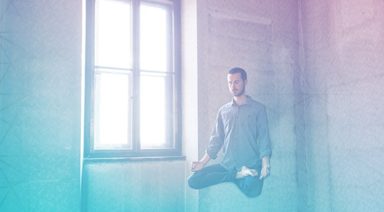
Meditation is the most studied and the most effective practice for training inner observation. By focusing attention on something specific—breathing, a bodily sensation, a mantra—you cultivate the ability to distinguish between what is happening in your mind and who is observing what is happening. That distinction is the foundation of the process.
Over time, the practice changes your relationship with thoughts. What once felt like a current with which you were completely identified begins to be seen as a series of phenomena that appear and disappear, without the need to react to each one. Practicing between ten and twenty minutes a day is usually enough to begin noticing real changes in the quality of your attention.
-
Conscious Breathing: The Bridge Between Body and Mind
Breathing is one of the few bodily functions that can be both automatic and voluntary, which makes it a direct bridge between the body and the mind. Consciously modifying its rhythm also changes your inner state: long, deep breaths calm the nervous system, while more active techniques can generate expanded states of perception.
There are different traditions that work with breathing as a tool for transformation. Yogic pranayama, holotropic breathing developed by Stanislav Grof, and the Wim Hof Method are examples of how this seemingly simple process can generate profound inner changes. Beginning with gentle practices and gradually increasing complexity is the safest way to incorporate it.
-
Yoga, Qigong, and Other Practices That Integrate Body and Mind
Yoga, qigong, and tai chi are disciplines that combine movement, breathing, and attention to create an integrated experience of body and mind. Unlike conventional exercise, their objective is not only physical: they seek to release blockages, improve the circulation of vital energy, and prepare the body to sustain subtler states of perception.
Practicing one of these disciplines consistently changes your relationship with your own body. What was once simply a vehicle for moving through the world becomes a sensitive instrument, capable of registering emotions, energies, and perceptions that previously went unnoticed. That new bodily awareness is one of the foundations for accessing broader levels of consciousness.
-
Contact With Nature: Leaving the Noise to Return to Yourself
Sustained contact with natural environments naturally elevates the quality of attention and the inner sense of presence. Walking among trees, meditating by the sea, or sitting silently in a park generates physiological and emotional changes that science has already documented: reduced cortisol levels, improved heart coherence, and an increased sense of unity with what surrounds us.
In nature, inner rhythms reorganize themselves and the mind encounters less resistance to opening up. This explains why so many spiritual traditions have always recommended natural spaces as privileged environments for reconnecting with deeper dimensions of being. There is no need for a long retreat: even brief periods, sustained over time, make a difference.
-
Silence: The Practice of Listening to Yourself
In a world saturated with stimuli, silence has become an almost revolutionary practice. Setting aside daily moments without screens, conversations, or music allows the mind to settle and subtler perceptions to emerge. Silence is not emptiness: it is the space where what is normally covered by noise becomes perceptible.
When sustained, this practice produces a very specific effect: you begin to listen to what you feel, what you thought during the day, and what you are avoiding. That listening is one of the most powerful driving forces of the process, because it returns information about yourself that the speed of everyday life keeps outside your awareness.
-
Sound and Frequencies: Working With Vibration
Sound is an ancient tool for altering states of consciousness. Mantras, Tibetan singing bowls, binaural sounds, and certain specific frequencies influence brain waves and facilitate entry into deep meditative states. It is a documented response of the nervous system to specific vibrational stimuli.
Incorporating sound bath sessions, conscious frequency listening, or mantra chanting offers an experience different from silent meditation. Vibration accompanies the body, harmonizes it, and creates a bridge between the material and the subtle. It is an especially useful path for those who find it difficult to quiet the mind through attention alone.
-
Journaling and Self-Observation: Seeing Your Inner World in Writing
Writing is a way of making visible what normally remains diffuse. Conscious journaling allows you to observe your thoughts, emotions, and patterns more clearly. Once they are placed on paper, they stop being a blurry current and become concrete information about your inner functioning.
The self-observation cultivated through this practice is one of the pillars of the process. It is not about judging what appears, but about recognizing and understanding it. Over time, that honest gaze toward yourself deactivates automatic mechanisms and makes room for more conscious responses.

The Benefits of Maintaining a Consistent Practice
When practices are sustained over time, changes accumulate and begin to become noticeable in different areas of life. What once required deliberate effort gradually becomes a natural way of functioning. Although each person experiences the process in a unique way, there are effects that appear in most people who walk this path with commitment:
- Greater mental clarity: thoughts stop imposing themselves automatically, and the mind becomes more organized.
- Emotional stability: emotions are processed instead of avoided, which reduces their intensity and emotional weight.
- Sharper intuition: a growing ability emerges to perceive subtle signals and make decisions from a more trustworthy inner sense.
- Better quality relationships: relationships gain depth when they are experienced through presence and listening.
- A sense of purpose: decisions align with a clearer inner meaning, and life acquires a more coherent direction.
- Reduced chronic stress: the nervous system regulates itself, and the ability to remain calm in the face of challenges increases.
- Connection with something greater: a sense of belonging to a larger whole develops, bringing peace and perspective.
These effects do not appear immediately, but they become consolidated when the practice is sustained over time. Each one is a concrete manifestation of the potential that was dormant and that, through practice, begins to unfold in everyday life.
The Less Visible Side of the Process
Alongside these benefits, there is an aspect of the process that is rarely discussed. The expansion of consciousness is often presented in a luminous way, but in practice it also moves through uncomfortable areas. Expanding perception inevitably means seeing what we previously preferred not to see: repressed emotions, beliefs that sustained your identity, relationships that no longer work, deep fears that the rhythm of everyday life kept silenced. This aspect is known in many traditions as shadow work.
These moments can manifest as periods of confusion, temporary sadness, irritability, or a temporary loss of reference points. They are not signs that something is going wrong: generally, they are signs that something is shifting. Moving through them requires patience, emotional support, and in many cases, proper guidance—whether from a therapist, mentor, or community.
It is also useful to distinguish between intense temporary experiences and sustained transformations. A powerful meditation, a retreat, or a mystical experience can generate profound states that last for hours or days, but later fade away. That is not necessarily the expansion of consciousness: it is an experience. True expansion is measured by how your way of perceiving and living changes over the long term, not by the intensity of peak moments.
How To Integrate Expanded Consciousness Into Everyday Life
Accessing expanded states during meditation or a moment of silence is progress, but the real challenge is sustaining that consciousness in everyday life. The presence you cultivate in practice has little value if it disappears once you return to work, relationships, or concrete problems. Integration is precisely about bringing the practice into life.
That integration happens through small gestures. Pausing before reacting, observing your emotions without running from them, choosing a conscious response instead of automatic impulse. Each of those moments is an opportunity for expanded consciousness to become your habitual way of inhabiting the day.
Over time, the line between moments of practice and the rest of your life disappears. Eating, walking, speaking, or working can all be experienced from the same presence felt during deep meditation. When this happens, expansion stops being an experience and becomes a way of being, and the potential that was dormant begins to express itself in every aspect of your life.