Who Are the Knights Templar?
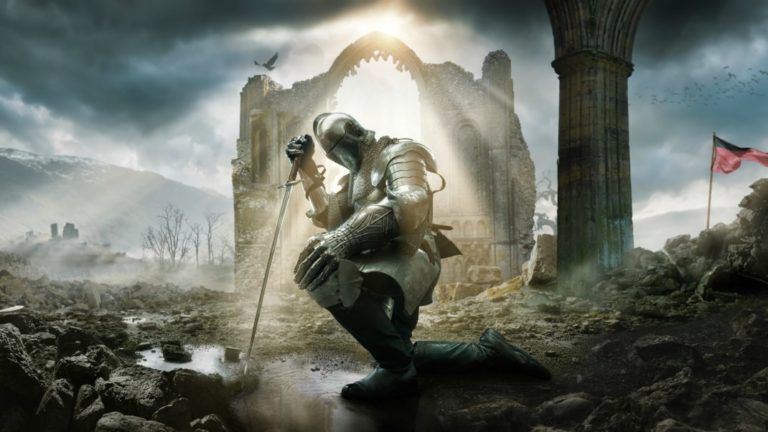
One of the most enduring historical topics, one filled with mystery, drama, abuses of power and outright betrayal, is that of the Knights Templar, the guardians of King Solomon’s Temple and the champions of Christianity in Jerusalem. Chances are, you’ve seen the Templars portrayed in cinema, read about them in novels, or have followed them down alternative historical avenues. Nothing fiction can provide can come close to the truth of what started as a group of nine Knights and ended with one of the most powerful financial and military organizations ever created.
It has been implied through historical speculation, as well as dramatic fiction, that the Knights Templar protected great secrets, too dangerous for the public to discover, as they could disrupt the faith and stability of the Catholic Church, as well as every other religion that relies upon the story of Jesus Christ, as presented in the Bible.
Their connection with the Holy Grail has been implied time and time again, and the belief that they may have known of the offspring of Jesus is a popular theory that has been speculated upon for much longer than most people realize. For those with an interest in Tarot, spend some time with The Chariot card, from the Aleister Crowley Thoth deck. You will discover the theory of the blood lineage of Jesus present in that card if you are willing to look deeply enough.
Who Were the Knights Templar?
We all know that the Middle East is a source of tension, territorial disputes, and war. This fact is nothing new. The Crusades were fought in an effort to recover Jerusalem from the Muslim conquerors of that city. Jerusalem has such importance because it is a sacred focal point for Judaism, Christianity, and Islam.
It was believed that the ability to occupy Jerusalem and control it, was an indication of the divine right to rule and was coveted by both the East and the West. The Crusaders regained control of Jerusalem in 1099. The control of the city was extremely complicated and it was necessary that there be a military force engaged for policing, protective detail, guarding and other duties.
Hugues de Payens, a French knight and nobleman, became the first Grand Master of the Knights Templar. The group initially consisted of nine Knights, supported by a basic staff. Eventually, they would number in the thousands.
Why Were They Called the Knights Templar?
Their name was taken from the fact that they believed that they were camped in what used to be a part of King Solomon’s Temple, specifically the stables, which suited them just fine. Their name as known to us, Knights Templar, simply means the Knights of The Temple. A more correct name for the Knights would be, “Poor Comrades (Soldiers) Of Christ And Solomon’s Temple.”
Unlock the full-length episode Mystery of the Templars with Freddy Silva
What Did The Knights Templar Do?
In addition to maintaining control of the Holy Land, one of the main duties of the Knights was the safe transportation of pilgrims from Europe to Jerusalem and back again. Christian pilgrims were common and the journey was treacherous. The roads were infested with robbers, murderers, and abductors.
Pilgrims without official protection were easy pickings for thugs and were almost certain to fall victim to violence. The Templars were well-trained and honest to a fault. As a formidable fighting force, they were both feared and respected.
In addition to the transport of people and goods, they devised an ingenious plan to keep from moving great amounts of money needlessly through hostile territories. Some consider this to be the first step toward modern banking. The system was remarkably simple.
Money was given to the Templars, in the city of departure, by a pilgrim or family member. The Templar administrators within that city would issue a document stating that fact, so no money actually had to be transported.
Upon arrival in Jerusalem, or whatever city was the destination, the document would be received by a Templar administrator or accountant, and the funds would be released to the pilgrim. If this reminds you of modern checking, it’s for a good reason. The Templars charged an administrative fee for the services rendered.
It could not be called interest, as usury was considered to be a sin. These administrative fees help to build the wealth of the Templars, which would eventually become unparalleled, making them invaluable and yet despised at the same time.
How Else Did the Templars Become Wealthy?
As time went on, entrance into the Templars became exclusive and desirable. Whenever a nobleman joined, and only a nobleman could actually be an actual Knight, he would generally forfeit his properties and wealth to the order itself. Eventually, the order became so rich that they were able to fund armies for nations engaging in wars. It was this very fact that would lead to their eventual demise.
How Did the Templars Live?
Every Knight, and every member of the Templar order beneath the Knights, took an oath of poverty and celibacy. Members were discouraged from speaking to women, even members of their own family and only then when absolutely necessary. To touch a woman was unthinkable, except in the active protection of their safety.
They were said to have fed modestly, lived and slept communally, and shunned worldly pleasures. Their oath of celibacy was taken seriously with grave consequences for those who strayed. It was so strict, that it was not unheard of for members to leave and rejoin the secular world, just as it is now known for holy men and women of religion to leave their calling.
There was a specific hierarchy within the order itself. One could only become a Knight if that station had been held before entering the Templar system. Nobility remained nobility. The Knights were the only fighters to ride horses. Each Knight had squires who saw to his needs and to the needs of his horses. There were servants who took care of most of the menial chores, as well as administrator Knights who ruled over everyone.
At the very top of the order was the Grand Master. He was the ultimate authority, directly below the Pope and, to some extent, the monarch of the kingdom in which the Grand Master lived. The Grand Master’s power was vast and influential, as he held the office for the duration of his life.
As the pinnacle of the Pope’s personal army, so to speak, the Grand Master became a holder of great power and was someone to be reckoned with.
What Brought the Templars to Their Demise?
By the early 1300s, the Templars had become massively wealthy and the funders of war. They had nearly unquestioned power and had been given immunity from the laws of whatever land they lived in, as well as the ability to pass through any border at their whim, without consequence. This latitude gave them the autonomy that some asserted led to corruption and the basic erosion of their original ideals as simple monks with a sacred duty.
The last Grand Master of the Knights Templar was named Jacques DeMolay. It is said that his imperative was to reform the order and attempt to bring it back to its humble roots. It’s probable that DeMolay wasn’t prone to “looking the other way,” when it came to dealing with corrupt monarchs and officials of nations. As a reformer, he would have shaken the web of corruption that seems to follow in the path of government.
Philip IV of France, also known as Philip the Fair, became increasingly intimidated by the power of DeMolay and the Templars. He was also massively in debt to the Knights, as they had funded his war against England. Philip sought to turn France into the undisputed center of power in Europe. To do this, he needed to subjugate and conquer. This took the money and one of his strategies was to expel all the Jews out of France and make what was theirs his, annexing properties and seizing wealth. This wasn’t enough for his plan, so he borrowed from the Templars, perhaps with no intent to repay his debt.
Reformers often face harsh retaliation for their attempt to remove the corruption that stifles the progress of a society or civilization. Jacques DeMolay was no exception to this trend.
On Friday, October 13, 1307, (yes, that’s exactly why) Philip IV of France, in coordination with Pope Clement V, a pontiff put in power by Philip, had all the Knights Templar, no matter where located, excommunicated, arrested and imprisoned on charges of heresy, blasphemy, the worship of unholy idols, sodomy, usury, trampling and spitting upon the cross, and other serious accusations. Jacques DeMolay was imprisoned, tortured, ordered to give up the names and locations of other Templars, all to no avail. He refused to betray those who looked to him for guidance and trusted him with their lives.
Not all Templars were as strong as DeMolay. Some gave up their brethren and were allowed freedom. Others evaded capture and went underground. Others were assessed to be of no threat and were assimilated into other orders, or worked in new capacities, or simply entered monastic orders. It is said that the only country that did not actively seek to eradicate the Knights Templar was Scotland.
In the year 1314, after seven years of torture and inhumane treatment, Jacques DeMolay was publicly executed by being roasted to death. He never gave up his convictions, never admitted to the charges of which he and his brothers were accused, and was defiant to the very end. Before he perished, he pronounced with great certainty that within the year, both Philip IV and Clement V would join him in death. Both men were dead by the end of the year. This brought the formal end to the Knights Templar, or did it?
What Is the Legacy of the Knights Templar?
The interest in the Knights has done anything but diminish. Mysteries abound as to what they actually were up to. What was the mysterious head that they supposedly worshiped, said to be named Baphomet? Some said it was the handkerchief of Veronica, used to wipe the face of Jesus as he carried his cross through the streets of Jerusalem. Some point to the head of John the Baptist, mummified and held as a sacred relic.
The most famous representation of Baphomet is the rendition created by the Eliphas Levi, the great French occultist. This drawing has been misinterpreted, perhaps more than any other graphic representation in the mysteries, and is often mistaken for the devil. It is also known as The Goat of Mendes.
To this day, no one knows exactly what, or if, Baphomet was to the Templars. As to the charge of trampling and spitting upon the cross, there are actually excellent reasons why the Templars might have done such things, in specific initiation rituals. Their meaning would’ve been misconstrued by those who heard of them, just as many of the rituals of secret societies today are completely misunderstood.
The legacy of the Templars, at least in spirit, goes on in the ideals of the unity of cause and an unwillingness to lower one’s ethical standards for any reason whatsoever.
Embracing the Four Cardinal Virtues, Temperance, Fortitude, Prudence and Justice, is a standard still held today by chivalrous orders worldwide.
The concept of giving one’s oath, swearing to adhere to a vow given, regardless of the penalties involved, or more importantly, even if no penalties are implicit, is a direct result of the strength of purpose of the Knights and those like them.
Perhaps the tales of grails and secrets that have disappeared into the fabric of time, protected by noble Knights, are popular because these are the very attributes that we need more than ever in our modern age. Sometimes we can find great comfort in the past.
Until next time, I wish you all peace and love.
About the Author

The History of the Anunnaki and Their Connection to Humanity
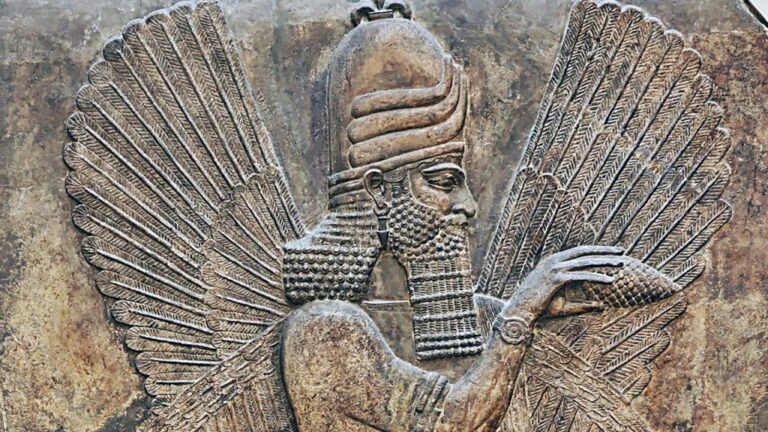
The Anunnaki are mentioned in ancient Sumerian texts as powerful deities who descended from the sky to influence human civilization. These beings not only guided the Sumerians in the development of their culture, but also participated in the creation and evolution of mankind. In this article we explore who the Anunnaki were, their characteristics, and how their presence has been interpreted in different historical and cultural contexts.
Table of Contents
- Who Are the Anunnaki?
- Characteristics of the Anunnaki According to Ancient Texts
- Origin and Meaning of the Term Anunnaki
- The Anunnaki and the Creation of the Human Being
- The Anunnaki in the Bible and Other Sacred Texts
- The Connection Between the Anunnaki and Atlantis
- Are the Anunnaki Still on Earth Today?
Who Are the Anunnaki?
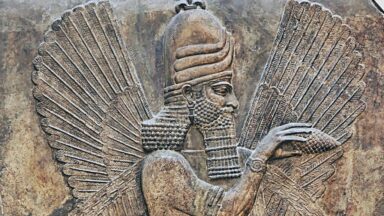
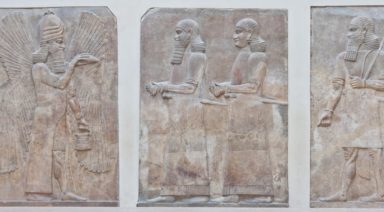
The Anunnaki are a race of deities mentioned in Sumerian mythology, considered to be the sons of Anu, the sky god. These deities were revered for their power and wisdom, and were believed to rule the Earth and the underworld. The Sumerians recorded on their cuneiform tablets the existence of the Anunnaki and their intervention in human affairs, attributing to them the creation of civilization through the transmission of advanced knowledge in astronomy, agriculture, architecture and medicine.
The writer and researcher Zecharia Sitchin popularized the idea that the Anunnaki were extraterrestrial beings from the planet Nibiru. According to Sitchin, these gods arrived on Earth some 450,000 years ago and, through genetic engineering, created Homo sapiens by mixing their DNA with that of terrestrial primates. The main purpose of this intervention was to use humans as labor to extract gold and other natural resources.
In the series Ancient Civilizations, available on Gaia, these theories are explored through various archaeological evidence and ancient texts, offering fascinating insights into the influence of the Anunnaki on human history.
Characteristics of the Anunnaki According to Ancient Texts
Sumerian texts and other ancient traditions attribute to the Anunnaki a number of extraordinary characteristics that distinguish them from other mythological or historical beings. These descriptions allow us to better understand why they were considered figures of superior power and wisdom.
- Celestial origin: They were said to have descended from the sky, specifically from the planet Nibiru, whose elliptical orbit periodically connected them with the Earth.
- Advanced technology: They possessed superior technical knowledge in fields such as astronomy, medicine, engineering and architecture.
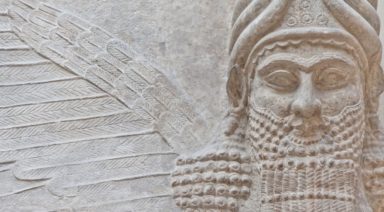
- Imposing appearance: They were described as tall beings, with defined features, long hair and beard, conveying authority and divinity.
- Extreme longevity: It was believed that they could live for thousands of years, which is reflected in the long reigns recorded in the Sumerian King List.
- Genetic capabilities: According to Sitchin, they mastered DNA manipulation and created human hybrids for specific tasks, such as mining.
- Role of rulers: They ruled cities and regions, establishing laws and rules that structured Sumerian social and political life.
- Lasting cultural influence: His teachings left deep traces in Mesopotamian culture, in religious practices, symbols and architectural structures.
Origin and Meaning of the Term “Anunnaki”
The term “Anunnaki” comes from Akkadian and translates as “those who descended from heaven”. In turn, it derives from the Sumerian Anunna, which means “the sons of Anu”, the supreme god of the sky in Mesopotamian cosmology. This name reflects the divine and celestial character of these beings, who were seen as intermediaries between the world of the gods and that of humans.
In Sumerian cuneiform tablets, the Anunnaki appear as figures with authority to establish order on Earth and in the underworld. Their constant presence in mythical accounts suggests that they were not simply local deities, but entities with a fundamental role in the creation, destiny and governance of the human and spiritual world.
The Anunnaki and the Creation of the Human Being
One of the most debated aspects of the Anunnaki is their participation in the creation of human beings. According to the theories proposed by Zecharia Sitchin, the Anunnaki would have arrived on Earth some 450,000 years ago with the objective of extracting gold to restore the atmosphere of their planet, Nibiru. To facilitate this task, they found it necessary to create a workforce adapted to the conditions of the planet.
According to this view, the Anunnaki used their knowledge of genetics to manipulate the DNA of primitive hominids and combine it with their own. The result would have been a new species: Homo sapiens. This hybrid being was not only capable of following orders and performing physical tasks, but also inherited some of the intelligence and technical skills of its creators.
In addition to creating a new life form, the Anunnaki would have guided its cultural development. They did not limit themselves to giving biological origin to human beings, but also sowed the first notions of social organization, spirituality and technology. This would explain, for some researchers, the rapid evolutionary and civilizational leap observed in the archaeological records of Mesopotamia.
-
Genetic Manipulation and Origin of Homo Sapiens
Genetic manipulation appears to be central to the theory of human creation by the Anunnaki. Sitchin posits that these beings had the ability to alter the genetic code with precision, a knowledge far beyond what ancient civilizations could have developed on their own. This act of biological engineering would have given rise to a species capable of reasoning, communicating and collaborating in complex activities.
This new being, the product of a fusion between extraterrestrial and terrestrial DNA, was designed with a functional purpose: to serve the Anunnaki in mining and other tasks. However, over time, this hybrid would have acquired self-awareness and developed capabilities beyond the control of its creators. This would have led to internal tensions among the Anunnaki themselves regarding the future of humanity.
-
Knowledge Transmitted to Ancient Civilizations
In addition to their biological intervention, Sumerian accounts indicate that the Anunnaki shared a wealth of knowledge with humans. This knowledge included astronomy, mathematics, architecture and agricultural practices that fueled the rise of the Mesopotamian civilization. Sumerian temples, ziggurats and irrigation systems are seen as evidence of this advanced legacy.
This transmission of knowledge was not random. The Anunnaki would have chosen specific human lineages to continue their teaching, giving rise to priestly castes and kings who ruled with “divine” authority. Through these intermediaries, the teachings of the Anunnaki were integrated into the social and spiritual structure of early human cultures, many of which continued to worship them as gods for centuries.
The Anunnaki in the Bible and Other Sacred Texts
Some researchers claim that the Anunnaki appear in the Bible under the name of the Nephilim. Genesis 6:4 describes these beings as the “sons of God” who united with the “daughters of men,” giving rise to a race of giants. This narrative bears similarities to Sumerian stories, where celestial gods interact and interbreed with humans, generating special lineages.
Other religious traditions also contain references to superior beings descending from heaven to guide or intervene in human affairs. Apocryphal texts such as the Book of Enoch expand on these descriptions, mentioning the “Watchers,” entities that taught mankind advanced knowledge. These coincidences have led some authors to propose that sacred figures in different cultures may have a common origin in the stories of the Anunnaki.
The Connection Between the Anunnaki and Atlantis
The alleged relationship between the Anunnaki and Atlantis stems from the idea that both represent highly advanced civilizations that existed in antiquity. Some theorists claim that the Anunnaki could have been the true founders of Atlantis, transmitting their technology and knowledge to the first Atlanteans. This hypothesis would explain the level of sophistication attributed to this mythical civilization.
When Atlantis was destroyed, according to Plato’s accounts, some survivors would have taken this knowledge with them to other parts of the world. This would have given rise to new cultures such as the Egyptian, Mesopotamian and Andean civilizations. From this perspective, the legacy of the Anunnaki did not end with Atlantis, but was dispersed throughout the planet through these migrations.
Are the Anunnaki Still on Earth Today?
The possibility that the Anunnaki are still present on Earth is an idea that has gained momentum among certain groups of researchers and enthusiasts. According to this theory, these beings never completely left the planet, but continued to operate from hidden planes or through human elites with whom they would be linked. Some even suggest that they influence global politics, economics and technological development.
However, there is no evidence to support these claims. Most scholars consider these ideas to be speculative. Even so, interest in the figure of the Anunnaki continues to grow, fueled by ancient texts, archaeological finds and the increasing exploration of alternative narratives about the origin of humanity.