Dr. Bradley Nelson On How to Break Down Our Heart Walls

After the year of a global pandemic, more people are experiencing levels of depression and anxiety than ever before.
A recent episode of “Open Minds” with Regina Meredith, explores our subconscious response to the past year’s tribulations in a conversation with Dr. Bradley Nelson, author of “The Emotion Code,” and the forthcoming book “The Body Code.” The two discuss Nelson’s work breaking down our “heart walls,” helping us to live with more joy, connection, and vibrational health, while also allowing us to thrive in difficult times.
Overwriting Negative Tendencies in Our Subconscious
The past year’s collective experience opened new insights into our innate need for connection and belonging. “We’re designed to be together,” Dr. Nelson explains. “We’re not designed to be apart.”
Nelson explains that the unfamiliar landscape we’ve been living in has resulted in our bodies shutting down, especially if there is already a tendency to bury intense and overwhelming emotions. He believes more people are now forming what he refers to as “heart walls,” a protective energy field around the heart, the organ Nelson defines as being “the seat of the soul, the source of love and creativity…the seed of the subconscious.”
Composed of mostly nervous tissue, scientists and holistic practitioners alike have viewed the heart as being another brain. Nelson shares that the majority of the messages between the heart and the brain are sent from the heart. With the amount of continuous stress, worry, or grief over lost loved ones, the heart’s response is one of feeling broken or being in extreme danger. In response, the heart erects a “wall” around it to protect our essential self — the heart wall.
Nelson explains that while this stress response is appropriate during times of crisis when the heart moves into a bunker, the heart wall pattern can live on after things have returned to “normal.” These protective layers, after a crisis has passed, can make it difficult for us to live in health or to give and receive love and affection—a basic function that is key to living our full potential.
Nelson’s work to help people break down the heart wall has had significant and positive impacts on suicidally depressed people. He believes that breaking the heart wall down is the most important work that any of us can do and is accessible by simply tuning into our subconscious self and ability to love.
The Healing Path of Love and Forgiveness
According to Dr. Nelson, the ability to love unconditionally, regardless of money, politics, gender, religion, or different belief systems, is what is going to help save our world. By breaking down the heart wall, we can feel deeper and higher vibrations of love in all its iterations, from romantic love to friendship, to life’s passion, and spiritual connection with higher energy; feelings many have never been able to experience before.
What does breaking down the heart wall look like? Nelson refers to a cup when he discusses the process. He states that most of us live with a very full cup on a daily basis, one that is filled with experiences and traumas from our recent and distant past. In other words, our emotional cups are very full.
And in a stressful time, such as a worldwide pandemic and political strife, and our cups begin to overflow. This can lead to what many of us have experienced — an inability to deal with life and an impending, overwhelming feeling. Nelson’s work helps people to learn how to empty their cups to allow new emotional experiences to be processed, or to not be as susceptible to collecting emotional baggage through resilience and love.
For Nelson, the ability to offer and receive love is the key to breaking down the heart wall. “When you tell someone you love them, really from your heart, even if you’re not saying it out loud, your heart sends that energy to them and their heart picks that up and it understands it on a subconscious level.”
This includes learning how to forgive, while the learned tendency when we are hurt, especially by someone we love, is to withhold forgiveness. Nelson says he believes this behavior only harms us. He advises us to let go of the hurt and practice forgiveness in order to have true peace in our lives, including forgiving ourselves.
Idea “Allergies,” Financial Energy Flow, and the Heart
Beyond our emotional walls, many of us have built up walls around our belief systems when it comes to financial wellness and prosperity. Nelson shares the story of a woman who used his work to help heal her “idea allergy” around financial success, which muscle testing revealed was related to her fear that if she were to be successful, her marriage would be ruined. By consciously clearing her abundance blockage, she more than doubled her income within a month, a goal she’d been chasing for many years.
By using what Nelson refers to as the “universal intelligence,” our imbalances can be revealed by simply asking our subconscious mind if there is an underlying reason why that blockage or trapped emotion exists. Identifying the blockage can quickly resolve the imbalance. The subconscious mind is our purest barometer of what is truly happening within us, from nutritional deficiencies, to emotional baggage, to so much more, if we believe what Nelson describes as, “our perfect comprehension.”
The Future of Healing
After a decade of working with many people who Nelson said had “no hope,” he believes that the work of the subconscious represents the future of healing. A former computer programmer, Nelson applied his past background to his new path as a healing practitioner, comparing our subconscious to a massive database that can be accessed through The Body Code and The Emotion Code.
Whichever approach you choose, the important thing, as Nelson points out, is to “trust your little inner voice, that voice that comes from the light and we’ll gradually ascend to higher and higher planes.”
For Nelson, that little voice is our birthright because “everyone has the ability to heal—to heal themselves, to heal their family members, and their loved ones.”
Nelson offers this way of looking at the challenging times we’ve all been living through: “As things seem to get darker, somewhere things are getting lighter…the light and the dark always stay in a state of balance.” He advises us to not worry if we’re “looking too much at the darkness” and invites us to also “look for the light because it’s increasing too.”
About the Author

The Brain-Heart Connection
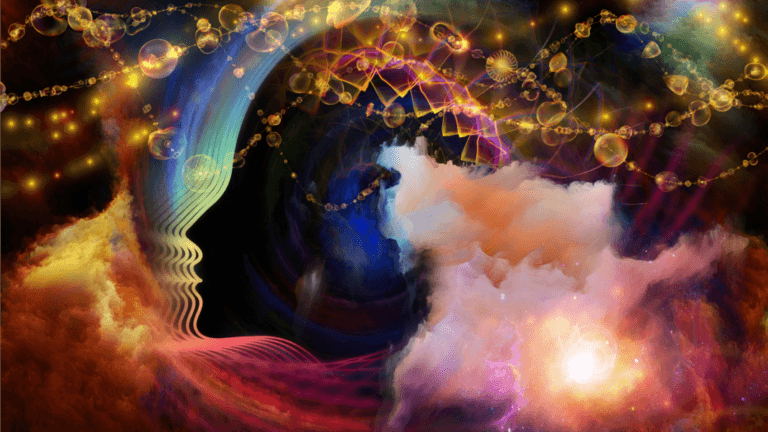
The brain: a 3-pound mass of protein, fat, and 100 billion neurons where thoughts are processed and stored. The heart: a half-pound, fist-sized electrical system capable of pumping up to 2000 gallons of blood through the passages of your veins and arteries in one single day, where emotions are believed to be deeply felt.
Both physiologically and psychologically speaking, the brain and the heart provide us with sustaining necessities. Lifetimes could be spent focusing on one or the other of these human super-entities individually; indeed this has been the case for thousands of cardiologists, neuroscientists, and spiritual leaders spanning the history of humankind seeking to unearth information about two of the most powerful drivers of life.
History of the Brain
When laying the foundation for a discussion on the brain/heart connection, it is important to consider the history of each. The organs of the brain and the heart have each seen their own evolution in terms of biological discovery, investigations, and spiritual symbolism.
The first written recording denoting the brain hails from Egypt on a papyrus scroll written about 1700 BC, as part of a document composed of 48 major injury cases, of which 28 noted were head injuries. This document, known as the Edwin Smith Surgical Papyrus, details a wound that had opened both the skull and the brain, a never-been-seen before medical analysis. Interestingly enough, the medic performing the examination mentioned pulsations of the brain itself; we now understand this as a reference to the pulse of the heart. According to Dr. Eric Chuder at the University of Washington at Seattle, ancient Egyptians did not recognize the importance of the brain’s functionality; in preparing the deceased for mummification, organs were extracted from the body. While the heart and other organs were removed and stored in jars close to the body or replaced back into the body itself, the brain was thrown away. It wasn’t until developments in the time Classical Greece and Rome that the brain began to gain recognition as a vital organ.
History of the Heart
The heart has been an object of scientists’ affection for centuries. Aristotle, the Greek philosopher, declared, even glorified, the heart as human being’s most prized and necessary organ controlling all functions of the body as well as thought and emotion; Ancient Egyptians regarded the heart as the center of all life. Unlike the brain, early understandings of the heart put this particular organ on a pedestal from both scientific and spiritual angles, figuratively and quite literally.
Drawn symbols of the heart similar to what we identify with today can be traced back to the Ice Age when Cro-Magnon hunters 10000 to 8000 BC first began using the shape.
In Ancient Aztec culture, communities paid respect to the gods they believed to be responsible for their existence through human sacrifice, and in doing so would ask for abundant crops amongst other requests. An important aspect of this ritual was removing the sacrificee’s still-beating heart on an altar as part of a ceremonious offering. Countless religious texts including the Bible often reference the heart to note the intention behind particular decisions and personalities, both positive and negative.
History of the Brain-Heart Connection
Hundreds of years of research and observation of the heart and brain eventually led to the manifestation of knowledge establishing the existence of the brain/heart connection. Anatomically speaking, Aristotle believed that other organs, including the brain, served as cooling agents for the heart. As further research began to unravel over the course of history, the dominance of the proven facts behind the brain’s functions took precedence over the mysteries of the heart, whose importance, up until the last few decades, has been somewhat demoted and whittled down to its existence as a glorified pump. It has become common knowledge that the brain sends signals to the heart by way of the autonomic nervous system, causing the pattern of heartbeats to slow, flutter, pound, and the like; it is commonly mistaken that the heart simply intakes cues from the brain and a change in palpitation patterns ensues.
Recent Research
According to research conducted over the course of the last four decades at the HeartMath Institute, the brain-heart connection influences each moment in which we exist.
It has been proven more recently that the heart does indeed respond back to the signals sent from the brain, and sends its own organically created messages by way of what is known as the intrinsic cardiac nervous system, and composed of cells found in the brain.
You can think of the communication between the brain and the heart as being spoken in the same language using four distinct dialects; neurological, biochemical, biophysical, and energetic exchanges occur and create unique results. When the body and mind experience stressful conditions, the rate of our heartbeat increases. This, in addition to other effects, often maims our capacity to make well thought out decisions, retain pertinent information, and pay attention to our surroundings; in short, cognitive functions are grossly stunted when feelings of overwhelm and anxiety are experienced. Stress in its many forms takes a toll on all facets of our health and wellbeing.
Positive emotions and experiences have quite the opposite effect. When we experience joy, happiness, and the sense of freedom, for example, our heartbeat and thoughts become in tune with one another, bringing us into a state of homeostasis, or balance . When thoughts and the heartbeat are recognized as being in neutrality, it has been proven their rhythms are erratic in nature; when we have the opportunity to reach homeostasis is when everything functions in sync.
Brain-Heart Connection and Meditation
Phrases such as “speaking from the heart,” “crying your heart out,” and the like truly do hold merit beyond common word play. Learning to access our emotions in an intelligent and useful way is possible when we employ the tool of meditation, which, according to the Center for Disease Control and Prevention, over 19 million Americans are engaged in a as a regular practice.
Meditation offers us a platform for awareness and connection within self, and brings us closer to a place of balance, physically, mentally, emotionally, and spiritually. Unveiling these pathways to our personal fortification helps us to show up fully, whether we are called to stand up for ourselves, manifest with clear intention, or engage with unexplainable phenomenon.
Making sure our minds and our hearts are individually healthy is imperative for our wellness and longevity. It can be almost overwhelming to consider the independent power both of these organs posses in terms of the sustenance of life. Setting aside time for connecting our brains to our hearts can assist us in living at our highest level of intuition and vibration. Just as the heart beats in different patterns depending on neurologically transmitted signals, the energetic frequency at which we live reflects this in its tendency to ebb and flow.
A seated meditation practice can be useful for getting in touch and finding congruency between the body’s natural metronomes: the brain, the heart, and the breath. In a place of conscious, engaged centeredness, you are able to lay down the tracks on which your emotional resilience, which the HeartMath Institute defines as, “the capacity to prepare for, recover from and adapt in the face of stress, adversity, trauma or challenge”, can travel with ease when faced with any kind of interruption inflicted upon the brain and the heart.
How to Practice Your Own Brain-Heart Connection Meditation
- Prepare yourself for seated meditation: If you are new to the practice of mindfulness and sitting, make sure you are comfortable and prepared.
- Find a guide that is right for you: HeartMath Institute offers a technique called the Quick Coherence Technique, a three-step process focusing on attention, breathing, and feeling.
- Be experimental: If a seated meditation practice is not your cup of matcha, an invigorating yoga practice focused on the flow of these same energies can also help to bring you into greater connection within.
- Journal about your results and revelations: Being able to look back on your journey can be a method of inspiring from within, no matter what kind of practice you are focusing your energy on.