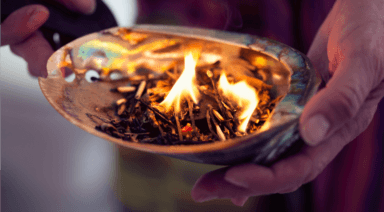
Exploring the Sacred Four Directions and Medicine Wheel in Native American Culture

The Native American tradition of recognizing the Four Directions—East, South, West, and North—and the central concept of the Medicine Wheel capture profound spiritual significance and cultural values across numerous indigenous communities. This revered system honors not only the physical elements of the world but also the stages of life, sacred directions, and the cycles of life inherent in Mother Earth. This article delves into the symbolism of each direction and the comprehensive meaning of the Medicine Wheel in Native American tradition.
Insights into the Four Directions
Each of the cardinal directions holds a unique symbolic meaning across many Native American traditions. The directions are commonly associated with specific colors, elements, animals, life stages, seasons, sacred plants, and spiritual attributes. While interpretations may vary by tribe, the following reflects widely recognized associations:
East – Air
- Color: Yellow
- Animal: Eagle
- Element: Air
- Season: Spring
- Life Stage: Birth / New Beginnings
- Sacred Plant: Tobacco or Sweetgrass
- Significance: East represents the rising sun, clarity, wisdom, and new beginnings. It is the direction of vision, spiritual insight, and awakening—energizing the day with light and understanding.
South – Water
- Color: Red
- Animal: Buffalo
- Element: Water
- Season: Summer
- Life Stage: Youth
- Sacred Plant: Cedar
- Significance: South symbolizes warmth, trust, and emotional growth. Aligned with water, it reflects fluidity, learning through experience, and the nurturing energy of summer.
West – Earth
- Color: Black
- Animal: Bear
- Element: Earth
- Season: Autumn
- Life Stage: Adulthood / Maturity
- Sacred Plant: Sage
- Significance: West is associated with introspection, grounding, and maturity. As the sun sets, it invites reflection and connection to the natural world, offering wisdom through self-awareness.
North – Fire
- Color: White
- Animal: Moose
- Element: Fire
- Season: Winter
- Life Stage: Elderhood / Wisdom
- Sacred Plant: Sweetgrass or Sage
- Significance: North represents endurance, cleansing, and transformation. It is a place of strength and resilience, where fire symbolizes purification and the wisdom gained through life’s challenges.
The Medicine Wheel as a Guide to Life
The Medicine Wheel is a sacred emblem used by many Indigenous cultures to express the cyclical nature of life and the interconnectedness of all things. While each tribe may have unique interpretations, the wheel is commonly divided into four quadrants that reflect:
- The Circle of Life: A continuous cycle of birth, growth, death, and renewal.
- The Four Life Stages: Birth, youth, adulthood, and elderhood—each aligned with a direction.
- The Four Seasons: Spring, summer, fall, and winter, representing natural rhythms and transitions.
- The Four Aspects of Wellness: Physical, emotional, mental, and spiritual needs—offering a holistic framework for balanced living.
- Interconnectedness: Emphasizes the unity of all beings, nature, and the spiritual world.
- Health and Healing: Serves as a guide for achieving balance and well-being in all areas of life.
- Spiritual Beliefs: Connects to sacred relationships with Father Sky, Mother Earth, and the Great Spirit.
- Tribal Heritage: Reflects the rich teachings, values, and perspectives of various Native American tribes, including the Navajo and Lakota.
By incorporating these themes, the Medicine Wheel becomes more than a symbol—it serves as a living philosophy, teaching respect, balance, and connection with all of creation.
Ritual of Calling in the Four Directions
Engaging in significant life events or seeking spiritual guidance often involves the ritual known as “Calling in the Four Directions.” This ceremony honors each cardinal direction and invites the energies and spirits associated with them into the ritual space. A typical script for this ceremony might include:
- East: “From the East, the land of the rising sun, we invite the spirit of the Eagle, bringing us vision and enlightenment.”
- South: “From the South, the realm of the warming sun, we call upon the spirit of the Buffalo, offering us strength and growth.”
- West: “From the West, where the sun sets, we summon the spirit of the Bear to bring healing and reflection.”
- North: “From the North, the place of the cold winds, we ask the Moose to join us, teaching resilience and wisdom.”
Assignment: Find Your True North
Knowing the cardinal directions and where you stand in relation to them is an essential aspect of connecting to the natural and spirit worlds. Ancient cultures of the world, in tune with the cycles of the seasons and the stars, knew how to orient themselves if lost and likely intuited their location naturally due to practice.
Set a reminder to locate true north intermittently throughout the day; for example, at sunrise, midday, and sunset, use a compass to find north. Stand facing north and notice the angle of the sun and landmarks that may guide you without a compass.
Four Directions Ceremony: Open Sacred Space
Call upon the four directions in this invocation from the Q’ero shamans of Peru to ask for a blessing from the spirits in your endeavors. Consider creating an altar representing each direction. To begin, take some deep breaths, let go of mental preoccupations, and align with your heart’s intention to create sacred space. As you face each direction, smudge or fan sage, blow scented water, or shake a rattle and say the prayer aloud.
Face the south with one arm up and the other palm open to receive.
To the Winds of the South,
Great Serpent,
Mother of the life-giving waters,
Wrap your coils of light around me.
Remind me of how to let go and shed old ways of being.
Teach me to walk the way of beauty.
Face the west with one arm up and the other palm open to receive.
To the Winds of the West,
Mother Jaguar,
Support me as I see my own fears.
Teach me how to transform my fears into love.
Remind me of how to live with impeccability.
May I have no enemies in this lifetime or the next.
Face the north with one arm up and the other palm open to receive.
To the Winds of the North,
Royal Hummingbird,
Ancient Ones,
Teach me about your endurance and your great joy.
Come to me in the dreamtime.
With honor, I greet you.
Face the east with one arm up and the other palm open to receive.
To the Winds of the East,
Eagle or Condor,
Great Visionary, remind me to lead from my pure heart.
Teach me to soar to new places, to fly wing to wing with Spirit.
Place one palm on the earth and the other arm up.
Mother Earth – Pachamama,
I pray for your healing.
Let me soften into your wisdom.
May I take great care of you, so that my children and my children’s children
may witness the beauty and abundance you offer me today.
Raise both arms to the sky.
Father Sun, Grandmother Moon, to the Star Nations,
Great Spirit – you who are known by a thousand names,
And you who are the Unnamable One,
Thank you for bringing me here at this time.
Close the Ceremony
When you have finished your ceremony, sacred space must be closed. This can be done silently or spoken aloud, but it must be intentional. Thank the serpent, jaguar, hummingbird, and eagle for their wisdom. As you release their energies back to their four directions, take a few deep breaths, acknowledge yourself back in the space you are in, and witness any changes in your being. Take any inspiration gleaned from your sacred space and share it with the earth, your family, and your community.
About the Author

Shamanic Soul Retrieval: How to Recover Parts of Our Soul?

“Every book…has a soul. The soul of the person who wrote it and of those who read it and lived and dreamed with it. Every time a book changes hands, every time someone runs his eyes down its pages, its spirit grows and strengthens.” ~ Carlos Ruis Zafon
It has been said, “The best things in life are free.” We can all agree it’s nice to be surprised with a gift, but not just any gift. The gift that arrives in your life precisely when you are ready to receive it. The gift is clearly a message to you and for you.
In this case, the gift is Soul Retrieval: Mending the Fragmented Self by Sandra Ingerman.
With graceful delivery of rarely discussed phenomena, Soul Retrieval: Mending the Fragmented Self combines shamanism and psychology to explain the effects of trauma that cause parts of the soul to leave the body and the process by which the part(s) can be retrieved.
Follow along as renowned psychotherapist, shamanic teacher, and author Sandra Ingerman delves into soul loss and retrieval.
What is Soul Loss?
Sandra Ingerman’s Abstract on Shamanism states that “there are many common symptoms of soul loss. Some of the more common ones would be dissociation, where a person does not feel fully in his or her body and alive and fully engaged in life. Other symptoms include chronic depression, suicidal tendencies, post-traumatic stress syndrome, immune deficiency problems, and grief that just does not heal. Addictions are also a sign of soul loss.”
For those who have lost parts of themselves, knowingly or unknowingly, “tremendous amounts of psychic energy” are unconsciously spent looking for the lost parts.
What Causes Soul Loss?
According to Ingerman, “The basic premise is whenever we experience trauma, a part of our vital essence separates from us in order to survive the experience by escaping the full impact of the pain.” This quiet occurrence, known as soul loss, takes the form of a perpetual feeling and experience of incompleteness and disconnection.
Ingerman says, “Anytime someone says, ‘I have never been the same’ since a certain traumatic event, and they don’t mean this in a good way, soul loss has probably occurred.”
Sandra Ingerman on Lost Soul Parts
Sandra Ingerman holds a master’s degree in counseling psychology from the California Institute of Integral Studies. She is a licensed marriage and family therapist, professional mental health counselor, the author of more than ten books, and a board-certified expert on traumatic stress who was awarded the 2007 Peace Award from the Global Foundation for Integrative Medicine.
As a leading authority on soul loss and retrieval, Ingerman’s highly regarded career spans 35 years of conducting workshops and soul retrievals around the world.
For Ingerman, the leading practitioner of soul retrieval whose own spiritual journey to recapture her soul led her on various spiritual paths. The answer she found was in the ancient tradition of shamanism, which views soul loss as an important cause of illness and death.
The word shaman, originating from the Tungus Tribe of Siberia, means “one who sees in the dark.”
Soul Loss in Society
According to Ingerman, “A reflection of how much soul loss people are dealing with” is evident when “so many governments and businesses are valuing money over life.”
However, Western medicine has no framework for this kind of diagnosis because it only deals with imbalance when it appears on a physical and mental level.
Western medicine “treats chronic pain with pain medication, insomnia with sleeping pills, weight issues with diet and exercise, and most damagingly, may label soul loss as mental illness and cover up the symptoms with psychiatric medications that may make things worse by slapping a Band-Aid on a wound that’s not healing underneath the bandage.”
This “covering up” can lead to the deep unhappiness that many have come to consider as “simply ordinary.” Eventually, this prolonged dissociation produces a nameless void that shows itself through “a loss of meaning, direction, vitality, mission, purpose, identity, and genuine connection.”
This spiritual void, which is always present and always trying to get your attention, operates as the incessant yearning of your soul wanting to incorporate all of its highest qualities, all of God’s essence, all of you.
Simply put, the soul is always trying to reconnect with that from which it came.
Ingerman imparts, “If you are truly in your body (your whole soul present), you cannot place money over life. Planetary soul loss causes so much of the behavior we are currently seeing, behavior that no longer honors the beauty and importance of life.”
Signs of Soul Loss
The following checklist can help identify symptoms of soul loss:
- You have a difficult time staying “present” in your body
- You feel numb, apathetic, or deadened
- You suffer from chronic depression
- You have problems with your immune system and have trouble resisting illness
- You were chronically ill as a child
- Memory gaps of your life after age five where you sense that you may have blacked out significant traumatic experiences
- Struggle with addictions, for example, to alcohol, drugs, food, sex or gambling
- Find yourself looking to external things to fill up an internal void or emptiness
- Have difficulty moving on with your life after a divorce or the death of a loved one
- You suffer from multiple personality syndrome
Having read this book without prior knowledge of soul loss or retrieval, I found the concepts quite sobering.
Within situations of physical and emotional abuse, negation, and trauma, many experiences in life can be too difficult to bear. Soul loss is an understandable response to spiritual woundedness and deep fragmentation of one’s soul essence that would lead to an internal dissociation from natural balance.
What is Soul Retrieval?
Soul retrieval is a shamanic healing practice based on the belief that parts of the soul can split off due to trauma, shock, or prolonged stress—leaving a person feeling emotionally or spiritually incomplete. The goal is to recover and reintegrate these lost soul parts to restore balance, vitality, and a sense of wholeness.
How the Process Works
In a typical session, a trained shaman enters an altered state of consciousness to journey into non-ordinary reality—spiritual realms beyond normal awareness—where lost soul parts are believed to reside. These soul parts may be hesitant to return or unaware they ever left, though many are ready to come back once found.
As Sandra Ingerman notes, the returning soul brings with it the pain and emotions it carried at the time of its departure. The shaman gently acknowledges this pain and guides the soul part back into the client’s body, traditionally through a breath into the head or heart.
Integration and Healing
Integration is one of the most important and often overlooked stages of the soul retrieval process. After the soul parts are returned, individuals must emotionally and energetically welcome them back—acknowledging old wounds and supporting healing.
This may involve:
- Processing re-emerging emotions or memories
- Journaling or meditation
- Rest, self-care, or supportive rituals
- Follow-up sessions with a practitioner or therapist
Because this stage can be emotionally intense, ongoing support may be helpful—especially for those healing from deep or long-held trauma.
Self-Guided and Alternative Methods
While working with a trained practitioner is often ideal, some individuals may choose self-guided approaches, especially if they have experience with shamanic practices.
Options include:
- Shamanic journeying with the support of spirit guides or power animals
- Healing dreams, where you set the intention before sleep to call back soul parts
- Mindfulness or visualization techniques inspired by inner child or trauma-reintegration work
If these self-led approaches don’t lead to lasting change or clarity, it’s wise to seek out an experienced soul retrieval practitioner.
Choosing a Practitioner
Not all practitioners offer the same level of skill or ethical grounding. When seeking soul retrieval work, look for someone with formal training, clear boundaries, and a strong reputation for integrity and safety. The healing process is deeply personal, and the right guide can make all the difference.
Different Approaches to Soul Retrieval
While traditionally shamanic, soul retrieval has evolved to include a variety of healing frameworks. Each honors the concept of reclaiming lost parts of the self, but through different lenses:
- Traditional shamanic: Practiced by trained shamans using journeywork, drumming, and ritual
- Psychological: Uses trauma healing, inner child work, or parts therapy to reconnect with dissociated aspects of the self
- Psychoshamanic: Combines shamanic practices with modern psychological tools for a more integrated, holistic approach
Shamanic Healing Practice Interview
BJB: What can someone do if they suspect soul loss has occurred but do not have immediate access for soul retrieval with a Shaman?
SI: If a person has soul loss, they can work with a shamanic practitioner long distance. Most shamanic practitioners perform long-distance healings these days.
I have been training Soul Retrieval practitioners since the late 1980’s. I have a website where I have an international list of shamanic practitioners who have sent me case studies. Of course, no shamanic practitioner can ever promise a cure, but I know their work, and I trust them.
BJB: Is there a healing exercise the person can do to begin to address and/or heal the root cause of the soul loss?
SI: Nature is our greatest healer. A person who feels they have lost their soul can walk or lie down on the ground and reflect on what is the root cause of their soul loss.
You can also do automatic writing. This includes listening to spiritual music while writing the following question on a piece of paper: “What is the root cause of my soul loss?”
You then close your eyes and allow your hand to write. This is a powerful way to let your soul and intuition give you the truth of the cause of your soul loss and other information that is important for you to know.
BJB: What has been the most surprising or unexpected part of your work as a Shaman?
SI: All of my Shamanic work is a surprise.
The helping spirits never give expected responses to the questions I ask them. This is true also when I perform the healing journey for a client. I am always given information I did not expect or would rationally think of on my own.
Also, in my 35 years of working with clients, I continue to be surprised by the miraculous effects of the work.
Power of Ancient Shamanic Practices
The shaman’s toolbox is a personal and intimate gathering of powers. Some shamans learned through direct experience, others gleaned knowledge from master teachers like Sandra, and some are gifted in journeying to the depths of spirit realms.
A few tools are so foundational that nearly every shaman utilizes them. Soul retrieval is one such tool. Not only is it universally effective, but it’s also the pervasive root cause of illness overlooked by many in the medical field.
Soul retrieval is not a modern New Age therapy but a profound healing tradition practiced for thousands of years. It involves the reintegration of lost soul parts, that’s akin to the surgical reattachment of a body part but for our spiritual essence instead. By recovering these lost soul parts, individuals can restore wholeness and harmony within themselves.
The Most Important Factor in Personal Healing
Soul retrieval is not a quick fix. Sandra Ingerman states, “If the person has done a lot of personal work, the soul retrieval might be the end of the work. If not, the soul retrieval would be the beginning of the work.”
No matter where you may find yourself, at the beginning or near the end of working through an issue, the most important factor in all healing work is you.
You have to be willing to do the work that is necessary to participate in your personal transformation. You will have to be willing to look at yourself with new eyes, from a new shamanic perspective, and as an embodiment of completion and wholeness while knowing that willingness is the impetus for great change, which always begins with the heart.
For more information on Sandra Ingerman’s work, log onto SandraIngerman.com.
You can also learn more by watching this interview on Gaia.com with Jill Kuykendall on soul retrieval.