What Is the Third Dimension and What Is Its Spiritual Role

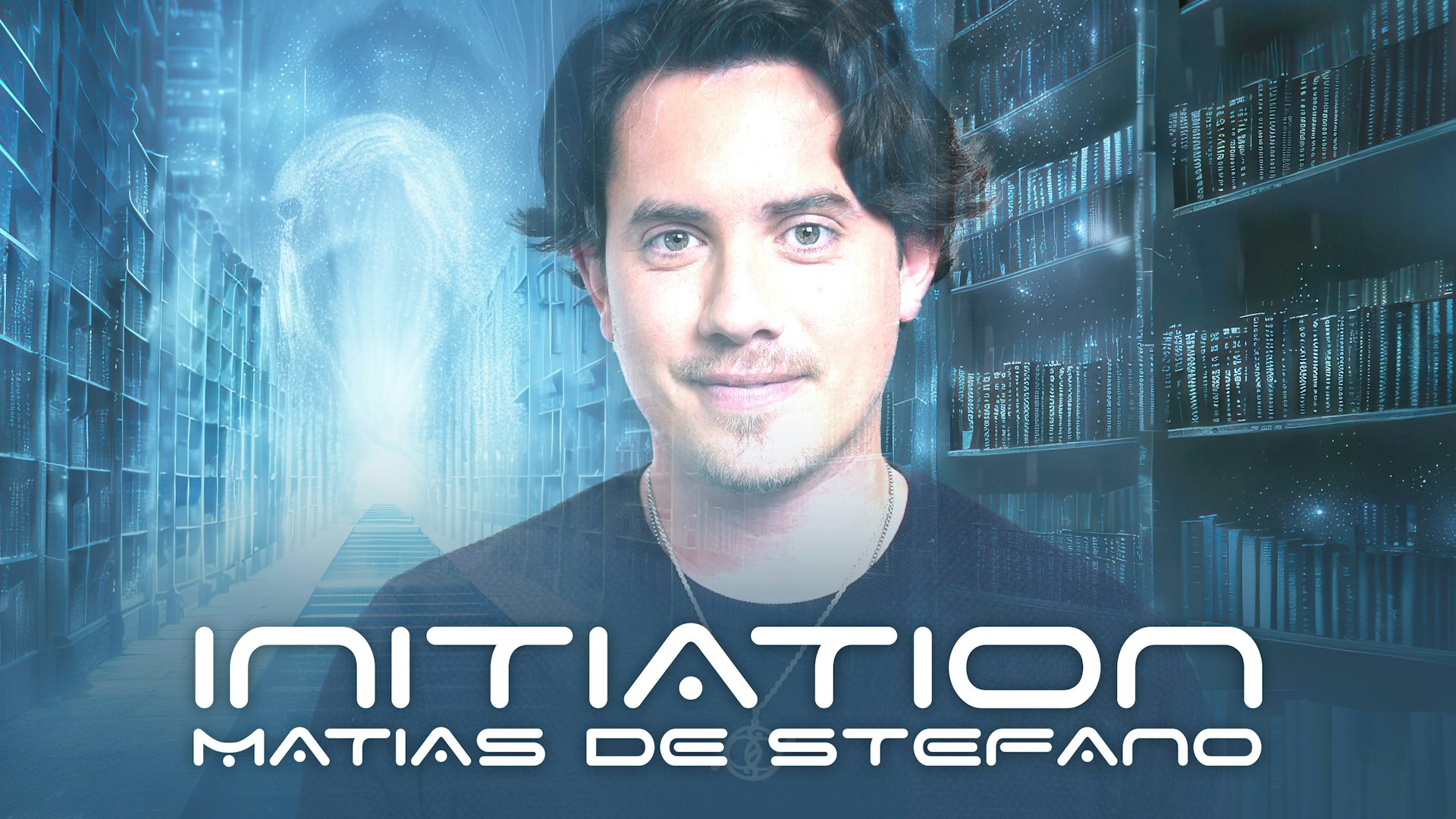
The third dimension is the level of existence in which form, matter, and the linear perception of time predominate. It is the plane where consciousness is experienced through the body, the senses, and duality. In this article, we explore what the spiritual 3rd dimension is from the perspective of Matías De Stefano, as explained in the series Initiation, available on Gaia.
Table of Contents
- What Is the Third Dimension?
- Differences Between the Third, Fourth, and Fifth Dimensions
- Depth and Matter in the Third Dimension
- The 3rd Dimension as the Plane of Sensory Reality
- Is Reality Real? The Illusion in the Third Dimension
- Spiritual Third Dimension: The Soul Incarnated in the Physical
- Why We Shouldn’t Escape the 3D
- The 3rd Dimension as the Foundation of the Higher Dimensions
What Is the Third Dimension?
The third dimension is one of the nine dimensions of the universe and represents the plane where energy takes physical form. Here, figures that arise from subtler dimensions acquire volume, density, and depth. It is not just a material space, but a structure of consciousness designed to experience reality through the tangible.
This plane is characterized by the perception of height, width, and depth, which allows for interaction with the environment through the senses. Consciousness at this level identifies with the body, with the linear passage of time, and with the idea of separation. It is at this point where contrasts are experienced: pleasure and pain, success and failure, light and shadow. All learning is built upon direct experience.
In the series Initiation, available on Gaia, it is explained that the third dimension is the setting where consciousness becomes matter to recognize itself through the senses. It is a necessary stage of the evolutionary process, where the soul can explore, practice, and transform its own energy into concrete experiences.
Differences Between the Third, Fourth, and Fifth Dimensions
These three dimensions are present simultaneously, but each one offers a different way of perceiving and processing reality. Understanding their differences helps to integrate the evolutionary path with greater clarity and awareness.
- Third dimension: This is the level of existence in which form, matter, and the linear perception of time predominate. Everything here is experienced through the body, the senses, and logic.
- Fourth dimension: This is the plane of time as a flexible structure, emotions, dreams, and energy in motion. It allows us to observe the internal processes behind what happens.
- Fifth dimension: This is the plane of expanded consciousness and a global vision. At this level, the unity of all things is perceived, and the soul’s purpose is accessed without judgment.
Depth and Matter in the Third Dimension
The main feature of the third dimension is depth. Unlike previous dimensions, which only allow for lines and flat shapes, this plane adds volume, enabling figures to become objects. Thanks to this depth, the abstract takes form and becomes tangible. This is the foundation on which all our material experience is built.
Matter in this dimension is not just something physical: it is the result of an energetic structure that has been densified. Every object is made up of patterns that originate from subtler dimensions but are organized in the third to form what we consider “real.” That is why, although objects appear solid, at their core they are fields of information vibrating at a specific frequency.
Understanding matter from this perspective allows us to see it not as something static, but as something in constant transformation. Nothing is completely solid or separate: everything is sustained by invisible relationships and by the energy that constitutes it. The third dimension is the point where those relationships become visible so we can explore them through the body and the senses.
The 3rd Dimension as the Plane of Sensory Reality
The third dimension is the only plane in which consciousness can be experienced through the five senses. Here, everything that is seen, touched, heard, smelled, or tasted acts as a path to knowing the world and oneself. This sensory interaction turns every experience into a learning opportunity. Consciousness immerses itself in matter to discover who it is through what it perceives.
This plane also allows the passage of time to be registered in a linear way, generating a sequence of moments: past, present, and future. That structure is essential for experience to have a narrative development, with causes, effects, and a sense of continuity. Thanks to this, we can build memories, make plans, and evolve within a logical framework. Without this sequence, organizing learning would be difficult.
Living in the third dimension does not mean being disconnected from the spiritual. On the contrary, this plane allows higher consciousness to be integrated through concrete actions. Every gesture, every relationship, and every decision offers the opportunity to align what we think, feel, and do. In this way, the physical doesn’t become a limitation, but a means to expand consciousness.

Is Reality Real? The Illusion in the Third Dimension
Although in the third dimension everything seems solid and separate, what we call “reality” is, in essence, a perception. What we touch, see, or feel is mediated by the senses and by the mind’s interpretation. That’s why what one person considers real can be completely different for another. Reality is not absolute—it is subjective and depends on the consciousness that observes it.
From a deeper perspective, matter is nothing more than energy organized into visible forms. What seems fixed is actually a vibration in constant motion. Even the most solid objects are made of expanding atoms, voids, and force fields. What we perceive as a “thing” is a mental construct based on stimuli and prior memories.
This understanding leads us to see the third dimension as a game of perception. It’s not a lie, but an illusion created so that consciousness can recognize itself in different scenarios. Understanding this doesn’t mean denying the physical—it means living it with greater awareness, knowing that what we experience is only one part of a much broader reality.
Spiritual Third Dimension: The Soul Incarnated in the Physical
The third dimension is not a realm foreign to the soul. On the contrary, it is the space where the soul projects itself in order to experience through the body and matter. To incarnate does not mean to “fall” into the physical, but to adopt a temporary form that allows one to feel, choose, create, and transform. From this perspective, living in this plane is an opportunity to explore consciousness from its limits.
When the soul incarnates in the third dimension, it faces the illusion of separation. This experience is necessary to develop identity, will, and a sense of self. It is through contrast that the possibility arises to recognize love, empathy, truth, or coherence. Each experience becomes a reflection that helps the soul remember who it truly is.
Embracing physical life as part of the spiritual path completely transforms how we inhabit this plane. Every sensation, every relationship, every obstacle has a purpose within the evolutionary process. The soul is not trapped in a body—it is using that body as a tool to expand, learn, and manifest its potential in a concrete plane.
Why We Shouldn’t Escape the 3D
There’s a common misconception that one must “escape” the third dimension to evolve spiritually. But this view stems from a rejection of the physical and the human experience, as if they were a mistake or a burden. In truth, this plane is not a punishment or a lower stage, but an essential part of consciousness’s journey. True growth happens by integrating it—not by avoiding it.
The third dimension brings challenges, but it also offers unique tools: the body, time, emotions, direct action. This is where everything learned in subtler levels is put into practice. If this plane is not fully lived, it becomes impossible to sustain the frequency of higher dimensions. Skipping stages only creates imbalance and confusion on the inner path.
To accept and inhabit this plane with presence does not mean resignation—it means embracing its purpose. The soul chose this dimension to evolve, and to escape it is to deny itself a vital part of the process. Only someone who has fully lived in the physical can integrate higher consciousness with stability, clarity, and coherence.
The 3rd Dimension as the Foundation of the Higher Dimensions
Far from being a separate dimension, the third is the base upon which the others are built. Every spiritual experience requires an anchor point in physical reality. Ideas, emotions, and intentions cannot expand unless they find a structure to support them. In this plane, that structure is the body, the environment, and everyday action.
Higher dimensions don’t float in some “beyond”; they are constructed from here. Every clear thought, every balanced emotion, and every coherent action creates the conditions to access more elevated states. There is no ascension without roots. The third dimension gives us those roots—the stability necessary to grow without losing center.
That’s why the more conscious life is in this plane, the more possibilities there are to open doors to other levels of reality. The depth developed through physical experience allows for expanded perception without disconnection. Instead of being an obstacle, the third dimension is the essential support for the soul’s evolution through all the other dimensions.
About the Author

What Numerology Is and What It Can Reveal About You

Numerology is a discipline that interprets the meaning of the numbers associated with your birth date and your full name. To do this, it converts letters into numerical values and performs calculations that make it possible to identify key numbers. From these, it is possible to analyze specific aspects of your life, such as your personality, your tendencies, and the stages that repeat over time.
In this article, we explore what numerology is, how it works, and why it is used as a tool for self-knowledge.
Table of Contents
- What Is Numerology and What Is It Used For?
- What You Can Discover Through Numerology
- What Does a Numerology Reading Consist Of?
- Basic Principles of Numerology
- History and Evolution of Numerology
- Numerology as a Tool for Self-Knowledge
What Is Numerology and What Is It Used For?
Numerology is a system that translates your birth date and your full name into numbers with specific meanings. To do this, it assigns a numerical value to each letter and then reduces the figures until reaching simpler numbers, which are the ones that are interpreted.
Based on these results, a reading is constructed that allows you to understand how you think, what motivates you, what your strengths are, and which challenges tend to repeat throughout your life. This information offers a clear framework for observing your experiences and understanding certain personal patterns from another perspective.
In this sense, numerology is used as a tool for self-knowledge. It does not seek to predict the future or provide definitive answers, but rather to help you observe your life more clearly, recognize patterns, and make decisions more consciously.
What You Can Discover Through Numerology
A numerology reading helps you understand your life from a broader and more organized perspective. Instead of seeing your experiences as isolated events, it allows you to identify connections between your way of thinking, your decisions, and the situations that repeat over time. This helps you understand why you react in certain ways and which dynamics influence your daily life.
As you go deeper into this interpretation, you begin to recognize patterns that may previously have gone unnoticed. Numerology organizes that information and presents it clearly, allowing you to make sense of different moments in your life and better understand the processes you are going through.
- Personality and character traits: It allows you to recognize which characteristics define the way you act and respond in different situations. It also helps identify patterns that repeat in your everyday behavior.
- Life purpose and personal path: It points to the general direction of your development and the lessons that appear over time. It functions as a guide to understanding where you naturally tend to move forward.
- Relationships and compatibility: It analyzes the way you connect with other people and which dynamics tend to repeat in your relationships. This brings clarity to both personal and professional connections.
- Life cycles and key moments: It allows you to identify stages in which certain themes become more important. This helps you understand changes, decisions, and processes from a broader perspective.
- Personal challenges and lessons: It identifies difficulties that appear repeatedly and that are part of your process. Understanding them makes it easier to face them with greater clarity.

What Does a Numerology Reading Consist Of?
A numerology reading is based on the creation of a numerology chart, which is a report in which all the numbers obtained from your full name and your birth date are organized. This chart does not analyze the numbers separately, but instead integrates them to show how they relate to one another.
By observing the chart as a whole, it is possible to identify which aspects have the greatest influence on your life, how they relate to each other, and which dynamics are most active in your current moment. This makes it possible to obtain a more structured view of your personality, your motivations, and your processes.
Within this chart, there are certain numbers that function as the main axes of interpretation:
- Life number: It represents the general direction of your journey and the main lessons that appear over time. It allows you to understand the type of path you are following.
- Soul number: It is related to your inner motivations and to what gives meaning to your life on a personal level. It reflects a more intimate part of yourself that is not always visible to others.
- Personality number: It shows the image you project and how you are usually perceived in different environments. It influences the way you relate to other people.
- Destiny or expression number: It indicates your abilities, talents, and possibilities for growth. It points to the ways in which you can move forward and make the most of your resources.
- Personal year: It describes the predominant energy of the current period. It helps explain why certain themes or experiences have a stronger presence at this moment.
Basic Principles of Numerology
Numerology is based on the idea that numbers can be used as a language to interpret reality. Beyond their practical use, each number represents a specific quality that helps describe tendencies, behaviors, and ways of experiencing different situations. From this perspective, numbers become a useful tool for organizing and making sense of what happens in personal life.
This system is based on the notion that there is an order that structures both the universe and the human experience. Numerology takes this principle and applies it to the individual, using the numbers that arise from your personal data to identify patterns that are not always obvious at first glance, but that influence how certain processes unfold.
From there, numbers are interpreted within a symbolic framework that gives them meaning. Each one is associated with specific characteristics that, when analyzed together, make it possible to build a clearer understanding of different aspects of life. This approach does not seek to simplify experience, but rather to offer a structure that helps make sense of it with greater coherence and depth.
In the Numerology episode of the series The Other Side, available on Gaia, it is explored how numbers and their patterns have been used in different traditions to interpret reality and understand the human experience. Far from being presented as a form of fortune-telling, numerology is introduced as a tool for self-knowledge that allows people to identify personal tendencies, recognize patterns, and understand how certain dynamics influence the way each person lives and relates to the world.
History and Evolution of Numerology
Numerology has very ancient roots and has evolved over time through different cultural traditions. Although today it is presented as a tool for self-knowledge, its origins are linked to philosophical, spiritual, and mathematical systems that sought to explain the order of the world through numbers.
-
Numerology in Ancient Civilizations
The earliest forms of numerology can be traced back to civilizations such as the Egyptian, Babylonian, and Chinese cultures, where numbers were already considered more than simple counting tools. In these contexts, they were given symbolic meaning and used to interpret natural phenomena, important decisions, and aspects of everyday life.
In many of these cultures, numbers were linked to religious and cosmological beliefs. They were thought to reflect fundamental principles of the universe and to provide access to deeper knowledge about reality and humanity’s place within it.
-
Pythagoras and Modern Numerology
One of the most influential figures in the development of numerology was Pythagoras, a Greek philosopher and mathematician from the 6th century BC. His approach went beyond traditional mathematics: he considered numbers to be the foundation of all reality and believed that everything could be explained through numerical relationships.
Based on his teachings, a system was developed that connects numbers with letters and makes it possible to analyze personal aspects through a person’s name and birth date. This approach is the foundation of much of modern numerology and remains one of the most widely used methods today.
-
How the Different Types of Numerology Emerged
Over time, numerology adapted to different cultural and spiritual traditions, giving rise to different systems of interpretation. Each of them developed its own rules, calculation methods, and ways of understanding the meaning of numbers according to the context in which they emerged.
Although they all share a common foundation, these systems may differ in the way they assign values to letters, interpret numbers, or apply their principles to personal analysis. This explains why there are different branches within numerology, each with its own approach.
- Kabbalistic numerology: It is based on the tradition of the Kabbalah and the interpretation of sacred texts. It uses the name as the central element for analyzing identity and life purpose.
- Chaldean numerology: It originated in ancient Babylon and focuses on the vibration of numbers more than on their mathematical value. It is considered one of the oldest and most precise forms of numerology.
- Tantric numerology: It comes from spiritual traditions of India and is related to the development of consciousness. It integrates numbers as a way of understanding the balance between body, mind, and energy.
Numerology as a Tool for Self-Knowledge
Numerology is not intended to reveal your future, but rather to help you better understand what you are already experiencing. Its value does not lie in predicting anything, but in offering you a framework from which to better interpret what you think, feel, and decide at different moments in your life.
When you analyze your numbers, you do not obtain fixed answers, but rather a clearer way of reading your own experience. You begin to recognize which dynamics repeat themselves, which aspects have the greatest influence on your decisions, and why certain stages feel like turning points. That understanding changes the way you relate to what happens to you.
This approach does not seek to simplify life or reduce it to a formula, but rather to organize the information that is already present. In doing so, it allows you to take a step back, see patterns more clearly, and avoid automatic interpretations that often generate confusion or unnecessary noise.
In this way, numerology functions as a tool for self-knowledge applicable to everyday life. It does not seek to tell you what to do or define a single path, but it does offer a structure that allows you to better understand yourself and move through your own processes with greater clarity.