Government Approval of MDMA for Treating PTSD Likely

For the millions of Americans suffering from Posttraumatic Stress Disorder (PTSD), there may finally be a solution. A late-stage clinical trial of the psychedelic drug MDMA has shown great promise in treating the condition, making FDA approval likely in the next few years.
MDMA, an illegal drug commonly known as “ecstasy” or “molly” started out as a synthetic compound created in 1912. After a period of use in the treatment of mental health conditions, it escaped in the 1980s from the clinic to the dance floor and was criminalized by the FDA. But a few proponents continue to push for research, including Dr. Rick Doblin who founded the Multidisciplinary Association for Psychedelic Studies, or MAPS.
Decades later their efforts finally led to a green light from the FDA for clinical study. Since then, there have been three rigorous clinical trials, which have all shown enormous promise of the drug in combination with psychotherapy to treat PTSD.
Watch more:
About the Author

Study Shows Microdosing Psilocybin Boosts Mood, Mental Health
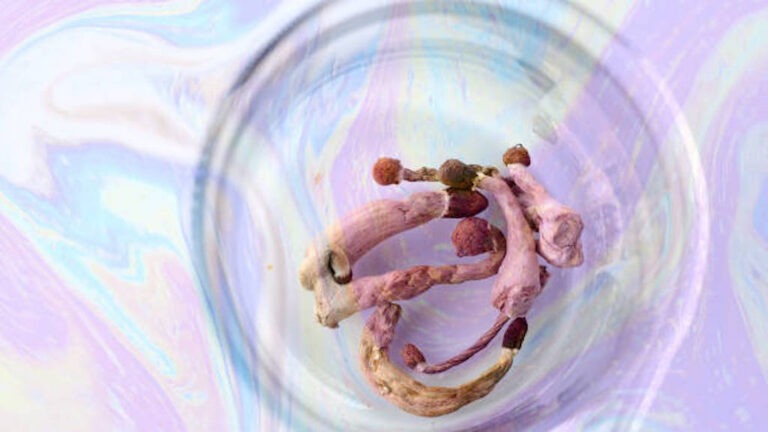
A new study provides the most compelling evidence to date on the impressive mental health benefits of microdosing psilocybin.
While there has been an ever-increasing number of studies showing the efficacy of treatment of mental health disorders with psychedelics, there has been relatively little research on the practice of microdosing.
Microdosing, or repeatedly taking small, barely perceptible amounts of psychedelics, has been exponentially increasing in popularity, with a wide range of people reporting a multitude of improvements to their psychological wellbeing.
The latest scientific study to look at the effects of microdosing was conducted by researchers at the University of British Columbia, as well as other leaders in the fields of psychology and mycology. The study followed 953 people who used small, repeated doses of psilocybin for about 30 days, as well as a control group who did not microdose.
While the exact dosages of psylocibin that participants self-administered varied somewhat, they were all low enough to not impact daily functioning.
Over a one-month period, participants took these psylocibin microdoses three to five times per week and were asked to complete a number of assessments through a smartphone app that tracked their mental health symptoms, mood, and measures of cognition. The findings definitively showed that the microdosing participants demonstrated greater improvements in mood and mental health than those in the non-microdosing control group.