Study Seeks to Find Scientific Evidence for Clairvoyance

A groundbreaking new study seeks to scientifically validate an ability we may all be born with, clairvoyance.
Clairvoyance, or the ability to perceive beyond the physical sense of sight, has been documented in almost every culture across all time. And yet it, like other psychic abilities, has often been feared, misunderstood, and disbelieved. Today, an ever-growing interest in extended perception has motivated researchers to scientifically study the phenomenon.
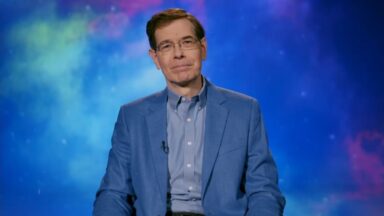
Helané Wahbeh ND, MCR, is the Director of Research at the Institue of Noetic Sciences (IONS), which investigates transcendent human experiences through rigorous scientific study. Dr. Wahbeh and her team recently conducted a study into clairvoyance.
“Clairvoyance is a historic term, it’s been used for a very long time, and it specifically means ‘clear seeing,’ but really it is this extended perception of being able to perceive beyond our physical sense of sight,” Dr. Wabeh said. “This shows up in different ways for people, some people actually see colors, they see supposed other beings that don’t have physical bodies, other people see in their mind’s eye. So, they might receive information or visuals from other people, from things around them that they wouldn’t be able to possibly know with their traditional five senses.”
Cyndi Dale is an energy healer and intuitive who has experienced clairvoyant abilities throughout her entire life.
“So there are many, many different ways that somebody can get a clairvoyant image or vision,” Dale said. “One of the ways is at night, sometimes they’re in dreams, sometimes in color or in black and white. Some people get their visions when they’re daydreaming. Sometimes the pictures that come in are futuristic, they’re about pre-destiny or something that could happen. Many times I find that the visions are about history, what’s occurred, or they’re psychological and they’re explaining what is. Being clairvoyant is complicated because it’s not just about receiving, it’s about how do you work with the images, how do you interact with them?”
While many clairvoyants have experienced these abilities from birth, there are many others who have developed the skill through training, which begs the question: Is everyone clairvoyant?
“Does everyone have the capacity to receive information and energy from beyond time and space? Yes, I do believe everyone has the capacity to do that, and yet the way that it shows up for them is unique,” Dr. Wahbeh said.
Using clairvoyance to obtain verifiable information has been repeatedly demonstrated in the forms of remote viewing and medical intuition. The recent study at IONS is the first designed to validate whether clairvoyant seers are able to accurately perceive what occurs during an energy medicine session.
It is a follow-up to an earlier study IONS did with the participation of one seer that yielded promising results. As this experiment incorporates multiple seers, the researchers hope is that the findings will not only validate the practice of clairvoyance but will also shed light on how energy medicine works.
“We had these reiki masters giving 30-minute sessions to people who had a variety of different health conditions, and in that space, we had six clairvoyant seers who were observing the sessions,” Dr. Wabheh said. “The primary research question is: What is the corroboration between those six seers in terms of what they were observing during each session? Our hypothesis is that there will be a corroboration between them, thus validating this experience of clairvoyant seeing.”
Researchers just finished data collection and are working on the findings. In this study and others being planned at IONS, the goal is not only to validate clairvoyance but also to understand just how it works.
About the Author

Clairvoyance: What It Is and How to Develop This Ability
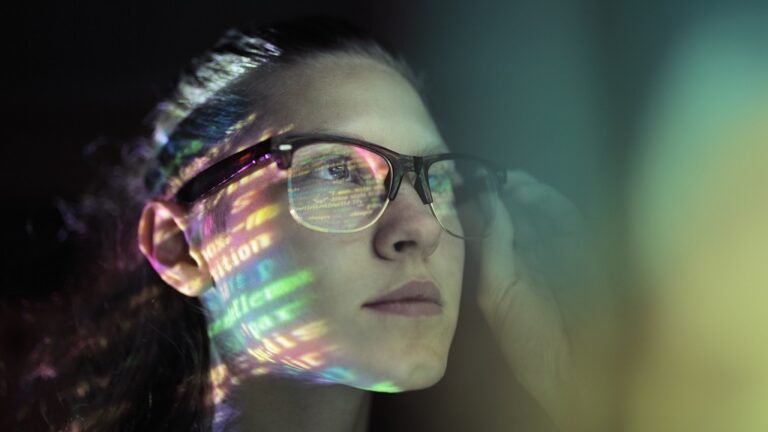
Clairvoyance is a psychic ability that allows the perception of events, people, or places beyond the reach of normal physical senses. This perception can manifest through visions, mental images, or even lucid dreams. In this article, we explore what clairvoyance is, its different types, and how you can develop this ability to enrich your spiritual connection.
Table of Contents
- What Is Clairvoyance
- Clairvoyance and Channeling
- Types of Clairvoyance
- How to Develop Clairvoyance
- Can Everyone Develop Clairvoyance?
- Benefits of Clairvoyance in Spiritual Growth
- Differences Between Clairvoyance and Other Psychic Abilities
What Is Clairvoyance?
Clairvoyance is a form of extrasensory perception that involves the ability to see beyond physical reality. People with this ability can receive mental images or visions that provide information about past, present, or future events. This information can come in the form of detailed scenes, symbols, or fleeting images that require interpretation.
Unlike clairaudience, which is based on auditory perception, clairvoyance focuses on the visual. This ability can arise spontaneously or be developed through practices such as meditation and guided visualization. Clairvoyants often describe their experiences as “seeing” with the mind’s eye, gaining information that is not available through physical senses.
Clairvoyance and Channeling
Clairvoyance and channeling are closely related, as both abilities allow access to information from non-physical sources. Channeling is the process by which a person allows a spiritual entity to communicate through them, using abilities like clairvoyance to receive and transmit visual messages.
In Gaia’s series Channeling: A Bridge to the Beyond, the complexities of being a channel and how clairvoyance is used in this process are deeply explored. Experts explain how the visions perceived through clairvoyance can provide guidance and wisdom, helping practitioners connect more deeply with the spiritual world.
Types of Clairvoyance
Clairvoyance manifests in various forms, each providing different types of information and visual experiences. Understanding the different types of clairvoyance can help identify and develop the specific ability each individual possesses.
- Spiritual Clairvoyance: Spiritual clairvoyance is the ability to see spiritual entities such as guides, angels, and deceased loved ones. This type of clairvoyance allows for a direct connection with the spiritual world, facilitating communication and the understanding of spiritual messages.
- Aura Clairvoyance: Aura clairvoyance is the ability to see the energy field that surrounds people, known as the aura. This type of clairvoyance provides information about a person’s emotional, mental, and physical state by observing the colors and patterns in their aura.
- Precognitive Clairvoyance: Precognitive clairvoyance is the ability to see events or situations that have not yet occurred. This form of clairvoyance allows a person to receive information about the future through spontaneous visions or during meditative states.
- Retrocognitive Clairvoyance: Retrocognitive clairvoyance is the ability to see events from the past. Through this ability, clairvoyants can receive information about situations or experiences that have already happened, offering a unique perspective on the past and helping to solve mysteries or better understand personal or collective history.
- Remote Clairvoyance: Remote clairvoyance, also known as remote viewing, is the ability to see people, places, or events that are at a great distance from the clairvoyant. This ability allows one to see or experience situations that are beyond normal physical or visual reach.

How to Develop Clairvoyance
Developing clairvoyance requires patience and regular practice. Techniques such as meditation, guided visualization, and conscious breathing are essential to open your third eye and strengthen your psychic visual abilities.
-
Meditation to Open Clairvoyance
Meditation is fundamental to developing clairvoyance. Find a quiet place and sit in a comfortable position. Close your eyes and take several deep breaths to relax. Focus your attention on the third eye area, located on your forehead between your eyebrows.
Visualize a bright light in this area, expanding with each inhalation. Keep this image in your mind as you continue breathing deeply. This practice helps activate and open the third eye, facilitating the reception of visions and clairvoyant perceptions.
-
Guided Visualization Practice
Guided visualization is a powerful technique to strengthen clairvoyance. Sit comfortably and close your eyes. Imagine a calm and safe place, such as a garden or a mountain. Visualize every detail of this place: the colors, textures, sounds, and smells.
Allow yourself to explore this space with all your senses, noticing any image or symbol that appears. Practicing guided visualization regularly enhances your ability to see with the mind’s eye and improves your capacity to receive clairvoyant images.
-
Conscious Breathing Techniques
Conscious breathing is another useful technique to develop clairvoyance. Sit in a comfortable position and close your eyes. Inhale deeply through your nose, filling your lungs completely, and exhale slowly through your mouth. Focus on your breath, feeling the air enter and leave your body.
As you relax, visualize your breath carrying energy to your third eye, activating it and clearing any blockage. Practicing conscious breathing regularly helps calm the mind and facilitates the opening of your clairvoyant abilities.
Can Everyone Develop Clairvoyance?
Developing clairvoyance is possible for the majority of people, as long as they are willing to dedicate time and effort to its practice. Although some individuals may have a natural predisposition toward psychic abilities, many can cultivate this ability through consistent practice and an open mind.
It is important to remember that progress may vary from person to person. Some may notice progress quickly, while others may need more time and patience. The key lies in persistence and trusting the process, allowing the abilities to develop naturally.
Benefits of Clairvoyance in Spiritual Growth
Clairvoyance offers numerous benefits for spiritual growth, allowing individuals to connect more deeply with their intuition and the universe. This ability can transform the way spiritual experiences are perceived and understood, providing guidance, clarity, and comfort on the spiritual path.
- Spiritual Guidance: Clairvoyance allows one to receive visions and messages from spiritual guides, helping to make informed decisions aligned with one’s life purpose.
- Connection with the Higher Self: It facilitates the connection with the higher self, offering a deeper understanding of oneself and one’s life purpose.
- Emotional Healing: Clairvoyant images can offer solutions and comfort, helping to heal traumas and emotional wounds from the past.
- Clarity and Focus: It helps focus energy on spiritual goals and objectives, providing a clear vision of the path ahead.
- Energetic Protection: It allows one to anticipate and avoid negative situations, offering an extra layer of energetic protection.
- Development of Intuition: It strengthens overall intuition, enhancing the ability to perceive and understand subtle signs in everyday life.
Differences Between Clairvoyance and Other Psychic Abilities
Clairvoyance is distinguished from other psychic abilities by its focus on the visual perception of spiritual information. While other abilities may involve different senses or forms of perception, clairvoyance centers on seeing images, symbols, and scenes that provide valuable information.
-
Clairaudience: It is the psychic ability to perceive sounds, voices, or messages that are not audible to the physical ear. Unlike clairvoyance, which manifests through images or visions, clairaudience is mainly experienced as information received through inner auditory perception.
-
Clairsentience: It consists of perceiving information through physical or emotional sensations that arise intuitively. While clairvoyance manifests through mental images, clairsentience is experienced as energetic or emotional sensations in the body.
-
Precognition: It is the ability to perceive or know events before they occur. Unlike clairvoyance, which usually appears as visions or symbolic images, precognition may manifest as intuitions, impressions, or dreams related to future events.
-
Remote viewing: It is the ability to obtain information about places, people, or objects that are located far from the observer. Although it may appear as mental images similar to clairvoyance, it specifically focuses on perceiving locations or situations that are beyond normal physical reach.
-
Telepathy: It is the ability to transmit or receive thoughts and emotions directly between minds without using the traditional physical senses. Unlike clairvoyance, which involves inner visual perceptions, telepathy manifests as thoughts or ideas that seem to come from another consciousness.