Palmistry Basics
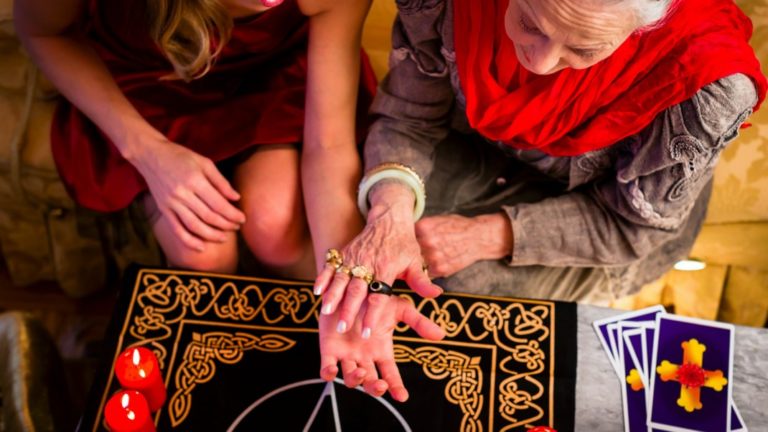
I read my first palm when I was eight years old. It was a chilly day on the playground and I don’t remember why I started looking at my classmate’s dirty hands, but I do remember how it ended. I was about to make a profound pronouncement of fate, when Miss T grabbed me by the ear, dragged me into the school, up the stairs to the principal’s office and firmly deposited me onto a chair opposite his desk. Miss T had been a teacher since Calvin Coolidge had been president and she didn’t put up with Tomfoolery, especially hand-holding, on her playground. I got off with a warning and a sore ear.
I’ve read thousands of palms since that morning. One of my favorite palm reading experiences was at a zoo, near the elephant enclosure. I’d been hired to read hands for a company picnic held there. It was one of the most amazing experiences of my life. I saw several remarkable hands that most palmists only get to read about. I read over 100 palms that day. I saw a perfect pentagram in the palm of a young lady, as well as a quadruple life line and the most complicated hands I’ve ever seen.To this day, the smell of elephant dung brings back fond memories.
Using the hand as a focus for divination and personality analysis is an ancient art. It’s still actively practiced all over the world, and will be for a long time to come, because it works. During the Victorian Era, attempts were made to turn it into a science, with bizarre results, some of them causing problems. The “Murderer’s Thumb,” is an example. Good people who had this trait were branded as dangerous. One of the kindest persons I ever met had such a thumb.
Let’s keep palmistry an art and leave the science out of it.
With practice, palmistry can help you to know who individuals are really, regardless of how they may try to disguise their true nature. Palmistry isn’t as hard as some make it out to be and has the benefit of not needing any special paraphernalia. I’m honored to share some of my views on the subject, as well as the basics of what it will take for you to get started in palm reading. Be prepared, for palmistry is uncannily accurate once you get the hang of it, so have fun, but do take it seriously and enjoy the adventure.
Palmistry Basics
Most palmists read much more than the palm. Chiromancy is the proper name of divination with the hand, but palmistry has become the generic term. The shape of the hand, length of fingers, both individually and as a group, the fleshy pads of the hand known as mounts, the knuckles, flexibility of the thumb, the way the hand is held, its color, fingernails and other traits are all taken into account. Of course, we read the lines of the hand, but they’re only a part of the puzzle. The key is to learn that puzzle piece-by-piece and not try to figure it all out at once.
How to Read Palms
What follows is some of what goes into palmistry. Some techniques are traditional and others my personal points of view. Ultimately, you’ll develop your own style and discover that experience is the best teacher.
The Shape of the Hand
Much is made in classical palmistry about the shape of the hand. I’ve studied it extensively and have finally come to the conclusion that whether a person has a Fire, Water, Air or Earth Hand is relatively unimportant. It’s far more valuable to look at a hand and ask yourself some simple questions. For example, does this person like to work with their hands? Is this the hand of a deep thinker? Is this person philosophical, or do they simply accept whatever comes their way? Is this hand impulsive? Does this person have psychic abilities? You’ll be surprised at how quickly the answers come and how accurate you are. After all, you’ve been observing hands all your life. It isn’t cheating to look at callouses, rings or other identifying features of the hands; it’s all part of the process.
The Hands Tell a Tale
Look at both hands. The dominant hand will reflect the interaction of the person with the “regular, real world,” while the other hand will show the less-known side, the subconscious and even their most secret desires, often unknown to them.
Don’t Forget the Back of the Hand
Knuckles can reveal more about a person than you might imagine, as will coloration and the general appearance of the hand itself. While looking at the back, take a gander at the fingernails. There are many theories regarding the shape and condition of fingernails, but the best advice is to allow your intuition to guide you. The key is to pay attention to details and to begin with people you know so you can apply what you’ve learned. In time you’ll find patterns that will invariably lead you to the truth.
Knuckles
Fingers with knobby, large knuckles often belong to people who are deeply philosophical, or analytical. They think things through and can often be stubborn. That analytical mind can be a great benefit, or a hindrance, depending upon the situation. Smooth knuckles are considered to be a sign of openness of mind and a willingness to accept situations. Some people consider smooth knuckles to be a sign of gentility and sensitivity, but that’s an archaic holdover from another era.
The truth is that you will usually see a mix of knuckle size and shape in hands. The proper analysis of these joints will depend upon the finger itself, as well as which knuckle is affected. With that in mind, let’s move on to the digits.
Fingers
Each finger is related to one of the planets. This system draws upon astrology as a model and allows the hand to become a reflection of a person’s chart. With this system, each finger has a specific story to tell, as well as the corresponding “mounts” beneath them and around the hand.
The forefinger is ruled by Jupiter. The middle finger is Saturn. The ring finger belongs to Apollo/the Sun, and the little finger to Mercury. The thumb is ruled by Venus. Mars is found in the plain of Mars, the central part of the hand itself. The Moon rules the lower percussion, or side, of the hand.
By noting the length of fingers, we get a good idea of what’s the most important focus of someone’s life and where their skills lie. For example, someone with a very short Mercury finger may not have great skills with money, or the ability to keep it once made. In some hands, we may notice that the fingers seem to be bending toward the Apollo, or ring, finger. We can assume that they have a strong sense of self, may be highly confident, or are thrust into the public eye. Many celebrities have such fingers. A long first, Jupiter finger implies leadership abilities and love of life, although it can also indicate engaging in fun activities or infidelity in relationships. The middle finger, ruled by Saturn, can show common sense, wisdom, the tendency to take life seriously and sound judgment, as well as a depressed personality or stubbornness and a lack of frivolity. Of course, all of these are only basic guidelines and need to be studied in real-life situations in order to be properly learned.
The fleshly bumps at the base of the fingers reflect the condition of certain energies. For example, an extremely pronounced mount at the base of the thumb is said to show great desire and physical urges. No mount at all represents quite the opposite.
The Thumb
The thumb can be an indicator of a person’s happiness, focus and desire. People have learned from body language experts that hiding our hands, or holding them in a specific way, can create trust or mistrust, but our thumbs never lie. They can reveal immense willpower or a total lack of such. They betray the habitual liar and show us to who’s punctual. It’s beyond the scope of this article to delve further into this, but I’ll give you a couple of pointers.
Consider the thumb to consist of two parts, the top part of the thumb, with the nail, and the bottom that connects to the hand. The bottom part is considered to be indicative of our desires, those things that we deeply crave, while the top is linked to our strength of will. I’ve found this to be accurate. A short top thumb joint may indicate an impulsive person who acts before thinking things through. A large top part of the thumb can belong to someone who plans carefully and doesn’t act before the time is right. Knowing this about someone, especially if you conduct some sort of business with them, can make the difference between a successful outcome or a problematic one. Incidentally, if you’re dealing with someone who continually hides their thumbs, be cautious.
What Do the Lines on Your Hands Mean?
The lines that mark the palm of the hand change throughout our life, subtly but definitely. I’ve watched my own hand change over the decades, accurately showing me where I’ve been and am most likely headed.
Life Line
The most famous of lines is the life line. It has been misrepresented in popular media as an indicator of the duration of life. I met a woman in her 90s who had an extremely short life line all her life. A palmist told her, at the age of eight, that she wouldn’t live much beyond 20 due to her short life line. She gave me mischievous look and asked me how long I thought she’d live. Luckily, she gave me wink to let me know she was only kidding. In her case, the short life line was an indication that her life was uncomplicated and without considerable changes. In fact, she’d never traveled farther than the county seat and had no intention to do so. The lifeline can show many specifics regarding the quality and consistency of life, but it shouldn’t be proclaimed as much more, unless great skill has been achieved in reading palms. I have a long life line, but then again I feel myself to be truly blessed.
Head Line
The head line begins near the life line and swings across the palm, toward the edge of the hand. Head lines that reach the edge, to the Mount of the Moon, are said to show psychic ability.
Heart Line
The heart line starts at the edge of the hand, underneath the Mercury finger, and heads toward the Jupiter and Saturn fingers. It is said to show emotional depth and volatility.
Fate Line
The line of fate starts at the wrist and makes its way straight up to the finger of Saturn, if we are lucky. It shows good fortune, or a lack of it. Of all the lines, this one seems to change the most in a lifetime.
The study of these lines and lines that cross, connect and spiral upon them is where the artistry of palmistry comes into play. I’ll leave it you to discover your own meanings through study, but the real power of palmistry will only come through the doing. You’ll learn quickly if you seek answers sincerely and with an open mind. Most importantly, never forget that regardless of how skeptical someone is, the holding of their hand is an intimate process, and peering into their life a remarkably personal and influential act. Always choose your words carefully and ethically.
If you approach palmistry with sincerity and respect, you’ll never lack for volunteers, or for a source of wonder.
Until next time, I wish you all peace and love.
About the Author

100 Tarot Questions: What You Should and Shouldn’t Ask
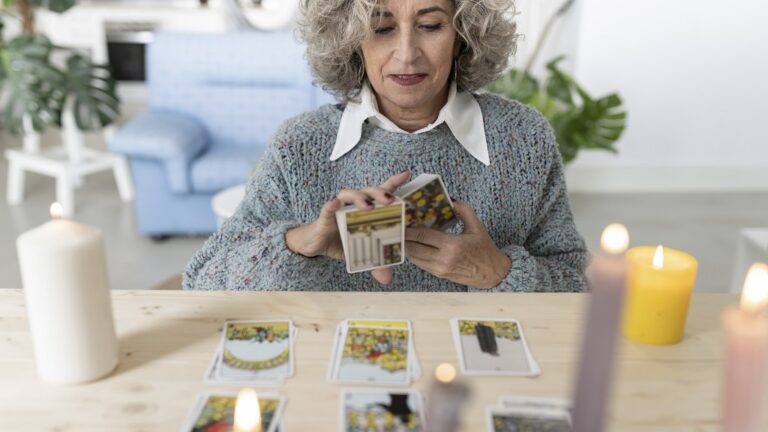
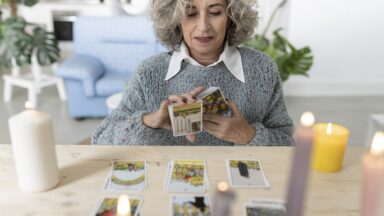
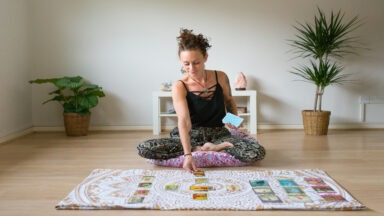
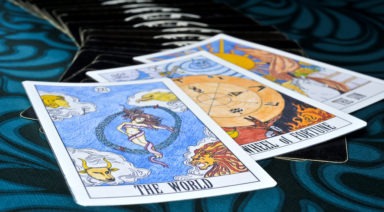
The Tarot offers a window into our inner world and a guide to facing challenges and making decisions. The key to getting useful answers lies in asking open and reflective questions. In this article, we explore the importance of questions, how to formulate them, how many to ask, and which ones to avoid in a Tarot reading.
Table of Contents
- The Importance of Questions in a Tarot Reading
- 100 Examples of Tarot Questions
- 10 General Questions
- 10 Questions About Love
- 10 Questions About Work
- 10 Questions About Finances, Business, and Money
- 10 Questions About Health and Well-being
- 10 Questions About Important Decisions
- 10 Questions About Family and Children
- 10 Questions About Spirituality
- 10 Questions About Past Lives
- 10 Questions About Life Purpose
- Do Tarot Cards Reveal the Future?
- What to Do with the Information from a Tarot Reading?
The Importance of Questions in a Tarot Reading
The questions we ask in a Tarot reading are crucial for the type of answers we receive. Well-formulated questions can provide clarity, direction, and understanding about various areas of our lives. On the other hand, vague or poorly phrased questions can result in confusing or unhelpful answers.
It’s essential to focus on questions that encourage reflection and self-awareness. Open-ended questions allow us to explore different aspects of a situation, offering a more complete and detailed perspective. This not only facilitates a better interpretation of the cards but also promotes a deeper and more meaningful internal dialogue, helping to uncover the true causes and possible solutions to the challenges we face.
In the series Mystery Teachings of the Tarot, available on Gaia, Dr. Theresa Bullard emphasizes the importance of asking questions that help us connect with our intuition and gain a clearer understanding of our circumstances. This series is an excellent guide for those who wish to deepen their Tarot readings and learn how to formulate effective questions to obtain useful and revealing answers.
How Many Questions Can I Ask?
There is no fixed number of questions to ask in a Tarot reading; it depends on individual needs and circumstances. A good number might be between three and five well-formulated questions, but this can vary depending on the depth of the answers you seek and the time available.
Limiting the number of questions helps avoid information overload. By focusing on a few questions, you can reflect properly on the answers received and apply the lessons learned to your daily life effectively. This allows you to explore each question in depth and maximize the value of the reading.
What Questions Should I Avoid in Tarot?
To get the best answers from the Tarot, it’s advisable to avoid questions that seek to predict specific events or depend on factors outside your control. Instead of asking, “When will I meet my soulmate?”, it’s more useful to ask, “What can I do to prepare my heart and life for a meaningful relationship?” This approach allows you to actively work on your personal development and be better prepared for future opportunities.
It’s also important to avoid questions that seek “yes” or “no” answers, as these don’t encourage deep dialogue or provide enough information for reflection. For example, instead of asking, “Should I change jobs?”, ask, “What should I consider when thinking about a career change?” This type of question opens the door to a more complete exploration of your options and circumstances, allowing for more detailed and enriching answers.
100 Examples of Tarot Questions
Below, we present 100 examples of questions in various areas of life that can help you make the most of your Tarot reading.
10 General Questions
- What is my life purpose at this moment?
- What do I need to know about my current situation?
- How can I overcome the obstacles I’m facing?
- What should I learn from my current challenges?
- How can I improve my overall well-being?
- What talents should I develop to achieve my goals?
- What is preventing me from moving forward in my life?
- How can I improve my personal relationships?
- What actions should I take to find inner peace?
- What should I know to make better decisions?
10 Questions About Love
- What can I do to attract a healthy romantic relationship?
- How can I improve my current relationship?
- What should I learn from my past romantic experiences?
- What qualities should I look for in a partner?
- How can I heal from a breakup?
- What is preventing me from finding true love?
- What do I need to know about my future love life?
- How can I communicate better with my partner?
- What aspects of my behavior are affecting my romantic relationships?
- How can I rekindle the passion in my relationship?
10 Questions About Work
- How can I advance in my professional career?
- What can I do to find a job I’m passionate about?
- What skills do I need to develop to succeed in my work?
- How can I improve my relationship with my coworkers?
- What should I consider when thinking about a career change?
- How can I better manage work-related stress?
- What is preventing me from achieving my professional goals?
- How can I find a better balance between my work and personal life?
- What opportunities for professional growth are available to me?
- What should I know about my current work environment?
10 Questions About Finances, Business, and Money
- How can I improve my financial situation?
- What should I know before making a major investment?
- What steps should I take to achieve financial stability?
- How can I better manage my personal finances?
- What should I consider when starting a business?
- How can I increase my income?
- What financial habits should I change?
- What financial opportunities are available to me?
- How can I free myself from debt?
- What is preventing me from achieving my financial goals?
10 Questions About Health and Well-being
- What can I do to improve my physical health?
- How can I better manage stress and anxiety?
- What habits should I adopt for a healthier life?
- How can I better balance my body and mind?
- What should I know about my emotional well-being?
- How can I strengthen my immune system?
- What is preventing me from achieving optimal well-being?
- How can I improve my mental health?
- What steps should I take to heal a specific ailment?
- What should I keep in mind to maintain a healthy lifestyle?
10 Questions About Important Decisions
- What should I consider when making this decision?
- What is the best path to follow in this situation?
- What consequences can I expect from this choice?
- How can I make a decision aligned with my values?
- What is preventing me from making a clear decision?
- What should I know before deciding?
- How can I find the courage to make this decision?
- What information am I missing to make this decision?
- How can I overcome the fear of making important decisions?
- What benefits will I gain from making this decision?
10 Questions About Family and Children
- How can I improve my relationship with my children?
- What should I know to better support my family?
- How can I foster a harmonious family environment?
- What family challenges do I need to address?
- How can I be a better parent?
- What can I do to improve communication in my family?
- What family patterns should I change?
- How can I better support my partner in parenting?
- What should I consider for my family’s emotional stability?
- How can I reconcile family differences?
10 Questions About Spirituality
- How can I deepen my spiritual practice?
- What should I know about my spiritual path?
- How can I better connect with my inner self?
- What spiritual lessons should I learn now?
- How can I balance my spiritual energy?
- What spiritual obstacles should I overcome?
- How can I find peace and spiritual balance?
- What spiritual practices should I incorporate into my life?
- How can I better align with my spiritual purpose?
- What should I know about my spiritual guides?
10 Questions About Past Lives
- What lessons from past lives are influencing my current life?
- How can I heal traumas from past lives?
- What should I know about my karmic connections?
- How have my past lives affected my current relationships?
- What talents from past lives can I use now?
- What repetitive patterns come from past lives?
- What vows or promises from past lives should I release?
- How can I better integrate the lessons from my past lives?
- What should I know about my experiences in other incarnations?
- How can I use the knowledge of my past lives for my personal growth?
10 Questions About Life Purpose
- What is my mission in this life?
- How can I discover my true purpose?
- What steps should I take to align with my life purpose?
- What is preventing me from fulfilling my purpose?
- How can I use my talents to fulfill my life mission?
- What should I learn to move forward on my life path?
- How can I better contribute to the well-being of others?
- What important lessons should I learn in this life?
- How can I live a more meaningful and fulfilling life?
- What should I know to fulfill my destiny?

Do Tarot Cards Reveal the Future?
The Tarot should not be seen as a tool that predicts the future in a fixed and immutable way. The cards reflect current energies and trends, suggesting possible paths and scenarios that could develop based on the querent’s decisions and actions. It’s essential to interpret Tarot answers with an open and contemplative mind, understanding that they offer guidance based on the present, not an absolute prediction of the future.
Rather than fixing destiny, the Tarot provides insight into the influences and opportunities present in the querent’s life. The cards can reveal behavioral patterns, blockages, and potentials that help in making informed decisions. The purpose of the Tarot is to empower the querent, providing the tools needed to navigate their circumstances with greater clarity and wisdom.
Querents should use the information obtained from the Tarot as a guide to reflect and make decisions based on their own judgment and inner wisdom. By doing so, they can make the most of the lessons and advice the cards offer, adapting their actions to better align with their personal goals and values. When used consciously, the Tarot becomes a powerful ally for self-awareness and personal growth.
What to Do with the Information from a Tarot Reading?
Once you’ve obtained the information from a Tarot reading, it’s important to take the time to reflect and process the answers. It’s recommended to jot down the ideas and feelings that arose during the reading to review them later. This practice not only helps you remember important details but also allows for continuous reflection on how to apply the advice received in daily life.
Applying the information obtained is the next important step. This involves taking concrete actions based on the Tarot’s suggestions, whether by adjusting behaviors, exploring new opportunities, or facing challenges in a different way. Integrating these changes into your daily routine can lead to significant growth and transformation, better aligning your actions with your personal goals and values.
Finally, it’s helpful to regularly review past readings to see the progress and changes that have been made. This not only reinforces the understanding of the Tarot’s messages but also allows you to adjust your course of action as needed. The process of continuous review and adjustment is key to maintaining an effective connection with the guidance provided by the Tarot, ensuring it remains relevant and useful over time.