Welcome to the 2019 Earth Pig Year
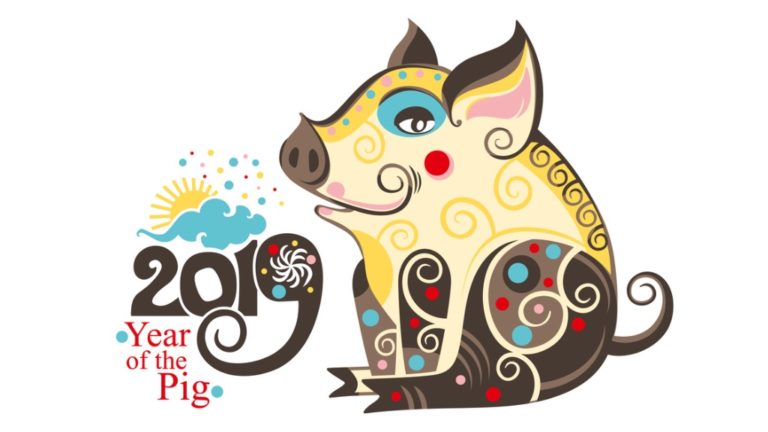
On February 5, we leave the Earth Dog and enter the 2019 year of the Earth Pig, closing a major 60-year cycle in the Chinese calendar — it takes 60 years to roll through every animal sign and element in both yin and yang aspects. 2019 brings us Ji Hai, the Yin Earth Pig. The last Ji (yin earth) Hai (pig) was 1959, so those born in that year are celebrating their 60th birthdays.
Characteristics of the altruistic Pig are optimism, gentleness, kindness, and honesty. The Chinese believe that the barnyard pig’s temperament is much like humans, as pigs enjoy listening to music, and are highly intelligent. Zodiac Pigs also enjoy luxury, comfort, and good food.
Ten Heavenly Stems, Twelve Earthly Branches
Ten heavenly stems and twelve earthly branches, in combination with the 12 animals of the Chinese zodiac, determine the qualities of a given year. The heavenly stems are derived from the elements of the Chinese quinary, or five-element system. Each element has a “yin” and “yang” aspect — passive and active — that make up the ten heavenly stems. For example, yin water (gui water) is represented by gentle rain, clouds, mist, dew, fog, and small streams and rivulets. Yang water (ren water) is lakes, oceans, and rivers. Yang water is in continual motion. The 12 animals are the earthly branches.
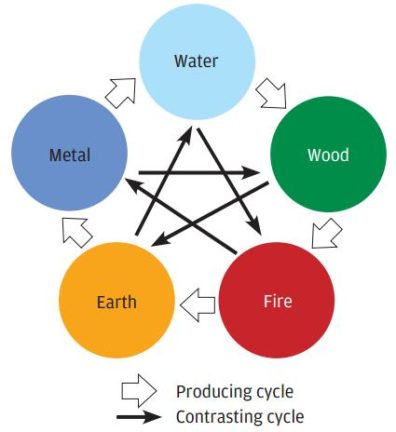
In 2019, the yin earth element (think of nurturing garden soil — gentle, maternal, supportive) combines with the pig or boar, associated with water; yin earth over water. While earth over water would normally be conflicted, the yin aspect of earth softens the relationship, bringing more harmony. That said, this is still an unstable combination (earth over water), so harmony is tenuous and delicate. The Pig’s water below can break through the flimsy yin earth above.
Some experts believe that the combination of fragile, yin earth over water could bring earthquakes, landslides, flooding — even sinkholes. The last time this heavenly stem (yin earth) and earthly branch (pig) met was 1959, when an historic earthquake (7.2) in Yellowstone Park permanently altered the regional landscape. A 7.9 earthquake in Kamchatka, Russia devastated that region, and the Malpasset Dam in Southern France collapsed. Taiwan and New Zealand had major 7.2 and 7.3 quakes. Chinese astrologers would suggest keeping your seatbelts fastened if you live in earthquake-prone zones.
Bulls, Bears and Pigs
According to expert Raymond Lo, the fire element is absent in 2019, and it is fire that drives economic prosperity and public enthusiasm. From 2013 to 2017, fire played a prominent role, bullishly driving stock markets, investment growth, and optimism. 2018, the last year of the fire trend, was a yang Earth Dog year (wu xing), ominously called “the grave of fire.” Perhaps “birth of the bear” would be a less foreboding handle.
The 2019 yin earth smothers any surviving fire, and the watery pig will finish it off. Chinese astrology experts will likely recommend investment in industries based on wood, which loves water (pig) and nourishing yin earth. Wood is the mother of the missing fire element, so theoretically, wood and earth-based industries would be auspicious choices, although this is not intended as, nor is a substitute for, professional investment advice.
Wood industries are classified as educational businesses, publishing, carpentry, botany, the floral industry, timber, furniture, anything related to paper, textiles, health care products and medicine, wood furniture, gardening, office supplies, fashion, media and books, agriculture — just in time for recently legalized hemp products containing CBD, a.k.a. cannabidiol.
Earth-based industries include real estate, architecture, building materials, supplies, and construction, antiques, renovation, warehouses and storage, stone quarrying and mining to name a few.
2019 Tai Sui — The Grand Duke Jupiter
One model of Chinese astrology and feng shui, called “Flying Stars,” is a system of different “stars” changing position in the lo shu grid each year on Chinese New Year. There are several stars, but significantly, it is the Tai Sui, also called the “Grand Duke Jupiter,” that is of highest significance.
In essence, each year’s Tai Sui is the star opposite the planet Jupiter — the ancient wisdom-holders who developed the Flying Star system implemented 12-year cycles based on Jupiter’s orbit of the sun.
Sixty celestial generals each take a turn in the 60-year cycle; in 2019 the Tai Sui is Xie Tai, an historic Ming Dynasty general known for his integrity and honesty.
Loyalty, integrity, and truthfulness are 2019 themes, and paying extra attention to these virtues pleases the general.
Each year Tai Sui moves to a new compass point — in 2019, Tai Sui’s direction is northwest. Flying Star experts advise to avoid sitting facing the northwest (Tai Sui sees this as confrontational) and to place the head of the bed in any other direction besides northwest.
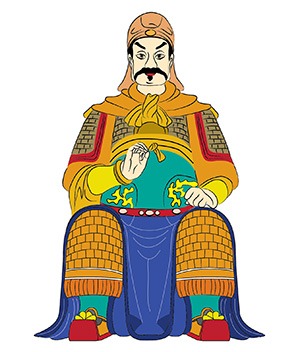
It’s also recommended to avoid beginning new construction, renovation, and landscaping in the northwest. A Flying Star astrologer would even advise against driving a nail into a northwestern wall to avoid offending the Duke. Keeping the northwest sectors of home and office tidy, and adding healthy, green plants, encourages peace with the Tai Sui.
The animal signs impacted most by the 2019 Tai Sui, according to the Flying Star model, are Pig (as Pig is facing Tai Sui — the case for every yearly animal), Monkey and Snake. These animal signs are advised to avoid disputes and rash actions. Remedies include wearing red agate, hanging a metal wind chime (indoors) in the northwest, or placing a laughing buddha statue in the area. Favored signs are Tiger, Rabbit and Goat or Sheep.
Another remedy is to wear or carry a tiger charm — this helps appease Tai Sui, as it is General Xie Tai’s favorite animal. Those who observe feng shui principles will be placing a special Tai Sui plaque in the northwest. 2019’s lucky colors are red, orange, yellow, and white.
About the Author

What Is Astrology: Origins, Purpose, and What It Is Used For
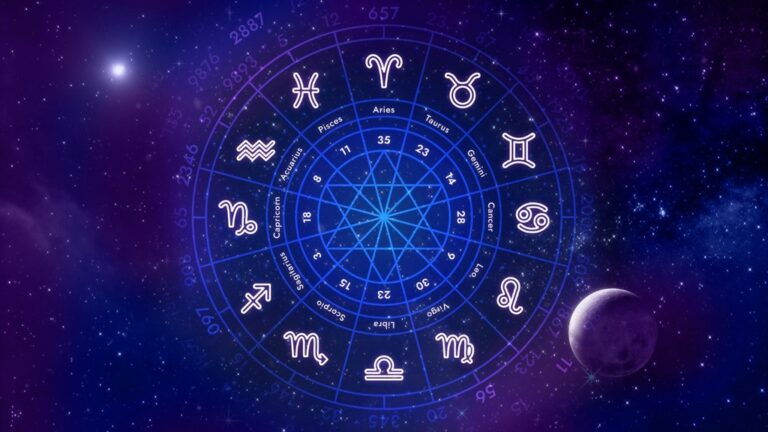
Astrology is one of the oldest disciplines humanity has developed to understand itself and the cycles and transformations that shape human experience. Through the observation of the sky, it built a symbolic language that is still used today as a tool for self-knowledge and personal guidance.
In this article, we explore what astrology really is, what the basic elements of a birth chart are, and why it continues to spark so much interest around the world.
Table of Contents
- What Is Astrology?
- The Foundations of Astrology: How It Really Works
- Basic Elements of a Birth Chart
- Difference Between Psychological Astrology and Predictive Astrology
- What Astrology Is Used for Today
- Why Astrology Continues to Resonate With Millions of People
- The Origins and Evolution of Astrology
What Is Astrology?
Astrology is the discipline that studies the correspondence between the movements of the sky and human experience. Its central premise is that the cycles of the Sun, the Moon, and the planets are connected to the internal, emotional, and life processes that people go through. It does not propose that celestial bodies cause what we experience, but rather that their movements can be read as a symbolic map of what is happening within us and in the world.
Throughout history, astrology was recognized as a respected field of knowledge by philosophers, astronomers, and physicians, and only in recent centuries was it pushed to the margins of official academic thought. However, it has always maintained a relevant place as a tool for self-knowledge and life guidance, especially in spiritual and philosophical contexts. Today, with the growing interest in inner development, its practice has once again gained strength throughout the world.
Understanding what astrology is requires stripping away the prejudices that surround it. It is not an exact science, but neither is it superstition. It is a structured symbolic language that, when properly interpreted, offers a valuable perspective for understanding who we are, how we relate to the world, and what processes we go through throughout life.
The Foundations of Astrology: How It Really Works
To understand how astrology works, one must first understand the central idea upon which this practice was developed: the existence of a symbolic relationship between the movements of the sky and human experience. Since ancient times, different cultures observed the cycles of the Sun, the Moon, and the planets and connected them with certain changes, stages, and processes present in human life. From those observations, astrology built a system of interpretation that seeks to understand what kinds of dynamics or transformations a person experiences at specific moments in life.
Astrology does not claim that celestial bodies control destiny or directly cause what happens. Its logic operates through symbolic correspondences: certain planetary movements are associated with particular emotional, psychological, or life processes. For this reason, astrology is used as a tool for interpreting periods of change, crisis, growth, or the closing of cycles, both in individual lives and in broader social processes.
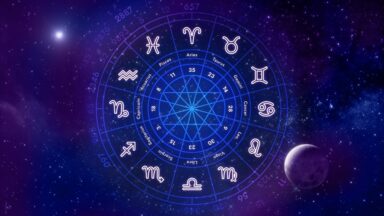
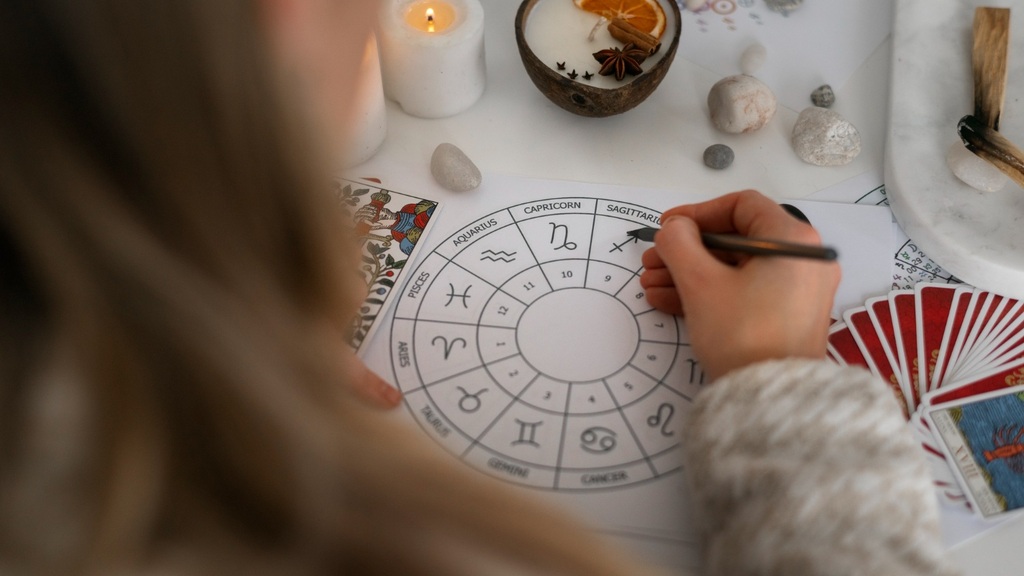
The main tool used for this interpretation is the birth chart, also called a natal chart. It is a map of the sky calculated from a person’s date, time, and place of birth. This configuration shows the position of the planets, the zodiac signs, the astrological houses, and the aspects at the exact moment of birth, and each of these elements provides information about different aspects of personality, relationships, and experiences that are part of each person’s life journey.
Basic Elements of a Birth Chart
A birth chart is composed of different elements that are interpreted together. Among them are the planets, the zodiac signs, the astrological houses, and the aspects, and each one provides information about different dimensions of personality and human experience. Understanding what each part represents is the foundation for beginning to read and interpret a natal chart.
The planets occupy a central place within astrology because each one symbolizes a different dimension of personality and human experience. The way these planets are arranged within a birth chart makes it possible to interpret different traits, dynamics, and personal processes.
Each planet is associated with specific themes. The Sun, for example, is linked to identity and self-expression; the Moon, to emotions and the inner world; Mercury, to communication and ways of thinking; Venus, to relationships and values; and Mars, to action and desire. In addition, Jupiter, Saturn, Uranus, Neptune, and Pluto are connected with processes of growth, structure, change, intuition, and transformation.
However, these planets do not act in the abstract, but rather manifest themselves through the zodiac signs. If the planets are the “what,” the signs are the “how.” The same planet can manifest in very different ways depending on the sign in which it is located. For example, Mars—associated with action and impulse—does not express itself in the same way in Aries, where it tends to act directly and impulsively, as it does in Capricorn, where it usually acts in a more strategic and disciplined way. The energy is the same, but the mode of expression changes completely.
Added to all of this are the astrological houses, which indicate the specific areas of life in which each combination manifests itself. They are twelve sectors that represent areas such as identity, close relationships, home, creativity, work, intimate relationships, or vocation. The same combination of planet and sign can be expressed very differently depending on the house in which it is located.
The planets also relate to one another within the chart through the aspects, which are the geometric angles they form when positioned at different points in the sky. These angles indicate how different energies interact with one another: some create flow and make things work effortlessly, while others create inner tension, which is often a driving force for growth. The aspects are what give depth to a reading because they show how all the elements connect with one another.
Finally, there is the ascendant, one of the most important elements of the birth chart. It is the sign that was rising in the sky at the exact moment of birth and is related to the way a person presents themselves to the world and moves through their experiences. This is why two people with the same Sun sign can have very different personalities and ways of living.
In the series Astrology 101, available on Gaia, renowned astrologer Rick Levine offers an accessible introduction to the basic concepts of astrology. Throughout the episodes, you can learn about the zodiac signs, the planets, the elements, and the houses, building a solid foundation for understanding the symbolic language of the stars.
Difference Between Psychological Astrology and Predictive Astrology
One of the most important distinctions for understanding contemporary astrology is the one that exists between the psychological approach and the predictive approach. Both perspectives work with the same elements—the birth chart, the planets, the movements of the sky—but they interpret them for different purposes.
- Predictive astrology seeks to anticipate events. It is the oldest approach and, for centuries, it was the dominant one. Its logic is to identify which planetary transits—that is, the current movements of the planets in relation to your birth chart—coincide with certain types of events in the life of a person or a society. Although it is still practiced, this branch now coexists with a more nuanced interpretation, because its literal application—predicting that something specific will happen on an exact date—often clashes with the real complexity of life and leaves very little room for personal freedom.
- Psychological astrology, on the other hand, developed strongly during the twentieth century, partly thanks to the influence of Carl Jung. This perspective does not ask, “What is going to happen?” but rather, “What internal processes are being activated, and how can I work with them?” Under this approach, the birth chart is read as a map of your inner world, and current planetary movements are interpreted as moments when certain personal dynamics become more visible or ask to be integrated.
The central difference has to do with the role of free will. In the strictest predictive approach, astrology describes what will happen; in the psychological approach, it describes the energetic terrain on which you will make your decisions. Most contemporary astrology works with a combination of both approaches, but with a much greater emphasis on the psychological and self-knowledge dimension. This explains why, today, many people turn to astrology not to know what will happen to them, but to better understand who they are.
What Astrology Is Used for Today
Precisely because of this shift toward the psychological perspective, contemporary astrology functions above all as a tool for self-knowledge and life guidance. It offers an inner map that helps you understand why you react the way you do, what you deeply seek, and what processes you go through at each stage of life.
On a personal level, astrology can help identify natural talents, areas of learning, emotional dynamics, and recurring patterns. It also makes it possible to understand the major cycles of life and recognize what kinds of processes tend to become activated at certain stages. One of the best known is the Saturn return, which occurs around the ages of twenty-nine or thirty and often coincides with periods of maturation, closure, and personal redefinition.
Another widely used tool is the solar return, a chart calculated for the exact moment when the Sun returns to the same position it occupied at birth and which is interpreted as a guide to the most important themes and lessons of each year. Understanding these cycles does not eliminate free will, but it does provide context for making decisions with greater awareness.
Astrology is also applied in the relational sphere. Comparing two birth charts (a practice called synastry) makes it possible to identify dynamics within a relationship: where there is natural affinity, where there is tension, and what challenges may arise. It does not function as a verdict, but rather as a map of the energies at play between two people.
Beyond the individual level, astrology is also applied to collective processes. Some astrologers analyze planetary movements in order to understand social, cultural, or historical moments, identifying the predominant energies of a particular era. This dimension allows personal experience to be placed within a broader context and helps explain how many individual processes respond to movements shared by an entire generation.
Why Astrology Continues to Resonate With Millions of People
Despite the centuries that have passed since its original systematization, astrology continues to attract millions of people around the world. What is remarkable is that its appeal does not diminish, but rather renews itself with each generation. The interesting question is not whether astrology “is true” in a scientific sense, but what people find in it that justifies such enduring relevance.
One possible answer lies in the feeling of recognition. Those who receive a serious astrological reading often experience a particular phenomenon: the feeling that something about their inner life is reflected with surprising precision. The birth chart functions like a mirror that reveals aspects of the self that are rarely put into words, and that recognition creates a deep connection with the practice.
Another reason has to do with the contemporary search for meaning. In a context where many traditional structures have lost influence—religious institutions, collective narratives, cultural mandates—people seek frameworks that help them interpret their experience from a broader perspective. Astrology offers precisely that: a language for placing yourself within processes larger than your individual life.
The broader cultural moment also plays a role. The rise of self-knowledge, psychology, secular spirituality, and contemplative practices created space for tools such as astrology. In fact, it has now become a common vocabulary for talking about oneself and relationships: many people use astrological terms to describe their personality, their partner, or the stage of life they are currently experiencing.
Finally, there is something even deeper at play. Astrology proposes that your life is not an accident or a series of isolated events, but rather part of a greater order that can be read, understood, and inhabited with greater awareness. That possibility alone—the idea of an underlying meaning—explains much of its enduring relevance in a world that often feels fragmented and lacking a unifying thread.
The Origins and Evolution of Astrology
Astrology has roots that date back at least four thousand years ago, in ancient Mesopotamia. The Babylonians were the first to systematize the observation of the stars and connect it with earthly events, laying the foundations for a body of knowledge that would later spread throughout the world. For those civilizations, the sky was not a neutral space: it was the place where the will of the gods could be read.
From Babylon, astrology spread to Greece, where figures such as Ptolemy developed treatises that still influence modern practice. His book Tetrabiblos, written in the second century, was for centuries the reference text for Western astrologers. At that time, astrology and astronomy were practically the same discipline, and they were taught together in European universities throughout the Middle Ages and the Renaissance.
The separation between astronomy and astrology began with the Scientific Revolution of the seventeenth century. While astronomy adopted mathematics and empirical observation as its foundation, astrology was relegated to the symbolic and spiritual realm. However, it never disappeared: it resurfaced strongly in the twentieth century through the work of psychologists such as Carl Jung, who incorporated it into their studies of the collective unconscious and archetypes.
In recent decades, astrology has experienced a new global expansion, fueled by growing interest in self-knowledge, spirituality, and contemplative practices. Today, it coexists with thousands of trained professionals, dedicated schools, and active communities around the world, and it has once again become part of contemporary cultural language. Its history shows that, far from being a relic of the past, astrology has continually reinvented itself in every era to respond to the questions each generation asks about itself.