How the Placebo Effect Really Works

Remember that time Ron believed Harry gave him Liquid Luck?
Felix Felicis, known in the wizarding world as Liquid Luck, is a magical potion that gives it’s drinker good fortune. For a period of time, everything the drinker attempts will be successful. So in the following scene, we see Ron dominate the quidditch match and become Gryffindor’s latest hero. But of course, there’s a catch, Harry didn’t actually put the potion in Ron’s drink at all. This is a prime example of the placebo effect.
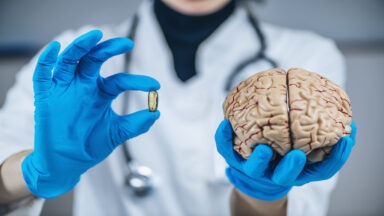
A placebo is a treatment with no active therapeutic properties. And it’s often used as the control in clinical trials to test the effectiveness of new pharmaceutical drugs. But the effect refers to the physiological phenomenon that usually happens to the control group who was given the placebo treatment.
Their condition improves in a way that is often comparable and sometimes even better than the control group, even though they weren’t given any drugs at all. In cases where the placebo outperforms the drug, researchers come to the conclusion that the pharmaceutical should be deemed ineffective.
But why aren’t they more interested in the fact that these people are getting better with no medicine at all?
It’s no secret that the healthcare industry needs sick people in order to turn over a profit. In a 2018 report, the investment banking company Goldman Sachs looked into the investment potential of biotech research companies who are attempting to create “one-shot cures.”
Their conclusion? Cures could be bad for business.
They stated, “While this proposition carries tremendous value for patients and society, it could represent a challenge for genome medicine developers looking for sustained cash flow.” So should we really be surprised that nobody’s putting money behind self-healing research? You can’t exactly put “belief” in tablet form and sell it to patients. But that’s sort of what placebos are.
The examples of miraculous placebo effect results are pretty much endless, so we’ll just look at a few.
In 2001, Irving Kirsch from Harvard Medical School used the Freedom of Information Act to obtain data of clinical trials of top antidepressants. He found that in over half of these trials, the drugs didn’t outperform the placebos, and concluded that 80% of the success in those trials was due to the placebo effect.
Several studies have shown that the placebo effect can also affect physical performance. In one of these studies, a group of weight lifters was told that they were being given a legal anabolic steroid. Each of those athletes set all-time personal records in every exercise tested after being administered the fake steroid.
So we have the ability to improve mental conditions and physical performance with our mind, but can the placebo effect go as far as surgery? According to this study published in the New England Journal of Medicine, yes.
A group of 180 patients with osteoarthritis of the knee was split into three groups. One group underwent an operation that shaves down the damaged cartilage, one group received flushing of the knee joint, and one group received a faux surgery. Complete with pre-op, post-op, small incisions on the knee to produce scars, and audio cues that an operation was taking place.
And the results were startling, the patients were followed up with at various times throughout recovery with the last check-in being 24 months after surgery. The data showed that “At no point did either of the intervention groups report less pain or better function than the placebo group.”
And they concluded, “Finally, health care researchers should not underestimate the placebo effect, regardless of its mechanism.”
Some have argued that the placebo effect boils down to good old fashioned bedside manner. In fact, the Senior Medical Fellow at the American Council on Science and health has claimed that it really just goes back to the soul of medicine — ritual, symbolism, trust, hope, and compassion.
And it’s true that the doctor-patient relationship plays a large role in the effectiveness of treatment. Patients with optimistic and compassionate doctors tend to fare better than those who receive treatment from unenthusiastic ones.
But it’s doubtful that this can explain the magic of the placebo effect entirely. After all, there’s something going on physiologically. And to get a better understanding of just what that is, we’re going to have to dive a little deeper.
Bruce Lipton is a cellular biologist whose research gives us some insight into the mechanism that allows us to heal ourselves. Once upon a time, the planet was populated with single-celled organisms. They did alright for themselves, the protein building blocks of the cells acted as receptors and effectors that took in environmental information and responded accordingly. But after some time these cells started to join together, forming communities that acted as units.
As a means of survival, special cells were tasked with acting as a centralized info processing system or what we would call a brain. In this way, highly evolved animals were able to take in even more information from the environment and relay it to all of the cells throughout the body.
This was great for organizing the flow of signal molecules that regulate the cells’ behaviors. But it also meant that individual cells had to relinquish control to the brain.
And as proud owners of these brains, we can all attest that sometimes our mind generates emotions that are unrelated to our environment and definitely not necessary or conducive to our survival. And these emotions are so strong that they have the ability to override the system.
So that’s great news, right? We can just think happy, healthy, positive thoughts to override the system and cure ourselves of any disease.
Well, not exactly. There’s an important distinction to be made about the instructions that our mind is sending to the rest of our body. Some are coming from our conscious mind, but most are coming from our subconscious mind. And unfortunately, the one that we have control over is only driving the bus about 5% of the time.
Our conscious mind is where we generate thoughts, but our subconscious mind is actually where most of our instructions are coming from whether we realize it or not.
Our subconscious mind acts out of habits and experiences that are formed over a lifetime, but most of which are programmed before we even reach adolescence. It’s where we store all of our fears and past traumas, so it’s no surprise that it might be operating under disempowering programs that conflict with the best intentions of our conscious mind.
But it isn’t all doom and gloom. Dr. Lipton believes that these programs can be easily overwritten through things like meditation, hypnotherapy, and various other forms of energy psychologies.
But how could these woo sounding modalities possibly work better than the chemicals that directly alter the functions and behaviors of particular cells? It turns out that cells respond much better to energy signals than they do to chemical signals.
When a chemical bond is made, most of the cell’s energy is wasted through a chemical coupling. So very little energy is left to take in information and respond to the signal. On the other hand, energy signals link with a cell’s available energy to relay environmental information which according to Oxford biologist C.W.F. McLare makes them 100% more efficient at receiving and responding to signals.
So now the placebo effect results aren’t such a mystery. We see why simply thinking our health will improve can be just as, if not more powerful than a chemical telling our cells to do something different. After all, thoughts are just energetic vibrations.
Now all of this isn’t to say that pharmaceuticals shouldn’t have a place in modern medicine or that every disease can be cured simply by positive thinking. But it is important to recognize that we have powerful internal resources to call upon and integrate into our overall health.
Humans have an innate desire to believe in magic. That’s why it’s so tempting to turn to magical pills and potions when something in our life isn’t going the way we want it to. But just like we saw before, magic doesn’t necessarily require wands and spells. We’re the drivers of our biology, and we have the ability to rewrite our data. The magic is already within us.
About the Author

Scientists Find Breakthrough Use of Light to Kill Cancer Cells

In a world-first, scientists have developed a breakthrough treatment that uses light to kill cancer cells.
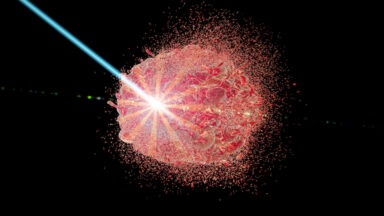
We often think of light as a life-giving source, but in the case of photoimmunotherapy — the use of light to help a person’s own immune system fight cancer — light can both be a source of life, for the patient, and death, to cancer cells.
A multidisciplinary team of European scientists joined forces to design the new treatment, which works by combining a special fluorescent dye with a cancer-targeting compound.
Shining light on the compound forces cancer cells to glow in the dark, helping surgeons to remove more of the tumors compared with existing techniques.
Then, the surgeon would shine near-infrared light on the site, switching the compound into tumor-killing mode and killing off any remaining cells.