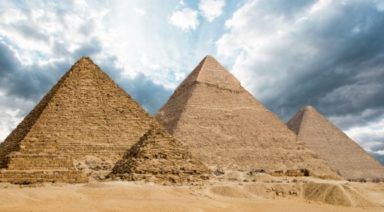
Indonesian Pyramid May Be Definitive Proof of a Lost Civilization
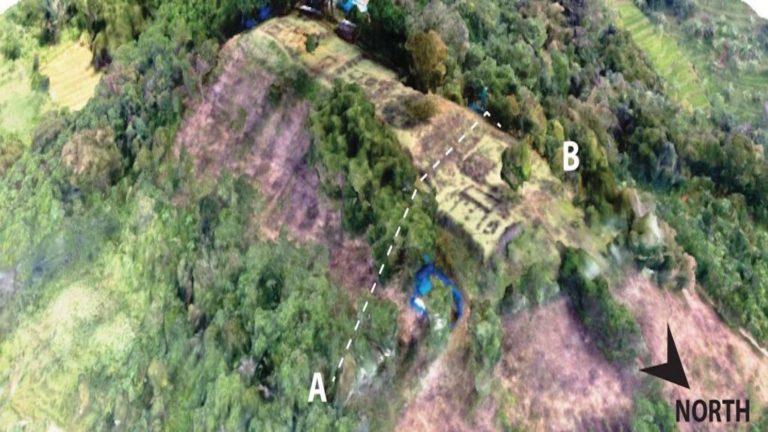
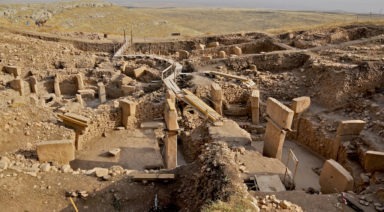
A massive pyramidal structure on the Indonesian island of Java was found to be man-made, after drilling samples returned evidence of a hidden, subterranean temple below layers of vegetation and soil. The structure might predate the oldest megalithic site on Earth, Göbekli Tepe, by millennia.
Though the pyramid has been known to locals as the Gunung Padang megalithic site for some time, it’s now being acknowledged by mainstream archeology as a possible “ancient temple.”
The pyramid is located atop Mount Padang in West Java, covered by a dense layer of trees and foliage that have amassed over the thousands of years since it was built. In addition to the tier of flora, a number of soil and rock layers have developed over the course of its history leading to its obfuscation and making it appear as if it might be a natural formation.
Danny Natawidjaja, Ph.D., a senior geologist for the Research Center for Geotechnology at the Indonesian Institute for Sciences, has been studying the pyramid for years, saying he believes it may be evidence of an ancient, lost civilization predating any we’ve known.
“Old stories about Atlantis and other great, lost civilizations of prehistory, long dismissed as myths by archaeologists, look set to be proved true,” Natawidjaja told Graham Hancock in a 2014 interview.
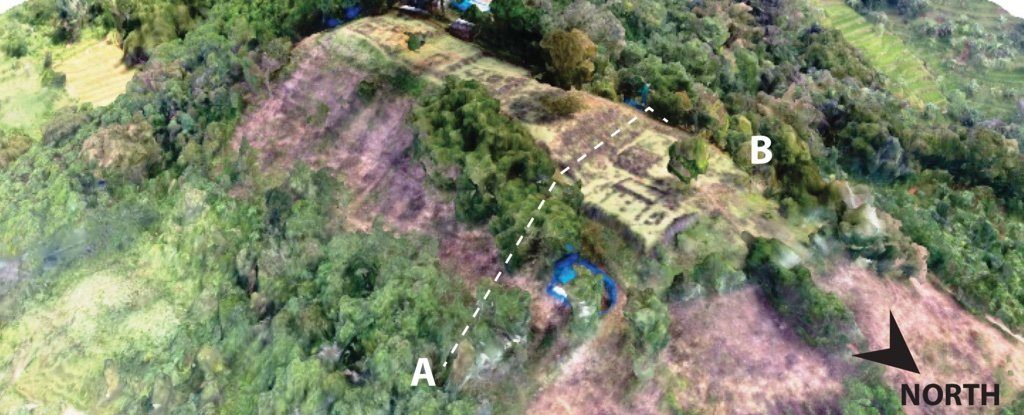
Natawidjaja and colleagues first noticed artificial signatures in the temple when comparing it to the eroded, natural landscape nearby. They also spotted particular characteristics in the basaltic standing stones atop the pyramid, that frame its stepped terraces. These can be found next to other rock columns and arrangements that form distinct walls, paths, and spaces clearly hinting at an anthropogenic origin. This layer alone dates back 3,500 years, with subsequent layers getting continually older the further archeologists dig.
In a recent report by LiveScience, Natawidjaja revealed the results of a study that incorporated ground-penetrating radar, x-rays, tomography, and core samples showing the pyramid’s age. The latest interest in his findings among the academic community may encourage the Indonesian government to allow further excavation – something it’s been averse to in the past.
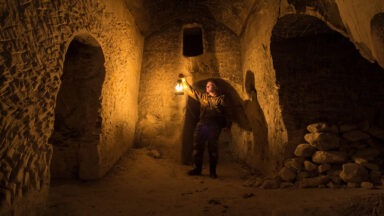
“Underneath the surface, to a depth of about 10 feet (3 m), was a second layer of similar rock columns, thought to be 7,500 to 8,300 years old. And a third layer, extending 49 feet (15 m) below the surface, is more than 9,000 years old; it could even date to 28,000 years ago, according to the researchers. Their surveys also detected multiple chambers underground,”
Today, the top of the pyramid is used for prayer like it probably was thousands of years ago. And now that mainstream archeology is finally willing to accept that it is in fact, a man-made structure, we may be on the precipice of a true paradigm shift in our perception of human history.
For more on anomalous archeological sites around the world, check out Ancient Civilizations :
About the Author

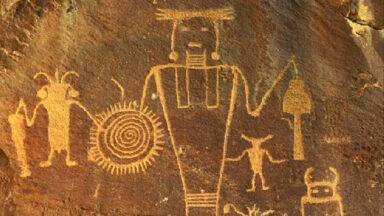
Ancient Footprints Evidence of 'Ant People' of Hopi Indian Lore
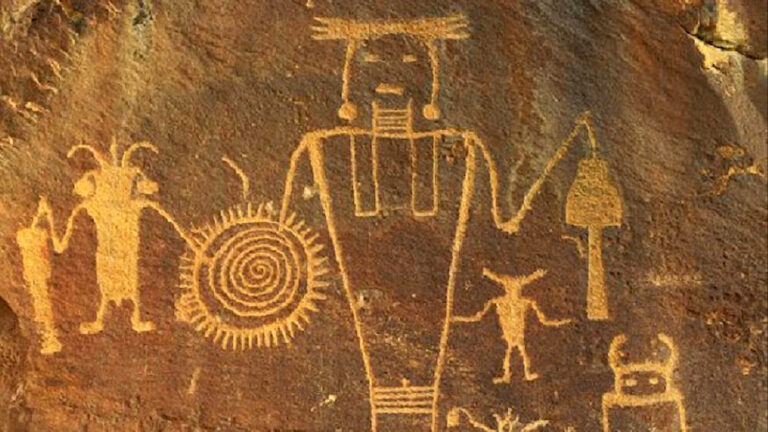
Ancient footprints buried for thousands of years are revealing their true date of creation thousands of years earlier than we thought and shaking up the conventional timeline. Could this validate Hopi stories of ancient Ant Men?
White Sands National Park in New Mexico today, is mostly chalky white desert and sand dunes, but thousands of years ago this was a temperate zone centered around the massive Lake Otero filled with flourishing plants, wildlife, and now we can confirm, humans. Ancient footprints originally discovered in 2009 have been radiocarbon dated to be from 21,000-23,000 years ago. Previous estimates of human habitation in this area were 13,000-16,000 years ago.
Ancient stone tools, footprints, and rock layers are difficult, if not impossible, to date. But scientists have found seeds from ancient spiral seed grass, mingled with some footprints. Those seeds were able to be carbon dated, proving humans were in the area and thriving thousands of years earlier than previously thought.
Jack Cary, researcher and author of “Paranormal Planet” commented on the significance of this discovery. “This is a huge point to shove back human migration. That means that you’re going to have to rewrite everything that’s associated in our science related to human migration. That is a huge problem for our anthropologists and for accepted science as a whole,” Cary said. “As investigators into ancient mysteries, this is one of the biggest things that we could ever discover because now we have absolute, inarguable proof that humans were there at this exact period of time.”
Why are investigators of ancient mysteries so excited about this find?
“This is the same area, the same place, and the same time that the Hopi Indians claimed that the so-called Ant People took them underground during a massive global cataclysm because the world basically caught fire according to their ancient, historical oral traditions. And this same event, strangely enough, can be found in the Book of Enoch when he describes a cometary impact. All of this would date back to around the same time period,” Cary said.
“And we have to remember that in Hopi language ‘Anu’ means ‘Ant’ and ‘Naki’ means ‘Friend,’ so the word Annunaki to the Hopi means ‘Ant Friends.’ And it was these ‘Ant Friends’ who twice took them underground, the second being when the last Ice Age actually melted creating a global flood that has been recorded in ancient histories worldwide. Now we have radiocarbon dated proof that there was in fact, human habitation in the right place, at the right time to make those oral histories viable.”