Padahastasana: Hand Under Foot Pose
ADJUSTMENTS | BENEFITS | SEQUENCING | SANSKRIT | STEPS
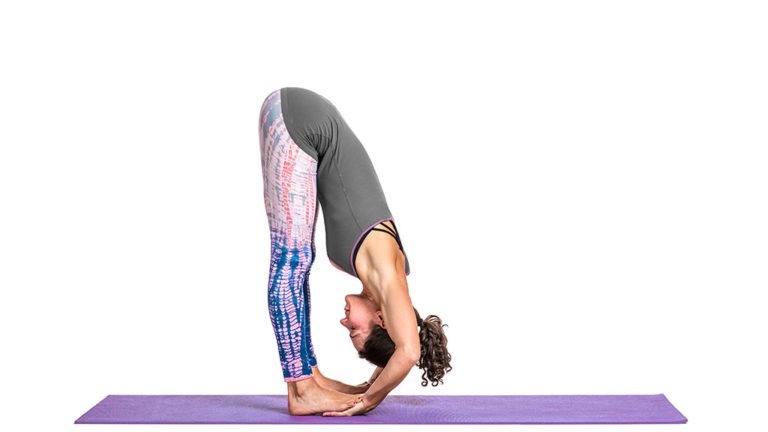
Padahastasana (PAHD-ah-hahs-TAHS-ah-nah) stretches the hamstrings and spine while compressing the hands and wrists. As a forward fold, padahastasana also relaxes the neck and shoulders to calm the mind and nervous system.
Philosophy + Origin
By bringing opposites together — upper and lower body, hands and feet, padahastasana is said to unite higher states of awareness and lower states of consciousness, bringing balance to body and mind. Likewise, practicing padahastasana unites the external nature and internal spirit.
ADJUSTMENTS/MODIFICATIONS:
- Bend your knees in order to place your hands under your feet, then straighten your legs.
- If legs are straight, avoid locking the knees.
STEP-BY-STEP:
- Begin standing at the top of your mat. Exhale to fold forward from the hips. Keeping length in the front of your torso, bring your hands to the floor. Bend your knees as much as needed.
- Turn your hands palm face up and slide them under the soles of your feet so that the toes are at the wrist joint. Shift the weight of your feet front and back so that you find the appropriate amount for your hands and wrists.
- Once you have secured your hands with your feet, option to draw your elbows out to the sides and forward. Keep the back of your neck long.
- Stay for up to eight breaths before releasing your hands from beneath your feet and slowly return to standing.
PREPARATORY POSES:
- Downward-facing dog | Adho mukha svanasana
- Reclined hand to toe pose | Supta padangusthasana
- Standing forward bend | Uttanasana
SEQUENTIAL POSES:
- Head to knee pose | Janu sirsasana
- Chaturanga dandasana | High to mid plank
- Cobra pose | Bhujangasana
COUNTER POSES:
- Chair pose | Utkatasana
- Cow pose |Bitilasana
- Mountain pose | Tadasana
SANSKRIT:
- Pada = Foot
- Hasta = Hand
- Asana = Pose
PHYSICAL BENEFITS:
- Stretches hamstrings, back body, and wrists.
- Encourages relaxation of the neck and shoulders.
ENERGETIC BENEFITS:
- Thought to balance tamasic energy.
- Thought to balance vata dosha.
Legal Disclaimer Before participating in any exercise program or using any fitness products or services that may be described and/or made accessible in or through the Gaia Website and/or the Services, you should consult with a physician or other healthcare provider. Read more about Gaia’s Terms Of Use.

About the Author

Anjaneyasana: Monkey Lunge Pose

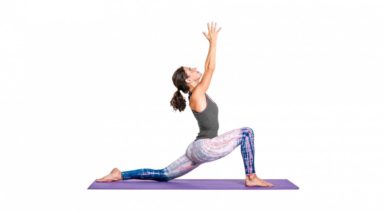
Anjaneyasana (AHN-jah-nay-AHS-uh-nuh), also known as low lunge or monkey lunge, stretches the hips, gluteus muscles, and quadriceps while improving balance, concentration, and core awareness.
Philosophy and Origin:
The term anjaneya is a matronymic reference to the monkey god Hanuman using his mother’s name, Anjani. Lord Hanuman is a central part of Hindu devotional worship, believed to be an incarnation of Lord Shiva. The pose resembles a young, divine child (anjaneya), reaching towards the sky and the warmth of the sun, captivated by a glowing fruit in the sky as depicted in the traditional epic.
Sanskrit:
- Anjaneya: Lord Hanumān, the divine entity of spiritual significance
- Asana: pose