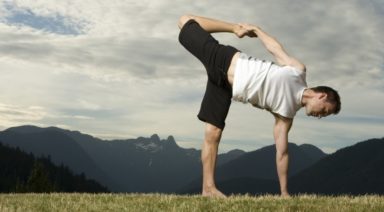
Parivrtta Trikonasana: Revolved Triangle Pose

ADJUSTMENTS | BENEFITS | SEQUENCING | SANSKRIT | STEPS
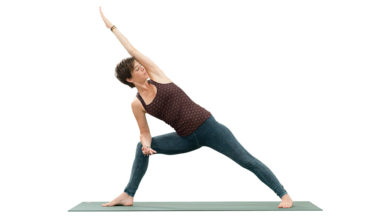
Parivrtta trikonasana (par-ee-VRIT-tah trik-cone-AHS-anna) is a great counterpose to its expansive sibling, utthita trikonasana (extended triangle). Stretching your spine and releasing tension in your chest and shoulders is a great antidote to a long work day.
Philosophy + Origin
As the more feminine version of utthita trikonasana, revolved triangle reminds us that there are always two sides to every coin — the dark to the light, the cold to the hot, the feminine to the masculine, the stillness after the movement. Reflecting on the differences and similarities between the two versions of triangle pose can help you find balance between two apparent opposites. Although feminine and masculine might seem like night and day, there’s a place in the middle where the two always meet.
ADJUSTMENTS/MODIFICATIONS:
- If shoulders are tight or tender, keep the raised hand on your hip rather than extending it straight toward the sky.
- Use a block under your bottom hand to bring the ground closer to you.
- Press the forearm of the bottom arm against the shin of the front leg to deepen the twist.
- Keep your gaze down or to the side to release the neck.
STEP-BY-STEP:
- Begin in a lunge with your right foot forward. Straighten your front leg and hop your back foot in to place your heel on the ground (pyramid pose).
- Place your left hand on the floor or a block, to the inside of your right foot. Place your right hand to your right hip and encourage your right hip behind you.
- Extend the crown of your head forward, then turn your torso toward your right leg.
- Lift your right arm toward the ceiling.
- Keep rooting down through your left heel.
- Option to turn your gaze to the ceiling.
- Hold for 5-10 breaths, then release back to lunge. Repeat on the other side.
PREPARATORY POSES:
- Pyramid pose | Parsvottanasana
- Wide-legged forward fold | Prasarita padottanasana
- Extended triangle pose | Utthita trikonasana
SEQUENTIAL POSES:
- Revolved half moon | Parivrtta ardha chandrasana
- Head to knee pose | Janu sirsasana
- Pose dedicated to the sage Marichi II | Marichyasana II
COUNTER POSES:
- Half lord of the fishes pose | Ardha matsyendrasana
- Standing forward fold | Uttanasana
SANSKRIT:
- Parivrtta = revolved
- Trikona = triangle
- Asana = pose
PHYSICAL BENEFITS:
- Expands chest and shoulders.
- Stretches the spine and increases range of motion.
- Strengthens and tones the thighs.
ENERGETIC BENEFITS:
- Soothes and stills the mind.
Legal Disclaimer Before participating in any exercise program or using any fitness products or services that may be described and/or made accessible in or through the Gaia Website and/or the Services, you should consult with a physician or other healthcare provider. Read more about Gaia’s Terms Of Use.

About the Author

Padahastasana: Hand Under Foot Pose
ADJUSTMENTS | BENEFITS | SEQUENCING | SANSKRIT | STEPS
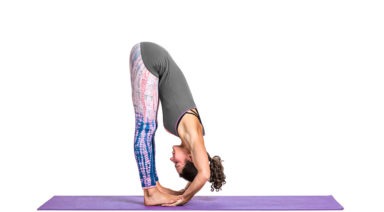
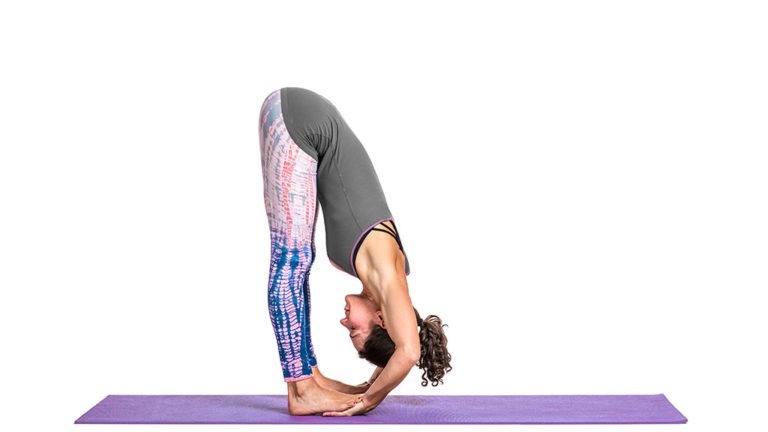
Padahastasana (PAHD-ah-hahs-TAHS-ah-nah) stretches the hamstrings and spine while compressing the hands and wrists. As a forward fold, padahastasana also relaxes the neck and shoulders to calm the mind and nervous system.
Philosophy + Origin
By bringing opposites together — upper and lower body, hands and feet, padahastasana is said to unite higher states of awareness and lower states of consciousness, bringing balance to body and mind. Likewise, practicing padahastasana unites the external nature and internal spirit.