Sound Resonance: Feel the Vibration

Sound is a powerful tool for any metaphysician. It can be linked to colors, chakras, moods, pathways on the Tree of Life, and many other uses. Resonance is a scientific principle based on a phenomenon in acoustics. The ancients knew about resonance and understood the principle that if two bells are tuned exactly the same when one is rung, the other will also begin to ring without being touched.
If something vibrates at a specific frequency, other things with that same frequency will also begin to vibrate, providing there is air between them to transmit the vibrations. Furthermore, the secondary vibration will move back to the initial and make it begin again. The philosophy hidden in this phenomenon is deeper than the physics behind it and can reveal much about life to the industrious student.
As Above, So Below
There’s an old saying in Hermetic Qabalism: as above, so below. This axiom implies that everything that exists in the microcosm, namely you, is reproduced somewhere in the Universe, in some form or another, and vice versa.
We are a reflection of the cosmos and the cosmos reflects us.
This belief was the basis for many of the Hermetic teachings attributed to Hermes Trismegistus and should be a focus of contemplation and investigation by every individual. It not only makes sense but will be found to be true, over and over again, with a minimum of study.
The Mystery of Sound
Since resonance is linked to vibration and there are viable theories claiming that everything is vibrating, we could infer that there must be resonance going on at all times. Of course, this isn’t necessarily a scientific way of looking at things, but it fits beautifully in our world of the mysteries. We find ourselves in possession of a way of looking at the world that allows us to be more sensitive to what we resonate with and what makes us cringe.
Not all we sense that’s vibrational is sound, and thankfully we can’t hear or see, all the vibrations that are in our world. Can you imagine being able to hear ultrasonic or subsonic tones? It might be novel in the beginning, but it wouldn’t take long to become bombarded by the din of the cosmos. The same is true of light. X-rays, Gamma rays, and all invisible waves of electromagnetic frequencies, including radio, television, microwaves, and cell phones, are constantly before us, but luckily invisible.
This reminds us that just because something can’t be seen, it doesn’t mean that it doesn’t exist.
Our brains are complicated biochemical electrical systems, designed to transmit thought. Our eyes are designed to receive light waves. Our skin is sensitive enough to feel minute changes in temperature and barometric pressure. We are finely tuned receptors, almost invisibly aided by the autonomic nervous system, and are essentially on autopilot. The autonomic system receives constant information from the outside world and adapts to its surroundings accordingly. If the temperature drops, the body shivers in order to bring warmth.
If our body chemistry signals a need for energy and our stomach is empty, we feel hunger. It makes sense to me that we are always perceiving information in the form of vibrations, some of these are sound-based, but much of it isn’t. As we receive the information around us, some of it from situations, others from people, some from nature itself, and some from places unknown, these vibrations, what we call intuitive knowledge and raw data, is turned into valuable information – if only we actually listen.
Those things that we vibrationally resonate with, either exactly or in a way that creates harmonic chords, bring us a sense of well-being, comfort, and pleasure. When we are faced with vibrations that don’t match our own, either directly or harmonically, we feel tense, suspicious, anxiety-ridden, and even miserable.
Such stresses on our system can bring unhappiness, dissatisfaction with our lives and the world, tendencies toward carelessness or recklessness, depression, or illness. The sheer amount of vibration in the world today caused both by artificial and natural sources is staggering and mustn’t be underestimated as to their effect upon our psyches. In order to feel the best that we can, it’s helpful to experiment and find tones that make us happy or at least make us feel calmer.
Sound is often a tool used in meditation. Chanting a mantra, humming a tone, listening to a bell, whether it be mentally rung or actually, are ways of achieving a resonance that can merge with our own vibration, bringing it into harmony again, or unifying it with an energy known to be stable and supportive.
Find the Music
Years ago, I experimented with a tuning fork that I’d bought to help me tune my ukulele. It was an A-440.000Hz fork and I experienced some odd feelings when I used it. I experimented by striking it and then closing my eyes. I was startled to discover that I had a definite reaction, some of it visual. Using an electronic tuner, I experimented with other tones and combinations of notes, with remarkable results.
I discovered that some tones were completely annoying to me, even though there was nothing inherently wrong with them. I also discovered that just because some notes harmonized and made a musically viable chord, it got on my nerves. Some might be tempted to chalk this up to personal preference, but I think it has more to do with my vibrations and what resonates with me. It’s probable that you would react differently to some of the tones.
I began using these sounds as the foundation for my mantra meditations, finding that the exact same mantra, given a different note, rendered unique results. I also experimented with bells. My favorite is a lovely set of Tibetan bells, known as Tingsha. Further experiments with the Tingsha proved them to be remarkable at sensing energetically dead spots in houses, malefic energies, and even dishonesty in others. This particular set of bells resonates well with me. When I bought them, I tried every set in the store, much to the chagrin of the shopkeeper, until I found my set, the one I felt the most comfortable with.
It’s important to discover what brings us comfort and to work with it and on it. You can bring positive sound resonance, also known as good vibes, into your world. Here are some suggestions as to how to do just that.
Experiment with Different Musical Tones
Electronic Tuners are readily available at music stores and on the Internet. You can find tone generators online for free that will allow you to create notes, usually for the tuning of a particular musical instrument. However, you find them, start with any note and decide if it resonates with you. Listen to it for a while, then allow it to vibrate in your mind. Do this three or four times and then switch to actually humming that note with your eyes closed.
It won’t take long for you to decide whether or not the tone has positive, negative, or neutral effects upon you. The benefit of this is being able to use a tone at any time, through the use of a tuning app or a pitch pipe, allowing it to help ground you, center your energies, and bring you back to a place of feeling good. The more tones you try, the better off you’ll be. Soon you’ll be building a library of vibrational tones that can help you to sleep, perk up, study, think more clearly, enjoy yourself, meditate, or any other of the personal activities that sound vibrations can enhance. This is a powerful and often neglected tool. I can’t suggest it to you enough.
Try Feeling Other People
When I say try feeling other people, I mean their vibrations, as you’re liable to get yourself into a lot of trouble otherwise. It’s important that you not judge someone based upon their appearance or your preconceived notions. Luckily we live in a society where shaking hands, although at times unsanitary, can also put you in direct contact with the vibrations of the person in question.
I’m sure you’ve met someone and instantly liked them, while others you’ve met have left you ice-cold. One of the most amazing aspects of all of this is that people can be vibrationally sensed over long distances, even through photographs. I’ve been using the technique for decades and have found it to be uncannily accurate. Imagine being able to say no to an online date profile based solely on the photograph and the vibrations you feel.
There will be those who scoff at this concept, but it works and if you try it, you’ll be hooked. Don’t be surprised if you feel great warmth and love coming from the most unsuspecting individuals. Likewise, never ignore your vibrational intuition when you sense that someone is not at all what they seem to be and may be hiding something. Forewarned is forearmed.
Get Some Bells
Almost every culture uses bells, in some form or another. Experiment with anything you find and see how it makes you feel. The vibrations from a Tibetan Singing Bowl will be completely different than those of a crystal bell. One bell may make you feel at ease and put you in contact with benevolent energies that surround you. Another may bring you to a state of anxious trepidation and make you break into a cold sweat.
Pay attention to what does what, and don’t neglect to note your responses. With practice, you’ll be able to feel these energies in the presence of others, which can give you a good idea as to what’s actually going on beneath the surface. There are very few people who can masquerade their vibrations as one thing when in fact they’re different. Use this fact to your advantage.
Consider Playing a Musical Instrument
You don’t have to be a good musician to benefit from making music. I love musical instruments and have collected them all my life. When it comes to vibration, I’m especially fond of playing the Didgeridoo. One of the most amazing experiences of my life occurred when I communicated with a dragonfly while playing a 7-foot long Didgeridoo.
The dragonfly landed on the end of the instrument and moved its wings in time to the vibrations I was putting out. Stunned, I stopped playing and it flew away. The instant I resumed, it once again lit on the end of the Didgeridoo, moving its wings to the exact rhythm of the notes I played. I sped up and so did the dragonfly.
I slowed down and its wings kept time. Through vibrational resonance, I communicated with an insect, which I consider to be one of the most astounding accomplishments of my life. As I mentioned, don’t worry about playing well; just play. Whether it be a flute, concertina, organ, piano, pennywhistle, ukulele, drum, violin or any other of the thousands of instruments used by humans to bring sound to the world, use it. It isn’t important to strive for mastery, for the joy is in the experience and the energy. Mastery will come if you pursue it.
My hope is that someday we can all harmonize with each other, making the world a much softer, more loving place to be. Remember, it begins with us.
I wish you all peace and love.
About the Author

Bach Flower Therapy: A Guide To Start Using It

Bach flower therapy is a natural system of emotional harmonization created from floral essences. It is used to treat imbalances such as fear, sadness, anxiety, or lack of confidence, without side effects. In this article, we explore what Bach flowers are, how they work on the emotional level, and how to start integrating them into your daily life.
Table of Contents
- What Are Bach Flowers And How Do They Work?
- What Are Bach Flowers Used For?
- The Origin Of The Flower System: Who Was Edward Bach
- The 38 Bach Flowers: A System To Balance Emotions
- How To Start Using Bach Flowers Consciously
- What’s The Difference Between Bach Flowers And Other Flower Essences?
- Can Bach Flowers Be Combined With Other Therapies?
What Are Bach Flowers And How Do They Work?
Bach flowers are natural essences extracted from wildflowers that work on an energetic level to balance emotional states. This system was created in the 1930s by British physician and homeopath Edward Bach, who sought a more holistic and accessible healing method for everyone. His approach is based on the idea that many physical illnesses have an emotional origin, and that by treating the internal cause, the healing of the body is encouraged.
Each flower essence acts as a subtle catalyst that helps dissolve blocked or overwhelming emotions, such as fear, anger, guilt, impatience, or hopelessness. Instead of suppressing these emotions, the flowers allow them to transform into positive qualities such as calmness, confidence, courage, or compassion. That is why it is said they do not fight the symptoms, but rather strengthen inner balance.
Floral therapy does not act on a biochemical level like conventional medicines, but instead operates in the energetic or vibrational field of the individual. For this reason, it is compatible with other treatments and can be used by people of all ages. By harmonizing emotional frequency, Bach flowers help reconnect with the body’s natural well-being.
What Are Bach Flowers Used For?
Bach flowers are used to support emotional processes, promote inner balance, and facilitate the transformation of limiting attitudes. Their application is very broad and can be adapted to different moments in life, both in people and animals.
- Stress management: They help reduce the impact of everyday emotional stress. They are useful in times of overload, pressure, or mental exhaustion.
- Anxiety relief: They help calm internal restlessness and repetitive thoughts. They are especially effective when there is nervousness or excessive anticipation.
- Grief processes: They support sadness and pain during significant losses. They promote a more loving and contained emotional adaptation.
- Improving self-esteem: They foster self-confidence and recognition of one’s own value. They can be helpful for people experiencing insecurity or excessive self-criticism.
- Major life changes: They provide support during transitions such as moving, breakups, motherhood, or new life stages. They offer clarity, stability, and emotional adjustment.
- Support for domestic animals: They are used to address behaviors related to fear, aggression, or hyperactivity. They are also useful when facing changes in home or absence of caregivers.
- Rescued or traumatized animals: They help release painful emotional memories and restore trust. They are a safe tool to support their emotional recovery.
The Origin Of The Flower System: Who Was Edward Bach
Edward Bach was a British physician who, after training in conventional medicine, began to take an interest in a more holistic view of the human being. His experience in bacteriology and immunology led him to understand that the emotional state of patients played a central role in the progression of their illnesses. This approach prompted him to research new forms of treatment that not only alleviated physical symptoms but also restored internal balance.
Through observing nature and his patients, Bach developed a system based on the idea that behind every ailment there is an emotion in imbalance. In his search, he identified 38 wildflowers with specific energetic properties for each emotional state, from fear and sadness to discouragement or indecision. His method consisted of working on the deep emotional cause to promote lasting healing.
The Bach flower system was conceived as a simple, safe, and accessible tool for everyone. He believed that each person could actively participate in their own healing process, without relying solely on medical treatments. His legacy remains alive today, and his essences are used worldwide as a way to reconnect with emotional harmony and inner wisdom.
The 38 Bach Flowers: A System To Balance Emotions
The Bach flower system is made up of 38 essences, each one associated with a specific emotional state. These emotions can range from fear, insecurity, or guilt, to impatience, sadness, or disconnection. By acting on the person’s energetic vibration, the flowers do not suppress what is felt, but rather encourage a more harmonious shift in perception.
The essences are organized into seven emotional groups: fear, uncertainty, lack of interest in the present, loneliness, hypersensitivity, discouragement, and excessive concern for others. This classification makes them easier to use and allows for a more intuitive selection depending on what someone is going through. Some of the most well-known flowers are Rescue Remedy (a blend of five essences for emergencies), Mimulus (for specific fears), and Larch (for lack of confidence).
Although they can be taken individually, it is common to combine several essences depending on the personal situation. The right selection allows subtle aspects of personality to be addressed and supports internal transformation processes. That’s why getting to know each flower and its function is an important step in making the most of the potential of the flower system.
How To Start Using Bach Flowers Consciously
Beginning a process with Bach flowers involves honestly observing what we are feeling. It is important to identify the main emotion we want to work on, as well as others that may be associated with it. Based on this self-observation, between one and seven flowers are selected, which can be combined in a personalized bottle.
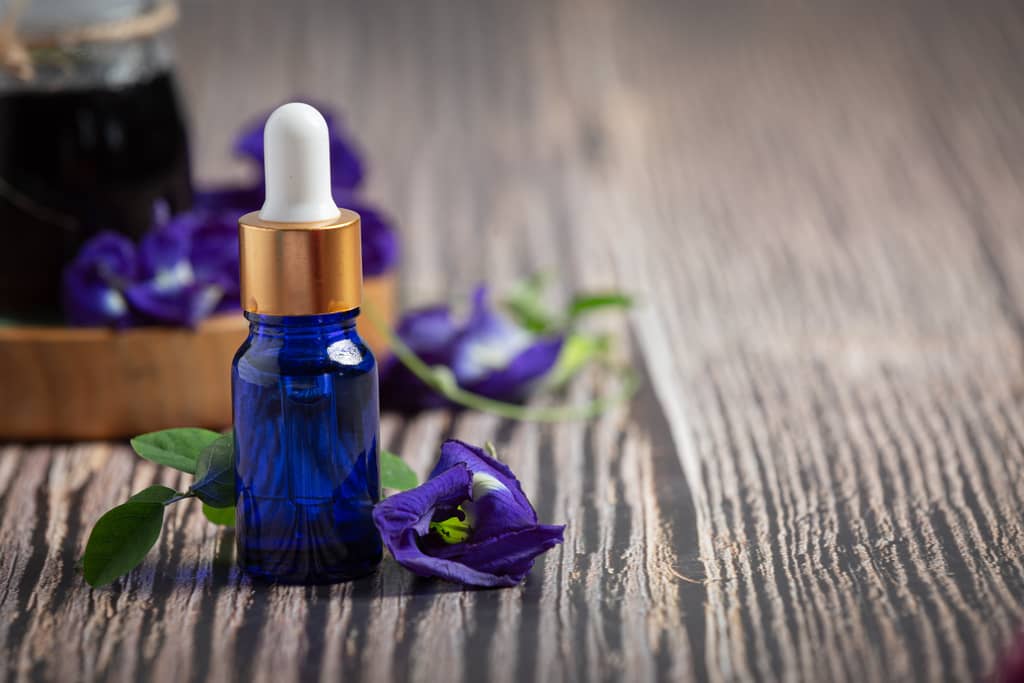
The essences are taken in drop form, usually diluted in water, several times a day. They can also be applied to the skin or added to baths. Although they have no side effects and do not cause dependence, their emotional impact can be profound if used with consistency and awareness.
In case of doubt, a flower therapist can be consulted to help choose the most appropriate essences. However, the system was designed so that anyone can use it safely. Listening to what we feel and choosing with intention is the first step for the flowers to act as allies on our path toward emotional balance.
What’s The Difference Between Bach Flowers And Other Flower Essences?
Bach flowers were the first flower essence system developed with a clear methodological and philosophical foundation. Its approach is focused on treating the emotional states that generate imbalances in the body and mind, and each of the 38 essences was researched by Edward Bach based on his clinical experience. The simplicity and accessibility of the system make it a daily-use tool for people of all ages.
Today, there are many other flower essence systems—such as those from California, Australia, or the Amazon—that broaden the emotional or spiritual spectrum they can address. Although all of them work on the energetic field, they differ in their preparation methods, classifications, and goals. Bach flowers, however, remain one of the most widely used and studied vibrational therapies in the world.
Can Bach Flowers Be Combined With Other Therapies?
Yes, Bach flowers can be complemented with other therapies without causing interference. Since they do not contain active chemical ingredients, they do not interact with medications or conventional medical treatments. They also do not negatively affect therapies such as homeopathy, acupuncture, or psychological approaches.
This versatility makes it possible to integrate the flowers into broader therapeutic processes, adding an emotional dimension that is often left out of traditional clinical approaches. In addition, they can be an excellent support in times of crisis, personal transitions, or self-development. The key is to use them with clear intention and as part of a holistic view of well-being.