Your Body Is a Superorganism Thanks to These Microbes
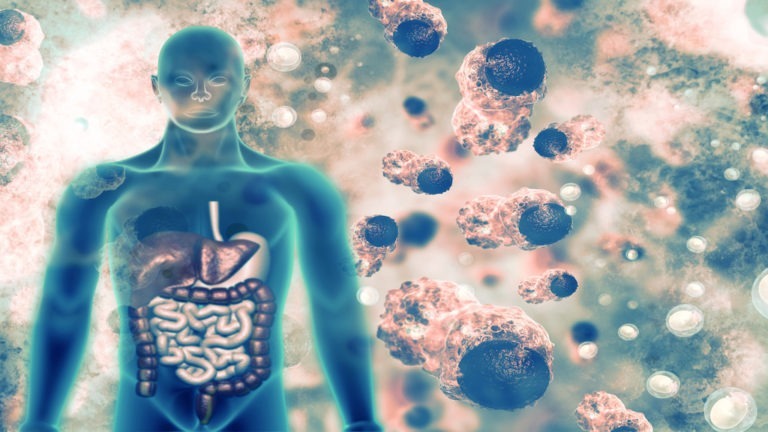
Dr. Bruce Lipton, Ph.D., a pioneer in the field of epigenetics who worked as a stem-cell biologist has effectively bridged the gap between mind, body, and spirit. Of particular note is his approach to the immune system, a widely appreciated (yet poorly understood) function of the body.
We Are Made of Microorganisms
As humans, we each possess a microbiome, a community of microorganisms (such as bacteria, fungi, and viruses) that inhabit the body. Our bodies are home to about 100 trillion of these microbes, and their role in protecting us from disease cannot be overstated: They are not just necessary, but crucial, to human life on a great many levels.
Microbiome research is an emerging field in which researchers investigate how the bacteria that live in and on our bodies affect our health and states of mind. Beneficial microbes in the gut have much to do with how efficiently we can extract calories from different kinds of food, how likely we can escape colon cancer or heart disease, and even how we metabolize different kinds of drugs.
And, as Lipton teaches, these microbes regulate a wide array of aspects related to both mind and body—from the removal of toxins to gut feelings, and from sleep patterns to appetite. In fact, because of their role in the production of certain hormones such as serotonin, a deficiency in the microbiome literally affects happiness levels and may contribute to anxiety and depression.
The Crucial Link to Our Immune Systems
Lipton brings the invisible world into focus, showing how three pounds of microbes in our bodies can make or break our state of health, and how they can be the deciding factor between life and death. He tells us that our skin is not only covered with bacteria and fungi but that every organ system is connected to the outside environment thanks to these tiny microbes.
Surprisingly, our bodies are made up of 150 trillion human cells, but we have five to 10 times that amount of microbes. Thus, when we look in the mirror we are really looking at a network of bacteria and fungi, leading Lipton to apply a new definition to the very notion of a human being — a superorganism.
Science has determined that we are more bacteria than human, and in his series, Lipton invites us to see how the microbiome is fundamental to sustaining and promoting health. The first line of defense is protecting our minds and bodies against environmental pathogens, or microbes that cause disease. The microbiome goes to work the moment we are born into this world and continues to keep us going until the inevitable end of our lives.
The microbiome is acquired after birth after the newborn infant leaves the sterile environment of the womb, and it guards against all sorts of environmental pathogens that touch the surface of the body. While most people, including doctors, are quick to assume that the immune system will attack, destroy, and manage these invasive organisms, Lipton offers a crucial and often overlooked part of the process: He teaches that it is the microbiome that deals with most external microbes, before our immune systems are called upon to address them.
Our bodily system of bacteria and fungi immediately go to work to prevent invading pathogens from harming us and upsetting the nature of the microbiome community. “Even before germs can touch your body,” explains Lipton, “your microbiome has filtered out almost all of the pathogens.” Meaning, “the microbiome is the first deterrent to infection.”
Our Disease-Fighting Power
For quite some time, physiologists, biologists, and other scientists have taught that foods we eat are broken down in the mouth, stomach, and intestines to make the nutrients available to the body. But that description of the digestive process leaves out an important stage. More recent findings show that the microbes of the digestive system actually carry out the final step of digestion, breaking the smallest pieces of food we eat into building blocks that feed our entire physiology.
Without this large community of microorganisms in our bodies, we wouldn’t be able to digest foods, and life would come quickly to an end. For this reason, drugs such as antibiotics can have a detrimental impact on our health when misused or overused, as they kill off the microbes that are crucial to our survival, and do not distinguish between pathogenic microbes and friendly bacteria of the microbiome. Lipton teaches that when drugs or diseases have this type of deleterious effect, we must then go to work replenishing the lost microbes or risk further health complications.
Dr. Lipton’s Life-Saving Knowledge
According to Lipton, there are three primary functions of our microbiome:
- To assist digestion.
- To release hormones that influence our behavior and “gut feelings.”
- To signal our immune system, so it effectively kills invasive pathogens, before they can damage our cells.
The message Lipton offers could be the most important viewers will ever hear regarding health and wellbeing: Not only are our microbiomes essential to digestion and cellular health, but they are also critical to the hormonal system that affects everything from our sense of happiness to our energy production to the lymphatic system that removes waste products from your body.
Lipton makes it clear that every cell in our body is dependent on the microorganisms that make up the microbiome — and good health depends upon the trillion bacteria that keep the body active and healthy.
Study Finds Anti-Inflammatory Meds Are Causing Chronic Pain

A groundbreaking new study suggests that commonly used anti-inflammatory drugs and steroids may cause pain to become chronic. Could this lead to a dramatic paradigm shift in how pain is managed and prevented?
For the vast majority of people in acute pain, taking an over-the-counter anti-inflammatory, such as ibuprofen is the usual course of action. Inflammation has, for decades, been seen as a cause of pain and its control, the goal of patients and doctors. A new study suggests, however, that inflammation may actually be necessary to prevent pain from becoming chronic.
Given today’s overwhelming prevalence of chronic pain — pain that persists for more than three months — scientists have lately been turning their focus to studying the process by which acute pain transitions into more lasting and debilitating pain.
Researchers at McGill University recently completed a study in which they observed this process, using several methods. First, they looked at patients with lower back and facial pain.
Upon analysis of their immune cell samples, the scientists were surprised to find that those whose pain resolved showed an intense spike in the activity of inflammatory genes during the acute pain stages, which then rapidly diminished within three months.