Who Are The Anunnaki? The Ancient Gods of Sumer
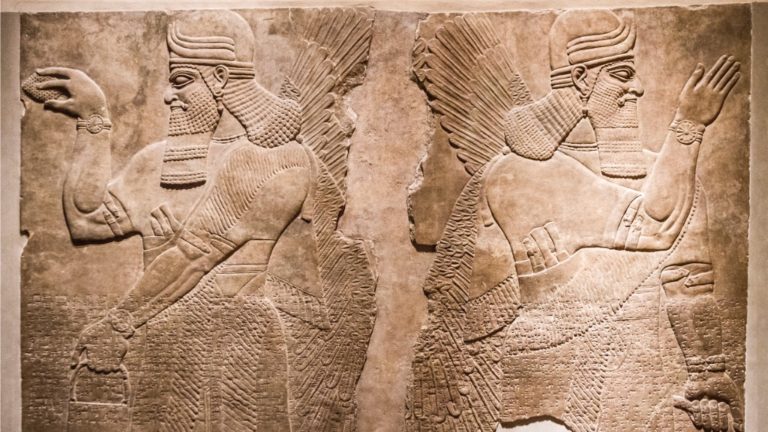
Who were the Anunnaki?
The short answer is: The Anunnaki were the central pantheon of deities worshiped by the ancient Sumerians and arguably the world’s first advanced civilization.
Interest in ancient Sumerian culture has been active and persistent since it was discovered in the 19th century, for several reasons, including the profound impact these early people had on religion, astronomy, law, and mythology. The Anunnaki, as divine figures, have fascinated scholars, theorists, and truth-seekers since their rediscovery.
Who Were the Sumerians?
The Sumerians appear on the archaeological record beginning around 4,500 BCE. Located in present-day Iraq, the region, f.k.a. Mesopotamia has long been referred to as “the cradle of civilization.”
Sumer was a handful of city-states initially ruled by priests, each organized around a city and temple now called a “ziggurat.” The ziggurats, dedicated to Anunnaki worship, were layered pyramids with flat tops. These communities were considered to be “servant-slave” populations dedicated to serving the temple gods — the Anunnaki.
Over time, priesthood rulership gave way to kings.
The Sumerians were skilled trade merchants and acquired lapis lazuli from Afghanistan, cedar from Lebanon, and gold from the Indus Valley. Their agrarian culture gave us the plow as well as “time” — the 24-hour day and 60-minute hour.
Sumerian history is gleaned from archaeological and geologic evidence — written records are in the form of cuneiform tablets. Reportedly, some half-million tablets have been recovered, but only a small number have been translated. Many of these tablets contain mythic and administrative insights that have shaped modern understanding of early Mesopotamian society. Much was also learned from translations of Babylonian records; Sumer was considered “ancient” in Babylonian times.
Sumerians worshiped the Anunnaki, said to be the children of earth and sky; An, the sky god, and Ki, the earth goddess. Chief among them was Enlil, the god of air. These Sumerian gods formed a divine hierarchy that influenced the region’s cosmology and political structure. This pantheon was passed to the Akkadian, Babylonian, and Assyrian cultures. The Epic of Gilgamesh, the story of the historical king of Sumerian city-state Urek, is an ancient literary relic of Sumerian culture.
This foundational account of human history continues to spark debate, fascination, and alternative interpretations. Above is the mainstream “narrative” regarding the Anunnaki — others have drawn different conclusions based on archaeological evidence, analysis of Sumerian mythology, and translations of cuneiform tablets.
The Rise of the Anunnaki: Sumerian Myth and Worship
At the heart of Sumerian belief was the Anunnaki—a powerful group of deities said to be born of the primordial gods An (the sky god) and Ki (the earth goddess). These beings were central figures in early Mesopotamian cosmology, thought to dwell in the heavens and the netherworld, yet actively involved in the fate of humanity. The Anunnaki were not just symbolic—they were considered real forces who controlled weather, harvests, justice, and even the afterlife.
Among them, Enlil, god of air and storms, held a position of dominance, often portrayed as the chief executive. His brother Enki, god of water and wisdom, was seen as a protector of humanity, credited with shaping mankind from clay. These Sumerian gods had specific roles and were often associated with particular cities, where grand temples were erected in their honor.
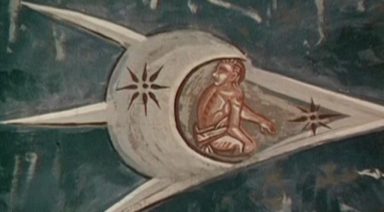
The depictions of the Anunnaki in art and text vary—some show human-like forms adorned in ritualistic attire, while others hint at more symbolic or even alien characteristics, especially in later interpretations. These gods demanded reverence and obedience, and their influence would ripple outward through other ancient Mesopotamian cultures such as the Akkadians, Babylonians, and Assyrians.
The Anunnaki Pantheon and City-States
Each Sumerian city-state had its own patron Anunnaki god, often assigned by the high deity An or Marduk. Temples served as spiritual and political centers, with Eridu, believed to be the first city, honored as Enki’s domain. Other prominent deities included Inanna (also known as Ishtar), the goddess of love and war, Utu, the sun god and arbiter of justice, and Nanna, the moon god—all considered vital members of the Anunnaki. These Mesopotamian gods remained central across millennia, shaping theology and cosmology throughout the ancient Near East.
Records of the Gods: What the Sumerian Texts Reveal
Sumerian history is gleaned from archaeological and geologic evidence, and written records are in the form of cuneiform tablets. Some half-million clay tablets have been recovered, but only a small number have been translated. These texts form the backbone of what we know about Sumerian religion, culture, and daily life, providing the earliest written accounts of the Anunnaki and their place in the cosmos.
Much was also learned from translations of Babylonian records; Sumer was considered “ancient” in Babylonian times. Stories found in these tablets laid the groundwork for later Mesopotamian mythology, influencing myths across multiple cultures. From creation stories to divine laws, the Anunnaki were portrayed as powerful forces guiding human existence.
Mainstream vs. Fringe Theories
Author Michael Cremo (Forbidden Archaeology) has researched the history of archaeology for 40-plus years, documenting findings that have been excluded from mainstream, academic archaeology; findings that would disrupt the widely accepted story of human origins.
Cremo, along with author Zecharia Sitchin, Erich von Däniken (Chariots of the Gods), author and researcher Michael Tellinger, and several others, are among the theorists who suggest the Anunnaki were not gods in the mythological sense, but actual beings from another world. This theory also asserts that these “sky” gods genetically engineered the human race as a slave species, which may account for weak links in the evolutionary story. According to some interpretations, the Igigi, a lesser class of divine beings, once served the Anunnaki but rebelled, leading to the creation of humans as a replacement labor force. These theories gave birth to the “ancient astronaut” hypothesis, asserting that off-world beings have been posing as gods to influence human affairs for millennia.
Many believe that the Anunnaki extracted massive amounts of gold using human labor — this is derived from multiple discoveries of ancient mining tunnels in South Africa, as well as relics and links to the Sumerians. “No one knows why they wanted gold, no one knows how much was taken,” said Tellinger. He added that the Anunnaki introduced the concepts of money, finance, and debt to human societies.
Off-World Origins? The Ancient Astronaut Theory
Expanding on the ancient astronaut theory, some believe the Anunnaki were not mythic deities, but extraterrestrial beings who intervened in human history. According to this narrative, they arrived on Earth from a distant planet—often identified as Nibiru—and genetically engineered early humans to serve as a labor force.
Some theorists link the Anunnaki to the biblical Nephilim, suggesting they were one and the same: powerful, godlike beings who walked among humans. In creation stories, the goddess Ninhursag is credited alongside Enki with shaping the first humans from clay. These interpretations propose that the Anunnaki brought advanced technologies, influencing the construction of megalithic sites and the development of ancient sciences.
Reptilian Influence and Conspiracies
While no lists of the Anunnaki pantheon exist, it is known that each Sumerian city-state had its own Anunnaki god/overseer assigned by senior Anunnaki Marduk.
Some, perhaps inspired by Theosophical Society founder Helena Blavatsky’s book The Secret Doctrine, assert that the Anunnaki are/were a reptilian race that survives to this day, deeply entrenched in human affairs. In her book, Blavatsky wrote of “dragon men” who influenced the lost Lemurian civilization. These beings, some claim, originate from the netherworld or beyond our dimension, manipulating human consciousness from hidden realms.
David Icke says he believes the imposter Anunnaki gods continue to manipulate humanity from seats of political, corporate, and financial power worldwide. He explains that these beings not only exploit humans but feed off collective fear; Icke calls for a disconnect from mainstream media and Orwellian entrainment that triggers fear and anxiety — an aggregate hypnotic state.
Many share Icke’s view. On the surface, the Anunnaki/Reptilian narrative appears to be a completely unbelievable hypothesis, but follow the breadcrumbs for a fascinating story reaching from ancient times to modern, and draw your own conclusions.
The Continued Legacy of the Anunnaki
From the earliest city-states of Sumer to modern conspiracy theories, the Anunnaki have maintained a unique place in the story of civilization. Whether viewed as gods, extraterrestrials, or symbolic archetypes, they continue to inspire debate, scholarship, and speculation.
Their legacy endures through myths, ancient architecture, and countless interpretations that blur the line between fact and legend. In pop culture, the Anunnaki appear in films, documentaries, games, and novels—testament to their persistent hold on the human imagination.
As part of ancient history, their story bridges myth and reality, offering insight into how early societies viewed the divine and their place in the cosmos. Ancient Mesopotamia may be long gone, but the mysteries it left behind—etched in stone and sealed in clay—remain very much alive. The Anunnaki, as beings or symbols, challenge us to ask deeper questions about our origins, purpose, and the unseen forces that may still shape our world.
About the Author

David Icke's Famous Reptilians Conspiracy: Do They Walk Among Us?

You’ve probably seen tabloid headlines claiming, “Justin Bieber Caught Momentarily Transforming into Reptilian Form,” or “Shapeshifting Secret Service Agent Proof of Illuminati Reptilian Bloodlines.” While these may seem like fringe conspiracies, a poll taken during the 2016 election showed that four percent or roughly 12 million Americans, believe in these famous reptilians. But if you really want to know more about the reptilian conspiracy theory, one need only ask David Icke.
Famous Reptilians
Much of the theory’s popularity comes from Icke’s interpretations of Gnostic texts such as the Nag Hammadi, as well as biblical Apocrypha like the Dead Sea Scrolls. He says he believes these texts contain evidence that certain higher vibrational beings of frequency, known as Archons, appear on Earth as humans, masking their true reptilian form.
These “Archontic” forces are undoubtedly evil, intent on enslaving humanity for their own selfish reasons. Icke says these forces are like a computer virus that manifested itself in elite bloodlines throughout mankind’s history. Also known to use their most infamous arm of clandestine influence, the Illuminati, these famous Reptilian shapeshifters form a psychopathic ruling class that pulls the strings in all of the world’s financial and political power structures.
And it’s not hard to sympathize with Icke’s belief; the decisions made by politicians, bankers, and the global elite are often selfish, detrimental to the environment, and subversive to the betterment of society at large – three signs of psychopathy. But are they really reptilian?
Of course, we all have a reptilian brain – that part of us responsible for behaviors, such as aggression, dominance, and territoriality – which was a nickname given to the basal ganglia by neuroscientist Paul McClean when he wanted to compare our instinctual actions to those of reptiles. But it seems like the Reptilians Icke describes are a little more conniving than McClean’s concept; it seems they’re capable of more cerebral thought.