We’re Born Natural Innovators, So Does School Kill Creativity?
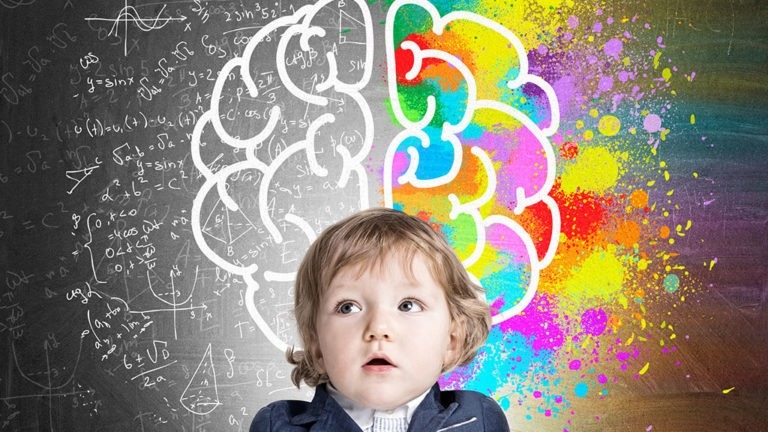
As children, we’re born with wild and inventive imaginations. In fact, 98 percent of children are born creative geniuses according to a test devised by NASA scientists. But as we get older that figure dwindles, and by adulthood, the number of creative geniuses drops to an astonishingly low average. Which begs the question: does school kill creativity?
George Land’s Creativity Test
When the deputy director for NASA wanted to figure out how to separate creative types from the rest, he tapped George Land to create a test. The goal was to seclude those who could think outside the box and come up with atypical solutions to some of NASA’s toughest problems. So, in 1968, he created a test that accurately predicted creativity, but then found himself faced with the question of where creativity comes from. Is it learned, or does it come from experience?
Land decided to apply his test to a range of age groups to see how creativity varied as we get older. He used a sample of 1,600 children and continued the study into his subjects’ adulthood. Incredibly, he found that by the time they reached maturity, only two percent of subjects passed the creativity test, despite their creative success as kids.
Land learned there are two patterns for the way we generate ideas in our minds. The first is divergent thinking, or being able to generate new possibilities – where creativity comes from. The other was convergent thinking, where we judge something by testing, criticizing and evaluating it.
As it turns out, Land says we’re taught to use both types of thinking simultaneously, forcing them to compete with each other. When we think of new possibilities, we’re immediately judging, criticizing and censoring them, without just letting them come to the surface.
Creativity and Ken Robinson’s Ted Talk
One of the most-watched TED talks of all time belongs to Ken Robinson who carries the torch for Land in the fight to bring back creativity. Since his wildly successful speech garnering nearly 50 million views, he has written books and given several more TED talks discussing how we can tap back into that latent creativity.
Robinson noticed that our education system teaches us that being wrong is the worst possible outcome. Nowhere is there a better example of this than standardized testing.
Our thought process is forced to conform to controlled paradigms of right and wrong, and so ideas that don’t fit the mold are rejected. And in the past few decades, ascription to that paradigm has been pushed harder by prescribing drugs to children who don’t easily fall in line with the system’s ideal standards.
Robinson points to the example of Gillian Lynne, one of the most famous theater choreographers who’s made millions for her work on Broadway shows, including Cats and Phantom of the Opera. When she was a child she struggled with school and was told she had a learning disorder. Her parents took her to a doctor to figure out what was wrong and potentially prescribe her medication. The doctor told them she wasn’t sick, she just needed to pursue dancing. And the rest is history.
Imagine how many dancers, artists, and creative types have had their potentials wasted because our system doesn’t have the time or patience to guide them in the right direction. Instead, we’re disciplined to follow narrow paths and if we don’t conform, we’re told that we failed.

Robinson says that a teacher’s job is not just to relay information that they learned to their students; not to simply be a delivery system. That’s part of it, he says, but there’s so much more.
He says that teachers are the lifeblood of success to schools, they should provoke, stimulate, and mentor students. Education, he says, is not the same as learning, learning requires engagement and sparked curiosity.
Louis Mobley’s Creative Insights
Before Land created his creativity test for NASA, Louis Mobley was hired by IBM to teach its top employees how to think creatively – his teachings led to the creation of the IBM Executive School.
Mobley quickly found that many of the executives already working for IBM didn’t fall within the expected parameters when it came to standardized testing, so he realized he needed to figure out what made them successful leaders. The answer: being able to think creatively. So he formed a list of six creative insights he found were key to success in leadership.
- Traditional teaching methods, like testing and memorization, were less than worthless. These systems were counterproductive to creativity and forced students to think linearly when instead they should be thinking in a non-linear manner.
- The process of becoming creative is an unlearning process. Instead of expecting students to think within preconceived assumptions, he wanted them to overturn existing beliefs.
- Being creative can’t be learned, it’s innate within us and must be released by doing it. Often creativity was channeled offline and in informal modes of peer to peer interaction.
- Hanging around creatives was the best way to inspire creativity.
- Creativity is highly associated with self-knowledge – it is impossible to overcome biases if we’re not aware of them.
- You’re allowed to be wrong. Good ideas come from lots of bad ones. The reason we don’t hit our potential is from fear of being wrong.
The truth in Mobley’s learnings is nowhere more obvious than in the success of IBM, and it’s unfortunate that these axioms aren’t applied more in our education system. But if there’s one thing that all of these researchers learned from studying creativity, it’s that we never lose it, it stays latent in all of us. In order to foster creativity, one must encourage its expression and not fear being wrong every now and then.
About the Author

The Pineal Gland’s Spiritual Connection With the Third Eye Chakra

The third eye is our greatest gift to connect us to source and remind us of a universe much more mystical than we can perceive with our physical senses. It’s through the awakening of the third eye and its corresponding pineal gland that we’re able to attain supernatural feats of telepathy, psychic vision, and an intimate connection with God.
Rare is a conversation on higher consciousness without a mention of the pineal gland. Its prevalence is more than a fad; it’s an imperative first step to attaining our full human potential.
What is the Pineal Gland?
The pineal gland, often referred to as the “third eye” in Eastern esoteric religions (Hinduism, Buddhism, and Taoism), is a pea-sized endocrine gland located deep in the center of the brain, between the two hemispheres. In Western medicine, it is an organ primarily recognized for its role in regulating the body’s circadian rhythms and melatonin production, which helps regulate sleep-wake cycles. The pineal gland also plays a part in the body’s response to light and darkness, influencing mood, energy levels, and overall well-being. While it holds significant physiological importance, some spiritual practices also attribute metaphysical qualities to the pineal gland, linking it to intuition, perception, and spiritual enlightenment.
The Pineal Gland and Third Eye Chakra
The chakra system is the way the spirit moves within the physical body—how the spirit animates form. The chakras can be imagined as wheels of energy to remain balanced and open for optimal human function. If stagnation appears within the chakra system, the physical body will be affected by unease, depression, and even illness.
Chakras are energy centers, whereas organs have defined locations. The chakras are ruled by the organs but are not confined to a specific location. The heart chakra, for instance, is in the center of the chest, while the physical heart is on the left side. Similarly, the third eye chakra is located in the center of the forehead near the pineal gland.
The pineal gland is known as the third eye chakra or ajna chakra in the Hindu system. A closed ajna (i.e. mind) is said to lead to confusion, uncertainty, cynicism, and pessimism.
Every esoteric tradition heralded the third eye as our connection to spirit. It’s the space between humans and God, moving us from the isolation experienced in the human condition—through an open and vibrant third eye, we find our highest source of ethereal energy. A return path to God is offered when one works to expand third-eye awareness.