All About the Vesica Piscis and Its Spiritual Meaning
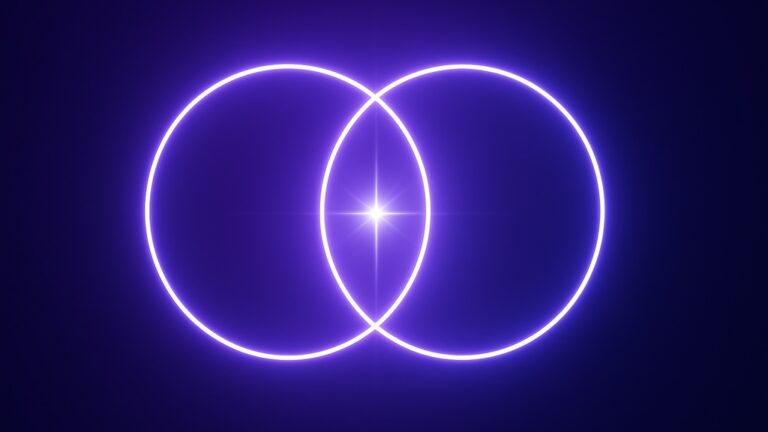
The Vesica Piscis is an ancient geometric symbol formed by the intersection of two circles that share the same radius and a common center. Throughout history, this sacred diagram has been interpreted as a portal between dimensions, a bridge between the material and the spiritual. In this article, we explore what the Vesica Piscis is, its profound symbolic meaning, and how it can be integrated into spiritual practices to expand consciousness.
Table of Contents
- What Is the Vesica Piscis and What Does It Represent Spiritually
- Symbolic Structure of the Vesica Piscis: Intersection and Proportions
- Origin and Use of the Vesica Piscis in Different Traditions
- The Vesica Piscis in Sacred Geometry
- How to Use the Vesica Piscis in Spiritual Practices
- Differences Between the Vesica Piscis and Other Sacred Symbols
What Is the Vesica Piscis and What Does It Represent Spiritually?
The Vesica Piscis is the oval-shaped space that arises when two circles of the same size partially overlap. Its simple and elegant form holds universal meanings that have captivated philosophers, mystics, and mathematicians for centuries. In geometry, it represents the harmonic intersection of two spheres of influence, and on the spiritual level, it symbolizes the point of union between the dual and the divine.
Spiritually, the Vesica Piscis expresses the idea of creation and balance. Its shape represents the womb of life, the union of opposites, and the feminine principle that gives birth to everything. Many belief systems regard it as a symbol of openness, revelation, and direct connection with higher consciousness, evoking the state in which limitations are transcended to access the source of all that exists.
Symbolic Structure of the Vesica Piscis: Intersection and Proportions
The structure of the Vesica Piscis arises from an exact and symmetrical proportion. Each circle contains the center of the other, creating a shared space that reflects the relationship between two entities that remain independent yet interconnected. This perfect union is associated with universal balance and the harmony of complementary forces.
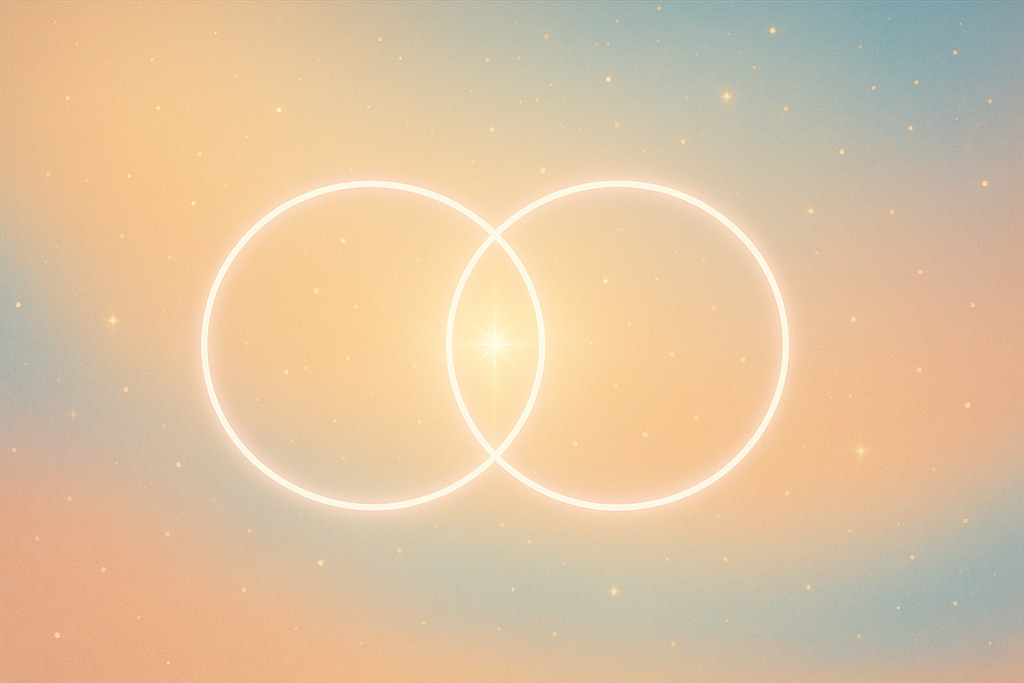
The area of intersection takes on an almond or vesical shape that has been used as a symbol of fertility, origin, and protection in different cultures. This form has also been interpreted as a portal, a threshold connecting the visible and the invisible, inviting deeper exploration of consciousness. Its precise geometry allows energy to flow without resistance, creating a field conducive to meditation and healing.
The proportions found in the Vesica Piscis are the same that underpin balance in nature and sacred art. From Gothic cathedrals to mandalas, this geometric pattern acts as a reminder that creation is based on a profound mathematical order. Its beauty and symmetry continue to inspire those who seek to understand the principles that govern existence from a spiritual perspective.
Origin and Use of the Vesica Piscis in Different Traditions
The Vesica Piscis has its roots in antiquity and has appeared in numerous cultures and spiritual systems. In Christian sacred art, it is used as a symbol of union between the human and the divine, representing the intersection of earth and heaven. Many medieval temples include this pattern in their stained glass windows and portals as a reminder of the eternal connection between spirit and matter.
In esoteric and hermetic traditions, the Vesica Piscis is a portal of manifestation. It is associated with birth and spiritual rebirth, symbolizing the cosmic womb of creation. It is believed that meditating on this symbol helps open higher channels of perception and synchronize individual energy with the universal flow.
Some ancient peoples used it to represent the feminine principle, the mother goddess, and water as a source of life. It is also present in megalithic monuments and artifacts as an element of balance and regenerative power. Its use in rituals and spiritual practices remains relevant today as a tool for activating vital energy and awakening consciousness.
The Vesica Piscis in Sacred Geometry
In Sacred Geometry, the Vesica Piscis holds a central place due to its precise structure and its resonance with universal patterns. Its almond-shaped form is the basis of many sacred figures, such as the Flower of Life and the Seed of Life, which represent the continuous process of creation and expansion. This geometric intersection also reveals the golden ratio, a key to natural harmony and beauty.
On an energetic level, the Vesica Piscis symbolizes the fusion of complementary energies. Its shared space evokes the perfect balance between polarities, inviting those who work with it to integrate opposites and find inner unity. For this reason, it is often seen as a starting point in meditation and energy alignment practices.
In the series Sacred Geometry: Spiritual Science, available on Gaia, the Vesica Piscis is explored as embodying fundamental principles of creation and consciousness. Through visual teachings and practices, the series shows how this figure can be used to open perception and connect with the underlying order that sustains all that exists.
How to Use the Vesica Piscis in Spiritual Practices
The Vesica Piscis can be easily incorporated into various spiritual practices to expand consciousness and align energy. Its archetypal shape acts as a channel that facilitates connection with subtle realms and the activation of deep meditative states. Here are some ways to work with it:
- Energy visualization: Imagine the Vesica Piscis surrounding your body to activate and harmonize your energy centers. This practice helps create a field of protection and stimulates vital energy.
- Meditation with geometry: Place a drawing or figure of the Vesica Piscis in front of you during meditation. This supports concentration and balance between body, mind, and spirit.
- Intention rituals: Use the Vesica Piscis as a support to focus intentions for healing or manifestation. Its shape represents the threshold between the internal and the external, enhancing the power of your thoughts.
- Energy therapies: Integrate this symbol into practices such as Reiki or crystal healing. Its geometry promotes the opening of energy centers and the smooth circulation of energy.
- Spiritual decoration: Place representations of the Vesica Piscis on altars, workspaces, or resting places. This helps maintain harmony in the environment and resonate with frequencies of expansion and balance.
Differences Between the Vesica Piscis and Other Sacred Symbols
Although the Vesica Piscis shares affinities with other Sacred Geometry symbols, each has a specific purpose and energy that distinguish it. The Vesica Piscis symbolizes the point of union and creation arising from duality, while other diagrams have complementary meanings or different functions.
- Metatron’s Cube: Represents the structure that contains all fundamental geometric shapes. Unlike the Vesica Piscis, its purpose is broader, serving as a container for the entirety of creation.
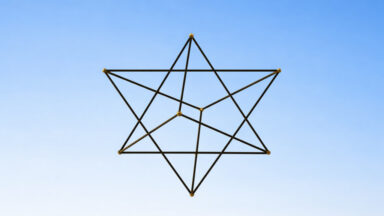
- Merkaba: Acts as a vehicle for spiritual ascension, representing the intersection of two tetrahedrons. The Merkaba is more focused on expanding consciousness to higher levels.
- Seed of Life: Forms the basis of the Flower of Life, symbolizing the beginning of creation and the cycle of life. The Vesica Piscis, by contrast, is the intersection point that initiates manifestation.
- Flower of Life: Represents the matrix of all existence, composed of multiple interconnected circles. The Vesica Piscis is part of its structure, but as a separate symbol, it expresses the primordial space of union.
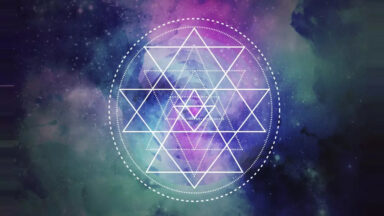
- Sri Yantra: Contains triangles and a central point symbolizing the union of the masculine and feminine. The Vesica Piscis shares that union but focuses on the geometry of the intersection as an energetic portal.
- Toroid: Shows the continuous and self-sustaining flow of energy in the universe. The Vesica Piscis, in contrast, represents the initial union that enables that circular flow.
About the Author

Sacred Geometry in Nature
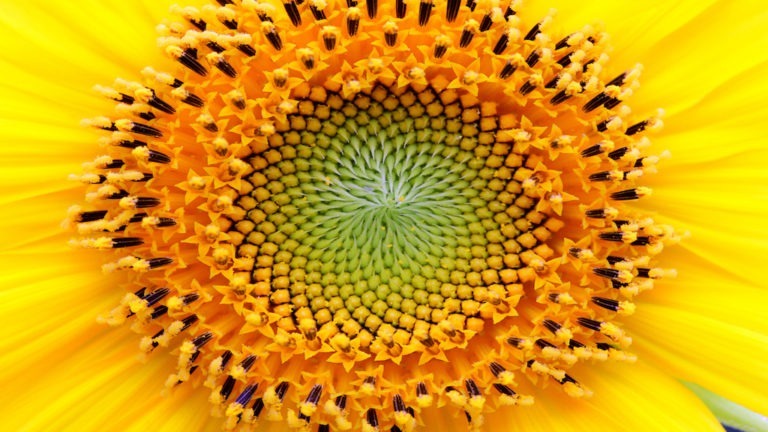
Sacred geometry is the nexus point between physics and mysticism. It is the realm where infinities live within finite forms, and the chaos of creation is brought to order.
The true beauty of sacred geometry is that it satisfies both the right and left brain. Elegant expressions of compelling proportional relationships simultaneously activate the intellectual and artistic functions, merging the rational with the abstract.
Sacred geometry arises from the desire to express philosophical truths through concrete means. It offers a scientific method for philosophical inquiry, complete with hypotheses, experiments, and repeatable results.
The best way to study the fundamental shapes of nature is to draw them yourself. In order to fully appreciate this article, I would encourage you to procure paper, pencil, compass and straight edge in order to perform at home the experiments here described.
Now, we will embark on a journey through creation as it arises in spheres, lines, and spirals. Fair warning: visceral engagement with these shapes can be irrationally rewarding; what begins as strictly formulaic may soon become more magical than ever expected.
Geometry as Nature’s Language
Geometry is not merely symbolic. It is nature’s way of solving problems with elegance and efficiency. The spiral of a galaxy mirrors the curl of a seashell, the hexagon of a honeycomb repeats in basalt columns, and the fractal branching of trees resembles lightning, rivers, and lungs. These recurring shapes reveal that nature builds through balance, proportion, and repetition.
In this sense, sacred geometry is also natural geometry, the mathematical language of creation itself. Patterns like the Fibonacci sequence and Golden Ratio govern growth and form, producing harmony in seashells, flowers, and snowflakes alike. Whether viewed through physics or philosophy, these patterns show that geometry connects all things, linking matter, energy, and consciousness through timeless order.