Balasana: Child’s Pose

Balasana (bah-LAHS-ah-nah) is a gentle resting pose that stretches the low back, hips, thighs, knees, and ankles while inviting release of stress and tension. Balasana’s dome shape provides an opportunity to refocus and focus on yourself.
Sanskrit:
- Bala: child
- Asana: pose
Physical Benefits:
- Gently stretches the low back, hips, thighs, knees, and ankles.
- Relaxes the spine, shoulders, and neck.
- Increases blood circulation to your head, which may relieve headaches.
Energetic Benefits:
- Calms the mind and central nervous system.
- Relieves stress, fatigue, and tension.
Preparatory Poses:
- Tabletop pose
- Cat pose
Sequential Poses:
- Puppy dog pose | Anahatasana
- Seated forward fold | Paschimottanasana
- Hero’s pose | Virasana
Counter Poses:
- Cow pose
- Sphinx pose | Salamba bhujangasana
Adjustments/Modifications:
- Place your forehead on your fist or a cushion if your head does not easily rest on the floor.
- If your knees are uncomfortable, place a cushion between your hips and your heels for support.
- If your ankles or feet are uncomfortable, place a thin cushion or rolled up towel under your ankles.
Step-By-Step:
- Start in a tabletop shape, on your hands and knees.
- Release the tops of your feet to the floor and bring your knees wider than your hips, big toes touching.
- Slowly lower your hips towards your heels.
- Walk your hands forward and rest your head on the floor or a prop.
- Take several slow breaths into your belly and chest.
- Gently release back to tabletop.
###Legal Disclaimer Before participating in any exercise program or using any fitness products or services that may be described and/or made accessible in or through the Gaia Website and/or the Services, you should consult with a physician or other healthcare provider. Read more about Gaia’s Terms Of Use.
About the Author

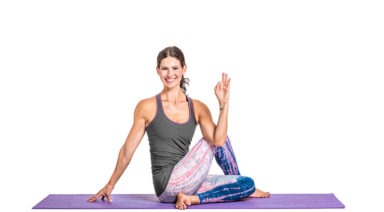
Ardha Matsyendrasana: Half Lord of the Fishes Pose
ADJUSTMENTS | BENEFITS | SEQUENCING | SANSKRIT | STEPS
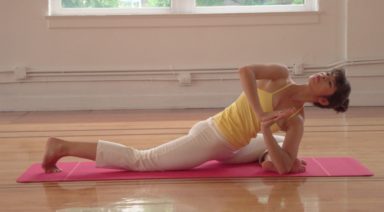
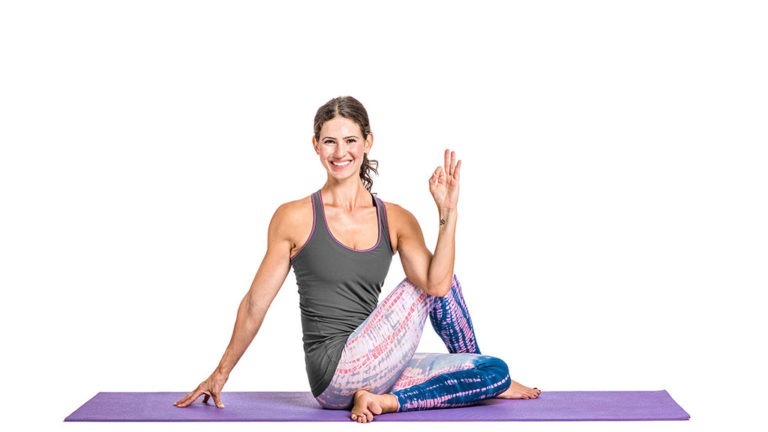
Ardha matsyendrasana (ARE-dah MOT-see-en-DRAHS-ah-nah) is an approachable twist that opens the shoulders and chest. A good antidote for too much sitting and symptoms that come with overusing technology, half lord of the fishes pose has the ability to increase energy in the body while also stoking the digestive fire in your belly.
Philosophy + Origin
Matsyendra is often recognized as one of the original founders of hatha yoga in yogic mythology. He was said to be a baby who was thrown into the ocean after his parents rejected him. The story of Matsyendra reminds us that it’s often the parts of our personal stories we don’t like or don’t want to accept that can be the most beneficial, especially on the path to becoming a yogi or yogini. Rather than conceptualizing the twist to be a purge of what is unwanted or unnecessary, think of the detoxification as a purification, an opportunity to take what was once viewed or understood as “bad” and transform it into something that is helpful on your personal journey.