What is the Code of Ur Nammu?
Unless you’re a member of law enforcement or an attorney, you probably don’t think too much about the laws that govern you on a daily basis. That’s not to say you’re oblivious — you’re probably just so used to certain laws that you wouldn’t think twice about keeping to or breaking them.
The origins of these laws, however, provide important insight into human civilization. Some of the laws we have in place today can be traced back to ancient times — specifically to someone called Ur Nammu.
Who was Ur Nammu?
Ur Nammu was a Sumerian king who lived around the year 2000 BC. He founded the third dynasty of Ur and initiated what is now known as the “Sumerian Renaissance,” a period of time in which Sumerian society heavily emphasized the arts and culture.
Achievements of Ur Nammu
Ur Nammu is praised for his myriad achievements, including but not limited to:
- The building of the Great Ziggurat of Ur: This ancient Sumerian structure, located in present-day Iraq, is thought to have been a temple dedicated to the moon god Nanna.
- Overthrowing the Gutians: Ur Nammu followed in his father-in-law Utu-Hegel’s footsteps to drive the Gutian people out of the Sumerian cities.
- Conquering other cities including Eridu
- Revitalizing Sumerian culture: Ur Nammu spearheaded projects such as planting orchards, revitalizing the arts, and strengthening Sumer’s infrastructure and economy.
Among all of Ur Nammu’s achievements, the Code of Ur Nammu is arguably the most significant.

Code of Ur Nammu
The Code of Ur Nammu is the oldest legal code that exists in the world today. It was discovered by Samuel Kramer in 1952 in southeast Iraq — the site of the ancient city of Nippur. It is inscribed on clay cuneiform tablets and details nearly 60 laws.
The Code of Ur Nammu is older than the Code of Hammurabi, which dates back to roughly 1754 BC, and even the Ten Commandments, which was one of the earliest and most recognized concepts of laws.
The Code of Ur Nammu is distinct from these two law codes for reasons aside from its age. Unlike the Ten Commandments, the laws listed in the Code of Ur Nammu are not dictated by a god or religious figure but by the government. Compared to the Code of Hammurabi’s “eye-for-an-eye” rationale, each law is written in a “cause-and-effect” format, listing each crime and its respective punishment.
Here are just a few of the laws found in the Code of Ur Nammu:
- If a man commits a murder, that man must be killed.
- If a man commits a kidnapping, he is to be imprisoned and pay 15 shekels of silver.
- If a slave marries a slave, and that slave is set free, he does not leave the household.
- If a man violates the right of another and deflowers the virgin wife of a young man, they shall kill that male.
- If a man proceeded by force and deflowered the virgin female slave of another man, that man must pay five shekels of silver.
- If a man divorces his first-time wife, he shall pay (her) one mina of silver.
Impact of the Code of Ur Nammu
Obviously, the law has come a long way since the age of Ur Nammu’s reign. However, the Code is very noteworthy for a number of reasons and has greatly influenced the laws we have in place today.
First and foremost, this is the oldest code of laws ever discovered, meaning it set the precedent for other laws written thereafter. It is particularly noteworthy because of the format in which the laws are written. Unlike the Babylonian “eye-for-an-eye” laws, the Code of Ur Nammu listed laws in a cause-and-effect format (i.e. “if this, then that”) that specifically outlined the crimes and their respective punishments.
Secondly, the Code of Ur Nammu introduced the concept of fines as a form of punishment — a notion we still rely on today. Fines ranged from minas and shekels of silver to kurs of barley.
Finally, the Code of Ur Nammu identified murder and rape as capital offenses. Murder is still considered a capital offense under the United States Code; however, rape is not unless it results in the death of the victim.
Although it was written thousands of years ago, the Code of Ur Nammu continues to affect our lives. By outlining laws in a cause-and-effect format, Ur Nammu set a precedent that would eventually become the norm.
The Future of the Laws
As we’ve experienced throughout history, laws are hardly set in stone. We’ve seen some pretty significant changes in the law over the years, from the abolishment of slavery to the legalization of same-sex marriage. Elections and even petition websites such as Change.org have an enormous influence on laws, putting the power back in the hands of the people. Only time will tell how our laws will continue to evolve and change.
Want more like this article?
Don’t miss Ancient Civilizations on Gaia to journey through humanity’s suppressed origins and examine the secret code left behind by our ancestors.
About the Author

The Story of Mu, the Lost Continent of the Pacific
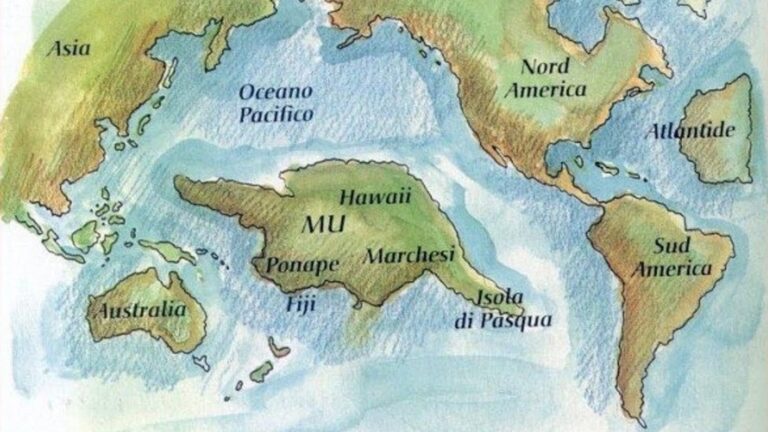
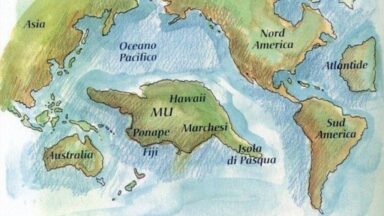
Mu was an ancient civilization that existed in a vast region of the Pacific Ocean, long before Lemuria or Atlantis. According to various traditions, it was a culture deeply connected with the energies of the planet and with a way of life centered on consciousness and balance. In this article, we explore what Mu was, its origins, evolution, and its role within the spiritual journey of humanity.
Table of Contents
- What Was the Continent of Mu?
- Origins and Evolution of Mu
- The Civilization of Mu and Its Main Characteristics
- Spiritual Society and Connection with the Divine in Mu
- Mu and Lemuria: Similarities and Differences
- The Fall of the Lost Continent of Mu
- The Legacy of Mu in Ancestral Cultures Around the World
What Was the Continent of Mu?
The Mu continent was a vast territorial expanse located in the Pacific Ocean, where flourished one of the oldest and least understood civilizations on the planet. Its existence dates back to a stage when Earth had a much subtler vibration, and life forms functioned in synchronicity with the energetic laws of the cosmos. Instead of building a society based on the material, the inhabitants of Mu cultivated a deep awareness of their connection with the whole.
Far from being an expansionist or technologically dominant culture, the Mu civilization represented a model that valued balance, introspection, and vibrational frequency as pillars of its existence. Daily life was organized according to natural cycles and the energetic perception of the environment. Every act carried a spiritual charge, from rituals to the simplest tasks, and each action was understood as a form of resonance with the universe.
This civilization has not left obvious physical traces, but its influence subtly persists in ancestral stories, symbols, and spiritual teachings that appear across different cultures of the world. The marks of its wisdom can be recognized in ceremonial practices and knowledge about energy that point to an ancient humanity, connected with the divine through vibration and intention.
Origins and Evolution of Mu
The origins of the island of Mu go back to a stage when Earth was just beginning to stabilize its energetic field. According to different accounts, its first inhabitants did not arrive in ships or by physical means, but rather descended as forms of consciousness from subtler planes. They manifested gradually, adapting their existence as Earth’s vibration became denser.
At first, life in Mu was predominantly etheric. The beings of this civilization communicated through frequencies, perceived their environment in an expanded way, and did not need complex material structures. Matter was not a limitation, but a transitory tool. Over time, they began to organize around energetic centers from which they sustained the balance of the planet.
The evolution of Mu was not focused on external development but on inner refinement. Their purpose was not to conquer or accumulate power, but to act as guardians of a stable frequency that would benefit all humanity. Their technology was based on vibration, geometry, and a harmonious relationship with the natural elements. They did not build to dominate, but to amplify consciousness.
In the series Initiation, available on Gaia, Mu is described as a key civilization at the dawn of human history. It is explained there how this culture functioned as a bridge between higher planes of consciousness and physical experience, preparing the way for the appearance of civilizations such as Lemuria and Atlantis.
The Civilization of Mu and Its Main Characteristics
The civilization of Mu developed in a state of constant balance between the physical and the subtle. Their way of life was not governed by structures of power or material hierarchies, but by collective vibration and respect for natural cycles. Everything in their society responded to an energetic logic, and their organization reflected a deep knowledge of the universal flow.
- Vibrational consciousness: The inhabitants of Mu lived guided by the energetic frequency of the environment. Every act was measured by its vibrational impact, not by its material result.
- Nonverbal communication: The transmission of information took place through vibration, mental imagery, or sensation. Spoken language was secondary or nonexistent.
- Temples as energetic nodes: The structures were not ordinary buildings but centers of alignment with the planetary energy grid. They functioned as anchoring points of consciousness.
- Direct relationship with the elements: They not only venerated nature but interacted with it consciously. Water, fire, air, and earth were living forces with which they collaborated.
- Horizontal organization: There were no permanent figures of authority. Decisions were made by group resonance, following the wisdom of the shared energetic field.
- Interdimensional mobility: Some accounts suggest they had the ability to move between planes of reality—not by technological means, but through expansion of consciousness.
- Collective memory: Knowledge was not stored in objects or texts, but in the vibratory field of the group. Each member could access the shared wisdom through inner connection.
Spiritual Society and Connection with the Divine in Mu
Spirituality was not an isolated aspect of life in Mu: it was the base on which the entire experience was built. There were no institutionalized religions or intermediaries between beings and the divine. Each individual was considered a direct expression of universal consciousness, and daily life was a constant practice of sacred connection.
Rituals did not follow dogma or tradition but were conscious acts of energetic alignment. Everything had a vibrational purpose: from the ways of inhabiting, to sounds and movements. Through breathing, visualization, and intention, the people of Mu cultivated states of deep unity with creation.
This connection with the divine was not experienced as a distant goal, but as a present reality. Living in Mu meant recognizing that each thought generated form, that every action was an extension of the spirit, and that all matter was an expression of energy. This understanding guided every aspect of their civilization, in perfect coherence between consciousness and form.
Mu and Lemuria: Similarities and Differences
Both Mu and Lemuria were deeply spiritual civilizations, born at a time when humanity was more connected to the subtle dimensions of existence. Both shared a worldview based on energy, resonance, and harmony with nature. However, their way of life and their purpose had different nuances that set them apart.
Mu represented a more etheric and contemplative state. Its society was centered on sustaining a stable planetary frequency, functioning as a point of global balance. Lemuria, on the other hand, was a civilization more developed on a structural level, with greater interaction with other cultures and a practical focus on the use of vibrational technologies.
While Mu prioritized silence, inwardness, and attunement with higher planes, Lemuria organized itself into cities and transmitted knowledge through spiritual schools. Mu was the energetic foundation, Lemuria the conscious expansion. Both played an essential role in humanity’s evolution, but from different levels of the same path.
The Fall of the Lost Continent of Mu
The disappearance of Mu was not the result of war or internal collapse, but of a change in the vibration of the planet. As Earth’s energetic field became denser, the civilization of Mu—whose existence was based on subtle frequencies—began to dissolve. Matter gained prominence, and the consciousness that inhabited that plane could no longer be sustained under the new conditions.
There is talk of tectonic shifts, tidal waves, and geological transformations that may have altered the surface of the Pacific Ocean, causing much of Mu’s territory to sink. However, beyond the physical causes, what occurred was a vibrational transition: a stage of human consciousness came to an end, giving way to a more material one, with new lessons to integrate.
Before its dissolution, many of its inhabitants managed to relocate to other regions of the planet, carrying with them the seed of their wisdom. Their legacy was not destroyed but distributed. Fragments of that memory were imprinted in the energy of different places, ready to be awakened by future cultures that could recognize that frequency.
The Legacy of Mu in Ancestral Cultures Around the World
Although the civilization of Mu disappeared as an organized structure, its influence is still alive in different ancestral cultures that preserve fragments of its knowledge. In many Indigenous traditions, especially from Asia, Oceania, and the Americas, there are symbols, myths, and practices that reflect a similar understanding of the world to that which existed in Mu. It is not a copy, but a vibrational echo that continues to transmit its essence.
The ceremonial use of the elements, the construction of temples in energetic points, and the conception of the human being as a channel of universal energy are common aspects between these cultures and the wisdom of Mu. Also, the idea that knowledge is not transmitted only with words, but can be activated internally through resonance. These similarities are not coincidences—they are vestiges of the same original source.
In a world that values speed and accumulation, the memory of Mu invites us to return to the essential: the connection with the energy that sustains all form and the wisdom of living in harmony with it. It is not about reconstructing the past, but about remembering a way of existence where the spiritual and the everyday were not separate. Mu leaves us with a silent but powerful teaching: when life is organized from inner coherence, balance is not a distant ideal, but a possible experience.