How to Activate Your DNA and Unlock Dormant Potential

Have you ever felt as if you’re not living up to your full potential? Or have you felt that brief flash of genius you know is lying dormant within but don’t know how to access it regularly? Of course, you have. It’s something we’re all familiar with and likely experience on a regular basis. And according to the theory of DNA activation, there are ways to clear these energetic blockages and access your true potential.
The double helix DNA structure most of us are familiar with is encoded with copious amounts of information. In fact, DNA can be used to store more data than any artificial medium – so much so that all the data ever recorded by humans could fit into a container the size and weight of a few pickup trucks.
Though our DNA contains such large amounts of data, the vast majority of it is considered extraneous by geneticists who regularly study it. Some refer to this 97 percent of DNA as non-functioning or “junk DNA.”
What if this data isn’t junk but actually encoded with information whose function has yet to be discovered? And what if there are more than two strands of DNA, but instead, up to 12 potential strands lying dormant in a subtle energy spectrum? Wouldn’t you want to activate them?
Activating Genetic Code
As humans, our potential for creativity, love, mathematics, and intellect exceeds far beyond our everyday output. Just the fact that some of us are born prodigies, savants, and virtuosos proves how much more potential our minds and bodies are capable of. And that potential isn’t unique to the small percentage born that way; we all have the capability. Just look at the proof found in acquired savant syndrome.
Our brains are the fastest data processors on Earth, far more efficient than any computer you’ve used. Though it may not seem like it, the human brain is able to calculate up to 38 quadrillion calculations per second, compared to your personal computer, which clocks in at somewhere between one and five billion. That fact alone gives some perspective into our true potential, and proponents of DNA activation believe that by implementing certain practices into one’s life, we can achieve even more.
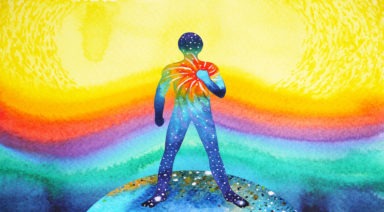
DNA activation suggests the idea that there is an additional DNA template contained within each of us that goes beyond the double-stranded helix. Proponents say that, in reality, there are up to 12 strands ranging in subtlety that can be activated along with our “junk DNA.”
If you think this sounds ridiculous, you should note that our knowledge of genetics is still in a relatively nascent phase as we’re constantly learning more about its sequencing and structure. Just recently, molecular biologists observed three and even four-stranded DNA known as G-quadruplex secondary structures that form in telomeric regions – the ends of our chromosomes that slowly unravel as we age. It has been suggested that studies of how this G-quadruplex DNA affects us could lead to new cancer treatments.
DNA Energy Healing Frequencies
There are certain modalities one can use to actuate the dormant aspects of our genetics according to DNA activation theory, and one of those methods is through DNA healing frequencies or what some refer to as DNA music repair.
There are certain sound frequencies discovered to have profound effects on brain function and possibly even cellular health. It has been shown that binaural beats and exposure to specific frequencies can impact our body in positive ways.
Binaural beats operate in the theta wavelength between four to eight hertz and are conducive to deep relaxation and meditative states, which have endless benefits to the body and mind.
The 528 Hz frequency, also known as one of the Solfeggio frequencies, is considered an auspicious tuning for music and sound, believed to have incredibly positive potential for DNA activation. But how can simple sound waves produce a distinct impact at the molecular level?
One scientific study tested the effects of sound waves on the synthesis of nucleic acids in chrysanthemums, finding the synthesis of RNA was accelerated under certain frequencies. In another instance, a music professor at Skidmore College discovered that certain combinations of sound waves, tuned to the right frequency, can destroy cancer cells – as can the human voice.
The 528 Hz frequency, thought to have first been used in Gregorian chants dating back to John the Baptist, is believed to activate and mend DNA. Dr. Glen Rein has devoted much of his career to studying the effects of sound and frequency on DNA and, specifically, the telomeric end caps of chromosomes that correspond with our biological age.
In 1998, Rein exposed in vitro DNA samples to 528 Hz and analogous Solfeggio frequencies in the form of Gregorian chants in scalar audio waves. He found the samples became more absorptive to UV light compared to samples exposed to other sound frequencies and other types of music, such as rock. This increase in absorption is known as hyperchromicity, causing DNA strands to separate and unravel. New bonds form in the DNA chains and crystal structure, subsequently increasing light absorption.
DNA Activation Through Meditation
Spiritual DNA activation proponents often speak of the need to connect with a higher self or etheric entity through meditation. Whether this entity is an archangel, an ascended master, or an enlightened divine being depends on the individual, as experiences often vary and are typically based on one’s spiritual path.
Guided meditations are available online or in the vast catalog found on the Gaia website, but these aren’t always necessary – individual, silent meditation is usually the end goal. Guided meditations are great for beginners, but once one is able to quiet the mind, you can experience greater depths of consciousness through silent or non-guided meditation. It certainly doesn’t hurt to listen to soft 528 Hz music while meditating for compounding activation modalities.

Affirmation and Positive Thinking
Our daily thoughts and intentions alter the frequency of our vibration and DNA. Simply switching the energy of your daily thoughts can have a profound impact on your physical being.
Too often are we consumed by the ego, an area of the brain scientists have recently pinpointed to be found in the default mode network. Though our consciousness may exist externally from our bodies, the ego exists internally and can consume our thought patterns, focusing our intentions and actions on the self. Recognizing this, acknowledging it, and allowing your mind to remove itself from the body and the ego can provide a third-person perspective.
This act of abstraction from the individual can help you remove yourself from egoic behavior, allowing you to instead think from a place of inclusivity, acceptance, and love. In turn, this can change our frequency and activate DNA to vibrate at a higher level.
Manifesting Genuine Relationships
We all wear many masks in the varied relationships we’re involved in throughout our lives. Work relationships, friendships, family, and lovers. And there’s good reason these relationships are varied, not everyone needs to know the same level of detail about you that others should be privy to.
However, there should be a level of consistency across all of these relationships if one is to truly awaken their full potential as a human being and activate their DNA to its highest level.
This final piece comes easiest as an amalgam of all the other practices of DNA activation, which, if practiced regularly, will naturally cultivate genuine relationships with everyone in your life. Giving an equal, honest version of yourself to others will, more often than not, manifest those genuine relationships you deserve.
DNA activation affects gene expression, determining an individual’s growth, functioning, and adaptability. As scientists delve deeper into the mechanisms of gene activation, they will eventually unveil opportunities for innovative medical interventions, personalized treatments, and a deeper understanding of our genetic heritage. This remarkable activation process holds the key to addressing diseases, unlocking hidden capabilities within our genomes, and redefining the boundaries of human potential.
Want to know more about the powerful impact your mind can have on your physical body? Check out Dr. Bruce Lipton’s advice for using the power of thought to control your genes in this episode of Inspirations.
About the Author

Biorhythms: A Comprehensive Guide to Balancing Biological Rhythms
Seasons have cycles, from amber fall days to verdant spring mornings covered in dew; day and night cycle between light and dark; the oceans swell and recede; the moon swells and thins to a crescent. If all other forms of life have inherent rhythmic cycles, are humans any different? The simple answer is no. Whether we’re aware of it or not, humans operate on a delicate biorhythm of various biological cycles, from the physical, intellectual, intuitive, and spiritual to even the aesthetic.
In this article, we’ll go over what biorhythms are, how to read yours, how they impact life, and more.
What are Biorhythms?
Derived from the Greek root words, bios (life) and rhythmos (regularly occurring movement or motion), biorhythm can be thought of as the body’s holistic mathematical system that can predict, or when studied, consciously control certain aspects of one’s life such as high performance, creativity, and emotional receptivity.
Biorhythms are “invisible waves of energy within the human body that are constantly in flux.” Considered unique to each person, these energy levels are thought to begin the moment we are born. But how and when did biorhythm theory begin?