Healing Energy Tools: Supporting Wellness Inside and Out
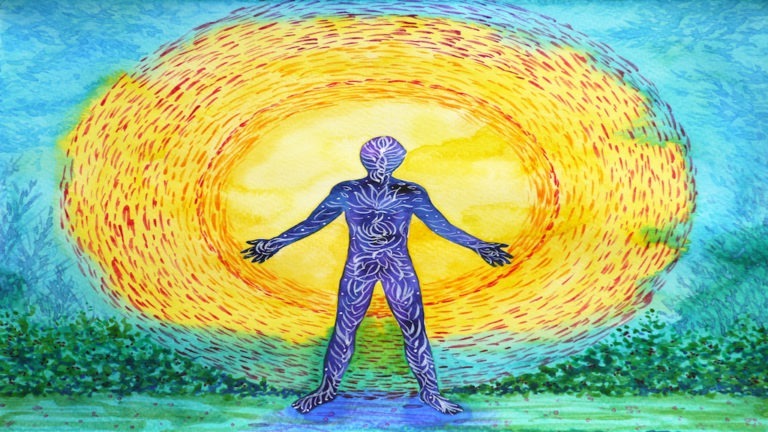
According to energy healer and author Donna Eden, our bodies are “lattice works of force fields,” in which “energy is the infrastructure.” But what happens when that infrastructure is stressed, exhausted, depressed, and filled with anxious thoughts, resulting in illness? To support wellness inside and out, healing energy tools can help foster physical, mental, and spiritual health.
Thankfully, we have an abundance of healing energy tools, from pyramids to crystals, energy healing stones to tuning forks. Whichever modality you or your energy healing professional work with, all are designed to optimize our wellness and heal what ails us.
Energy healing, or energy medicine, can be defined as any healing work designed to balance and restore our energetic channels. Similar to our circulatory system, which can have negative impacts on our health if not running smoothly, our energetic field also has a flow. If that flow is blocked, our energy fields can lead to emotional, spiritual, and soul pain.
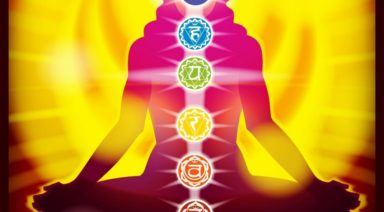
Also similar to our physical body, energy carries its own anatomy — aura, meridians, and chakras. The balance for optimum energetic functioning leads to a sense of calm, equilibrium, and peace. To help achieve this balance, energy healers have a veritable energy healing toolkit at their fingertips. These range from ones steeped in ancient healing traditions, the natural world, and those derived from modern technology.
MOTHER EARTH AND HEALING ENERGY TOOLS
As old as the earth itself, energy healing stones, or gemstones and crystals, facilitate healing on different levels, from boosting the immune system, to clearing negative energy that is trapped in the energetic system, to creating a sense of balance and well-being.
Many believe the healing properties associated with energy healing stones can be traced to Asian concepts of interconnected mind, body, and spirit through a strong qi (life-force) or chakras. Healing stones and crystals are placed along locations, or meridians, on the body to help increase positive energy flow and provide support for specific health concerns. Out of the hundreds used in this practice, below are a few of the more commonly used energy healing stones and their healing properties:
- Amethyst: Beneficial for the intestines, calm, and decision-making
- Agate: Grounding, stability, and increases confidence
- Lapis Lazuli: Wisdom, self-awareness, and spiritual enlightenment
- Turquoise: Bridge between heaven and earth; highest spiritual potential
- Carnelian: Creativity and vitality
- Jasper: Joy and release from stress
Energy healing professionals also incorporated tools such as massage wands and heated massage stones into their practice. Massage wands are made of rounded, smooth crystals which are applied at various pressure points throughout the body. Massage stones, heated and placed along both sides of the spine, are normally made of basalt, a kind of lava rock believed to dissipate anger, as well as strengthen courage, stability, and ignite one’s inner fire.
In addition to healing stones, the natural world offers many other energetic tools, such as sage, grasses, feathers, the elements, light, and color:
-
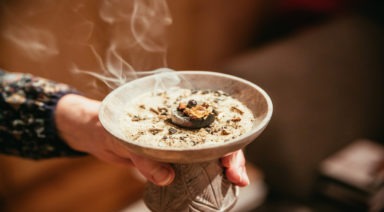
- Sage: A purifying herb, sage is commonly burned or turned into a smudging tool for a variety of healing purposes, from spatial cleansing, to spiritual, emotional, and in Native American rituals. White sage is considered to be the purest form of sage and used for spiritual purification. Desert sage is valued for its medicinal properties including antioxidants, anti-fungal, antiseptic, and astringent.
-
- Cedar: Mostly used in the Pacific Northwest, red cedar is burned as a prayer offering, as well as a purification tool. Referred to as a “tree of life,” indigenous people incorporated it into many aspects of their lives, from building, to medicine, to sweat lodges and baths designed to cleanse the entire energetic system.
-
- Sweetgrass: Dried and braided before burning, sweetgrass makes the healing process a sweet one with its vanilla scent. The aromatic essence is thought to attract positive energy, people, and as a purification tool.
-
- Feathers or Feather Fans: Used in conjunction with smudging of incense, sage, herbs, or grasses, feathers represent duality and balance. According to Professor Tom Bacig, Morse Alumni Distinguished Teaching Professor of Cultural Studies Emeritus at the University of Minnesota Duluth, “the color of the tail feather is divided into two parts, light and dark…[i]t is said that the dualism is needed along with the symbol of the eagle to keep balance in the circle of life.”
-
- Five Elements: Phylameana Ilsa Desy, energy healing practitioner and author of The Everything Guide to Reiki, writes that understanding the healing aspects of the five elements — fire, water, air, wood, metal — can serve to guide one toward the best energy healing path. For example, if you are struggling with trusting your inner voice, water or air energy treatments can support those needs. Or if being grounded is a struggle, working with soil, or wood, can assist to feel more connected to self and the planet.
-
- Light and Color: The use of light and color therapies in energy healing tools is wide-ranging and diverse, from colorpuncture or Samasati Color therapy, Color Silks therapy, to Hydro Color and Light therapy, and more. Color and light are thought to be able to enter the skin, as well as the respiratory system, and used to treat everything from hormonal imbalance, to mild depression, to brain disorders.
SOUND AND OTHER HEALING TOOLS
One of the earliest forms of healing, sound healing techniques and tools use sound resonance to increase vibrational health and well-being. One of the most popular sound healing tools are tuning forks. Based on the acoustic resonance tools musicians use to create a harmonic and unified tone, tuning fork therapy applies heated metal tuning forks to different parts of the body, to promote healing, emotional wellness, and to relieve pain, anxiety, and stress.
The placement of the tuning forks is often compared to acupuncture, substituting sound frequencies to stimulate the meridians instead of needles. Recent research has suggested that tuning fork therapy is beneficial in the treatment of muscle and bone discomfort.
Singing Bowls: Whether made from copper alloy or crystal, singing bowls create different healing sounds either through by a mallet gently stroked on the inside of the bowl, or with the use of water inside. Used to evoke tones associated with chakra centers and in meditation, recent medical research has also shown the healing power of singing bowls for those suffering from chronic pain, as well as mood disorders, stress, and anxiety..
Pendulums: Made from natural materials including crystal, metal, glass, and wood, pendulums can be beneficial in setting intentions, pondering difficult life choices, and for creating more balance in the energetic field, or chakras. Similar to dowsing, pendulums are used to uncover and heal blocks in energy, as well as to receive guidance, and develop one’s intuition and sense of reflection.
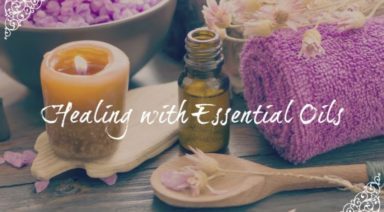
Essential Oils: Derived from plants, flowers, roots, seeds, and other environmental elements, essential oils are used to balance and clear energies, help relieve stress, improve concentration, and assist in integrated health. According to the Center for Energy Healing, “essential oils work primarily on an energetic level — especially when they are used as a scent only, rather than applied directly to the skin. They clear out the “auric debris” (congested energy), thus making way for the field to shift into balance-back into a harmonious whole.”
Pyramid Therapy: Often referred to as an energetic, or cosmic antenna, pyramid energy tools are thought to activate the pineal gland, third eye chakra, or the geometric center of the brain which produces the calming hormone called melatonin, which regulates the body’s natural rhythm. “Pyramid,” comes from the Greek words pyra, fire, and mid, middle, translating into “fire in the middle.” Energy healers who incorporate pyramid therapy in their practice believe that these tools can assist with stress reduction, improved sleep, concentration, and an overall higher vibrational energy.
HEALING ENERGY TOOL KIT
Our energetic infrastructure is a living, breathing entity that requires care and attention. Working with a qualified and experienced energy healing professional is important and as well, understanding which tools are right for one’s healing is also critical. With the richness of energy healing tools, the paths to wellness are abundant and the potential for putting together your own healing energy toolkit is endless so you can live your best and healthiest life.
About the Author

Biorhythms: A Comprehensive Guide to Balancing Biological Rhythms
Seasons have cycles, from amber fall days to verdant spring mornings covered in dew; day and night cycle between light and dark; the oceans swell and recede; the moon swells and thins to a crescent. If all other forms of life have inherent rhythmic cycles, are humans any different? The simple answer is no. Whether we’re aware of it or not, humans operate on a delicate biorhythm of various biological cycles, from the physical, intellectual, intuitive, and spiritual to even the aesthetic.
In this article, we’ll go over what biorhythms are, how to read yours, how they impact life, and more.
What are Biorhythms?
Derived from the Greek root words, bios (life) and rhythmos (regularly occurring movement or motion), biorhythm can be thought of as the body’s holistic mathematical system that can predict, or when studied, consciously control certain aspects of one’s life such as high performance, creativity, and emotional receptivity.
Biorhythms are “invisible waves of energy within the human body that are constantly in flux.” Considered unique to each person, these energy levels are thought to begin the moment we are born. But how and when did biorhythm theory begin?