Indonesian Pyramid May Be Definitive Proof of a Lost Civilization
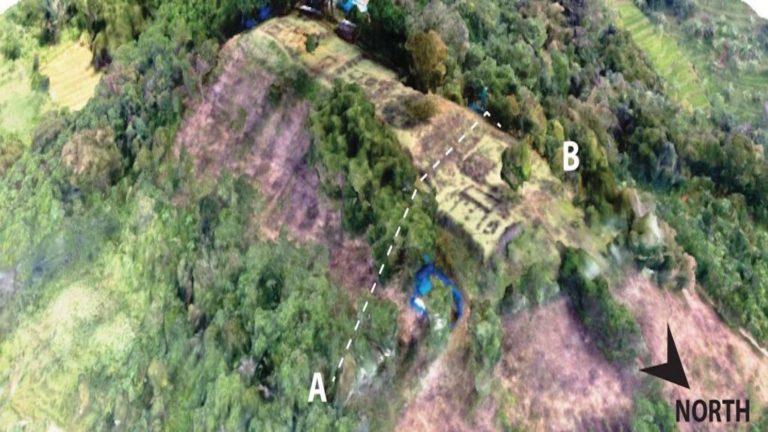
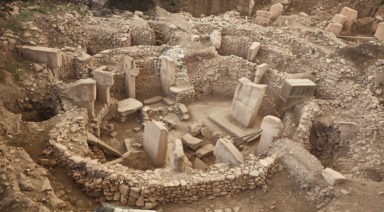
A massive pyramidal structure on the Indonesian island of Java was found to be man-made, after drilling samples returned evidence of a hidden, subterranean temple below layers of vegetation and soil. The structure might predate the oldest megalithic site on Earth, Göbekli Tepe, by millennia.
Though the pyramid has been known to locals as the Gunung Padang megalithic site for some time, it’s now being acknowledged by mainstream archeology as a possible “ancient temple.”
The pyramid is located atop Mount Padang in West Java, covered by a dense layer of trees and foliage that have amassed over the thousands of years since it was built. In addition to the tier of flora, a number of soil and rock layers have developed over the course of its history leading to its obfuscation and making it appear as if it might be a natural formation.
Danny Natawidjaja, Ph.D., a senior geologist for the Research Center for Geotechnology at the Indonesian Institute for Sciences, has been studying the pyramid for years, saying he believes it may be evidence of an ancient, lost civilization predating any we’ve known.
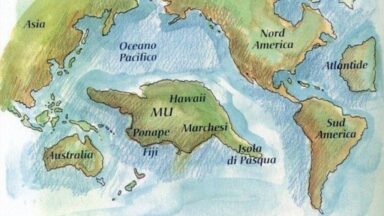
“Old stories about Atlantis and other great, lost civilizations of prehistory, long dismissed as myths by archaeologists, look set to be proved true,” Natawidjaja told Graham Hancock in a 2014 interview.
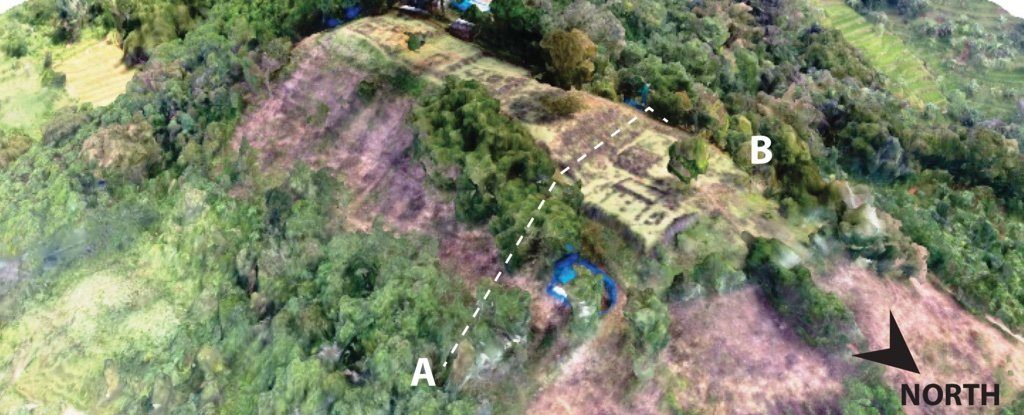
Natawidjaja and colleagues first noticed artificial signatures in the temple when comparing it to the eroded, natural landscape nearby. They also spotted particular characteristics in the basaltic standing stones atop the pyramid, that frame its stepped terraces. These can be found next to other rock columns and arrangements that form distinct walls, paths, and spaces clearly hinting at an anthropogenic origin. This layer alone dates back 3,500 years, with subsequent layers getting continually older the further archeologists dig.
In a recent report by LiveScience, Natawidjaja revealed the results of a study that incorporated ground-penetrating radar, x-rays, tomography, and core samples showing the pyramid’s age. The latest interest in his findings among the academic community may encourage the Indonesian government to allow further excavation – something it’s been averse to in the past.
“Underneath the surface, to a depth of about 10 feet (3 m), was a second layer of similar rock columns, thought to be 7,500 to 8,300 years old. And a third layer, extending 49 feet (15 m) below the surface, is more than 9,000 years old; it could even date to 28,000 years ago, according to the researchers. Their surveys also detected multiple chambers underground,”
Today, the top of the pyramid is used for prayer like it probably was thousands of years ago. And now that mainstream archeology is finally willing to accept that it is in fact, a man-made structure, we may be on the precipice of a true paradigm shift in our perception of human history.
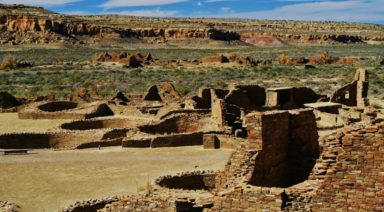
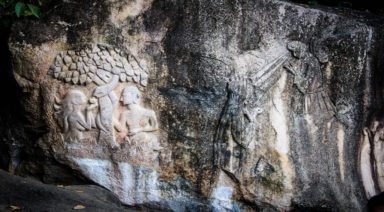
For more on anomalous archeological sites around the world, check out Ancient Civilizations :
About the Author

The Tall, Red-Headed Demi-Gods From Orion
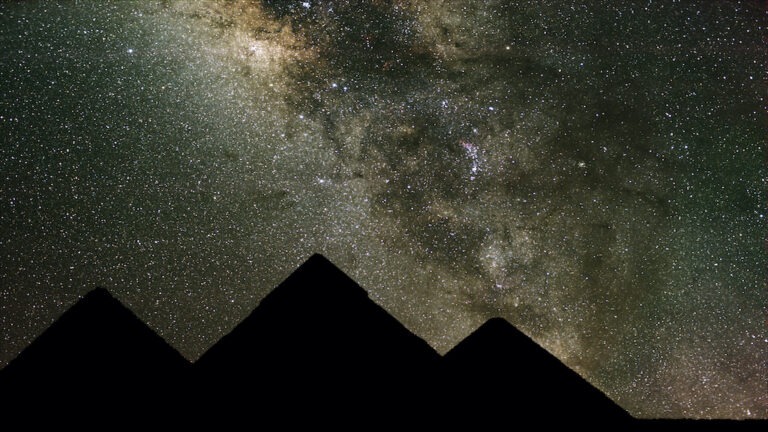
Humans through millennia have gazed into the night’s sky at Orion’s three outstanding stars. Among them was the Greek poet Homer who made mention of the constellation in the Odyssey;. the writers of the Old Testament referenced Orion in two of its books, Job and Amos; and the Egyptian mathematician Ptolemy, who cataloged Orion in his astronomical studies.
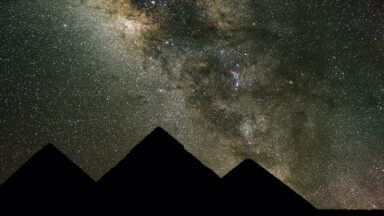
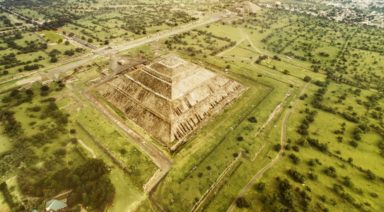
Named after the Greek hunter, the constellation of Orion is one of the most famous of all constellations, with nearly every ancient civilization forming an affinity to it from the Middle East to Africa and across the Americas. It is even said that the ancient Egyptians and Mayans used the three stars of Orion’s belt as a guide for positioning the pyramids, to mimic what they had seen in the heavens above.
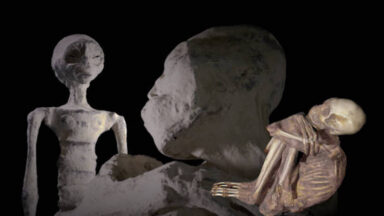
And modern-day researchers, including Freddy Silva, are putting together the pieces embedded in the myths of the ancient world, asserting that the “gods” descended from the belt of Orion, came to Earth, and became our ancestors.
Many have questioned the origins of humans on Earth, as there seems to be no definitive starting point, but several researchers, such as Graham Hancock, Freddy Silva, and others, have concluded that mainstream science is way off the mark.
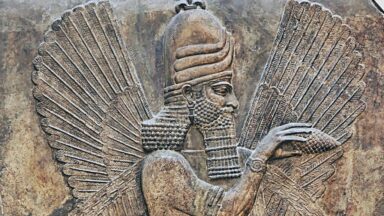
Silva cites several interesting sites and cultures that point to extraterrestrial origins of the human race, and his evidence is worldwide. The gods, Silva suggests, may have been more literal than mythical. A god, he says, “was considered any being who had control over the laws of nature… a god is a force of nature.” The gods who descended from Orion and came to planet Earth were human-like, but not quite human.
Much of this mystery has to do with the great flood occurring around 12,000 years ago that is written about in the oldest literature of myriad cultures. Following the flood, the gods seem to have moved on from this world, leaving their children behind to procreate with human women. The offspring were known as Nephila, translating to “the children of Orion.”