An Update on the Nazca Mummies: There’s More to Come
Just under a year ago we released the short series, Unearthing Nazca, detailing the discovery of an anomalous mummy found in Peru. Predictably, the revelation stirred up excitement, as well as some controversy and criticism. Since then, a considerable amount of conjecture has circulated on the internet, with articles and headlines speculating as to what we found. Now, we’d like to address some of those claims and provide an update on where we stand.
Without having access to bone and tissue samples, CT scans, or laboratory test analysis, a number of publications made claims that the results were complete on the Nazca mummy, known as Maria. Headlines citing DNA evidence that conclusively showed Maria to be 100 percent human were touted, without due diligence to confirm those assertions.
Sensational Headlines
Many cited the internet’s go-to fact checking website, Snopes, as the authoritative voice to settle the case, despite the website’s lack of any substantial investigation. Snopes aimed to fact check the claim that “a corpse found in Nazca, Peru is that of an alien,” giving it a rating of “false.”
While the provenance of the mummy was part of others’ online speculation, we have made it a priority to avoid making any definitive claims, until all of the test results are in. We’ve been careful with our verbiage, knowing that sensitivity and patience are crucial to conducting an objective investigation.
Snopes goes on to compare our reporting with that of a completely unaffiliated website, Disclose.tv, and the headline it posted with our video, which read “New Alien Mummy Discovered in Peru…”
It then continues to criticize the beliefs and previous work of the scientists and journalists involved in the study, rather than focusing on the evidence they provide.
Another one of the recurring tabloid headlines we noticed made such claims as, “DNA results are in on the ‘mummified aliens’… and they are REAL beings.”
While we’ve already addressed our stance on qualifying the mummy, one thing to point out here is that there is some truth in this headline, we believe Maria was a real being. However, one should note that the author is intentionally using ambiguity to bait the reader. Yes, we believe the mummy was once a real being, but no one here is jumping to the conclusion that she was an extraterrestrial being.
Another claim cited by a number of publications was that the Paleo DNA Laboratory at Lakehead University in Ontario finished conducting its DNA sequencing and that the results were conclusive; the mummy was human.
While we are working with this laboratory, these results are not conclusive. In fact, nothing is conclusive at this moment and we are working on running DNA sequencing at a number of labs in several countries to ensure proper procedure. This is a very time-intensive process that requires a lot of resources, coordination, and expert opinion to remove unwanted variables, such as DNA contamination and inconclusive analyses. But as the results come in, we promise to give you the details as we know more.
The Difficulties of DNA Sequencing
One of the most difficult variables to control for in DNA sequencing is contamination, and it can come from a number of sources. Given the circumstances, our samples weren’t collected in the most sterile environment, therefore it can take some time to distinguish between DNA from those who came into contact with Maria, and actual DNA samples from her bone.
Once in the lab, the challenge is still not over. Aerosol contamination from solid or liquid particles can interfere, as well as improper handling, or cross contamination from previous sequencing. It’s a very delicate process, to say the least.
There are also various sequencing protocols based on different laboratories and their chosen methodologies. Before a lab begins their process, the sequencing must be based on a question, such as: “does this sample match the DNA of a primate?” or, “does this sample match the DNA of modern humans?” From there, the sample is compared to the specific DNA in question, and that one question can take months or even years to answer.
This is why we have made the costly and time-consuming decision to have multiple labs sequence Maria’s DNA – think of it like getting a second opinion from another doctor; with such sensitive material, we want to have the best information we can get.
Archeological Precedent
If we were to compare this process to the most recent precedent in archeology, we would have to consider the discovery of the Denisovans. When archeologists found a 40,000-year-old finger bone of a hominin ancestor in a Siberian cave, they didn’t realize its anomalies for nearly two years. Once they did, it took another two years to fully sequence its DNA, before they could confidently classify it as a previously unknown species.
When the Denisovan discovery was made, it received pushback from the scientific community by those unwilling to accept the fact that, not only did another hominin ancestor exist, but it may have also interbred with our human ancestors. It was a controversial discovery, indeed.
And with a controversial discovery such as Maria, it can be difficult to find archeologists and laboratories willing to get involved. Cultural, social, and political sensitivities all play a role in the decision of those who may fear a negative outcome could affect their careers and reputation among colleagues. This is understandable, though it limits the pool of those we can work with to acquire results in a timely fashion.
But as the sensationalism around the discovery has faded over the past year, we have been in contact with a number of new scientists, domestically and abroad, who are excited to lend their expertise in helping us uncover the true origins of the mummy, known as Maria. We are excited to move forward with our research and will keep you informed along the way.
By reexamining our history we believe we can shift our paradigm and learn more about ourselves in the process. We care about more than headlines, we care about seeking truth.
Watch the original report below:
About the Author

The Story of Mu, the Lost Continent of the Pacific
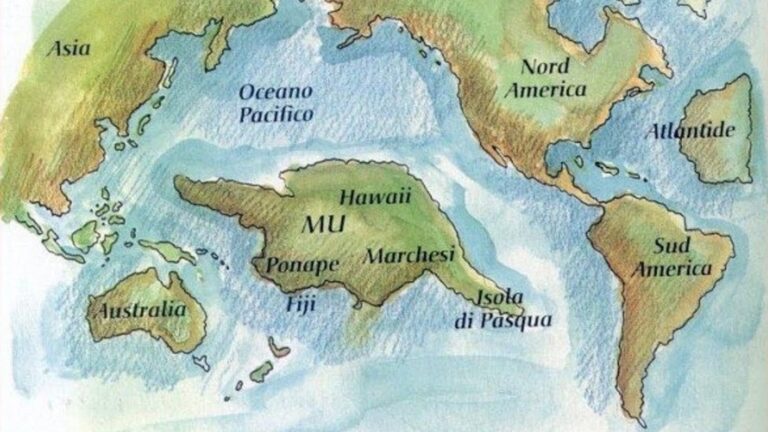
Mu was an ancient civilization that existed in a vast region of the Pacific Ocean, long before Lemuria or Atlantis. According to various traditions, it was a culture deeply connected with the energies of the planet and with a way of life centered on consciousness and balance. In this article, we explore what Mu was, its origins, evolution, and its role within the spiritual journey of humanity.
Table of Contents
- What Was the Continent of Mu?
- Origins and Evolution of Mu
- The Civilization of Mu and Its Main Characteristics
- Spiritual Society and Connection with the Divine in Mu
- Mu and Lemuria: Similarities and Differences
- The Fall of the Lost Continent of Mu
- The Legacy of Mu in Ancestral Cultures Around the World
What Was the Continent of Mu?
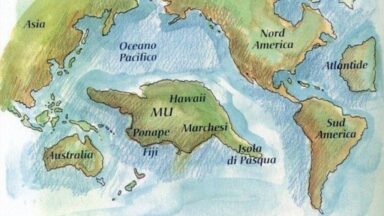
The Mu continent was a vast territorial expanse located in the Pacific Ocean, where flourished one of the oldest and least understood civilizations on the planet. Its existence dates back to a stage when Earth had a much subtler vibration, and life forms functioned in synchronicity with the energetic laws of the cosmos. Instead of building a society based on the material, the inhabitants of Mu cultivated a deep awareness of their connection with the whole.
Far from being an expansionist or technologically dominant culture, the Mu civilization represented a model that valued balance, introspection, and vibrational frequency as pillars of its existence. Daily life was organized according to natural cycles and the energetic perception of the environment. Every act carried a spiritual charge, from rituals to the simplest tasks, and each action was understood as a form of resonance with the universe.
This civilization has not left obvious physical traces, but its influence subtly persists in ancestral stories, symbols, and spiritual teachings that appear across different cultures of the world. The marks of its wisdom can be recognized in ceremonial practices and knowledge about energy that point to an ancient humanity, connected with the divine through vibration and intention.
Origins and Evolution of Mu
The origins of the island of Mu go back to a stage when Earth was just beginning to stabilize its energetic field. According to different accounts, its first inhabitants did not arrive in ships or by physical means, but rather descended as forms of consciousness from subtler planes. They manifested gradually, adapting their existence as Earth’s vibration became denser.
At first, life in Mu was predominantly etheric. The beings of this civilization communicated through frequencies, perceived their environment in an expanded way, and did not need complex material structures. Matter was not a limitation, but a transitory tool. Over time, they began to organize around energetic centers from which they sustained the balance of the planet.
The evolution of Mu was not focused on external development but on inner refinement. Their purpose was not to conquer or accumulate power, but to act as guardians of a stable frequency that would benefit all humanity. Their technology was based on vibration, geometry, and a harmonious relationship with the natural elements. They did not build to dominate, but to amplify consciousness.
In the series Initiation, available on Gaia, Mu is described as a key civilization at the dawn of human history. It is explained there how this culture functioned as a bridge between higher planes of consciousness and physical experience, preparing the way for the appearance of civilizations such as Lemuria and Atlantis.
The Civilization of Mu and Its Main Characteristics
The civilization of Mu developed in a state of constant balance between the physical and the subtle. Their way of life was not governed by structures of power or material hierarchies, but by collective vibration and respect for natural cycles. Everything in their society responded to an energetic logic, and their organization reflected a deep knowledge of the universal flow.
- Vibrational consciousness: The inhabitants of Mu lived guided by the energetic frequency of the environment. Every act was measured by its vibrational impact, not by its material result.
- Nonverbal communication: The transmission of information took place through vibration, mental imagery, or sensation. Spoken language was secondary or nonexistent.
- Temples as energetic nodes: The structures were not ordinary buildings but centers of alignment with the planetary energy grid. They functioned as anchoring points of consciousness.
- Direct relationship with the elements: They not only venerated nature but interacted with it consciously. Water, fire, air, and earth were living forces with which they collaborated.
- Horizontal organization: There were no permanent figures of authority. Decisions were made by group resonance, following the wisdom of the shared energetic field.
- Interdimensional mobility: Some accounts suggest they had the ability to move between planes of reality—not by technological means, but through expansion of consciousness.
- Collective memory: Knowledge was not stored in objects or texts, but in the vibratory field of the group. Each member could access the shared wisdom through inner connection.
Spiritual Society and Connection with the Divine in Mu
Spirituality was not an isolated aspect of life in Mu: it was the base on which the entire experience was built. There were no institutionalized religions or intermediaries between beings and the divine. Each individual was considered a direct expression of universal consciousness, and daily life was a constant practice of sacred connection.
Rituals did not follow dogma or tradition but were conscious acts of energetic alignment. Everything had a vibrational purpose: from the ways of inhabiting, to sounds and movements. Through breathing, visualization, and intention, the people of Mu cultivated states of deep unity with creation.
This connection with the divine was not experienced as a distant goal, but as a present reality. Living in Mu meant recognizing that each thought generated form, that every action was an extension of the spirit, and that all matter was an expression of energy. This understanding guided every aspect of their civilization, in perfect coherence between consciousness and form.
Mu and Lemuria: Similarities and Differences
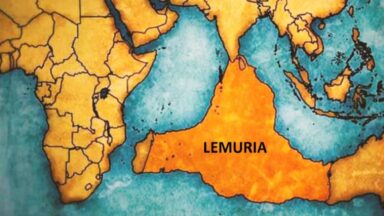
Both Mu and Lemuria were deeply spiritual civilizations, born at a time when humanity was more connected to the subtle dimensions of existence. Both shared a worldview based on energy, resonance, and harmony with nature. However, their way of life and their purpose had different nuances that set them apart.
Mu represented a more etheric and contemplative state. Its society was centered on sustaining a stable planetary frequency, functioning as a point of global balance. Lemuria, on the other hand, was a civilization more developed on a structural level, with greater interaction with other cultures and a practical focus on the use of vibrational technologies.
While Mu prioritized silence, inwardness, and attunement with higher planes, Lemuria organized itself into cities and transmitted knowledge through spiritual schools. Mu was the energetic foundation, Lemuria the conscious expansion. Both played an essential role in humanity’s evolution, but from different levels of the same path.
The Fall of the Lost Continent of Mu
The disappearance of Mu was not the result of war or internal collapse, but of a change in the vibration of the planet. As Earth’s energetic field became denser, the civilization of Mu—whose existence was based on subtle frequencies—began to dissolve. Matter gained prominence, and the consciousness that inhabited that plane could no longer be sustained under the new conditions.
There is talk of tectonic shifts, tidal waves, and geological transformations that may have altered the surface of the Pacific Ocean, causing much of Mu’s territory to sink. However, beyond the physical causes, what occurred was a vibrational transition: a stage of human consciousness came to an end, giving way to a more material one, with new lessons to integrate.
Before its dissolution, many of its inhabitants managed to relocate to other regions of the planet, carrying with them the seed of their wisdom. Their legacy was not destroyed but distributed. Fragments of that memory were imprinted in the energy of different places, ready to be awakened by future cultures that could recognize that frequency.
The Legacy of Mu in Ancestral Cultures Around the World
Although the civilization of Mu disappeared as an organized structure, its influence is still alive in different ancestral cultures that preserve fragments of its knowledge. In many Indigenous traditions, especially from Asia, Oceania, and the Americas, there are symbols, myths, and practices that reflect a similar understanding of the world to that which existed in Mu. It is not a copy, but a vibrational echo that continues to transmit its essence.
The ceremonial use of the elements, the construction of temples in energetic points, and the conception of the human being as a channel of universal energy are common aspects between these cultures and the wisdom of Mu. Also, the idea that knowledge is not transmitted only with words, but can be activated internally through resonance. These similarities are not coincidences—they are vestiges of the same original source.
In a world that values speed and accumulation, the memory of Mu invites us to return to the essential: the connection with the energy that sustains all form and the wisdom of living in harmony with it. It is not about reconstructing the past, but about remembering a way of existence where the spiritual and the everyday were not separate. Mu leaves us with a silent but powerful teaching: when life is organized from inner coherence, balance is not a distant ideal, but a possible experience.