What Are Twin Flames and How to Know if You’ve Found Yours

The concept of twin flames has been interpreted in many ways throughout time, and today it remains a topic of debate within spirituality. Beyond the romantic idea of two halves of the same soul destined to reunite, this connection is perceived as a deep energetic bond that transcends the common experience of relationships. It is a union that drives intense, challenging, and, in many cases, transformative personal development.
In this article, we explore what twin flames really are, how they differ from soulmates, and how to recognize if you’ve found yours.
Table of Contents
- What Is a Twin Flame and What Is Its Spiritual Meaning
- Twin Flames and Soulmates: Key Differences
- How to Know if You’ve Found Your Twin Flame
- Why Twin Flames Experience Challenges and Separations
- The Spiritual Purpose of Twin Flames
- Do All People Have a Twin Flame?
What Is a Twin Flame and What Is Its Spiritual Meaning
A twin flame is a soul with which we share an exceptional bond, one that goes beyond the physical or emotional. This connection transcends time and circumstances, manifesting as a profound recognition and an inexplicable sense of familiarity. Their presence in our life usually marks a before and after in our personal and spiritual development.
The purpose of twin flames is not limited to romantic love; rather, it is tied to the evolution of the soul. Their union awakens deep aspects of the self, which can create moments of both harmony and challenge. This relationship brings to light emotional wounds, unconscious patterns, and unresolved lessons that each must heal individually, forcing each person to face themselves and grow spiritually.
This connection has a high vibration and functions as a mirror that reflects both the light and the shadows of each individual. For this reason, the bond between twin flames can be as revealing as it is complex, challenging beliefs, emotional structures, and internal limitations to lead both people to a greater understanding of themselves and the universe.
Twin Flames and Soulmates: Key Differences
Although both concepts are related to deep spiritual connections, there are key differences between a twin flame and a soulmate. Soulmates are people with whom we share a significant bond, whether in a romantic relationship, friendship, or family. They are harmonious connections that provide support, companionship, and valuable lessons throughout life.
On the other hand, the relationship with a twin flame is much more intense and challenging. Instead of giving us immediate stability, this connection is a unique experience that goes beyond attraction or compatibility, propelling you into accelerated personal growth. While we may have several soulmates in a single life, there is only one twin flame, and its purpose is not to complete us but to help us reach our highest spiritual evolution.
How to Know if You’ve Found Your Twin Flame
Finding your twin flame is a unique experience that goes beyond attraction or compatibility. From the very first encounter, an intense and inexplicable connection emerges, accompanied by a deep sense of recognition, as if you already knew each other on a soul level.
This relationship stirs strong emotions and acts as a mirror that reflects both your virtues and your shadows, propelling you into accelerated personal growth. Along the way, challenges, periods of separation, and intense lessons may arise, but the connection always remains, guiding you toward a shared evolution and a higher purpose.
Most Common Signs of a Twin Flame Connection
The relationship with a twin flame has unique characteristics that set it apart from any other bond. Here are some signs that may indicate you have found yours:
- Instant and intense attraction: From the very first meeting, you feel a magnetic connection that is difficult to explain. No matter how much time passes, the energy between you always remains.
- Sense of recognition: Even if you barely know the person, you feel that you have met them before. Their presence awakens memories or deep emotions without any logical reason.
- Mirror effect: Your twin flame reflects both your strengths and your unresolved fears and wounds. This relationship pushes you to grow and face what you need to heal.
- Telepathic connection: Many times, you can feel what the other person is experiencing without needing to speak. It is common to share thoughts, emotions, and even dreams in which you meet.
- Separations and reunions: The relationship may go through periods of distance in which each person must work on their own growth. However, the bond never breaks, and destiny brings you back together at the right time.
Stages of Meeting a Twin Flame
The journey of twin flames is not linear; it goes through different phases that accelerate the growth of both parties. These are the most common stages in their process of union:
- The recognition: From the first meeting, both feel a profound and inexplicable connection. There is a sense of destiny and familiarity that goes beyond the rational.
- The initial fusion: The relationship advances with intensity, creating moments of unconditional love and a deep emotional connection. It is a stage of expansion and spiritual awakening.
- The challenges and crisis: Internal conflicts arise as they face the mirror effect. Both must work on their shadows, which can create tension or even a temporary separation.
- The healing phase: During the distance, each person undergoes a process of personal growth. They learn key lessons for their individual evolution before they can reunite.
- The conscious union: After overcoming the obstacles, the relationship balances and strengthens. In this stage, the twin flames work together on their spiritual purpose and in the development of their highest connection.
Why Twin Flames Experience Challenges and Separations
The bond between twin flames is deeply transformative, but also challenging. As they are reflections of one another, the relationship brings to light emotional wounds, fears, and unresolved patterns that each must heal individually. This confrontation can create moments of tension and instability, as both must face their own evolution before reaching balance in the connection.
Separations are often a necessary part of the process, as they allow for personal growth and the integration of the lessons that the relationship brings. In many cases, one of the two may not be ready for the intensity of the connection and needs to step away to work on their internal development. Although the distance can be painful, it is a period of healing that helps strengthen the bond on a higher level.
More than an obstacle, the challenges that twin flames face are part of the evolutionary path they have chosen. Rather than depending on each other, the true purpose is to learn, heal, and develop a connection based on individual wholeness. Only when both have achieved this internal balance can the union occur in harmony.
The Spiritual Purpose of Twin Flames
Twin flames are not only united by an energetic bond, but also by a soul agreement made prior to their incarnation. These spiritual agreements establish encounters and experiences designed to accelerate the growth of both parties. Their purpose is not to provide an easy or perfect relationship but to awaken personal transformation and guide them toward a greater understanding of themselves and their mission in the world.
Beyond individual growth, many twin flames have a shared purpose that goes beyond their personal relationship. Their union generates a high-vibration energy that can manifest as healing projects, spiritual teachings, or contributions to humanity. In many cases, this connection is a catalyst for the awakening of others and the expansion of collective consciousness.
The twin flame path does not always involve a romantic relationship or permanent cohabitation. In some cases, the union manifests as a spiritual collaboration or a bond of deep understanding without the need to be physically together. What matters is not the type of relationship they form, but the impact they create on their evolution and that of others.
In the Open Minds series, available on Gaia, Regina Meredith converses with Sheila and Marcus Gillette about the role of twin flames in the evolution of the soul. Through the channeling of THEO, they reveal how these connections are designed to help us release limiting beliefs and access a greater spiritual understanding.
Do All People Have a Twin Flame?
Not all souls have a twin flame incarnated in the same life. Some may be in different planes of existence or in distinct evolutionary processes, so a reunion is not always possible in this incarnation. However, this does not mean that a person cannot experience deep and meaningful relationships that contribute to their spiritual growth.
The path of each soul is unique, and the absence of a twin flame in this life does not prevent personal development or spiritual evolution. Many people find equally transformative connections with soulmates, kindred spirits, or other types of relationships that help them fulfill their purpose. What is essential is not to seek a twin flame, but to focus on one’s own growth and on the lessons that each bond brings.
About the Author

Name Numerology: What Your Name Says About You
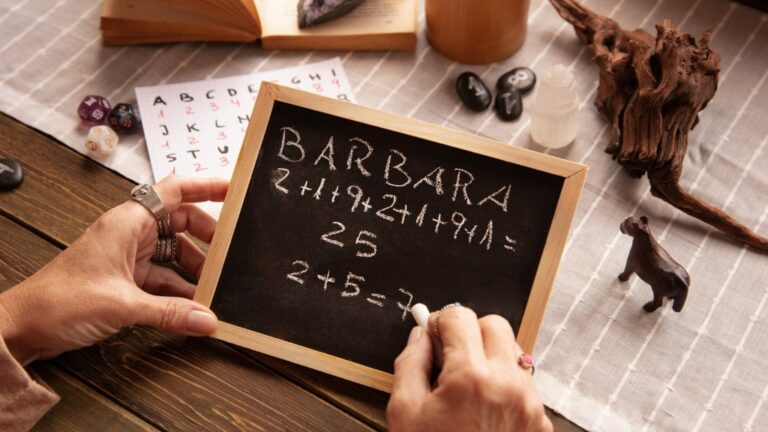
Your name has been with you from the beginning: you hear it, sign it, respond to it, and carry it through every stage of your life. Rarely, however, do you stop to look at it closely. Numerology proposes exactly that: observing it not only as a form of identification, but as a key that can reveal aspects of your deeper identity.
In this article, we explore what your name reveals about you, which main numbers arise from it, and how to calculate them step by step.
Table of Contents
- Numerology and Its Relationship With Names
- The Three Main Numbers of Your Name
- How to Calculate the Numbers of Your Name Step by Step
- What Name Numerology Is For
Numerology and Its Relationship With Names
Numerology begins with a very ancient idea: that numbers are not only used to measure or count, but also hold a meaning of their own. Each digit, from 1 to 9, is associated with a set of specific qualities. The name is one of the elements this discipline uses as the basis for its interpretation, because it turns something as everyday as your letters into a symbolic key to who you are.
To arrive at that meaning, it starts from a simple principle: each letter corresponds to a number. In this way, your full name stops being only a set of sounds and becomes a sequence of digits that can be added together and interpreted. That sequence, once deciphered, begins to speak about your way of being.
There is something particular about working with the name: you did not choose it yourself, it was given to you at birth and, over time, became inseparable from who you are. Numerology uses it as a starting point to talk about you. What it offers, ultimately, is one more language for knowing yourself.
In the episode Numerology from the series The Other Side, available on Gaia, numbers are explored as a symbolic language for better understanding personal experience. There, numerology is presented not as a form of divination, but as a tool for observing who you are, how you show up in the world, and what patterns appear on your path.
The Three Main Numbers of Your Name
When working with the full name, there are three numbers that are considered especially important: the Destiny or Expression Number, the Soul Urge Number, and the Personality Number. Each one is calculated using a different part of the name and reveals a specific dimension of your way of being.
It may help to think of them as three levels of interpretation. One speaks of your visible potential, another of your inner motivation, and another of the image you project. They do not compete with each other: they complement one another.
-
The Destiny or Expression Number
The Destiny Number, also called the Expression Number, is calculated by adding all the letters of the full name. It is one of the broadest numbers in the analysis because it takes the entirety of the name into account, not just one part.
It is related to your talents, abilities, and personal resources. It speaks of the way you tend to act, create, solve, build, or communicate when you express your potential with greater clarity.
It does not indicate a fixed destiny or a series of inevitable events. Rather, it points to the tools you have available to move forward on your path and the way you can develop what is already within you.
-
The Soul Urge Number
The Soul Urge Number is calculated only with the vowels of the full name. In numerology, vowels are associated with a person’s innermost dimension: what they desire, value, and need in order to feel aligned.
This number can help you recognize what truly moves you, even when you do not express it in an obvious way. Sometimes it appears in quiet decisions: a choice that may seem illogical from the outside, but feels necessary within.
It can also reveal tensions between what you deeply want and what you do out of habit, obligation, or external expectation. That is why it is often a very useful number for reviewing motivations, relationships, and important decisions.
-
The Personality Number
The Personality Number is obtained from the consonants of the full name. Unlike the Soul Urge Number, it does not focus on what you feel inside, but on the way you show yourself to the outside world.
This number describes the first impression you can create, the type of energy you communicate, and certain traits that others often perceive easily. Depending on the result, it can speak of a more reserved, firm, sensitive, creative, practical, or expansive image.
Knowing it does not mean adjusting your behavior to be more pleasing to others. It helps you observe whether the way you are perceived matches what you feel you are, or whether there is something in the way you express yourself that you could refine in order to relate with greater authenticity.
How to Calculate the Numbers of Your Name Step by Step
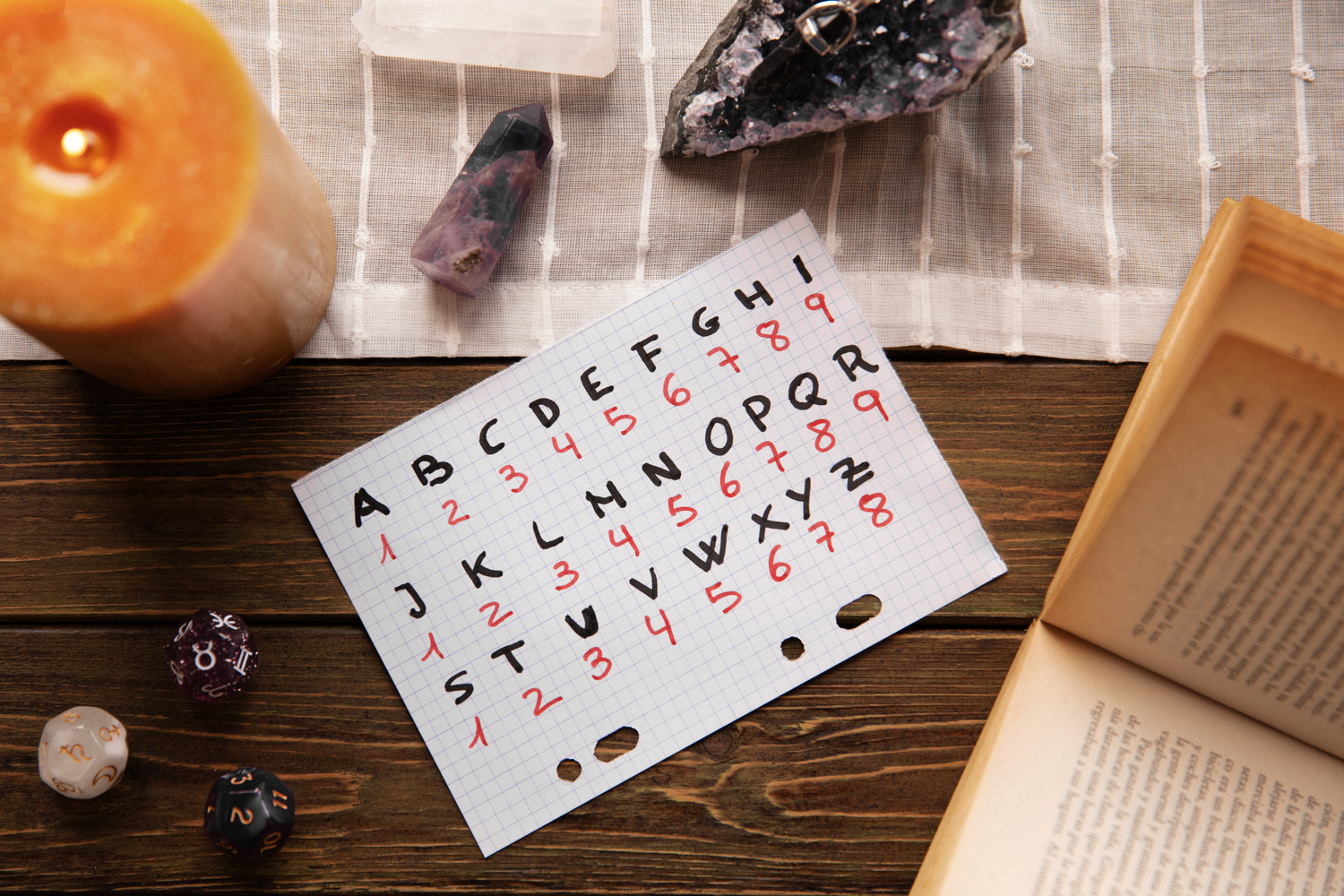
To calculate these numbers, you first need to convert each letter into its corresponding value according to the Pythagorean table. Then you make different sums depending on the number you want to obtain: all the letters for the Destiny or Expression Number, only the vowels for the Soul Urge Number, and only the consonants for the Personality Number.
The process is simple, but it is best to do it calmly. Write your full name, separate vowels and consonants, and check each letter before adding. In names with accents or special characters, the base letter is usually used for numerological calculations.
-
The Pythagorean Table Letter by Letter
The Pythagorean table assigns a number from 1 to 9 to each letter of the alphabet. The full correspondence is as follows:
- 1: A, J, S
- 2: B, K, T
- 3: C, L, U
- 4: D, M, V
- 5: E, N, W
- 6: F, O, X
- 7: G, P, Y
- 8: H, Q, Z
- 9: I, R
With this table, you can convert any name into a numerical sequence. Then, you only have to add and reduce the result until you obtain a number from 1 to 9, unless a master number appears: 11, 22, or 33.
-
Practical Example With a Full Name
Let’s take the name Olivia Carter as an example. First, each letter is replaced by its numerical value:
O (6) + L (3) + I (9) + V (4) + I (9) + A (1) + C (3) + A (1) + R (9) + T (2) + E (5) + R (9)
The total sum is:
6 + 3 + 9 + 4 + 9 + 1 + 3 + 1 + 9 + 2 + 5 + 9 = 61
6 + 1 = 7
In this case, the Destiny or Expression Number is 7.
To calculate the Soul Urge Number, only the vowels are taken:
O (6) + I (9) + I (9) + A (1) + A (1) + E (5) = 31
3 + 1 = 4
The Soul Urge Number is 4.
To calculate the Personality Number, only the consonants are taken:
L (3) + V (4) + C (3) + R (9) + T (2) + R (9) = 30
3 + 0 = 3
The Personality Number is 3. In this way, the same name offers three different readings: one about the potential for expression, another about inner motivation, and another about the image projected toward others.
-
What to Do With Master Numbers (11, 22, and 33)
Master numbers in numerology are 11, 22, and 33. When a sum reaches one of these results, it is not reduced further. That is, if by adding the letters you obtain 11, you do not turn it into 2; if you obtain 22, you do not turn it into 4; and if you obtain 33, you do not turn it into 6.
These numbers are interpreted as vibrations of greater symbolic intensity. This means they may indicate a broader potential, but also more demanding challenges when it comes to integrating that energy into everyday life. They do not indicate that a person is “better” or “more advanced”; they simply require a more careful reading.
It is also useful to remember that each master number contains the base of its reduction: 11 is linked to 2, 22 to 4, and 33 to 6. That is why, when interpreting them, both their elevated qualities and their simpler, everyday expressions are observed.
What Name Numerology Is For
Knowing the numbers that arise from your full name can be a form of self-knowledge. This does not mean that every description will match you exactly, or that you should adjust yourself to a fixed interpretation. It works more like a mirror: it shows you certain tendencies so you can observe them, question them, and understand yourself better.
This reading can help you distinguish between what moves you inside, what you express through your actions, and what others perceive in you. Perhaps you discover that your Soul Urge Number points to a need for stability, while your Personality Number projects a much more changeable or restless image. That difference can give you clues as to why others sometimes expect an energy from you that does not always match what you truly need.
It can also be useful when making decisions. You can ask yourself: Does this respond to what truly moves me? Does it allow me to use my abilities? Does the way I am presenting myself reflect what I want to communicate? The answers do not depend only on a number, but the calculation can give you a concrete reference point from which to look more honestly.
As with the birth chart, numerology does not replace your discernment or fully define who you are. It offers a symbolic language for looking at your experience from another angle. Used with discernment, it can help you recognize patterns, organize inner questions, and make decisions that are more aligned with who you are, not only with what others expect to see in you.