Journey of the Tarot: How Major Arcana Meanings Mirror the Soul
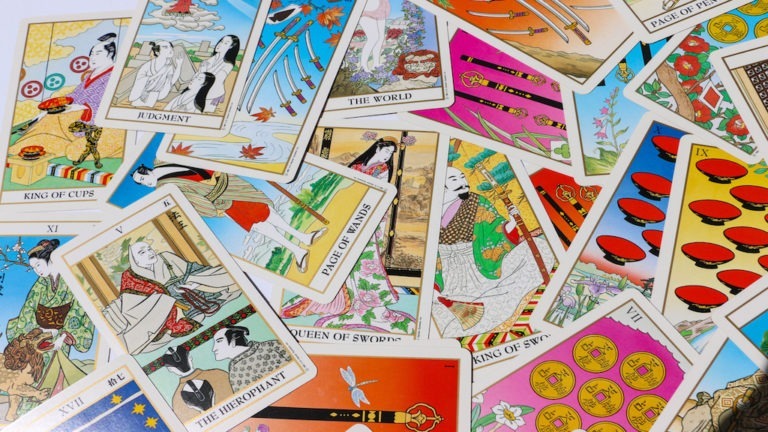
Cloaked in mystery and magic, the Tarot is more than a mere card game or parlor trick. In fact, the symbolism of this mysterious set of cards dives deeply into the realm of human consciousness and experience, revealing patterns of both the past, present, and probable future. The Major Arcana meanings in particular echo important aspects of the human experience, shedding light onto the many stages of spiritual development.
Divided into two separate Arcana, the Tarot tells the story of human experience using archetypal symbolism, numerology, and elemental meanings. The Major Arcana in particular speaks to what Carl Jung termed “the universal subconscious.” Each of the 22 cards symbolizes a different portion of the psyche, leading the querent on a spiritual journey from division to wholeness. On the path of the Major Arcana the seeker faces various trials and tribulations, which eventually lead to understanding and individuation.
The Story and Meaning of the Major Arcana
Many beginning Tarot enthusiasts are overwhelmed by the imagery and seemingly mysterious nature of the symbolism of the Major Arcana. Each of the 22 cards is packed with angelic figures, glyphs and characters that can both inspire and unsettle the reader. Yet if one approaches the Tarot as a storyline with the Fool as the central character, the mystery begins to reveal itself.
The Fool’s Journey: The Major Arcana Explained
Beginning with the number zero, the first character we will meet and follow throughout the Major Arcana is the carefree Fool. He appears in many decks clothed in a white tunic, flower in hand and feet dangerously close to a precipice. On the surface, The Fool appears unaware and dim, but in the Tarot, his actions and personality take on a different light.
With the Fool we have the point between points, the power of the present moment. He is unaware and thusly unafraid to face the perilous journey before him. It is the Fool’s innocence and openness that make the adventure possible.
The first two characters he encounters are the Magician and the High Priestess. The Magician represents pure dynamic masculine energy, and a willingness to project oneself out into the world. This is a card of harnessing one’s abilities towards the alchemical transformation of self or experience.
The High Priestess on the other hand, represents the pure feminine energy of incubation and arcane knowledge. She sits patiently at the gates of Solomon’s Temple, guarding the secrets of divine power. The High Priestess embodies the mysterious element of femininity and intuition, the intangible yet powerful forces that explore the realms of magic.
Now that The Fool has met his own personal masculine and feminine aspects, he meets the external embodiment of these characters. The Empress and The Emperor can be approached as the parents of The Fool, the earthly counterparts of The Magician and The High Priestess. As the mother of The Fool, The Empress is loving, abundant and giving. She is the feminine provider who feeds and nurtures her subjects.
The Emperor holds the energy of the father, creating firm foundations and boundaries in the external world. He protects his realm, building walls to encase the softness of the Empress. These parental figures instill their knowledge on the young Fool, defining his ideas of boundaries and security.
But the Fool must leave the safety of home, so next he encounters the dogma and structured world of The Hierophant. Here knowledge is passed down from heaven to Earth through the lens of hierarchy and teaching with a strong emphasis on religious institutions. Next the Fool learns the power of choice, symbolized by The Lovers card. It is the first instance where the Fool begins to realize that his future is in his own hands, and that his decisions will shape his path.
Now that The Fool has been educated, he must take this knowledge and apply it to the real world. The Chariot is his graduation, a sign that he has the necessary knowledge to embark upon the adventure. From here, he meets his first challenge: Strength. The Fool must overcome his base qualities by realizing that “mind over matter” is at times the best solution to a problem.
From the trial of Strength, the Fool is thrown into the introspective world of the Hermit. Alone with his own thoughts and removed from the world, the Fool realizes that life is in some ways a game to be played. The Wheel of Fortune appears next, as if the knowledge acquired by the Hermit is suddenly manifest. Life is a series of riddles and twisting turns, moved by both fate and choice, where one day things are up and the next day they are down.
The Fool comes to terms with this wild ride through the assumptions of the Justice card, where decisions are measured and enacted through a fair trial. But often enough, life is not so black and white. Soon the Fool finds himself in the quandary of the Hanged Man, suspended between two worlds in order to find a new perspective.
It is from this discomfort that he realizes that what he once took as blind truth is in fact the beliefs and ideas of his former teachers. The Death card appears to free him from these falsehoods, clearing away the words of the Emperor, Empress, Hierophant, and even the child the Fool once was.

The Fool is forever changed by this experience, and his new understanding is embodied by the angel of the Temperance card. Here we have a deeper spiritual understanding, where emotion is regulated and a middle path is forged between extremes. But with this new found clarity the hidden blind spots within the Fool himself are revealed, taking shape as the Devil.
Emerging from the darkness, the Devil speaks to the unconscious urges of the psyche which manifest as addiction and attachment. Luckily, this level of tension and manipulation is short lived, released by the shock and awe of the Tower. With a lightning bolt from heaven, the walls of the Fool’s inner world crumble, allowing for the growth and renewal of the Star.
The Star is one of the most magical and hopeful moments on the Fool’s journey, where healthy new ideas are planted and divine assistance flows freely from heaven. Yet this level of transcendence still has its own shadow. The profound and psychic Moon appears, reminding the Fool of all that is uncontrollable and mysterious. The Moon moves the tides of the ocean and the cycles of women, causing both the wild wolf and the tame dog to howl.
But night does not last forever, and the Fool’s journey is also nearing its end. The Sun rises once more and with it comes the promise of homecoming and return. The Fool finds himself at the gates of his ancestral castle, ready to reveal all that he has learned during his travels. The Judgement card is that revelation, where anything left unsaid is dealt with and the final inner work is completed.
The World represents the end of this journey, while also hinting at the cycle that is yet to come. This is one of the deepest aspects of the wisdom that the Tarot holds: life is an endless circle, a chance to learn and grow through experience. As long as we inhabit bodies on the Earth plane, there will be lessons to discover and conquer. Luckily there are tools such as the Tarot to help us understand ourselves, the world around us, and how best to thrive on our own archetypal journey.
About the Author

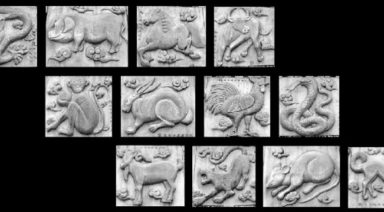
Chinese Zodiac Animals Complete Guide: The Race of Twelve
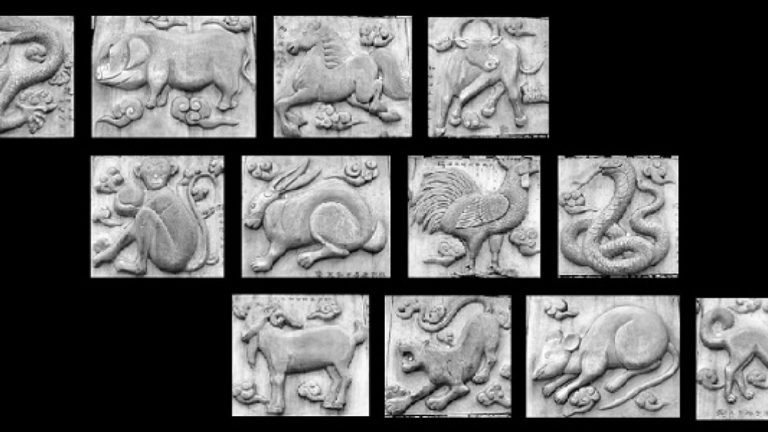
People can rarely guess this by looking at me, but I am half Chinese, and very proud of it! What an incredibly complex and colorful culture to claim as part of my own; the richness of the Chinese traditions and customs can be credited with many amazing advancements dating before America was even a twinkle in the world’s eye. One such aspect is the Chinese Zodiac containing the twelve animals that make up the cycle of our years past, present, and future.
Growing up, my grandmother instructed me, my brother, and my cousins in the way of traditions that have been passed down generation after generation. Usually, we’d gather around her home during Chinese New Year and welcome the new animal of the year (this year, 2014, is the Horse, which is my animal! Power to the Horses.).
We celebrated with a pyramid of oranges, red envelopes called li shis, delicious candies like sweet lotus root, and many a decoration in the shade of the Chinese lucky color, red. Of course, being a kid, I was most interested in the candied fruit, but the stories did grab my attention enough for me to be fascinated by the story of how the animals came to be in the Zodiac.
12 Chinese Zodiac Animals
Click any sign to skip directly to its section in the article