Astral Journey: What It Is, How to Do It, and What You Can Discover

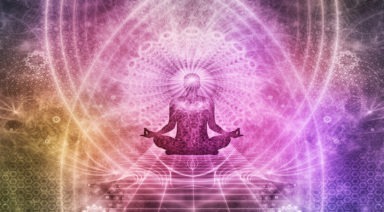
An astral journey is a fascinating practice in which consciousness detaches from the physical body to explore the astral plane, a dimension of existence beyond the tangible world. In this article, we will delve into how an astral journey can be consciously induced, explore the transformative benefits it offers, and demystify the risks commonly associated with this ancient experience.
Table of Contents
- What Is an Astral Journey and What Is It For?
- Differences Between an Astral Journey and a Lucid Dream
- Step-by-Step Guide for a Safe Astral Journey
- How to Return from an Astral Journey
- Benefits of Astral Travel
- Dangers of Astral Travel
- Advancing in Astral Travel Practice
- Integrating Astral Travel into Daily Life
What Is an Astral Journey and What Is It For?
An astral journey is an experience in which consciousness separates from the physical body and moves through the astral plane, a non-material dimension that coexists with the physical world. Although many people experience it unconsciously while sleeping, it is possible to learn how to consciously and voluntarily induce these journeys through specific techniques of relaxation, meditation, and visualization.
This practice allows individuals to explore realities beyond the physical senses. Those who have had conscious astral journey experiences often describe an expansion of perception, encounters with other forms of consciousness, and access to information that is not available in the usual waking state.
The astral journey can be a tool for spiritual development and self-knowledge. By transcending the limits of the physical body, the practitioner can gain a deeper understanding of the nature of being, overcome the fear of death, and strengthen the connection with their spiritual essence.
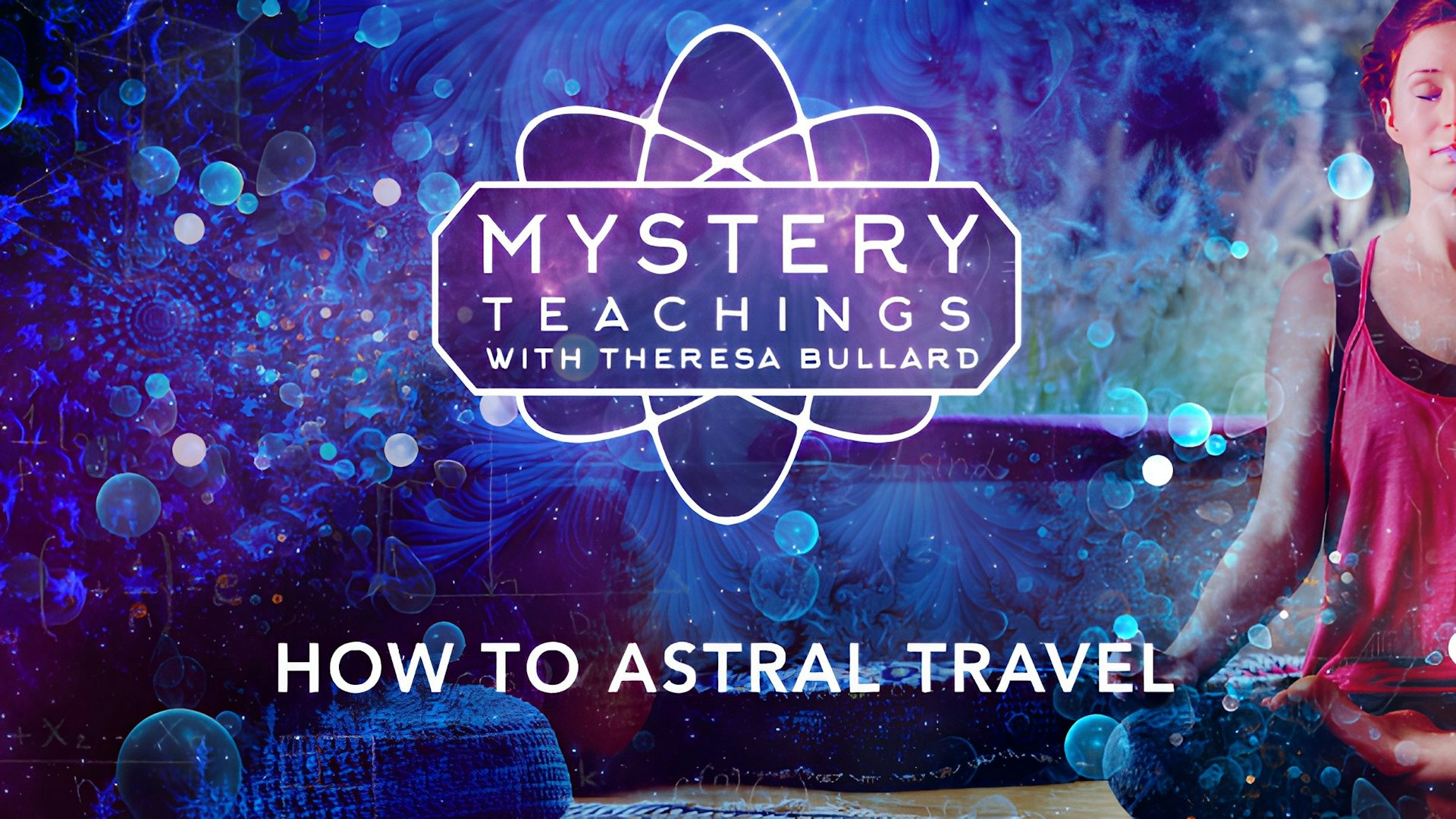
In the third season of Mystery Teachings, available on Gaia, an entire episode is dedicated to astral journeys. There, Theresa Bullard shares effective techniques for initiating in the astral plane, addressing what should and should not be done, and demystifying several myths associated with the journey through the astral realms.
Differences Between an Astral Journey and a Lucid Dream
Although they may seem similar, an astral journey and a lucid dream are distinct experiences. In a lucid dream, the person becomes aware that they are dreaming and can control certain elements of the dream, but remains within the dream plane generated by the mind. In contrast, an astral journey involves the separation of consciousness from the physical body to explore a real and external plane, different from the internal world of dreams.
Additionally, the purpose and experience also differ. While lucid dreaming often has a recreational or symbolic component, the astral journey has a more experiential and spiritual nature. The level of clarity, intensity, and perception of reality in the astral plane is notably higher than in dreams, and the experiences obtained can have a profound impact on the practitioner’s daily life.
Step-by-Step Guide for a Safe Astral Journey
To have a safe astral journey, it is essential to follow a structured practice that combines mental preparation, physical relaxation, and visualization techniques. In Mystery Teachings, Theresa Bullard presents a progressive method that can be integrated into the daily routine as training. This step-by-step guide helps to induce astral projection gradually, consciously, and safely, allowing the practitioner to explore the astral plane with greater clarity and confidence.
- Preparatory meditation: Dedicate 15 minutes a day to meditate with your back straight. This posture favors the energy flow through the chakras and allows you to reach a receptive mental state.
- Initial visualization: Observe a white dot on a black background or vice versa. Then close your eyes and try to keep a clear mental image of the dot.
- Daily visual training: Practice this visualization every day for a week. This strengthens concentration and trains the mind to sustain images in deep relaxation states.
- Expansion of the dot: In the second week, mentally expand the visualized dot until it transforms into a large space. This space represents the threshold between the physical and the astral plane.
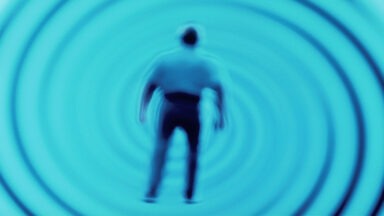
- Tunnel formation: Imagine that this space turns into a tunnel connecting both planes. Visualize yourself entering this transitional tunnel with your consciousness.
- Visualized destination: At the end of the tunnel, mentally create a specific place you want to reach. Keep your intention clear and use that goal as an anchor for the astral experience.
- Conscious movement: Move through the astral plane using the speed of thought. This form of movement allows you to explore the environment fluidly and without physical effort.
How to Return from an Astral Journey
The return to the physical body after an astral journey usually occurs naturally, as consciousness is permanently connected to the body through what many practitioners describe as the “silver cord.” In most cases, it is enough to direct attention toward the physical body or internally express the intention to return for the process to occur immediately. This reconnection is usually smooth, although some people may experience sensations of vibration or a slight jolt upon returning.
However, there are simple techniques that can facilitate a more conscious and gradual return. Slightly moving the fingers of the hands or feet, taking a deep breath, or visualizing the physical body as an anchoring point are effective methods to reintegrate without abruptness. With practice, the return to the body becomes increasingly natural, allowing the experience to be concluded in a balanced way and wakefulness to be resumed with clarity and stability.

Benefits of Astral Travel
Astral travel offers a wide range of spiritual and personal benefits, allowing practitioners to explore beyond physical limitations and gain new perspectives on life and existence. Reaching these states of consciousness can result in a profound sense of liberation and knowledge, alleviating fears such as the fear of death and strengthening the connection with the higher self and spiritual dimensions.
- Expansion of consciousness: Astral travel allows one to experience a broader reality beyond daily life, promoting greater mental openness and flexibility in thinking.
- Understanding life after death: Practicing astral projection can provide comfort and insight into what might exist beyond physical life, reducing the fear of death.
- Development of psychic abilities: Through astral travel, some people report an increase in their intuitive and psychic abilities, such as clairvoyance or extrasensory perception.
- Emotional healing: Consciously revisiting past experiences from an astral perspective can provide new understanding that helps in the emotional healing process.
- Increased creativity: Astral travel can inspire individuals by giving them access to visions and ideas beyond the reach of conventional thought.
Dangers of Astral Travel
Although astral travel is safe, there are certain myths that may cause concern among practitioners. It is important to clarify these myths to ensure that participants feel comfortable and secure during their astral experiences. Understanding that these “dangers” are largely unfounded can help practitioners approach astral travel with confidence and peace of mind.
- Fear of not returning to the physical body: A common myth is the fear of getting stuck in the astral plane and not being able to return to the physical body. However, the so-called “silver cord,” which connects the astral body to the physical body, is not something that can be broken. Instead, it is a metaphorical connection that always ensures the return to the body.
- Encounters with negative entities: Some practitioners express concern about encountering malicious entities during their travels. Protecting oneself with light visualizations and setting clear and firm intentions for safety before the journey can help avoid these experiences and ensure a positive astral environment.
- Disorientation and fear: For beginners, it is common to feel some disorientation or fear when exploring astral experiences for the first time. These feelings are usually mild and can be easily managed with practice and preparation. Learning control techniques and cultivating a positive mental environment before starting the journey can help overcome these moments and improve the overall experience.
Advancing in Astral Travel Practice
For those interested in deepening their astral travel practice, it is essential to develop a consistent routine and employ advanced meditation and visualization techniques. As practitioners gain more experience, they can begin to explore various aspects of the astral plane with greater control and purpose. This includes learning to navigate to specific locations, interact with different spiritual entities, and receive teachings or guidance.
Additionally, sharing experiences with a community of practitioners can be invaluable. Joining groups or workshops where techniques and personal experiences are discussed helps validate and enrich one’s journey in astral travel. The guidance of an experienced mentor can also be a great advantage, offering the opportunity to learn through direct teaching and receive feedback that is crucial for personal and spiritual growth in this practice.
Integrating Astral Travel into Daily Life
Integrating astral travel into daily life means more than just having out-of-body experiences; it involves applying the perceptions and teachings obtained during these journeys to everyday physical existence. For example, insights gained about personal challenges or behavioral patterns can be used to improve relationships, make more informed decisions, and cultivate greater inner peace.
On the other hand, regularly practicing astral travel can foster a sense of spiritual connection and purpose that transcends mundane activities. This may manifest as greater empathy toward others, a commitment to service or community, and an interest in additional spiritual practices that complement personal growth. For those who deeply integrate these practices, astral travel becomes a way of life that fully embraces the multidimensional nature of human existence.
About the Author

Dowsing: What It Is, How It Works, and What It’s Used For

Dowsing is a technique that allows one to detect vibrations or subtle fields present in people, objects, and places. It relies on the natural human ability to perceive energetic frequencies that escape the physical senses but can influence our well-being and our environment.
In this article, we explore what dowsing is, how it works, and how it can help us understand the relationship between mind, energy, and matter.
Table of Contents
- What Is Dowsing?
- Brief History and Evolution of Dowsing
- How Dowsing Works and What Energy It Detects
- Uri Geller and His Relationship With Dowsing
- Tools Used in Dowsing
- Applications of Dowsing in Everyday Life
- Everything Is Energy: Understanding the Basis of Dowsing
What Is Dowsing?
Dowsing is based on the idea that everything in the universe emits a vibrational frequency that can be perceived by the human body. Using tools like pendulums or rods, it is possible to translate this energetic information into physical movements that reveal data about the state of a person, a space, or a situation. This technique starts from the principle that we are sensitive receivers of subtle fields and that this perception can be trained for practical or introspective purposes.
The body acts as a bridge between the visible and the invisible: when it is in a receptive state, it can register signals that bypass logical reasoning and instead reach us through intuition. The movements generated in dowsing tools—such as spins, oscillations, or vibrations—are not caused by the object itself, but by an interaction between the energetic field of what is being consulted and the sensitivity of the dowser.
In addition to its use in the search for water, minerals, or lost objects, dowsing is also used to explore emotional, physical, or spiritual aspects of a person. It serves as a gateway to a more subtle dimension of reality, where mind, energy, and consciousness intertwine in a deep dialogue.
Brief History and Evolution of Dowsing
The use of dowsing dates back to ancient civilizations that used rods or Y-shaped branches to locate underground water or minerals. In cultures such as the Chinese, Egyptian, or Roman, it was acknowledged that the Earth emitted energetic currents that could influence people’s well-being and the harmony of spaces. Over time, this practice took on different approaches depending on the spiritual and scientific traditions of each era.
During the 19th and 20th centuries, dowsing began to be systematized and studied as an energetic discipline. More precise instruments were developed, such as the dowsing pendulum and vibrational measurement scales, which allowed the technique to be applied in fields as diverse as health, geobiology, and the exploration of natural resources. Today, it continues to be used as a complementary tool to explore the relationship between energy, consciousness, and matter.

How Dowsing Works and What Energy It Detects
Dowsing works through the interaction between the energetic field of the environment and the sensitivity of the dowser. When a person enters a relaxed state of attention and holds a tool such as a pendulum or a rod, their body acts as an amplifier that responds to subtle stimuli. The movements produced in the instruments are not random; they reflect an unconscious response that can be interpreted as “yes,” “no,” or as a direction to follow.
The energy detected in dowsing corresponds to vibrations present in everything that exists. These may be related to a person’s vital state, the geobiological energy of a piece of land, the vibrational quality of food, or even emotional imprints that persist in a space. The technique helps identify variations in these fields, aiding in more balanced and aligned decision-making.
The key to how dowsing works lies in its ability to translate the invisible into observable signals. It is not a form of divination, but rather an energetic reading based on a fundamental principle: everything is made of energy, and it is possible to tune into it by training perception and using the right tools.
Uri Geller and His Relationship With Dowsing
Uri Geller, world-renowned for his psychic abilities and telekinetic phenomena, also explored dowsing as a way to understand the energetic field that surrounds us. In the series Uri Geller’s Legacy of Paranormal Experiences, available on Gaia, his experiences with this practice are explored in depth—from its use in the search for deposits to its role in his spiritual transformation.
In the episode From Dowsing to Spirituality, Geller reveals how this technique was key to opening new dimensions of perception in his life.
Tools Used in Dowsing
Although energetic perception can be developed without instruments, many people use tools that amplify and translate subtle impulses into physical signals. These tools hold no inherent power but function as extensions of the operator’s field of consciousness. Each one serves a specific purpose and can be adapted to different types of energetic inquiry.
- Dowsing pendulum: A small mass suspended by a thread or chain. It moves according to the energetic vibrations of the environment and provides simple answers (yes, no, maybe).
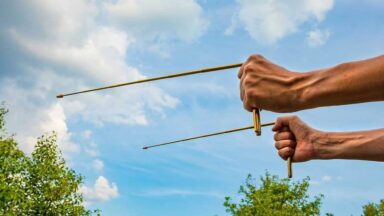
- L-shaped rods: Two metal rods bent at right angles. They are used to explore physical spaces and detect energetic alterations in a location, such as geopathic stress or underground currents.
- Y-shaped rod (or forked stick): Traditionally used to find underground water. The tip lowers when the operator approaches a source or flow.
- Aurameter: A rod with a spiral or sphere at the tip. It is used to measure the energetic field (aura) of people, animals, or objects.
- Biometer or Bovis scale: A numerical scale that measures the “energetic vitality” of something. It helps determine whether an energy is high, low, or neutral.
- Witnesses or energetic samples: Objects or photographs that represent what is being searched for. They help focus the search by acting as a point of connection with the target’s energy.
- Dowsing charts or bases: Templates with symbols or geometric shapes. These are placed under the pendulum to guide and refine responses.
Applications of Dowsing in Everyday Life
Dowsing is not only used in spiritual or therapeutic contexts, but also in practical aspects of daily life. Thanks to its ability to detect energetic imbalances, it is used as a tool for guidance, diagnosis, and harmonization at both a personal and environmental level.
- Energetic health: It can be used to identify blockages or imbalances in a person’s energetic field. This helps guide complementary healing practices.
- Food selection: Dowsing helps evaluate the vibrational charge of foods before consuming them, allowing for choices that are more aligned with physical well-being.
- Space harmonization: It is used to detect areas with dense energy in the home or workplace. Measures can then be applied to restore balance to the environment.
- Searching for objects or water: Traditionally, it has been used to find lost objects or underground water sources. The tool acts as a sensor that responds to energetic traces.
- Decision-making: Some people consult dowsing when choosing between important options. The pendulum, for example, may reflect which alternative is more aligned with the person consulting.
- Evaluation of objects or crystals: Dowsing allows the energy of amulets, crystals, or ancient objects to be measured, helping determine whether their frequency is beneficial or needs cleansing.
Everything Is Energy: Understanding the Basis of Dowsing
The foundation of dowsing lies in a fundamental understanding of the universe: everything is made of energy. Beyond visible matter, every being, object, and place emits a unique frequency that can be perceived by those who refine their sensitivity. This energy is not mystical or exclusive to spirituality; it is part of the invisible fabric that sustains physical reality.
When a person trains their ability to perceive these subtle fields, they can access a deeper dimension of the world around them. Dowsing is a tool that facilitates this access, acting as a translator between the energetic and the tangible. By detecting vibrations, it allows for more conscious decision-making, the harmonization of environments, and a deeper understanding of the connections between body, mind, and surroundings.
In the series Superhuman: The Invisible Made Visible, available on Gaia, cases and experiments are presented that demonstrate the power of the mind to interact with energy. Through scientific research and real-life experiences, the series offers a fascinating look at our perceptual abilities and how they can be trained to expand our understanding of reality.