What Is the Flower of Life, the Symbol of Cosmic Unity
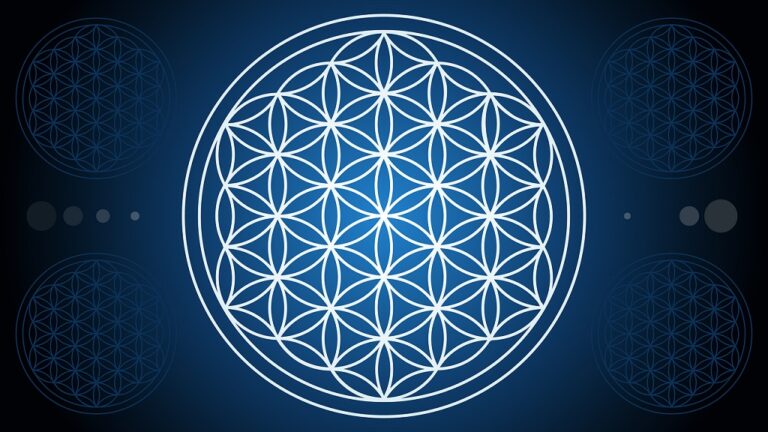
The Flower of Life is one of the most representative patterns of Sacred Geometry, composed of interlocking circles that form a symmetrical and harmonious design. This universal symbol, present in cultures around the world, is considered a visual map that reveals the fundamental laws of creation and the interconnection of all things. In this article, we explore what the Flower of Life is, its deep spiritual meaning, and how to integrate it into daily practice to access greater awareness.
Table of Contents
- What Is the Flower of Life
- The Spiritual Meaning of the Flower of Life
- The Flower of Life in Sacred Geometry
- How to Use the Flower of Life in Spiritual Practice
- History and Evolution of the Flower of Life
What Is the Flower of Life?
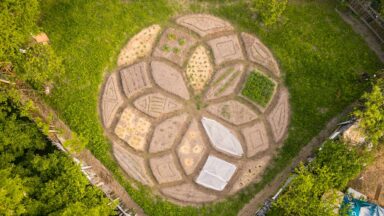
The Flower of Life is a geometric design that is formed from a series of perfectly overlapping circles. Each circle is drawn from the center of another, creating a pattern that symbolizes the connection between all forms of life. This design can expand infinitely, making it a visual representation of the interrelation between the microcosm and the macrocosm.
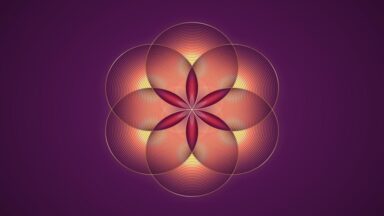
At its core, the Flower of Life contains the Seed of Life, formed by seven basic circles that represent the initial processes of creation. As the pattern grows, it unfolds into more complex levels, reflecting the evolution of existence. For this reason, the Flower of Life is considered a symbol of expansion and manifestation.
In the series Sacred Geometry: Spiritual Science, available on Gaia, Dr. Robert J. Gilbert explains how the Flower of Life acts as a bridge between the physical and the spiritual worlds. This program explores the meaning and applications of this symbol in the transformation of consciousness and its connection with fundamental patterns of the universe.
The Spiritual Meaning of the Flower of Life
From a spiritual perspective, the Flower of Life symbolizes unity and universal connection. It represents how all things in the cosmos are interrelated and part of a greater whole. Its design is associated with universal energy and the laws of creation, making it a powerful tool for meditation and for connecting with higher dimensions.
Additionally, this symbol is believed to help balance internal energies and facilitate personal transformation. Meditating with the Flower of Life or incorporating it into spiritual practices can provide clarity, harmony, and a profound sense of connection with the universe. This symbol is valued both for its ability to represent the structure of the cosmos and for its power to transform and elevate consciousness.
The Flower of Life in Sacred Geometry
The Flower of Life is one of the most recognized patterns within Sacred Geometry, a system that explores the shapes and proportions that support existence. Its design, based on the repetition of interlocking circles, reflects mathematical and energetic principles that underlie the structure of the universe. It is considered a key symbol that connects material manifestation with spiritual laws.
This pattern has been found in various cultures throughout history, from Egyptian temples to ancient Chinese and Greek monuments. Its geometric harmony conveys a message of balance and cosmic unity, inviting contemplation and a deep study of the interconnectedness of all existence. Exploring its meaning opens the door to a broader understanding of the relationship between consciousness and creation.
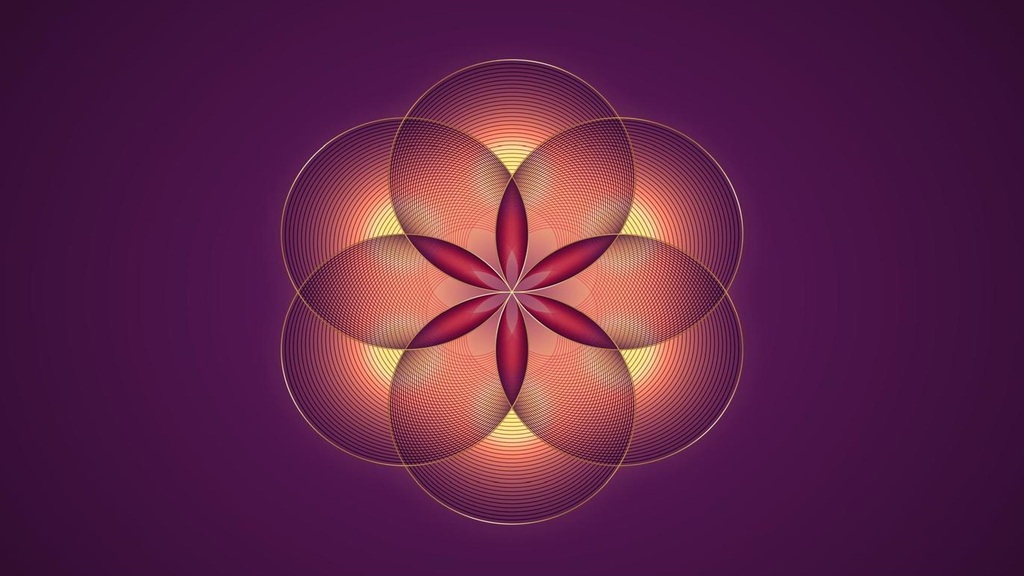
The Seed of Life is the core of the Flower of Life, a pattern composed of seven interlocking circles that symbolize the initial stages of creation. While the Seed represents the beginning of every creative process, the Flower reflects how those basic forms expand to give rise to the totality of existence. Its structure, present in ancient temples and sacred art, shows how the microcosmic and the macrocosmic are interconnected.
Within Sacred Geometry, the Flower of Life is seen as a symbol of perfection and universal harmony. It is believed to contain fundamental patterns that express the laws of nature, such as the Platonic Solids and the Golden Ratio. Studying and meditating on this symbol facilitates a deeper understanding of the structure of the universe and of one’s own spiritual path.
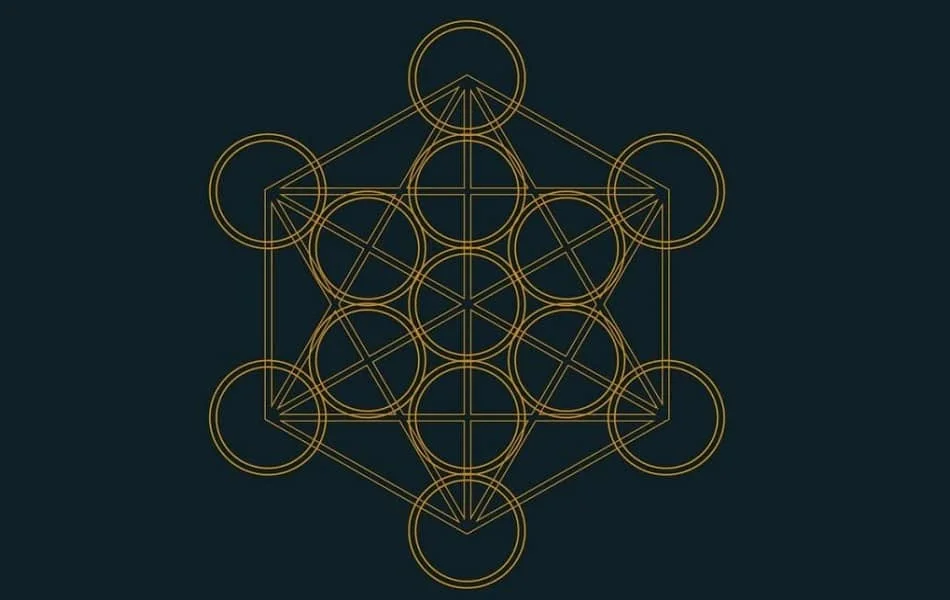
Metatron’s Cube is another figure derived directly from the Flower of Life. It emerges by connecting the centers of the circles in this pattern, revealing the Platonic Solids that symbolize the essential elements of nature. Its relationship with the Seed of Life shows how both patterns represent different stages of the creative process: the beginning and the expansion.
Metatron’s Cube is said to act as a bridge between the physical and the spiritual worlds. For this reason, it is used in meditation and energetic protection practices, helping to cleanse spaces and raise their vibration. Its use allows practitioners to experience a deeper connection with universal laws and access higher states of consciousness. These patterns reflect how sacred geometry translates cosmic principles into forms that are understandable and applicable in daily life.
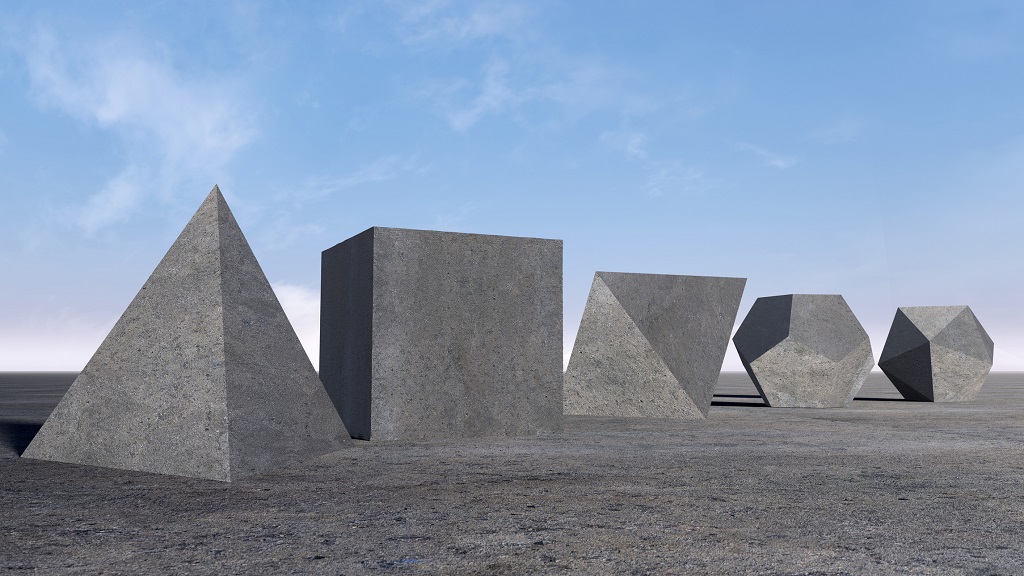
The Flower of Life contains the five Platonic Solids, the basic geometric shapes that represent the elements of nature: earth, water, fire, air, and ether. These figures, known for their perfect symmetry, are the foundation of matter in the universe. Their presence in the Flower of Life reflects the harmony in which creation operates.
Meditating on the relationship between the Platonic Solids and the Flower of Life helps to understand the connection between physical elements and spiritual energies. This allows practitioners to visualize the structure of the cosmos as a perfect balance between the tangible and the intangible.
How to Use the Flower of Life in Spiritual Practice
The Flower of Life can be integrated into various spiritual practices, serving as a tool to harmonize the mind, body, and environment. Its geometric design helps focus attention and connect with universal energy, promoting a state of balance and well-being.
- Mindful meditation: Visualize the symbol while breathing deeply to calm the mind. This practice helps you enter a state of mindfulness and feel a deeper connection with your inner self.
- Energetic balance in spaces: Place the Flower of Life in your home or workspace. Its pattern is believed to harmonize the environment, helping to clear negative energies and create a peaceful atmosphere.
- Manifestation of intentions: During your meditations, project your desires into the design of the Flower of Life. This strengthens your focus and aligns your intentions with universal energy.
- Energy healing: Use the Flower of Life near the body or on the chakras to unblock stagnant energies. This practice is believed to promote healing and inner harmony.
- Protective amulet: Wear the Flower of Life as a personal protective object. Its symbolism helps reinforce your connection with cosmic unity and keep you centered in challenging situations.
History and Evolution of the Flower of Life
The Flower of Life is an ancient symbol that has appeared in various cultures around the world. One of the oldest representations can be found in the Temple of Osiris, in Egypt, where it is carved in stone. This pattern has also been discovered in manuscripts, temples, and monuments from cultures such as Chinese, Indian, and Greek.
Throughout history, this symbol has been associated with sacred knowledge and connection with the divine. In the Middle Ages, the Flower of Life was used by alchemists and philosophers as a representation of universal balance and creation. Its presence in various traditions reinforces its meaning as a universal pattern.
Today, the Flower of Life has gained popularity in the realm of modern spirituality. Thanks to its relationship with sacred geometry, it is studied as a tool for personal development and for understanding universal laws. Its relevance transcends time, reminding us of the interconnection of all existence.
About the Author

7 Sacred Geometry Symbols and Their Meanings
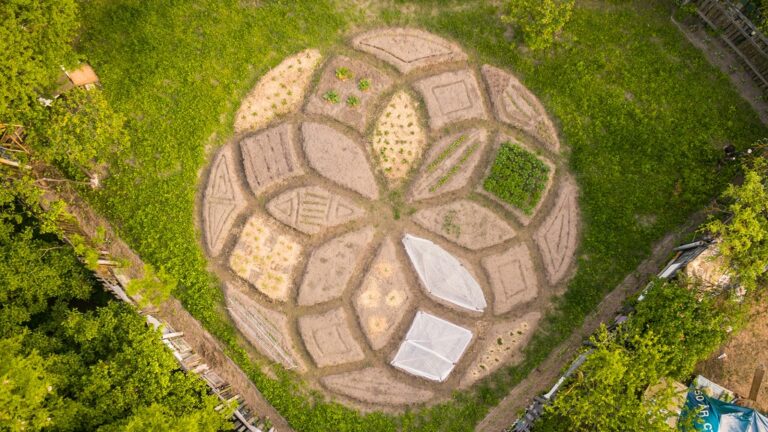
Sacred geometryis a discipline that studies the geometric shapes and patterns found in nature and in human-made structures. These figures are considered sacred due to their perfect symmetry and proportions, which are believed to reflect the harmony of the universe. In this article, we explore the meanings of seven sacred geometry symbols and how they can influence our spiritual and daily lives.
Table of Contents
- What is Sacred Geometry and What is its Purpose?
- 7 Sacred Geometry Symbols and Their Meanings
- History and Origin of Sacred Geometry
- How to Integrate Sacred Geometry into Daily Life
What is Sacred Geometry and What is its Purpose?
Sacred geometry is the study of geometric shapes that appear in nature and human constructions, considered sacred due to their perfect symmetry and proportions. These shapes include structures such as the cube, tetrahedron, and dodecahedron, among others. It is believed that sacred geometry connects with the order and harmony of the universe, providing a deeper understanding of the structure of reality.
These geometric figures are found in a variety of contexts, from ancient architecture to modern art. Temples and cathedrals often incorporate sacred geometry patterns in their design, using these shapes to create spaces that promote meditation and spiritual connection. Additionally, these figures are also found in nature, such as in the structure of crystals and the shapes of plants and animals.
Sacred geometry is also applied in meditation and spiritual practices. By meditating on these figures, one can harmonize internal energies with universal energies, promoting healing and spiritual growth. Geometric shapes act as a bridge between the physical and the spiritual, facilitating a deeper connection with the cosmos.
In the series Sacred Geometry: Spiritual Science, available on Gaia, it is explored how these geometric shapes are essential for understanding the structure of the universe and how they can be used in spiritual and meditative practices to enhance awareness and spiritual connection.
7 Sacred Geometry Symbols and Their Meanings
There are several sacred geometry symbols that are widely known and used in various spiritual traditions. These symbols include the Metatron’s Cube, the Merkaba, the Seed of Life, the Flower of Life, the Sri Yantra, the Torus Yantra, and the Celtic Labyrinth. Each of these symbols has a profound meaning and is used for different purposes in meditation and spiritual practices.
Before we explore each symbol in depth, it can be helpful to see a quick overview of what these geometric forms represent.
Quick Meanings of Each Sacred Geometry Symbol
- Metatron’s Cube: Represents the geometric blueprint of creation and is used for protection, balance, and energetic alignment.
- Merkaba: A star-shaped field symbolizing ascension, higher consciousness, and the union of body and spirit.
- Seed of Life: A seven-circle pattern representing the first stages of creation, new beginnings, and the foundation of all geometric forms.
- Flower of Life: A multi-circle design symbolizing unity, interconnectedness, and the underlying structure of life.
- Sri Yantra: A complex diagram representing cosmic order, divine balance, and the union of masculine and feminine energies.
- Torus / Toroid: A donut-shaped energy field symbolizing infinite flow, cyclical creation, and the movement of life force.
- Vesica Piscis: The intersection of two circles symbolizing the union of complementary forces, creation through duality, and the portal between the material and the spiritual realms.
Metatron’s Cube
Metatron's Cube is a sacred geometry figure that contains the five Platonic solids: tetrahedron, hexahedron, octahedron, dodecahedron, and icosahedron. These solids are arranged in such a way that they represent the fundamental structure of the universe. The cube is used in spiritual and meditative practices to connect with universal energy, providing balance and harmony to the user. Additionally, it is considered a powerful tool for protection and energy cleansing.
This symbol is not only visually impressive but also holds deep spiritual meanings. It is believed that Metatron’s Cube acts as a bridge between the material and spiritual worlds, allowing practitioners to access higher dimensions and sacred knowledge. Meditating with Metatron’s Cube can help align internal energies with cosmic forces, promoting healing and spiritual growth.
The Merkaba
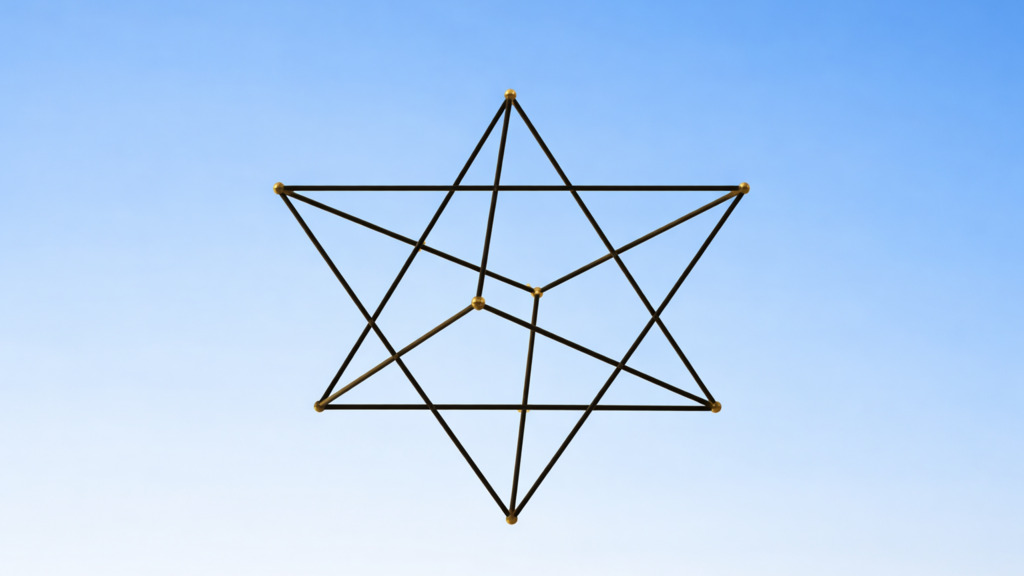
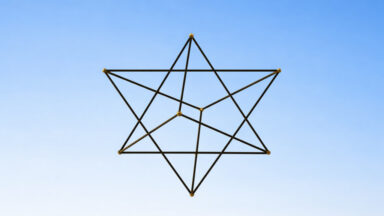
The Merkaba is a geometric figure formed by two interlocking tetrahedrons that rotate in opposite directions, creating a three-dimensional star. This symbol represents the union of spirit and body and is used to facilitate spiritual ascension and the expansion of consciousness. By activating the Merkaba, one can balance and harmonize the body’s energies, facilitating connection with higher dimensions and access to elevated states of consciousness.
In spiritual practices, the Merkaba is known for its ability to protect and heal. Meditating with the Merkaba can help activate the energy field around the body, known as the Merkaba field, which acts as a protective shield against negative energies. Additionally, this energy field is believed to facilitate astral travel and mystical experiences, providing a powerful tool for spiritual exploration and personal development.
The Seed of Life
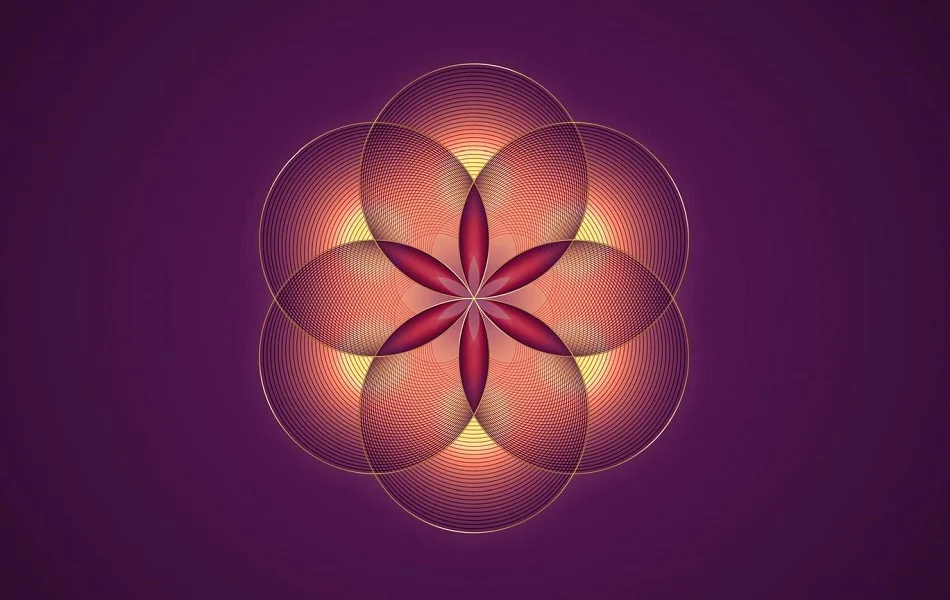
The Seed of Life is a sacred geometry symbol composed of seven interlocking circles that form a flower-like pattern. It represents the seven days of creation and is considered a symbol of fertility and creation. This basic pattern is the foundation of more complex figures like the Flower of Life and is used in meditation to promote healing and spiritual growth.
The spiritual meaning of the Seed of Life lies in its representation of the interconnectedness of all life in the universe. Meditating with this symbol can help connect with the energy of creation and foster a sense of unity and harmony. The Seed of Life is used in various spiritual practices to stimulate creativity, fertility, and the manifestation of new beginnings.
The Flower of Life
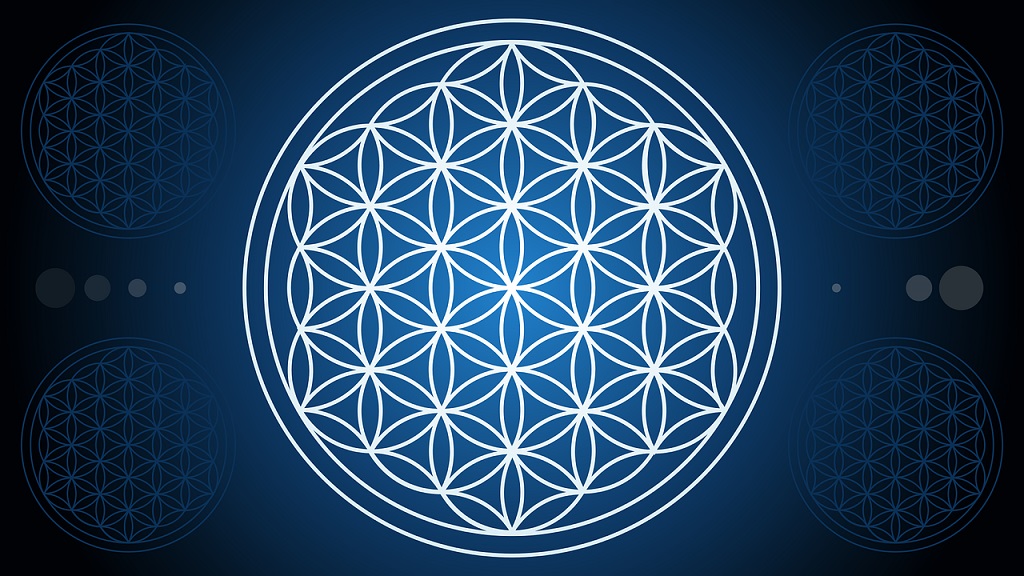
The Flower of Life is an expansion of the Seed of Life and is composed of multiple interlocking circles that create a more complex pattern. This symbol is considered one of the most sacred patterns and is believed to contain the secrets of the universe, including the shapes of the Platonic solids. The Flower of Life represents the interconnectedness of all life and is used to meditate on unity and harmony.
This symbol is not only visually appealing but also holds deep spiritual meanings. The Flower of Life is considered a visual representation of the life force energy that flows through all living things. Meditating with the Flower of Life can help activate this life force energy, promoting healing and spiritual growth. This symbol is also used to connect with universal energies and to explore the mysteries of creation.
The Sri Yantra
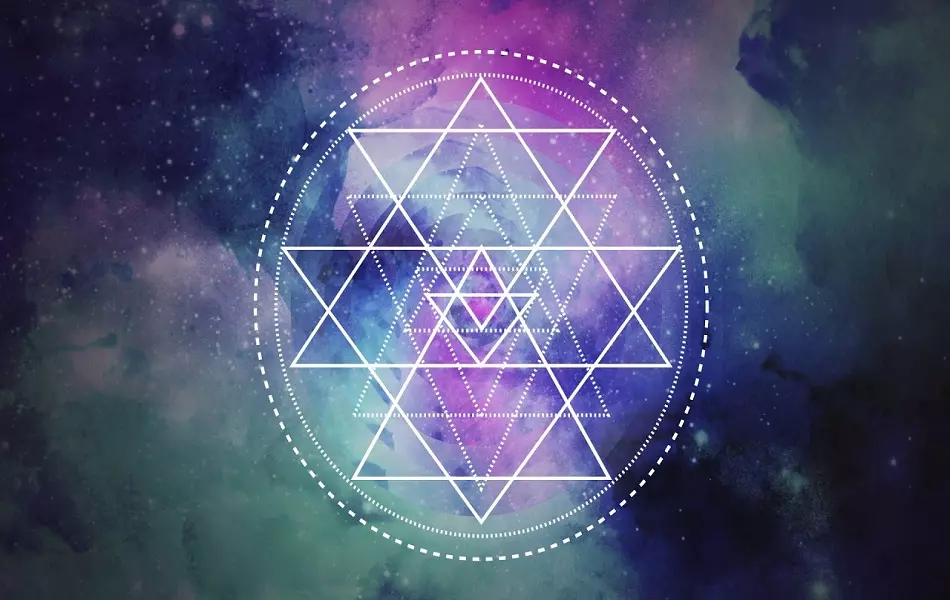
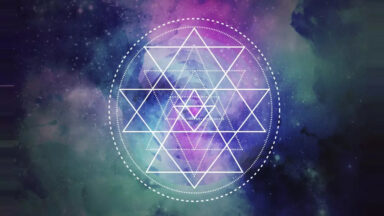
The Sri Yantra is a Hindu symbol composed of nine interlocking triangles that form 43 smaller triangles, all enclosed within an eight-petaled lotus. This complex geometric design represents the cosmos and the structure of the universe, symbolizing the union of the masculine and feminine. It is used in meditation and rituals to promote prosperity, peace, and harmony. The Sri Yantra is considered a powerful tool for manifesting desires and connecting with divine energy.
Meditating with the Sri Yantra helps align internal energies with cosmic forces, promoting healing and spiritual growth. This symbol is also used to balance the chakras and improve concentration and mental clarity. The intricate structure of the Sri Yantra acts as a map of the spiritual journey, guiding the practitioner toward a greater understanding and realization of their connection with the universe.
The Torus Yantra or Toroid
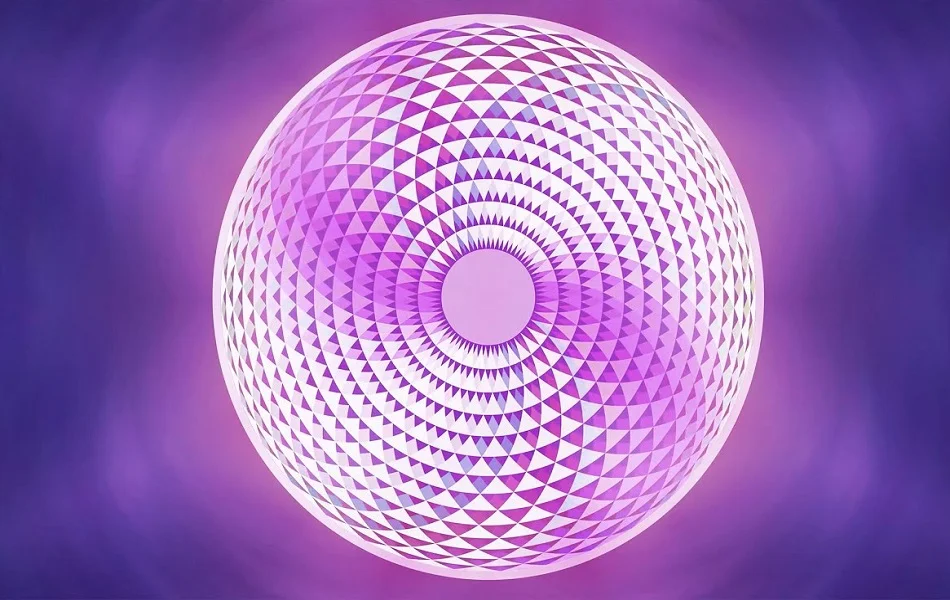
The Torus Yantra, or Toroid, is a geometric shape that represents a ring-shaped energy field, similar to a donut. This symbol reflects infinite energy and continuous creation, symbolizing the flow and balance of energies in the universe. The toroid is considered a model of the universe’s structure and is used in meditation to harmonize internal and external energies, facilitating a state of balance and well-being.
Meditating with the Torus Yantra helps activate the flow of energy in the body, promoting healing and spiritual growth. This symbol is also used to connect with universal energies, facilitating the expansion of consciousness and the integration of cosmic energies into daily life. The toroid is a visual representation of the human energy field, providing a powerful tool for transformation and spiritual elevation.
The Vesica Piscis
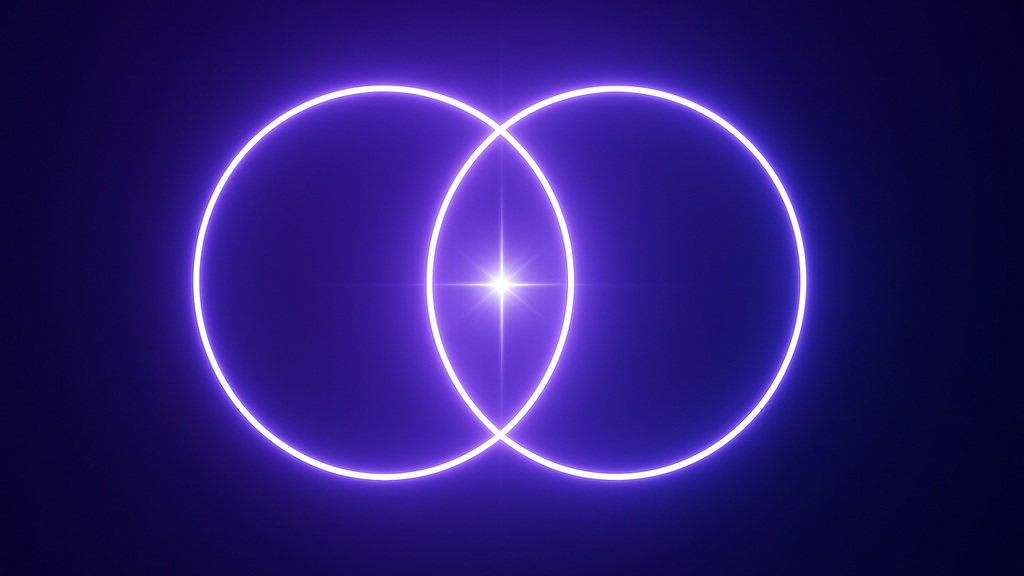
The Vesica Piscis is an essential figure of sacred geometry formed by the intersection of two circles of the same radius, whose centers lie on each other’s perimeter. This overlap creates an almond-shaped form at the center that symbolizes the union of two complementary principles. On a spiritual level, it represents the meeting point between the material and the divine, as well as the origin of creation emerging from duality. Due to its precise and symmetrical structure, it is considered a fundamental geometric matrix within many ancient symbolic systems.
This symbol has been used in spiritual and artistic traditions as a representation of birth, manifestation, and universal balance. Meditating with the Vesica Piscis allows one to work on the integration of inner opposites and to foster states of greater energetic coherence. It is also the structural foundation of more complex figures such as the Flower of Life, reinforcing its importance as a primordial pattern of creation and expansion of consciousness.
History and Origin of Sacred Geometry
Sacred geometry has its roots in ancient civilizations, where geometric patterns observed in nature were replicated. The Egyptians, for example, used geometry in the construction of the pyramids, believing that these shapes contained mystical and energetic properties. Egyptian structures were designed to align with cardinal points and certain astronomical events, reflecting a deep connection with the cosmos.
In ancient Greece, sacred geometry was formalized and deeply studied by philosophers and mathematicians such as Pythagoras and Plato. Pythagoras observed that certain geometric patterns and proportions repeated in nature and developed the concept of the Platonic solids, geometric shapes that represent the building blocks of the universe. Plato, in his work “Timaeus,” linked these solids to the fundamental elements of creation: earth, water, air, fire, and ether.
The cultures of India and China also incorporated sacred geometry into their spiritual and architectural practices. The mandala and yantra are examples of geometric symbols used in meditation and temple construction, aiming to facilitate connection with the divine and promote spiritual harmony. These patterns reflect the belief in an interconnected universe, where geometry is the foundation of all things.
During the Renaissance, interest in sacred geometry resurfaced in Europe, driven by artists and scientists such as Leonardo da Vinci and Johannes Kepler. Da Vinci studied and used the golden ratio in his art, while Kepler explored the relationship between the Platonic solids and planetary orbits. This period marked a fusion of art, science, and spirituality, highlighting the importance of sacred geometry in understanding the universe and human experience.
How to Integrate Sacred Geometry into Daily Life
Integrating sacred geometry into daily life can bring balance, harmony, and a deeper spiritual connection. Here are some practical ways to do so:
- Meditation with symbols: Use figures like Metatron’s Cube or the Flower of Life during your meditations. These shapes can help focus your mind and harmonize your internal energies.
- Home decoration: Incorporate sacred geometry patterns into your home decor. Placing paintings or objects with these symbols can create an atmosphere of peace and balance.
- Yoga and energy exercises: Use postures and movements inspired by geometric shapes during your yoga practice. This can help align your body and mind with universal energies.
- Art and creativity: Create your own designs based on sacred geometry. Drawing and painting these patterns can be a meditative and creative way to connect with the divine.