Gifts From the Divine; Lightning Strike Survivors Gain Abilities

Gifts From the Divine; Lightning Strike Survivors Gain Abilities

We’re all familiar with this supernatural Hollywood motif: an otherwise normal protagonist gets struck by lightning and develops superpowers. Similar stories are told about comic book heroes who encounter substances or are bitten by creatures that imbue them with superpowers, and a story unravels about their metamorphosis.

As art often imitates life, this idea of lightning strike survivors gaining abilities after being hit isn’t just science fiction. Numerous stories have been recounted by people who have not only been struck by lightning, but who have also been declared dead — only to come back to life forever changed, with talents and abilities they’d never had before. In a sense, these survivors have been reborn, but reborn into the same body.

The Story of Dr. Tony Cicoria

In 1994, Anthony Cicoria, M.D., an orthopedic surgeon in Chenango County, New York, was on a pay phone with his mother when he noticed a storm brewing in the distance. Describing what happened next, he said, “With my left hand I pulled the phone hand-piece away from my face to hang it up. When it was about a foot away from my face, I heard a deafening crack. Simultaneously I saw a brilliant flash of light exit the phone hand-piece I was holding. A powerful bolt of lightning had struck the pavilion, traversed through the phone striking me in the face, as its massive electrical charge raced to ground.”

Cicoria found himself first flying backward, and then forward. After a minute, he took note of his surroundings and saw his lifeless body on the ground with a huddle of people around him — a woman was giving him CPR.

He realized then that he was dead. His life flashed before his eyes, and he reported being surrounded by a bluish-white light that flooded him with bliss. And then he returned to his body, in pain, looking at the woman hovering over and attempting to revive him. According to The New Yorker, “After a minute or two, when he could speak, he said, ‘It’s O.K.— I’m a doctor!’ The woman, who turned out to be an intensive-care-unit nurse, replied, ‘A few minutes ago, you weren’t.’”

Cicoria explained that up until this incident, he’d worked 10- to 12-hour days while raising three children, leaving room for little else. But after this near death experience, he began craving classical music, which was strange to him because he’d never before had an affinity for much beyond classic rock. But he was so moved by his passion that he drove to the closest music store, nearly an hour away, and purchased his first classical album: a CD of Chopin’s piano compositions. 

Soon after, Cicoria acquired a piano from his babysitter and then bought some beginner piano books, as well as the sheet music to the songs on the Chopin CD he’d been listening to over and over again.

A few months later, he had a dream in which he says felt like another out of body experience. He entered a concert hall and saw himself on stage, playing haunting compositions that, after a few moments of listening, he realized were his own. It was the crescendo of his own music that awoke him at 3:15 in the morning. Cicoria climbed out of bed, walked to where the piano was stationed, and attempted to play what he’d heard. But he was unable to.

He continued to teach himself piano, and every time he sat down to practice, his own compositions would begin to play. “If I tried to ignore it, it became more insistent. I became obsessed with the piano and came to believe the only reason I survived the lightning was because of the music,” he said.

Eventually, he hired a Julliard-trained teacher to give him piano lessons and began practicing relentlessly. After attending the Sonata Piano Camp, he was introduced to the late Dr. Oliver Sacks, who interviewed him for a book he was writing, Musicophilia: Tales of Music and the Brain. “At the end of that day, as we shook hands in his doorway, he looked into my eyes as if looking through me and said, ‘The music from the dream went through an awful lot of trouble to get here, the least you can do is write it.’ I was so shaken by what he said, I went home and bought a Sibelius music writing program,” Cicoria said.

Cicoria has now performed his highly acclaimed compositions for crowds across the world. 

Scientific Phenomenon or a Gift From the Divine?

There is a term for Cicoria and others like him — an “acquired savant” — and it describes a person who exhibits savant skills after a serious brain or central nervous system (CNS) injury or disease. One moment they’re the person they’ve always been, and the next they have acquired a skill or talent that defies explanation. 

The more spiritual among us are apt to credit divine intervention for savant status. Scientists, on the other hand, are left scratching their heads to come up with a logical explanation. In any case, it is impossible to deny the newfound talents of these people who have acquired such gifts nearly instantaneously. They have pushed past not only what most people would deem to be prodigal, but in so doing, they have metamorphosed further, becoming mythic — as Phoenixes rising from the ashes to be reinvented as gifted human beings, almost supernaturally so.

As an acquired savant, Cicoria became fanatical, and music became his raison d’etre. He attributes the gifts of composition to the divine, refusing to take any credit for them.

In a sense, such lightning strike survivor stories can function as myths, showing us what we are capable of doing when we feel there’s a higher purpose. But for those who wonder, if you get struck by lighting, will you get superpowers — the safest response is no, whether it’s because such phenomena are rare or because the lightning was divinely sent, there’s no guarantee such an event will have a happy outcome.
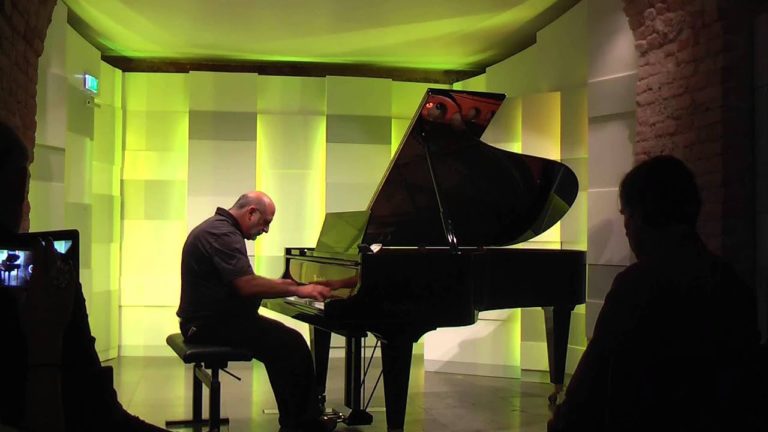
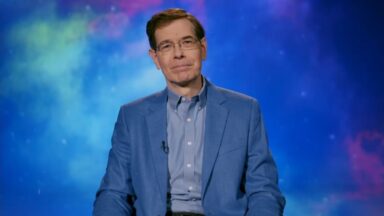
Acquired savant Tony Cicoria

Tony performing one of his compositions

Scientists searching for material answers surmised that lightning strikes damage the anterior temporal and orbitofrontal cortex of the brain, quieting “parts of the brain that normally inhibit or put the brakes on parts of the brain responsible for vision and perception.” Neuroscientists who accept this explanation, though, “suggest that sudden savant syndrome is brought about by damage in parts of the brain that normally act as a kind of check on the way information is filtered into a person’s conscious experience.” However, this point is negated by the sheer fact that anterior temporal and orbitofrontal cortex damage is not true in all cases. 

Newsweek writer Joseph Frankel wrote that “many of these ‘sudden savants’ worked extremely hard to improve their skills. The lightning strike left Cicoria with a hunger for piano music that drove him to throw himself into playing, starting practice on the piano at 4:00 a.m. before work and then again well into the night once he got home.” Though this doesn’t explain what sparked the drive in Cicoria, or why he developed such a predilection for a genre of music he never had interest in.

What is known by scientists and laypersons alike is that a sudden brain image can unlock, or perhaps create, a sudden talent or skill. This is all that is known, and at this point all else is speculation. But if we were to take a broader approach to this, perhaps a new picture would arise.

For instance, if we regard the brain as no more than a receiver of information (similar to the way a radio receives waves that are existent and invisible to the senses), then we may understand that an altered brain can begin to receive signals that are existent but have not been accessed.

Science is not completely averse to this idea, especially in cutting edge branches such as quantum physics that recognize consciousness — or the quantum field (that which Einstein called the unified field) — as a singular and all-encompassing complex network of reality. In such a case, the brain affected by a lightning strike or other similar trauma may simply take in information that has always been available to it, yet never before accessible. 

Cicoria said of his own experience, “What is clear to me is that my consciousness survived death and I was able to verify details of my near-death and out-of-body experience that I would have no conceivable way of knowing except through conscious travel of my spiritual self outside of my body.”

Scientists often describe near death, out of body experiences as artifacts of the brain, to those who have had such startling experiences there is a reality that cannot be understood by those, including scientists, who have not had them. And, in the cases wherein so-called superpowers or talents arise due to a person’s brush with death, science is left speechless.

How To Expand Consciousness: 7 Practices To Awaken Your Potential

There is a state of greater presence in which everything becomes more conscious. Before reacting, you can register what is happening inside you; before being carried away by an emotion, you are able to observe it with a certain distance; before repeating a habitual way of thinking, feeling, or acting, you begin to recognize the patterns that activate it. 

Little by little, mental habits, beliefs, and internal mechanisms become visible—things that were always there, although they remained hidden beneath the automatic rhythm of everyday life.

The expansion of consciousness is what makes possible this broader, clearer, and more present way of perceiving yourself and relating to the world. In this article, we explore what it means to expand consciousness, what potential awakens when it happens, and seven concrete practices to begin developing it.

Table of Contents

What Is the Expansion of Consciousness?

When we function from ordinary consciousness, we live guided by automatisms: learned responses, mental habits, old fears, and inherited beliefs that activate on their own in response to any stimulus. We eat while thinking about something else, pick up the phone without remembering why, react before realizing what we feel. That is the way consciousness operates within its usual range, and it is also the reason why most people live without noticing their own inner functioning.

Consciousness, in simple terms, is your capacity to become aware: of what you feel, what you think, and what happens inside and outside of you. That capacity exists in everyone, but most of the time it functions in a limited way, completely absorbed by what is happening in the mind and emotions. When a thought appears, you become that thought; when an emotion appears, you get lost in it. There is no distance between what you experience and your response: everything happens automatically.

Expanding consciousness means broadening that range. It means beginning to see what you used to do unconsciously: the recurring patterns, the thoughts that arrive without being invited, the conditioning that sustains your identity. The moment that observation appears, something changes irreversibly: you are no longer only what you feel or think, you are also the one observing it. And that small split—being and observing at the same time—is the beginning of everything.

In everyday life, this translates into very concrete moments. Before arguing with someone, you notice the wave of irritation pushing you. Before eating, you realize that you are not actually hungry. Before saying yes, you clearly feel that deep down it is a no. As you expand your consciousness, a small space appears between what happens and your response, and within that space you recover something decisive: the possibility of choosing. That is what it means to awaken a potential that, in most people, remains dormant their entire lives.

propositos de vida

What Potential Awakens When You Expand Consciousness?

When people talk about “awakening your potential,” there is no need to imagine extraordinary abilities or hidden powers. It is something much closer than that: human capacities that were always there begin to activate, although automatic functioning had kept them dormant. As consciousness expands, the way you relate to yourself, others, and life also changes.

That change begins to reflect in different aspects of your daily experience. Little by little, certain inner capacities become more accessible and begin to express themselves naturally:

  • You discover a more authentic version of yourself: Many decisions, reactions, and ways of acting are born from inherited mandates, emotional habits, and other people’s expectations that you assumed as your own. When you observe them clearly, a more authentic version of yourself appears, one less sustained by the need to fit in or constantly adapt.
  • You recover the ability to choose consciously: Between what happens and your reaction, a small space of presence begins to open. That space may seem minimal, but it completely changes the way you live, because it allows you to respond from consciousness instead of automatic impulse.
  • The mind stops having the same control over you: Thoughts and emotions continue to appear, but they no longer absorb you in the same way. Instead of reacting immediately to every internal state, you develop the ability to observe it without becoming trapped in it.
  • Your priorities begin to reorganize naturally: Situations that once seemed urgent lose weight, while others begin to become essential. It is not a forced change, but a natural consequence of perceiving life with greater clarity.
  • You develop a more honest relationship with yourself: You begin to detect patterns, defense mechanisms, and ways of acting that previously went unnoticed. That observation transforms the way you understand yourself and allows you to live with greater inner coherence.

In the series Divine Science, available on Gaia, experts such as Gregg Braden, Theresa Bullard and Dannion Brinkley intertwine science and spirituality to show how expanding consciousness is possible through multiple paths. Across six episodes, the bridges between human potential, consciousness, and physical reality are explored, offering a profound perspective on how to activate your own process.

7 Practices To Expand Your Consciousness

There is no single path to expanding consciousness. What both ancient spiritual traditions and current scientific research do confirm is that certain practices consistently support that process. Most of them do not require special conditions or a secluded environment: they are accessible, complement one another, and can be integrated into any routine. What matters most is not the number of techniques you use, but the consistency with which you sustain one or several of them over time.

  • Meditation: The Gateway to More Conscious States

Meditation is the most studied and the most effective practice for training inner observation. By focusing attention on something specific—breathing, a bodily sensation, a mantra—you cultivate the ability to distinguish between what is happening in your mind and who is observing what is happening. That distinction is the foundation of the process.

Over time, the practice changes your relationship with thoughts. What once felt like a current with which you were completely identified begins to be seen as a series of phenomena that appear and disappear, without the need to react to each one. Practicing between ten and twenty minutes a day is usually enough to begin noticing real changes in the quality of your attention.

  • Conscious Breathing: The Bridge Between Body and Mind

Breathing is one of the few bodily functions that can be both automatic and voluntary, which makes it a direct bridge between the body and the mind. Consciously modifying its rhythm also changes your inner state: long, deep breaths calm the nervous system, while more active techniques can generate expanded states of perception.

There are different traditions that work with breathing as a tool for transformation. Yogic pranayama, holotropic breathing developed by Stanislav Grof, and the Wim Hof Method are examples of how this seemingly simple process can generate profound inner changes. Beginning with gentle practices and gradually increasing complexity is the safest way to incorporate it.

  • Yoga, Qigong, and Other Practices That Integrate Body and Mind

Yoga, qigong, and tai chi are disciplines that combine movement, breathing, and attention to create an integrated experience of body and mind. Unlike conventional exercise, their objective is not only physical: they seek to release blockages, improve the circulation of vital energy, and prepare the body to sustain subtler states of perception.

Practicing one of these disciplines consistently changes your relationship with your own body. What was once simply a vehicle for moving through the world becomes a sensitive instrument, capable of registering emotions, energies, and perceptions that previously went unnoticed. That new bodily awareness is one of the foundations for accessing broader levels of consciousness.

  • Contact With Nature: Leaving the Noise to Return to Yourself

Sustained contact with natural environments naturally elevates the quality of attention and the inner sense of presence. Walking among trees, meditating by the sea, or sitting silently in a park generates physiological and emotional changes that science has already documented: reduced cortisol levels, improved heart coherence, and an increased sense of unity with what surrounds us.

In nature, inner rhythms reorganize themselves and the mind encounters less resistance to opening up. This explains why so many spiritual traditions have always recommended natural spaces as privileged environments for reconnecting with deeper dimensions of being. There is no need for a long retreat: even brief periods, sustained over time, make a difference.

  • Silence: The Practice of Listening to Yourself

In a world saturated with stimuli, silence has become an almost revolutionary practice. Setting aside daily moments without screens, conversations, or music allows the mind to settle and subtler perceptions to emerge. Silence is not emptiness: it is the space where what is normally covered by noise becomes perceptible.

When sustained, this practice produces a very specific effect: you begin to listen to what you feel, what you thought during the day, and what you are avoiding. That listening is one of the most powerful driving forces of the process, because it returns information about yourself that the speed of everyday life keeps outside your awareness.

  • Sound and Frequencies: Working With Vibration

Sound is an ancient tool for altering states of consciousness. Mantras, Tibetan singing bowls, binaural sounds, and certain specific frequencies influence brain waves and facilitate entry into deep meditative states. It is a documented response of the nervous system to specific vibrational stimuli.

Incorporating sound bath sessions, conscious frequency listening, or mantra chanting offers an experience different from silent meditation. Vibration accompanies the body, harmonizes it, and creates a bridge between the material and the subtle. It is an especially useful path for those who find it difficult to quiet the mind through attention alone.

  • Journaling and Self-Observation: Seeing Your Inner World in Writing

Writing is a way of making visible what normally remains diffuse. Conscious journaling allows you to observe your thoughts, emotions, and patterns more clearly. Once they are placed on paper, they stop being a blurry current and become concrete information about your inner functioning.

The self-observation cultivated through this practice is one of the pillars of the process. It is not about judging what appears, but about recognizing and understanding it. Over time, that honest gaze toward yourself deactivates automatic mechanisms and makes room for more conscious responses.

Escritura Automatica

The Benefits of Maintaining a Consistent Practice

When practices are sustained over time, changes accumulate and begin to become noticeable in different areas of life. What once required deliberate effort gradually becomes a natural way of functioning. Although each person experiences the process in a unique way, there are effects that appear in most people who walk this path with commitment:

  • Greater mental clarity: thoughts stop imposing themselves automatically, and the mind becomes more organized.
  • Emotional stability: emotions are processed instead of avoided, which reduces their intensity and emotional weight.
  • Sharper intuition: a growing ability emerges to perceive subtle signals and make decisions from a more trustworthy inner sense.
  • Better quality relationships: relationships gain depth when they are experienced through presence and listening.
  • A sense of purpose: decisions align with a clearer inner meaning, and life acquires a more coherent direction.
  • Reduced chronic stress: the nervous system regulates itself, and the ability to remain calm in the face of challenges increases.
  • Connection with something greater: a sense of belonging to a larger whole develops, bringing peace and perspective.

These effects do not appear immediately, but they become consolidated when the practice is sustained over time. Each one is a concrete manifestation of the potential that was dormant and that, through practice, begins to unfold in everyday life.

The Less Visible Side of the Process

Alongside these benefits, there is an aspect of the process that is rarely discussed. The expansion of consciousness is often presented in a luminous way, but in practice it also moves through uncomfortable areas. Expanding perception inevitably means seeing what we previously preferred not to see: repressed emotions, beliefs that sustained your identity, relationships that no longer work, deep fears that the rhythm of everyday life kept silenced. This aspect is known in many traditions as shadow work.

These moments can manifest as periods of confusion, temporary sadness, irritability, or a temporary loss of reference points. They are not signs that something is going wrong: generally, they are signs that something is shifting. Moving through them requires patience, emotional support, and in many cases, proper guidance—whether from a therapist, mentor, or community.

It is also useful to distinguish between intense temporary experiences and sustained transformations. A powerful meditation, a retreat, or a mystical experience can generate profound states that last for hours or days, but later fade away. That is not necessarily the expansion of consciousness: it is an experience. True expansion is measured by how your way of perceiving and living changes over the long term, not by the intensity of peak moments.

How To Integrate Expanded Consciousness Into Everyday Life

Accessing expanded states during meditation or a moment of silence is progress, but the real challenge is sustaining that consciousness in everyday life. The presence you cultivate in practice has little value if it disappears once you return to work, relationships, or concrete problems. Integration is precisely about bringing the practice into life.

That integration happens through small gestures. Pausing before reacting, observing your emotions without running from them, choosing a conscious response instead of automatic impulse. Each of those moments is an opportunity for expanded consciousness to become your habitual way of inhabiting the day.

Over time, the line between moments of practice and the rest of your life disappears. Eating, walking, speaking, or working can all be experienced from the same presence felt during deep meditation. When this happens, expansion stops being an experience and becomes a way of being, and the potential that was dormant begins to express itself in every aspect of your life.

Read Article

Our unique blend of yoga, meditation, personal transformation, and alternative healing content is designed for those seeking to not just enhance their physical, spiritual, and intellectual capabilities, but to fuse them in the knowledge that the whole is always greater than the sum of its parts.


Use the same account and membership for TV, desktop, and all mobile devices. Plus you can download videos to your device to watch offline later.

devices en image
Monthly
$13 .99 /mo
BILLED MONTHLY
Select
First 7 days FREE
then $13.99 billed monthly, cancel anytime
Gaia+
$24 .92 /mo
BILLED ANNUALLY
$299 /yr
Select
Live & replay events
$299 billed annually, cancel anytime
All prices USD plus applicable tax
Testing message will be here