FDA Gives Psilocybin Clinical Studies Breakthrough Therapy Status

The FDA recognized psilocybin, the psychoactive compound in magic mushrooms, with “Breakthrough Therapy” designation for clinical trials studying its use for treatment-resistant depression by a company called Compass Pathways. The group plans to treat patients in Europe and North America over the next year in placebo-controlled studies to determine proper dosage and treatment methods.
Since hallucinogenic drugs were given Schedule I designation in 1966, psilocin and psilocybin have been villainized by the media and politicians who claim it has a high potential for abuse and no medical application. But recent studies from esteemed research institutions, including Johns Hopkins and London’s Imperial College, have helped ease misconceptions and stigma surrounding the drug, and now government regulatory bodies are seeing its potential.
Compass Pathways, a life sciences company founded in 2016 whose focus is to “accelerate patient access to evidence-based innovation in mental health,” specifically through research with psilocybin, was given the go-ahead by the FDA back in August, but the recent designation was an unexpected acknowledgment, according to some of those involved in its research.
According to the FDA, “Breakthrough Therapy” means it reviewed the findings of researchers it granted use of the drug to and viewed their results as:
“Preliminary clinical evidence indicates that the drug may demonstrate substantial improvement over existing therapies on one or more clinically significant endpoints, such as substantial treatment effects observed early in clinical development.”
Once this designation is given, the FDA expedites the development and review of the drug, hopefully allowing medical professionals to soon begin implementing it as a legal, viable treatment and eventually change the scheduling of the drug.
Dr. Roland Griffiths, one of the foremost researchers in government-sanctioned studies of hallucinogenic drugs, told Inverse he’s hopeful the regulatory approval will change, though he doesn’t envision it becoming available from a pharmacy anytime soon, if ever.
Griffiths and his colleagues have mostly advocated for its use in controlled settings with guided sessions from a trained psychologist. He’s also stated he believes it can be a dangerous drug when taken by those with certain pre-existing mental illnesses, notably schizophrenia.
But now that studies have shown psilocybin to act as a “reset mechanism” in the brain for those suffering from severe forms of depression, this latest recognition from the FDA may allow psilocybin treatment to become available for those desperately needing it. This breakthrough may also pave the way for FDA trials with other psychedelic substances, such as LSD, currently studied by Griffiths and others in his field.
For more on Dr. Roland Griffith’s and other cutting edge work studying clinical treatments with psychedelic substances, check out this episode of Psychedelica:
About the Author

Study Shows Microdosing Psilocybin Boosts Mood, Mental Health
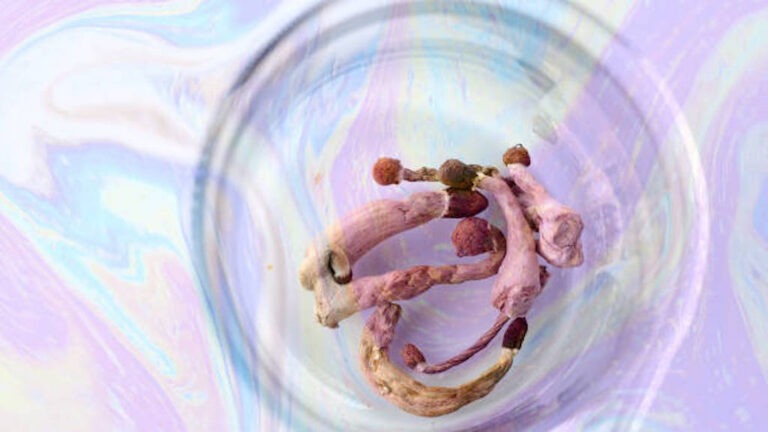
A new study provides the most compelling evidence to date on the impressive mental health benefits of microdosing psilocybin.
While there has been an ever-increasing number of studies showing the efficacy of treatment of mental health disorders with psychedelics, there has been relatively little research on the practice of microdosing.
Microdosing, or repeatedly taking small, barely perceptible amounts of psychedelics, has been exponentially increasing in popularity, with a wide range of people reporting a multitude of improvements to their psychological wellbeing.
The latest scientific study to look at the effects of microdosing was conducted by researchers at the University of British Columbia, as well as other leaders in the fields of psychology and mycology. The study followed 953 people who used small, repeated doses of psilocybin for about 30 days, as well as a control group who did not microdose.
While the exact dosages of psylocibin that participants self-administered varied somewhat, they were all low enough to not impact daily functioning.
Over a one-month period, participants took these psylocibin microdoses three to five times per week and were asked to complete a number of assessments through a smartphone app that tracked their mental health symptoms, mood, and measures of cognition. The findings definitively showed that the microdosing participants demonstrated greater improvements in mood and mental health than those in the non-microdosing control group.