Binaural Beats Heal, Induce Out-of-Body Experiences Research Shows
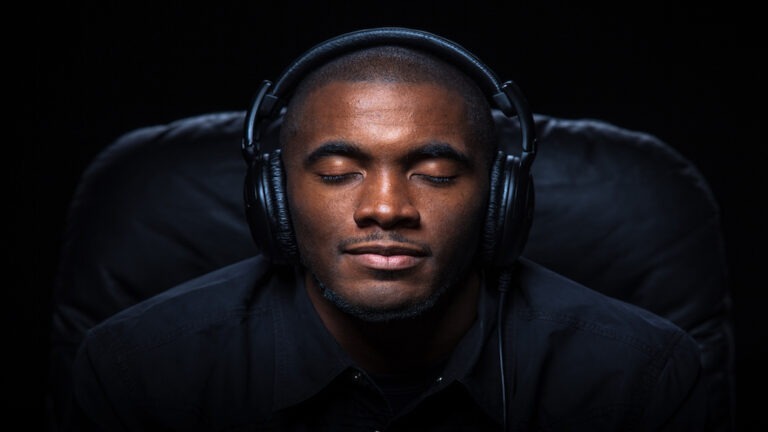
New research suggests that using binaural beats to entrain your brain may not only heal but also induce out-of-body experiences.
Brainwave entrainment is a method of using pulsing sounds to stimulate the brain into entering a specific state. It has grown in popularity lately, evidenced by the increasing number of available brainwave entrainment recordings. Many such recordings are created using binaural beats; two tones with slightly different frequencies. Now, research is showing the healing benefits of listening to these binaural beats for both body and mind.
Karen Newell is an author and co-founder of Sacred Acoustics, a leading creator of brainwave entrainment audio recordings.
“Binaural beats are delivered by giving you one signal in one ear and a slightly different signal in the other ear, and the result is a wavering sound,” Newell said.
“Binaural beats are effective in that they are affecting the brainwave state of the brain. So, our brains put out an electric signal (and) it’s measured with an EEG device with the names of Delta, Theta, Alpha — we’re used to hearing those words. Beta, that’s the state that we’re in when we’re walking and talking; that’s the state that really prevents us from getting into a quieter state of awareness. So, binaural beats are designed to bring us into those lower brainwave states, so help the brain get into a quieter state that’s associated with sleep, meditation, and focus.”
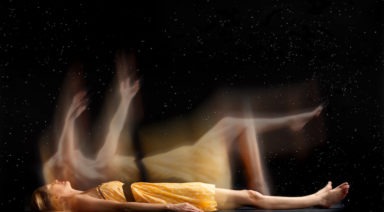
People experience a wide range of responses to binaural beats, from deep relaxation to enhanced intuition, lucid dreams, and even connection with the souls of departed loved ones. Another fascinating effect increasingly reported to Newell and her team is the out-of-body experience.
“An out-of-body experience is where your awareness literally leaves your physical body,” Newell said.
“It gives you that first-hand, personal direct experience that exists outside of your body that isn’t necessarily reliant on your body. Out-of-body experiences can happen incredibly spontaneously without anyone even realizing it. Other people will cultivate them very consciously, and I’ve had reports from sacred acoustics listeners who write to me and say that after about 18 months or so, of almost daily listening to our recordings, they’ve started to have these out-of-body experiences.”
What is it about these binaural beats that engender such experiences?
“The real sweet spot of binaural beats is that border between awake and asleep,” Newell said. “
“We’re all in this state, the hypnagogic state, every night as we’re falling asleep we go into this state, and every morning as we wake up. This is what binaural beats can do (it) can bring you into that state. This is where the body becomes extremely relaxed and the mind still stays awake and alert. That’s where you can start to make visualizations and imagine your body’s energy doing different things that can help to engender an out-of-body state. Anything that gets your mind off of the physical body is the mechanism for having your energetic body actually move away from it. You can also use that hypnagogic state to really reprogram your deep-seated belief system.”
For Newell and other proponents of brainwave entrainment, the implications of this kind of experience are profound.
“The real vision of sacred acoustics is to help people get in touch with their own infinite minds. Explore within, get behind those racing thoughts, find out who you truly are; the part of you that is your essence. We each can find out for ourselves that we are spiritual beings — a very important spiritual being that’s connected to the larger one mind, or one heart, one consciousness that connects us all. And as we find that connection we’re able to find real meaning and purpose in our lives,” Newell said.
Researchers Find Genetic Signature in People With Channeling Abilities
New research into channeling is getting closer to validating and explaining the ancient practice, and is showing that everyone had the innate ability to channel.
While the practice of channeling has existed throughout all of history, it has always been shrouded in mystery and misunderstanding. Doctor Helané Wahbeh is the director of research for the Institute of Noetic Sciences, or IONS, whose mission is to reveal the interconnected nature of reality through scientific exploration. Dr. Wahbeh has been practicing and researching channeling for decades. She is the author of the newly released book “The Science of Channeling.”
“The way I define channeling is the process of accessing information and energy beyond our conventional notions of time and space that can appear receptive or expressive,” Dr. Wahbeh said.
“We propose that anybody can channel; that it’s actually this innate human capacity that anybody has. Channeling phenomenon exists on a spectrum from, perhaps, intuition and hunches that everyone can probably say they’ve had at one time or another, to more rare experiences like trance channeling or mediumship or mind-over-matter psychokinesis. And then you have everything in-between, like being able to sense the future or mind-to-mind communication,” she said.
Dr. Wahbeh and the team at IONS have just completed a study in which they analyze the characteristics of 500 channelers to answer the question “what makes a channeler?” They call the unique way in which a channeler receives and uses information their ‘noetic signature.’
“So we coined this term the ‘noetic signature,’ that refers to this unique and diverse fingerprint, if you will, of people’s channeling abilities, and we created a measure to be able to see what that looks like. We call it the noetic Myers-Briggs, which is a personality test, to be able to understand people’s channeling expression. We have 12 different categories of channeling or noetic experiences that make up this noetic signature,” Dr. Wahbeh said.
Now that the inventory is complete, IONS will soon be making it available to the public so that everyone can assess their own unique noetic signature. IONS has also been doing some fascinating research on the genetic basis of channeling abilities. They recently completed a study in which they analyzed the DNA of a group of channelers.
“There are many, many anecdotes where people share that their experiences of channeling run in family, so we did a case-control study. We found 13 high-functioning psychics who had various channeling abilities, we had them give us a saliva sample and we looked at their DNA. So this TNRC18 gene was statistically significantly different in the channelers versus the controls. The controls, the people who said they didn’t have channeling abilities, had the mutation whereas all of the channelers had the original version of that gene,” Dr. Wahbeh said.
“The notion of this supports this concept that we actually all have an innate capacity to channel on some level.”