Tiny Crystals In Our Brain Could Unlock Psychic Powers

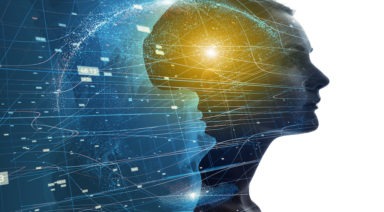
Magnetite is one of the most magnetic substances on Earth. As you can probably guess, it has a diverse range of uses; from fridge magnets to generating electricity in power plants. But what you probably wouldn’t guess is that your brain actually synthesizes these crystals, and you have hundreds of millions of them inside your head. Much smaller ones of course.
Scientists are still unsure what role, if any, these crystals play in the brain’s function. Studies have inferred that it may play a role in long-term memory. In animals, like honey bees, homing pigeons, and dolphins, magnetite is believed to be associated with the ability to respond to the Earth’s magnetic field.
While similar studies have yet to be performed on humans, we do know that Earth’s magnetic fields effect everything from our mood to our ability to learn. Even stranger, research has begun to provide links between the electromagnetic field of our planet and psychic abilities. Could these crystals act like tiny antennas connecting our brains to each other and to the entire planet? It may sound far-fetched, but surprisingly, the evidence is there.
First, let’s look at what we know about the magnetite in our brains. To be honest, we don’t know much: In 1992, the first evidence of this mineral in the brain was published. It was shocking to uncover that this highly magnetic substance was actually synthesized by our bodies, and while we don’t know exactly what function it plays in brain activity, some interesting theories have emerged. A 2009 hypothesis proposed that magnetite plays a significant role in long-term memory. It suggests that cellular components of the brain communicate with each other through magnetic signals, with the magnetite particles acting as tiny antennas, simultaneously receiving information throughout the different parts of the brain.
Magnetite also acts as an antenna for external electromagnetic fields, including the geomagnetic field of the Earth itself. And this is where things start to get interesting. An enormous body of research is emerging that shows substantive links between magnetic fields and cognitive function.
Back in 1978, research physicist Dr. Robert C Beck published preliminary research on the effects of extremely low frequency magnetic fields on the moods of human subjects. ELF fields of 6.67 Hz, 6.26 Hz and lower tend to produce symptoms of confusion, anxiety, depression, tension, fear, mild nausea and headaches. On the other hand, oscillations of 7.8, 8.0, and 9.0 Hz produce anxiety-relieving and stress-reducing effects that mimic some meditative states.
More recently, magnetic fields have been used in successful clinical practices for eliminating depression and bipolar disorder, with over 1300 medical research papers published to date. The non-invasive treatment, known as repetitive transcranial magnetic stimulation, uses a wand-shaped gadget to zap away the effects of depression.
While all of this is interesting, and can pave the way for new therapies and treatments, a group of researchers at Canada’s Laurentian University are exploring the role of electromagnetic forces in more extreme cognitive functions. Dr. Michael Persinger is a neuroscientist who has argued that all phenomena, including consciousness, spiritual experiences, and even “paranormal events,” can be explained by physical mechanisms, and can be verified using the scientific method.
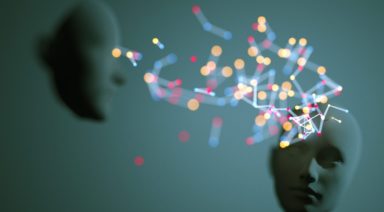
Since 1971, he has been researching electromagnetic field effects upon biological organisms, and some of his recent studies sound straight out of a sci-fi movie: Dr. Persinger has shown in the laboratory that magnetic brain stimulation can create metal states conducive to human telepathy. A recent experiment placed two people at a distance in different rooms, each surrounded by an identical, computer-controlled magnetic field. When a light was flashed in one subject’s eye, the person in the other room showed responses in their brain as if they saw the flash of light.
As Dr. Persinger stated:
“We think that’s tremendous because it may be the first macro demonstration of a quantum connection, or so-called quantum entanglement. If true, then there’s another way of potential communication that may have physical applications, for example, in space travel.”
On a much larger scale, correlation has been shown between the geomagnetic forces of the planet and a variety of effects spanning large populations. A 2003 study found “strong empirical support in favor of a geomagnetic-storm effect in stock returns” and “evidence of substantially higher returns around the world during periods of quiet geomagnetic activity.”
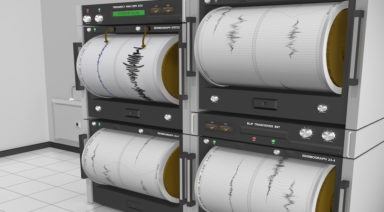
Other research has linked geomagnetic activity to suicide, heart-disease, and even birth rates. A particularly curious global effect is related to a standing electromagnetic wave that exists between the Earth’s surface and the ionosphere. Known as “The Schumann Resonance,” this wave has a frequency of 7.8 Hz, and is frequently referenced in alternative theories of consciousness. Measurements by Dr. Persinger have shown that the fundamental and harmonics of the Schumann Resonance were discernible in normal human brain activity, and in fact they correspond to Dr. Beck’s anxiety-reducing ELF fields.
Stranger still was Persinger’s study of the remote viewer Ingo Swann. “Remote viewing” refers to a technique used by “psychic spies” working for the CIA; they were able to see far off locations as if they were there; and they could even move through time. Ingo Swann was one of the first, and most accurate, viewers in this program. When Dr. Persinger measured his brain’s electromagnetic activity during viewing sessions, he found a spike in activity at 7 Hz which correlated with the most accurate viewings. Is it possible that Swann was able to project his consciousness by tuning into the standing geomagnetic waves of the Earth?
All of this adds up to a fascinating connection between our brains and the shared magnetic field not only of our planet, but potentially of the entire universe. It’s undeniable that the brain responds to magnetic forces on a local and a global scale. While no one has been able to prove the involvement of magnetite, it seems a likely suspect. If we learn to harness the power of these tiny antennas in our brain, who knows what kind of psychic superpowers we might unlock?
How to Remember Your Past Lives: 3 Ways to Access Past Life Memories

Sometimes life feels familiar in ways that are hard to explain. You meet someone and feel you’ve known them forever. Or you travel somewhere new and something deep inside stirs, like a memory you can’t quite place. Maybe these are traces of memories of past lives, or maybe they’re just intuition. Either way, they’re worth paying attention to.
Patterns often repeat themselves. Unexplained fears. Sudden talents. Relationships that circle back to the same lessons. These moments might be echoes from a previous life still influencing your present life.
Exploring past life experiences is not only about curiosity. It can be about understanding how your soul’s history continues to shape who you are. You might not find clear answers at first. Insights rarely arrive as complete stories. They show up in fragments, symbols, and emotions. Sometimes they make sense only later.
Table of Contents
- Can You Access Past Life Memories?
- How Past Lives Might Shape Your Present Life
- Signs You Might Have Lived Before
- Three Ways to Explore Past Life Memories
- Making Sense of What You Find
- The Story of Matías De Stefano
- Living With Past Life Insights
Can You Access Past Life Memories?
The idea of reincarnation suggests that human beings live more than one lifetime, each one leaving behind energetic and emotional imprints. Most people don’t consciously recall memories of previous lives, but certain practices can help open the door to them. Techniques like deep meditation, past life regression, or exploring the Akashic Records can reveal glimpses that feel older than this lifetime.
For some, these insights appear as flashbacks, vivid dreams, or waves of emotion. For others, it’s just a subtle pull toward a person, a place, or even a time period. In my experience, it’s unpredictable. You can’t force it, and that’s often what makes it meaningful.
The process takes patience. Sometimes fragments come together slowly, piece by piece. You might feel a sensation before you see an image, or recognize a lesson before you know its origin.
How Past Lives Might Shape Your Present Life
Emotional patterns often carry forward from former lives. Dr. Ian Stevenson, a psychiatrist who studied young children recalling memories of past lives, documented cases where birthmarks matched fatal injuries described in these memories. Whether you see this as scientific or spiritual, it’s hard to ignore the consistency of such reports.
These imprints may not prove anything, but they do suggest continuity between lives. A certain fear, gift, or attraction could reflect something unresolved or unfinished from a previous life. Recognizing these connections can bring clarity and healing in current life.
I once worked with someone who had a deep fear of the ocean. Through past life regression therapy, guided by a trained hypnotist, she recalled a drowning incident from what felt like another lifetime. The memory came in pieces, more feeling than image. Still, acknowledging that connection helped her let go of the fear over time. Experiences like this show how understanding past life experiences can release something held deep in the subconscious.
Signs You Might Have Lived Before
Even if you never access vivid memories, signs of former lives can appear in subtle ways:
- A powerful connection with someone you’ve just met
- Fascination with a specific era or culture
- Unexplained fears or emotional triggers
- Skills or talents that seem to come naturally
- Dreams or visions that feel oddly specific
Most people notice just one or two of these patterns. Others find the signs everywhere once they start paying attention. Sometimes a single clue opens a path toward remembering more.
In my experience, recognizing a familiar emotion or attraction can be just as revealing as a full flashback. It’s less about proving a past and more about noticing what the soul is trying to show you now.
Three Ways to Explore Past Life Memories
1. Deep Meditation
Deep meditation is one of the simplest ways to open the mind to memories of past lives. The key is to relax and observe whatever comes up without judgment. Images, sensations, or feelings may surface. Some might seem random. Others might carry a weight that feels ancient.
Before beginning, it can help to set a quiet intention, such as:
“I’m open to seeing what my soul wants me to understand.”
Then you simply allow the experience. Don’t chase it or analyze too soon. In my experience, the most authentic insights from former lives come gently, not dramatically. Even a fleeting moment of recognition can hold meaning.
2. Past Life Regression Therapy
Past life regression therapy uses relaxation and visualization to uncover memories of previous lives stored in the subconscious. A trained hypnotist guides you into a meditative state, helping you move beyond surface thoughts. Some people experience vivid scenes or sensations that feel like a flashback to another existence.
Whether these experiences are literal or symbolic, they often reveal emotional truths. They can explain patterns that don’t make sense in your present life or help resolve fears that seem to have no origin.
I once met someone who had always struggled to speak publicly. During past life regression, she recalled a lifetime where her voice had been silenced by strict authority. That realization gave her the courage to use her voice more freely in her current life. Even if symbolic, the experience carried emotional truth.
3. Exploring the Akashic Records
The Akashic Records are said to contain every thought, action, and experience the soul has ever had. Accessing them, either independently or through a reader, allows you to explore lessons across past lives and recurring patterns of growth.
When people tap into these records, they often describe sensations of recognition more than visual imagery. Insights come as feelings, intuitive words, or brief impressions. You might discover why certain people or challenges keep reappearing, or how your soul’s history is guiding your spiritual awakening.
Even a few minutes of connection can shift how you see your current life. These insights don’t have to be dramatic to be meaningful.
Integrating What You Discover
Exploring past life memories is not about getting lost in the past. It’s about using what you find to better understand your choices now. A glimpse into a previous life might explain an ongoing struggle or illuminate a hidden strength.
In some cases, the lesson might be an emotional release. In others, it could be creative inspiration or reconciliation. What matters most is how the experience influences your perspective in the present life.
It helps to write down what you recall after meditation or regression. Don’t try to label everything as fact or fiction. Treat it as information from your inner world, something your soul is offering for reflection.
The Story of Matías De Stefano
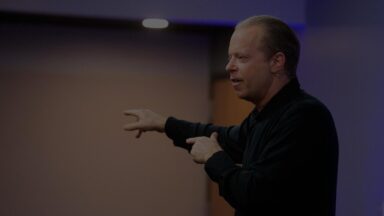
Spiritual teacher Matías De Stefano has captivated audiences with his extraordinary ability to recall multiple past lives since childhood. Unlike those who access memories through regression, Matías’ recollections emerged naturally and in vivid detail, spanning ancient civilizations, planetary histories, and metaphysical dimensions.
Through his Gaia podcast and original series The Journey of Remembering, Matías shares how his memories shaped his understanding of the universe and his role in the collective spiritual awakening. His story offers profound insight into how connecting with the memories of past lives can guide us toward purpose, unity, and a deeper remembrance of who we truly are.
Just as with Matías’s experience, remembering past lives invites us to explore the continuity of consciousness and to see life as an unfolding journey rather than a single chapter. Whether through meditation, past life regression, or the Akashic Records, these methods can open the door to self-discovery and healing.
Ultimately, the value of these experiences lies not in proving their accuracy but in how they help us grow, evolve, and live our present life with peace, clarity, and a renewed sense of purpose.
Living With Past Life Awareness
Understanding past life experiences and exploring the soul’s history is not about proof or persuasion. It’s about awareness. Insights from past lives can explain repeating patterns, clarify emotional attachments, or simply remind you that growth is continuous.
Whether through deep meditation, past life regression, or the Akashic Records, each method opens a doorway to reflection. Sometimes that reflection is subtle, almost imperceptible. Other times it feels profound, as if you’ve remembered something essential about who you are.
Ultimately, remembering past lives isn’t about living in the past. It’s about carrying forward what matters most into the present life. Each glimpse, each small understanding, becomes part of how you live more consciously now.