Introducing Gaia Marketplace

Gaia Marketplace is an exclusive, first-of-its-kind online retail experience designed to serve current and future community members with exclusively curated offerings and products that aim to empower the evolution of consciousness.
“Gaia is the world’s premier destination for transformational media, offering exclusive series and documentaries focused on spiritual growth, consciousness expansion, ancient history, and more,” said James Colquhoun, Gaia CEO. “As we usher in this new evolution of our platform it moves us further towards the Company’s vision as a movement-driven community organization. With Marketplace, members can shop exclusive retreats and experiences, live events and meet-ups, courses and training programs, plus hand-curated products at member-only discounts.”
Gaia’s Marketplace offers a diverse range of experiences, including explorations of ancient civilizations in Egypt with Gaia’s top talent as guides, engaging in transformational healing practices in Costa Rica, and awakening to one’s highest potential through curated retreats with leading teachers. Marketplace also provides unmatched access to powerful courses and training programs whether someone is looking to deepen their healing knowledge, expand their yoga or meditation practice or explore the hidden knowledge of ancient astrological practices.
In addition, members can book tickets to live events and workshops and meet up with like-minded individuals to take the online offline. Gaia Marketplace also allows members to shop for research-backed wellness and transformational products. Gaia Marketplace is open to both Gaia members and non-members and offers exclusive member-only benefits and discounts. Gaia offers membership plans on a monthly and annual basis. You can find out more at https://marketplace.gaia.com/.
Current Gaia Marketplace Highlights Include:
- Retreats & Tours:
- Courses
About the Author

7 Self-Knowledge Exercises To Truly Discover Who You Are

Self-knowledge is a process of inner exploration that helps us understand how we think, what we feel, and why we act the way we do. It involves looking inward with honesty, acknowledging both our strengths and limitations.
In this article, we explore why it’s important to know ourselves, how to begin that journey, and which practical exercises can help us discover who we really are.
Table of Contents
- The Importance Of Discovering Who We Are
- How To Begin Our Path Toward Self-Knowledge
- Self-Knowledge Activities To Deepen Our Understanding Of Ourselves
- Writing A Personal Journal
- Answering Deep Self-Knowledge Questions
- Taking A Personality Test
- Exploring The Birth Chart
- link text=”Using Cards As A Tool For Symbolic Introspection” url=”#using-cards-as-a-tool-for-symbolic-introspection” target=”_self” /]
- Exploring Our Personality With The Enneagram
- Analyzing Our Wheel Of Life To Detect Imbalances
- Explore More Self-Knowledge Tools On Gaia
- Integrating Self-Knowledge Into Everyday Life
The Importance Of Discovering Who We Are
Many times we go through life following routines, expectations, or obligations without asking ourselves if what we do is actually connected to who we are deep down. We may reach certain goals or meet what’s expected of us, but if we do it from a place of disconnection, it’s common to feel exhausted, empty, or find it hard to see real meaning in what we do. Living without an inner compass can lead us to make decisions that don’t represent us and to maintain relationships or lifestyles that pull us away from our essence.
On the other hand, when we begin to understand what moves us, what we value, and what we need, decisions stop being automatic. A sense of internal order arises, which is reflected in how we live, how we relate, and how we respond to daily challenges. Living from our truth, even if it brings discomfort or uncertainty at first, brings a deeper sense of calm—less dependent on what’s outside.
This process of knowing ourselves isn’t a goal we reach once and for all—it’s a constant practice cultivated in everyday life. It is a way of being in relationship with ourselves: observing ourselves honestly, questioning our beliefs, reviewing what we choose and what we avoid. And in that movement of self-exploration and reconstruction, we gain clarity, depth, and meaning.
How To Begin Our Path Toward Self-Knowledge
Self-knowledge begins with an internal decision: to look at ourselves with more attention. Sometimes, it’s enough to pause for a moment, take a deep breath, and notice what’s happening inside us. That small pause can be the starting point for establishing a more conscious relationship with our inner world.
Over time, that space of observation becomes clearer and more natural. We begin to notice recurring thoughts, emotions that are hard to express, or decisions we make without questioning them. It’s not about correcting everything at once, but about recognizing what’s there so we can act with greater clarity and meaning.
Self-Knowledge Activities To Deepen Our Understanding Of Ourselves
If we feel the urge to know ourselves better but don’t know where to begin, we can rely on certain practices that offer us valuable guidance. Writing in a journal, answering reflective questions, or taking a personality test can help us see more clearly what we think, feel, and do.
These tools don’t offer definitive answers, but they do open inner doors that are worth exploring. What’s essential is to maintain an honest attitude and openness to the process.
-
Writing A Personal Journal
Keeping a journal is a simple yet powerful practice for exploring what we think and feel. By recording our daily experiences, we can detect emotional patterns, recurring reactions, or themes that need attention. You can also practice automatic writing, with no filters or corrections, to connect with deeper parts of your inner world.
-
Answering Deep Self-Knowledge Questions
Asking ourselves deep questions can open up spaces that usually remain hidden. Questions like “What gives us meaning?”, “What are we avoiding?”, or “What do we need to let go of?” activate reflection and allow us to explore motivations, fears, and desires we may not have previously considered. It doesn’t matter if no immediate answer comes—the very act of asking already sets the process in motion.
-
Taking A Personality Test
Taking a personality test can help us put into words certain traits or tendencies that are part of who we are. Tools like MBTI, DISC or the Big Five offer frameworks for understanding how we think, how we relate to others, and what kind of environment supports our development. It’s not about labeling ourselves, but about gaining clarity on how we function internally.
-
Exploring The Birth Chart
The birth chart reflects the configuration of the sky at the moment of our birth. Through its symbols and archetypes, we can identify emotional patterns, relationship styles, talents, and personal challenges. It is a symbolic guide that does not define who we are, but it does allow us to understand ourselves from a broader and deeper perspective.
-
Using Cards As A Tool For Symbolic Introspection
Tarot, oracle, or archetype cards can serve as gateways to our inner world, through images, symbols, and intuitive associations. By asking a question and observing the card that emerges, a dialogue with the unconscious opens. It’s not about predicting the future, but about giving shape and language to what we may not yet be able to see clearly.
-
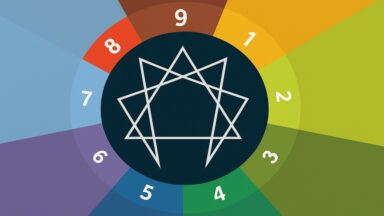
Exploring Our Personality With The Enneagram
The Enneagram is a system of nine personality types that describes how we perceive the world, how we react to our environment, and what we seek on an emotional level. Recognizing our type allows us to more consciously observe our automatic behaviors, fears, and deep motivations. From there, we can work on our growth with more clarity and direction.
-
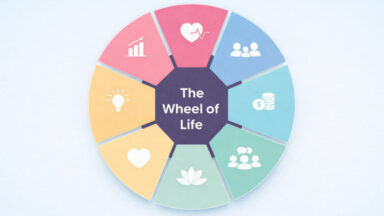
Analyzing Our Wheel Of Life To Detect Imbalances
The Wheel of Life is a visual exercise that helps us assess how we feel in different areas: health, relationships, purpose, work, finances, among others. By completing it, we can identify which areas are balanced and which need attention. It is a practical tool to focus our energy more consciously and in alignment.
Explore More Self-Knowledge Tools On Gaia
On Gaia you’ll find a wide variety of content designed to support you in your self-knowledge process. There are series, documentaries, courses, and guided practices that cover all the topics we’ve discussed in this article: astrology, enneagram, meditation, tarot, personal development, and more. These resources are designed to help you go deeper into your inner world with clear, accessible, and high-quality information.
An excellent place to start is with the series Transcendence, which offers a comprehensive view of how mind, body, and consciousness are connected. It’s an introductory program that combines science, spirituality, and practical tools to help you begin to know yourself from a broader and more transformative perspective.
Integrating Self-Knowledge Into Everyday Life
Knowing ourselves doesn’t mean much if we leave it at the level of reflection. True value arises when we begin to bring that understanding into daily life: into how we make decisions, how we set boundaries, and how we respond when something makes us uncomfortable. Self-knowledge becomes alive when it influences our actions—not just our thoughts.
Integrating what we discover takes practice and patience. Sometimes it means making small adjustments, other times holding onto decisions that may not be comfortable. It’s not about getting it perfect, but about staying aware of when we stray from what we know is true for us—and choosing to return.
Over time, this internal work translates into a more honest relationship with ourselves. We learn to listen before reacting, to recognize when we need to pause, and to choose from a more conscious place. That is one possible closure for this journey: not arriving at a final answer, but continuing to inhabit the process with greater clarity and presence.