The Wheel of Life: What It Is, What It’s For, and How To Use It
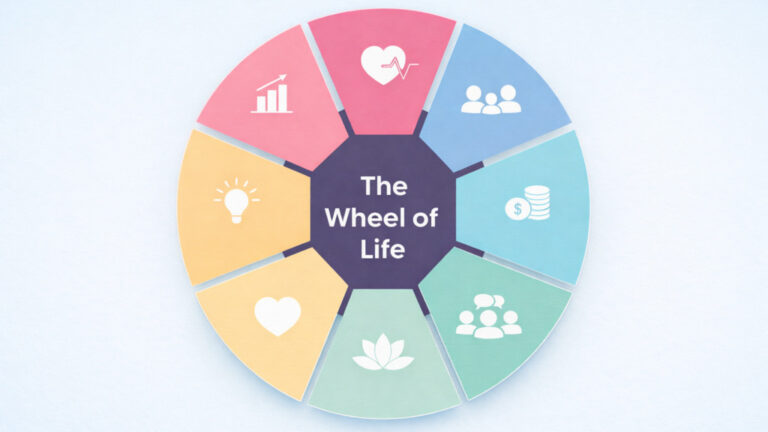
The Wheel of Life is a visual tool used in coaching to assess balance across different areas of a person’s life. It helps identify areas that need more attention and to set goals for improving satisfaction in each aspect. In this article, we explore what the Wheel of Life is, how to create your own, and how to use it to achieve greater well-being.
Table of Contents
- What Is the Wheel of Life?
- How To Create Your Own Wheel of Life
- The 8 Components of the Wheel of Life
- What to Do With the Results of the Wheel of Life
- History and Origin of the Wheel of Life
What Is the Wheel of Life?
The Wheel of Life is a circular diagram divided into several sections, each representing a key area of life, such as health, relationships, career, and leisure. This tool allows people to clearly and simply visualize the current state of their life in these areas, offering a holistic view of their well-being. By evaluating and rating each area on a scale from 1 to 10, it creates a visual representation of balance—or imbalance—in one’s life.
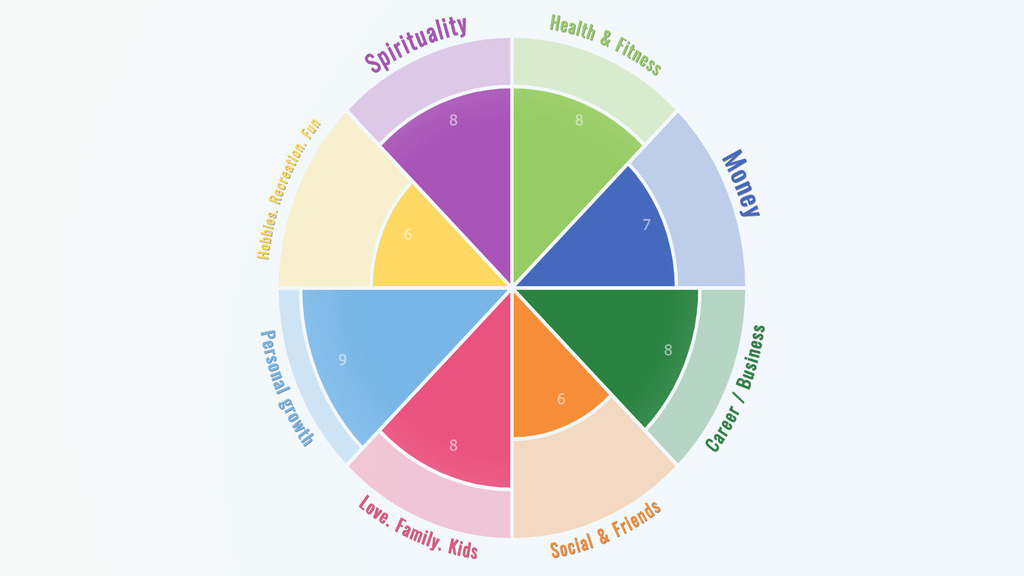
The process of using the Wheel of Life involves reflecting on each area and assigning a score that reflects your current level of satisfaction. The scores are connected to form a figure resembling a wheel, where its symmetry indicates the degree of balance in life. An unbalanced wheel with peaks and valleys suggests areas that require more attention and development.
How To Create Your Own Wheel of Life
Creating your own Wheel of Life is a simple and effective process to evaluate and improve different aspects of your life. Follow these steps to build yours:
- Represent the areas in a circle: Draw a circle and divide it into equal sections, each representing an important area of your life. Imagine it like a birthday cake sliced into equal parts. Ideally, you should include eight areas of the Wheel of Life, but you can adjust based on what you consider meaningful.
- Identify the key areas: Determine the specific areas you want to assess, such as health, relationships, career, personal development, finances, leisure, family, and friends. These areas should reflect significant aspects of your life that influence your overall well-being. Be sure to include both personal and professional dimensions.
- Rate each area: Evaluate your current level of satisfaction in each area on a scale from 1 to 10, where 1 means total dissatisfaction and 10 represents maximum satisfaction. Be honest with yourself when assigning these scores. This step is crucial to identify which areas need more attention.
- Connect the dots: Link the scores in each area to form a figure within the circle. This shape may look like a balanced wheel or an irregular form with peaks and valleys. The consistency of this figure reflects the level of balance in your life.
- Interpret the results: Analyze the resulting shape to identify the unbalanced areas that require more attention. Ask yourself which areas are causing greater imbalance and how you might improve your satisfaction in them. Use the results to set goals and create an action plan.
The 8 Components of the Wheel of Life
Below are the eight key areas that make up the Wheel of Life. Each represents a different aspect that influences your overall well‑being. These categories help you see, at a glance, how you feel in each area. You can adjust them based on your current priorities. The essential thing is that they reflect what truly matters to you.
-
Personal Development
This area focuses on growth and continuous improvement in all aspects of your life. It includes learning new skills, expanding your knowledge, and working on personal qualities. Reflecting on personal development allows you to identify areas to improve and set clear growth goals.
Ask yourself: Am I dedicating enough time to my learning and growth? What new skills would I like to acquire? How can I improve my daily habits to boost personal development? What training or reading activities can I incorporate into my routine? Am I setting achievable development goals? How can I measure my progress?
-
Home Environment
Home represents the physical and emotional environment in which you live. A balanced and harmonious home greatly contributes to your overall well‑being. Evaluating this area involves considering not only the physical space but also the relationships and family dynamics that affect your quality of life.
Ask yourself: Do I feel comfortable and safe at home? Are home relationships healthy and supportive? What changes can I make in my environment to improve my well‑being? Am I dedicating enough time to organizing and cleaning my space? How can I improve living together with household members? Which aspects of my home’s physical and emotional environment need more attention?
-
Health
Evaluating your health means considering multiple aspects such as diet, exercise, rest, and stress management. Reflecting on these factors helps you identify patterns that need adjustment to improve overall well‑being. A proactive approach to your physical and mental health is crucial for maintaining a balanced, fulfilling lifestyle.
Ask yourself: Am I taking proper care of my body and mind? Do I have healthy eating and exercise habits? How do I manage stress and nurture my emotional well‑being? Am I sleeping enough and in a restorative way? Do I need to adjust my exercise routine? How can I improve my diet to feel better physically and mentally?
-
Work and Career
Reflecting on your professional life allows you to assess not only your career satisfaction but also the balance between work and personal life. It’s fundamental to consider growth and development opportunities in your current role. Finding work that you’re passionate about and that offers harmony with other areas of your life can significantly improve your overall well‑being.
Ask yourself: Am I satisfied with my current job? Do I have opportunities for professional growth and development? How can I improve the balance between my work and personal life? Am I achieving an adequate balance between work time and rest? What aspects of my job bring me the most satisfaction? How can I better manage work-related stress?
-
Friends
Authentic, high-quality friendships are essential for emotional well-being. Evaluating your friendships can help you discover the depth and authenticity of these connections. It’s important to invest time and effort into maintaining and strengthening these relationships to ensure they provide the support and companionship you need.
To go deeper in this reflection, consider: Do I have friends I can fully trust? How often do I spend quality time with my friends? Do my friendships uplift me or drain me? Am I dedicating enough time to maintaining and nurturing these relationships? How can I improve communication and connection with my friends? Am I open to making new friends if needed?
-
Love
In the Wheel of Life, love refers to romantic relationships and the quality of these intimate interactions. Evaluating this area involves considering aspects such as communication, emotional connection, and overall satisfaction in the relationship. A healthy, loving partnership can be a major source of emotional support and well-being.
To explore this area, ask yourself: Do I feel loved and valued by my partner? Do we communicate openly and honestly? What can I do to strengthen our emotional connection? Am I satisfied with the level of support and understanding in our relationship? How can I contribute to making our relationship stronger? Are there any conflicts we need to resolve together?
-
Finances
Evaluating your financial situation allows you to analyze your spending habits, your saving capacity, and your future planning. Reflecting on these elements will help you identify areas that need adjustment to improve financial stability. Good personal finance management is key to peace of mind and quality of life.
Reflect on your finances with questions like: Am I satisfied with my current income? Am I saving and investing adequately for the future? Are my spending habits aligned with my priorities and values? What changes do I need to make to improve my financial stability? Am I managing my debts and financial commitments effectively?
-
Leisure and Hobbies
Spending time on hobbies and leisure activities is essential for maintaining a healthy balance. Evaluating this area helps you consider whether you are investing enough time in activities that relax and entertain you. Adding more recreational time to your routine can boost your well-being and personal satisfaction.
To assess this area, ask yourself: Do I regularly make time for my hobbies and leisure activities? Do these activities bring me joy and satisfaction? Am I exploring new activities that interest me? What can I do to ensure I have quality free time each week? How can I integrate more recreational activities into my daily life? Am I prioritizing time for myself amid my daily responsibilities?
What to Do With the Results of the Wheel of Life
Once you’ve completed and assessed your Wheel of Life, the next step is to use the results to set goals and create an action plan. Analyze the areas with lower scores and reflect on why these areas are out of balance. Identifying the reasons behind dissatisfaction in these aspects will help you determine specific actions you need to take to improve.
After identifying which areas need attention, it’s crucial to set clear and achievable goals for each one. Break these goals into smaller, manageable objectives you can work on progressively. This will allow you to track your progress and stay motivated over time. Make sure your goals are SMART: Specific, Measurable, Achievable, Relevant, and Time-bound.
History and Origin of the Wheel of Life
The Wheel of Life was created by Paul J. Meyer, a pioneer in the field of personal and professional development and founder of the Success Motivation Institute. Meyer developed this tool in the 1960s as part of his coaching programs, with the goal of helping people assess and improve different aspects of their lives in an integrated way.
Since its creation, the Wheel of Life has been adopted by coaches and therapists around the world due to its simplicity and effectiveness. Its intuitive design facilitates reflection and self-assessment, enabling individuals to quickly identify areas that need attention and growth. Over time, this tool has become a staple in coaching programs, personal development workshops, and therapy sessions, proving its versatility and long-term value.
About the Author

Palmistry: What the Lines and Shapes of Your Hand Reveal

Palmistry is an ancient art that seeks to reveal aspects of life, personality, and destiny through the analysis of the hands. This reading system is based on the observation of lines, shapes, and mounts found on the palm. In this article, we explore what palmistry is, how it works, and what the lines of your hand can say about you.
Table of Contents
- What Is Palmistry and How Does It Work?
- History and Origin of Hand Reading
- What Do the Lines of the Hand Mean?
- Shapes, Mounts, and Other Elements in Hand Reading
- Palm Reading as a Tool for Personal Growth
What Is Palmistry and How Does It Work?
Palmistry, also known as hand reading, is a practice that interprets the physical characteristics of the palm to obtain information about a person’s emotional, mental, and spiritual life. Contrary to what many believe, it is not about predicting exact events, but about understanding inner patterns that influence our decisions, relationships, and experiences. The lines of the hand, the shape of the fingers, and the elevations of the palm are some of the key elements in this analysis.
The way palmistry works is based on the idea that each hand contains a unique “map” that reflects both the potential and the challenges of the person who carries it. Hands change over time, which indicates that destiny is not fixed but can be transformed. The left hand is usually associated with the emotional plane or family legacy, while the right hand shows what has been developed through personal experience, although this reading may vary depending on whether the person is right- or left-handed.
History and Origin of Hand Reading
Hand reading is an ancient practice that has left traces across multiple civilizations over time. Records of this technique have been found in cultures as diverse as Indian, Chinese, Egyptian, and Greek. In many of these contexts, hands were observed as a source of information about the health, personality, and destiny of each individual.
During classical antiquity, thinkers such as Aristotle and Galen mentioned the relationship between the physical characteristics of the hands and certain traits of human temperament. Over the centuries, knowledge of this practice was passed down and adapted to different philosophical currents, becoming integrated into broader systems of symbolic interpretation of the body and nature.
From the 18th and 19th centuries onward, treatises were published that organized and classified the lines, mounts, shape of the palm, and the proportion of the fingers. This systematization provided clearer criteria and repeatable practices, allowing palmistry to acquire a more structured approach. Since then, hand reading has become established as a discipline that seeks not only to know the future, but also to explore a person’s inner potential through the language of the hands.
What Do the Lines of the Hand Mean?
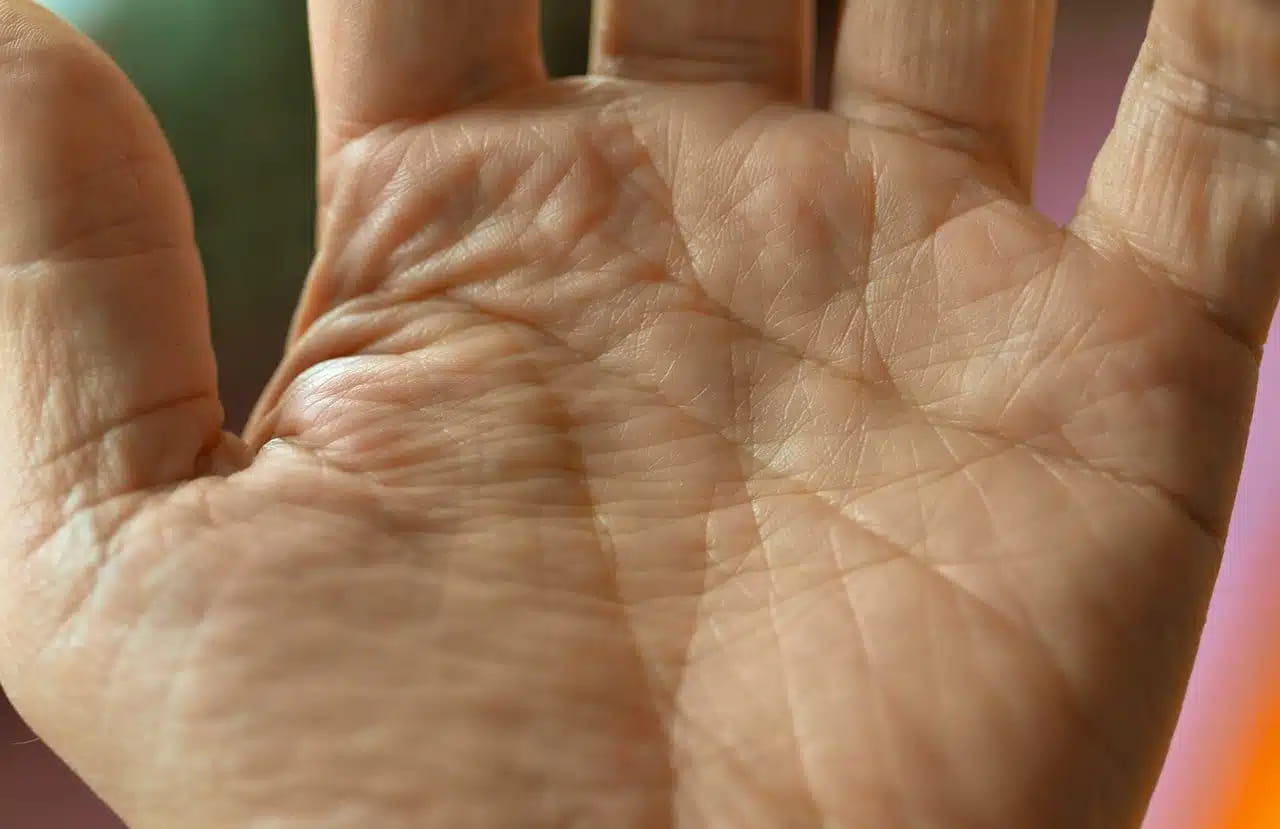
In palmistry, the lines of the hand reflect key aspects of a person’s life, such as their vital energy, emotional world, way of thinking, and sense of purpose. Not everyone has the same lines or with the same depth, which makes each reading unique. Analyzing their shape, length, curvature, and intensity provides valuable information about the present and personal tendencies.
-
Life Line
The life line represents vitality, physical strength, and the way a person faces the changes and challenges of their existence. It begins between the thumb and index finger and extends toward the base of the palm. Although many believe it reveals how long one will live, it actually shows the quality of energy, adaptability, and how transformations are experienced over time.
If the line is deep and well-defined, it indicates strength, vitality, and physical stability. On the other hand, if it is interrupted, forked, or faint, it may point to periods of exhaustion, significant transformations, or the need to make important decisions. The presence of other secondary lines around it can also influence its meaning, adding details about external influences or associated emotional processes.
-
Heart Line
This line represents emotional life and how a person relates affectively to others. It usually starts beneath the pinky finger and extends toward the area below the index or middle finger. Its shape, length, and depth provide information about one’s way of loving, emotional openness, and significant emotional bonds.
A clear and continuous heart line suggests an emotionally balanced person with a good ability to form sincere connections. If the line is curved, it reflects sensitivity and warmth; if it is straight, it indicates a more rational approach to love. Interruptions, branches, or markings may reveal intense emotional experiences, emotional blockages, or important lessons in relationships.
-
Head Line
The head line is associated with the mind, thought processes, and decision-making. It typically begins near the life line and extends horizontally toward the center of the palm. Through its analysis, one can identify the person’s cognitive style, level of concentration, analytical ability, and intellectual tendencies.
A long, deep, and unbroken line indicates mental clarity and structured thinking. If it is curved, it may reflect an imaginative or intuitive mind, while a straight line usually suggests logical and direct thinking. When it has branches or breaks, it may indicate moments of confusion, changes in direction, or learning through challenging experiences.
-
Fate Line
The fate line, also known as the Saturn line, reveals how external factors influence the person’s life, as well as their attitude toward environmental changes and their sense of purpose. Not all hands have this line, and its absence does not imply a lack of direction—it may simply mean the person builds their path without relying on predefined structures.
This line typically starts near the wrist and moves toward the middle finger. A straight and defined line suggests a clear and coherent trajectory, while breaks or deviations may indicate changes in course, new opportunities, or redefinition of life goals. Its reading should be integrated with the rest of the elements in the hand to offer a more complete view of one’s personal journey.
Shapes, Mounts, and Other Elements in Hand Reading
In addition to the lines, palmistry analyzes other essential features that complement the reading, such as the general shape of the hand, the mounts, and the arrangement of the fingers. These elements reflect a person’s vital energy, temperament, and natural abilities. Interpreting them alongside the main lines provides a more complete view of an individual’s character and potential.
Hand Shapes and Their Symbolism
Hand shapes are associated with the four elements of nature: earth, air, fire, and water. Each type reveals a particular way of acting, thinking, and relating to the environment. Recognizing which type your hand belongs to helps you better understand your tendencies and the energy that predominates in your personality.
- Earth Hand: Wide palm and short fingers. Reflects a practical, stable, and hardworking person with a strong connection to the material and tangible world. Typically has a realistic approach and a strong sense of duty.
- Air Hand: Long and slender, with fine fingers and visible joints. Indicates an analytical mind, constant curiosity, and clear communication skills. Tends to live more in the mental realm than the emotional one.
- Fire Hand: Elongated palm and short fingers. Represents dynamism, initiative, and enthusiasm. These people are active, energetic, and constantly seek new challenges.
- Water Hand: Soft and flexible, with long fingers and small palms. Denotes sensitivity, empathy, and intuition. Those with this hand type are usually guided by emotions and connect easily with others.
Mounts of the Palm and Their Interpretation
The mounts are the elevations located in different areas of the palm and are associated with planets that symbolize various human qualities. Their size and firmness provide clues about the predominant energy in a person’s life. Observing them allows for a deeper reading and helps refine the overall interpretation of the hand.
- Mount of Venus: Located at the base of the thumb. Represents the capacity to love, pleasure, and vital energy. A prominent mount indicates an affectionate and passionate nature; a flat one suggests emotional reserve or physical fatigue.
- Mount of Jupiter: Below the index finger. Related to self-esteem, ambition, and the desire for growth. When firm and elevated, it reflects leadership and self-confidence.
- Mount of Saturn: Below the middle finger. Symbolizes responsibility, maturity, and a sense of duty. If well developed, it indicates prudence and stability; if weak, it may suggest distraction or lack of purpose.
- Mount of Apollo: Below the ring finger. Associated with creativity, joy, and personal expression. A balanced mount shows artistic talent and a love for beauty.
- Mount of Mercury: Located below the pinky finger. Represents communication, intuition, and mental agility. When well defined, it suggests skill in negotiation and adaptability to different situations.
Palm Reading as a Tool for Personal Growth
Palmistry is not about offering predictions, but about providing tools for self-knowledge. By observing the shape of the hand, the lines, and the mounts, it is possible to identify emotional patterns, strengths, fears, and tendencies that influence our daily decisions. This information acts as a mirror that reflects both what we have already developed and what we can still transform.
One of the most valuable contributions of hand reading is that it allows us to recognize talents and qualities we are often unaware of possessing. The lines reveal dormant potential, natural gifts, and skills that can be cultivated. This awareness can inspire new decisions, changes in direction, or even a more authentic way of relating to others.
It also helps identify personal blocks or challenges that are shaping one’s life experience. Breaks in the lines, underdeveloped mounts, or imbalances in hand shapes may point to internal aspects that require attention. Far from being a judgment, this reading offers an opportunity to act with greater clarity and responsibility over one’s own story.
For all these reasons, palm reading can be a complementary tool in therapeutic processes, spiritual paths, or simply in the desire to live with greater awareness. Through the symbolic language of the palm, each person can access deep insights about their purpose, their lessons, and their capacity for growth. The key is to approach it not as a fixed truth, but as a guide to connect with oneself from a more honest and free place.